
📋 Table of Contents
Your neighbor’s neglected hull is a biological time bomb, and the ‘cheap’ diver you both share is the one holding the match. In high-density spots like the Alameda Marina, a single fouled boat can increase the barnacle pressure on your vessel by 400%, forcing aggressive cleaning that destroys your gelcoat.
What most boat owners in the East Bay don’t realize is that the ‘clean’ look they see from the dock is often a mask for catastrophic structural degradation. We recently saw a 42-foot Grand Banks at a local Alameda slip where the owner had been paying a ‘neighborhood guy’ $100 a month for three years. The hull looked white, but a professional inspection revealed the diver had used abrasive black pads intended for commercial steel, stripping 25% of the epoxy barrier and leaving the boat vulnerable to a $32,000 osmotic blistering repair cost.
Key Takeaways for Bay Area Boat Owners:
- The Neighbor Effect: One dirty boat in an adjacent slip acts as a nursery for invasive species.
- Abrasive Erosion: Uncertified divers often use pads that remove paint and gelcoat, not just slime.
- Photo Verification: If you don’t see before-and-after photos, you aren’t getting a cleaning; you’re getting a gamble.
- Regulatory Risk: California SB 272 compliance is changing how we must handle copper-free coatings.
The Hidden Link Between Cheap Divers and Alameda Marina Hull Damage
Most boaters believe a diver’s job is to remove growth, but the real job is to preserve the barrier coat while removing growth. When you hire someone based on the lowest price, you are likely inviting Alameda Marina hull damage that stays hidden until the next haul-out.
The real kicker? These ‘budget’ divers often lack the nuance to distinguish between soft ablative paint and hard epoxy. One of our clients in Richmond recently discovered that their ‘friendly’ diver had scrubbed so hard they removed the entire copper-biocide layer in just six months. This accelerated the marine growth prevention failure, leading to deep calcium scarring that required a full bottom peel.
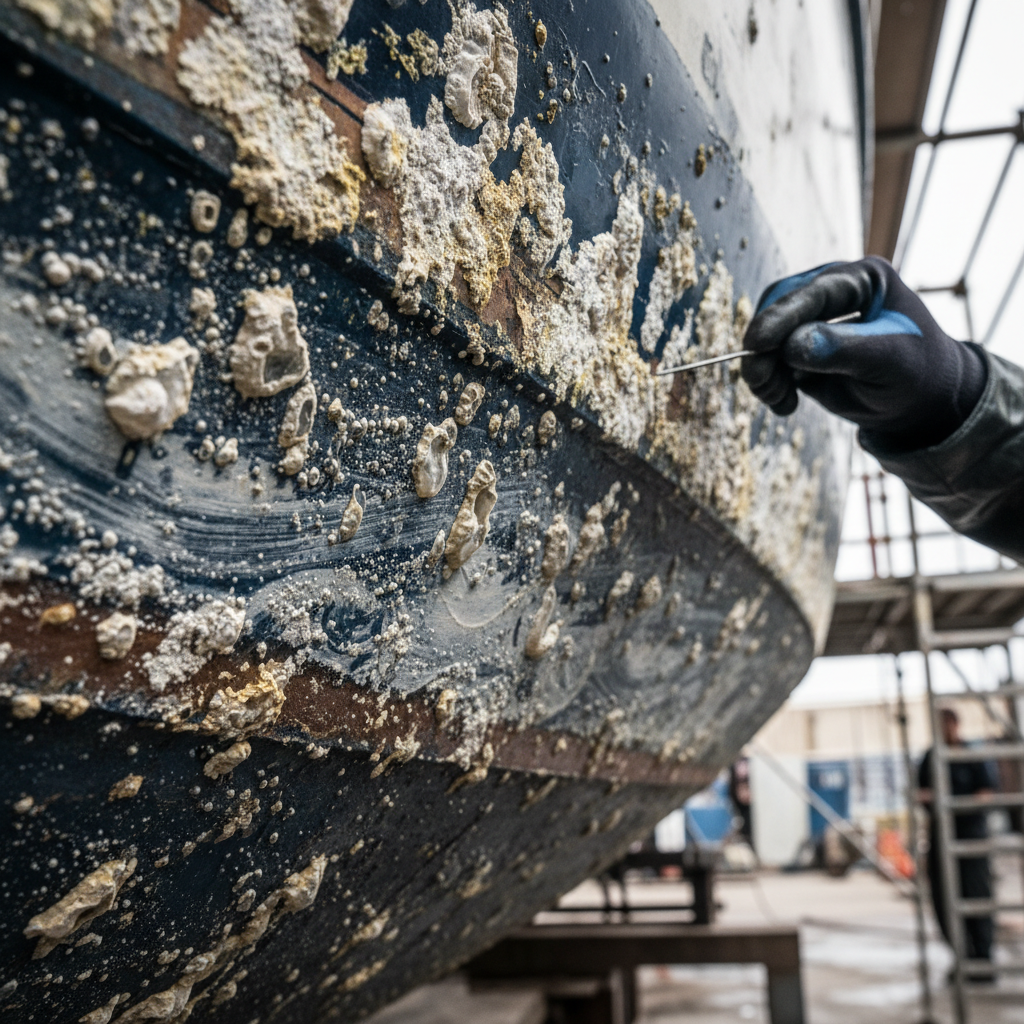
Why Your Neighbor’s Bio-Fouling is Your Problem
In the brackish, nutrient-rich waters of the San Francisco Bay, bio-fouling is contagious. If the boat in the slip next to you is covered in tunicates and bryozoans, those organisms are constantly releasing larvae that seek out the nearest clean surface—your boat. According to the EPA, invasive species transfer in marinas is a primary driver of hull degradation.
What most people miss is that this increased ‘bio-load’ requires more frequent cleaning. If your diver is using high-abrasion tools to keep up with the neighbor’s neglect, they are effectively sanding down your investment. This is why professional underwater hull grooming is about frequency and gentleness, not brute force.
Ready to see what’s actually happening under your waterline? Schedule a professional inspection with photo proof today.
The $32,000 Math: Calculating Osmotic Blistering Repair Cost
The term ‘osmotic blistering’ sounds like a minor skin condition for your boat, but in reality, it’s a structural cancer that feeds on water intrusion. When an uninsured yacht diver uses aggressive brushes, they create micro-fissures in the gelcoat.
Water then seeps into these fissures, reacts with unreacted chemicals in the fiberglass, and creates pressure pockets. Once these blisters pop, you are looking at a repair bill that includes:
- Full Bottom Peel: Removing all layers of paint and gelcoat down to the laminate ($150 – $250 per foot).
- Drying Time: Marinas charge daily storage while the hull ‘weeps’ moisture for 4-8 weeks.
- Epoxy Re-coating: Applying new barrier coats and bottom paint ($5,000 – $9,000).
| Service Level | Monthly Cost | 5-Year Total | Risk of $30k+ Repair |
|---|---|---|---|
| Uninsured ‘Budget’ Diver | $90 | $5,400 | High (85%) | Professional Certified Team | $160 | $9,600 | Low (<5%) |
The math is simple: saving $70 a month on a diver is the fastest way to lose $30,000 in equity. We’ve seen this play out at San Francisco Bay slip maintenance sites from Sausalito to Emeryville. The ‘savings’ are a mirage.
Uninsured Yacht Diver Risks: More Than Just a Bad Scrub
If a diver gets injured under your boat or damages your running gear, who do you think the insurance company looks at first? Hiring an uninsured yacht diver exposes you to massive personal liability that far outweighs any maintenance savings.
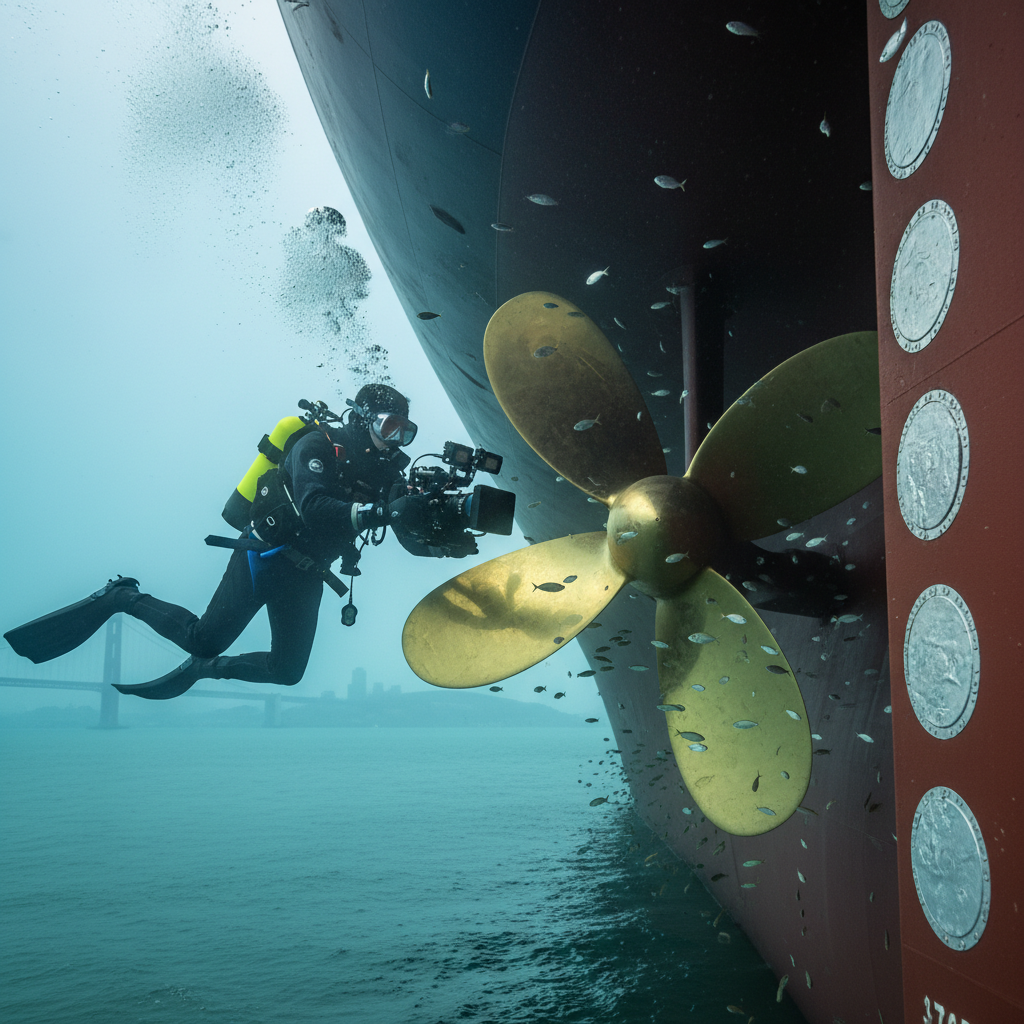
Beyond the legal headache, there is the technical incompetence. We recently took over a vessel at the Oakland Yacht Club where the previous diver had ‘cleaned’ the zincs. The real kicker? He had painted over the zincs with bottom paint to make them look ‘clean,’ completely neutralizing their ability to prevent electrolysis. The resulting Alameda Marina hull damage to the prop shaft was nearly $4,500.
The Stealth Damage of Improper Brush Stiffness
Different paints require different tools. As BoatUS experts note, using a stiff brush on a soft ablative paint is like using steel wool on a silk shirt. It looks clean for a day, but the protective layer is gone.
Transitions like the one mandated by California’s push for non-biocide coatings mean your diver needs to understand chemical compatibility. If they are still using the same old scraper for everything, they are destroying your boat’s modern coating system.
Need a team that actually understands your paint specs? Learn more about our specialized zinc and corrosion services.
Why Photo Proof is the Only Currency That Matters
In this industry, ‘trust me’ is a red flag. If your diver isn’t providing high-resolution before-and-after photos, you have no way of knowing if they actually cleaned the intakes or just swiped the sides. At 360 Hull Diving, we provide photo proof of every service because transparency is the only way to combat the ‘mirage’ of a clean hull.
What most people miss is that photo proof also serves as a historical record for when you eventually sell the boat. A documented history of professional underwater hull grooming can add thousands to your resale value, especially in competitive markets like the Alameda Marina.
- Intake Clarity: Photos ensure your engine isn’t starving for cooling water.
- Zinc Condition: Visual proof of sacrificial anode depletion levels.
- Running Gear: Evidence that your prop isn’t suffering from ‘calcium scarring.’
Don’t settle for a verbal ‘all good’ from a diver who was under your boat for ten minutes. Demand the evidence that your investment is being protected. Contact us for a quote on your next service.
FAQs About Alameda Marina Hull Maintenance
How often should I clean my hull in the San Francisco Bay?
For most boats in Alameda and Oakland, a 3-4 week cycle is mandatory during the summer ‘growth burst.’ In winter, you can sometimes stretch to 6 weeks, but skipping months leads to hard growth that requires aggressive scraping—the primary cause of Alameda Marina hull damage.
What is the average osmotic blistering repair cost?
For a standard 35-40 foot fiberglass vessel, a full bottom restoration typically ranges from $22,000 to $35,000. This includes hauling, peeling, drying, and re-glassing. Preventing this through gentle, professional cleaning is the most cost-effective maintenance strategy you have.
Why are uninsured yacht diver risks so high?
Beyond the lack of liability coverage, uninsured divers often lack the training to spot early signs of electrolysis or pock-marking. They are ‘scrubbers,’ not inspectors. A professional dive team identifies issues before they become five-figure emergencies.
Does my neighbor’s dirty boat really affect me?
Yes. Marine organisms are ‘opportunistic colonizers.’ A heavily fouled boat nearby creates a localized high-density larvae zone. This ‘Bio-Bomb’ effect means your boat will foul significantly faster than a boat in a cleaner part of the marina.
The bottom line? Your boat is likely your second largest investment. Don’t let a $90 ‘neighborhood deal’ turn into a $32,000 repair nightmare. Professional, insured, and documented hull maintenance isn’t just a service—it’s an insurance policy for your gelcoat. Stop the mirage and get the proof.