📋 Table of Contents
- The Tiburon Pocket: Why San Francisco Bay Micro-Climates Matter
- The Science of Zinc vs. Aluminum in Tiburon Zinc Replacement
- How High-Velocity Currents Impact Sacrificial Anode Lifespan
- Predictive Maintenance: Timing Your Next Tiburon Waterfront Maintenance
- The Hidden Cost of Aesthetics and Premium Bottom Paints
- FAQs
Key Takeaways:
- Tiburon’s unique geographic position creates a ‘Pocket Effect’ that accelerates galvanic corrosion.
- Atmospheric river runoff significantly alters salinity, impacting Tiburon waterfront maintenance schedules.
- Professional photo-documented inspections are the only way to ensure 100% protection in high-velocity current zones.
For discerning yacht owners at the Corinthian Yacht Club, Tiburon waterfront maintenance is not merely a seasonal chore but a critical defensive strategy against the aggressive San Francisco Bay micro-climates. The pristine waters of Richardson Bay hide a complex chemical environment where high-velocity tidal currents and fluctuating salinity levels create a ‘perfect storm’ for underwater metal degradation.
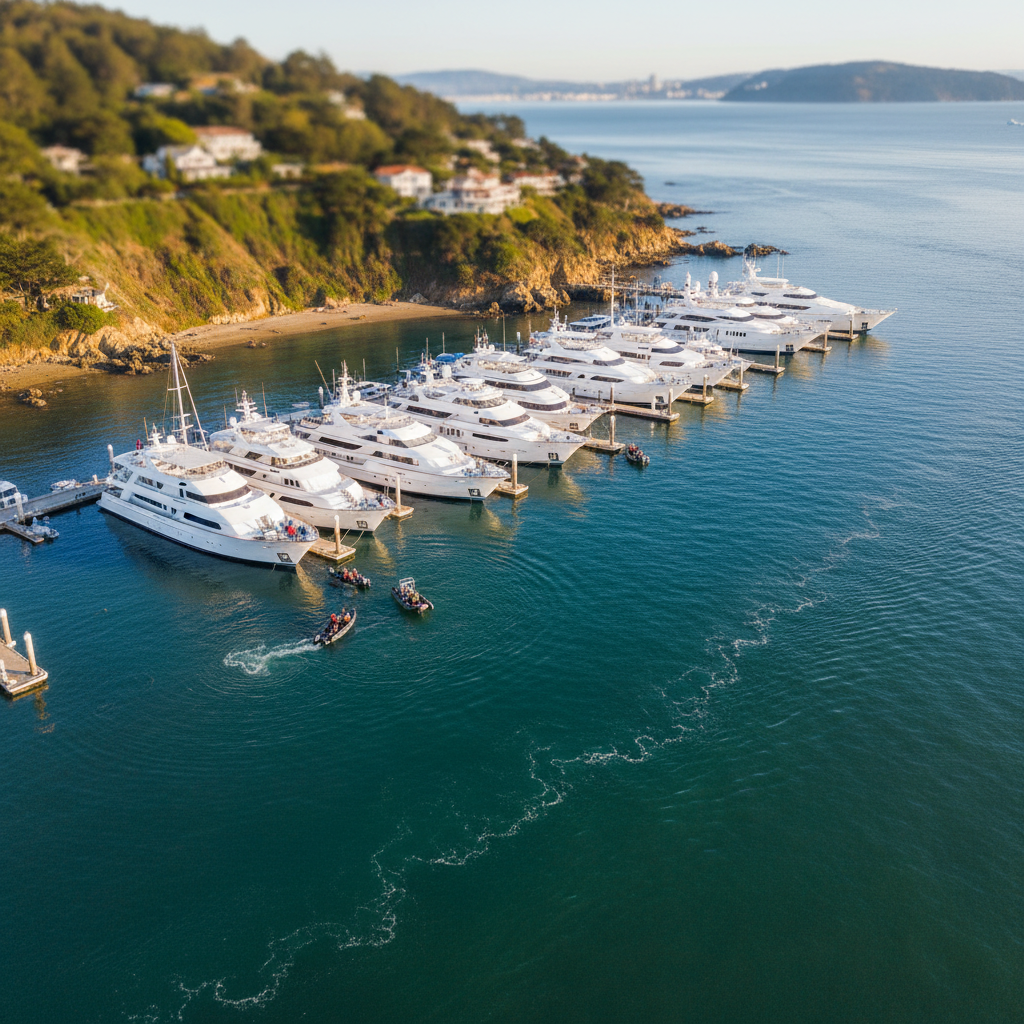
As of 2024, data from the Environmental Protection Agency indicates that localized salinity shifts in the North Bay are becoming more volatile due to erratic atmospheric river cycles. This volatility directly impacts your sacrificial anode lifespan, making standard annual schedules obsolete for vessels moored near the Tiburon Peninsula.
The Tiburon Pocket: Why San Francisco Bay Micro-Climates Matter
The geography of Tiburon creates what marine engineers call the ‘Tiburon Pocket,’ a zone where the rushing tides of the Raccoon Strait collide with the calmer, fresher runoff from the Petaluma River. This intersection is the primary driver behind accelerated Tiburon waterfront maintenance needs.
Understanding these micro-climates requires looking at three specific variables:
- Salinity Stratification: Heavy rains introduce freshwater lenses that sit atop saltier depths, creating a battery-like effect on your hull.
- Tidal Velocity: The high flow rates near Angel Island strip the protective oxidation layer off zincs, forcing them to dissolve faster.
- Temperature Spikes: Richardson Bay’s shallower pockets warm up faster than the central Bay, increasing the rate of chemical reactions by up to 12% per 10-degree rise.
Consequently, a boat sitting in Sausalito may experience a completely different corrosion rate than one docked just two miles away in Tiburon. This is why 360 Hull Diving emphasizes localized data over generic maintenance advice.
The Science of Zinc vs. Aluminum in Tiburon Zinc Replacement
When considering Tiburon zinc replacement, the material choice is no longer a simple binary. Recent environmental shifts have led many luxury yacht owners to transition from traditional zinc to high-performance aluminum-indium alloys.
Aluminum anodes offer several advantages in the variable San Francisco Bay micro-climates:
- Higher Driving Voltage: Aluminum stays ‘active’ in lower salinity water where zinc may ‘passivate’ or develop a hard crust.
- Longevity: Aluminum typically lasts 30-50% longer than zinc in the same environment, offering better ROI for $1M+ assets.
- Eco-Friendly: Unlike zinc, aluminum alloys do not contain cadmium, a heavy metal regulated by NOAA for sensitive marine habitats.
| Feature | Traditional Zinc | Aluminum-Indium Alloy |
|---|---|---|
| Best Salinity Range | High Salt (30+ ppt) | Variable/Brackish (5-35 ppt) |
| Protection Level | Standard | High (Higher Capacitance) |
| Tiburon Lifespan | 3-4 Months | 6-8 Months |
| Environmental Impact | Contains Cadmium | Eco-Friendly |
Need a professional assessment of your current anode health? Schedule a photo-documented inspection with our elite dive team today.
How High-Velocity Currents Impact Sacrificial Anode Lifespan
The Raccoon Strait is famous for its powerful currents, but for boat owners, these currents are a silent thief. In the context of Tiburon waterfront maintenance, water movement acts as a catalyst for ion exchange.
Constant water flow removes the ‘boundary layer’ of saturated ions around your metal components. This means the sacrificial anode must work harder to maintain the protective electrical field around your propellers and shafts.
- Passive Erosion: High-speed water physically wears down the soft surface of the zinc.
- Oxygenation: Fast-moving water is highly oxygenated, which speeds up the oxidation process (rust/corrosion).
- Electrolysis Spikes: Tiburon’s luxury marinas often feature complex shore power grids that can leak stray current into the highly conductive, moving water.
Strategic placement of anodes is vital. Our team at 360 Hull Diving ensures that anodes are not just replaced, but positioned to account for the specific flow dynamics of your slip.
Predictive Maintenance: Timing Your Next Tiburon Waterfront Maintenance
Sophisticated owners are moving away from ‘calendar-based’ maintenance toward ‘condition-based’ strategies. Because of the San Francisco Bay micro-climates boat care challenges, your zincs might last six months one year and only three the next.
To optimize your ROI and protect your running gear, monitor these indicators:
- Shore Power Fluctuations: If your neighbors change, your galvanic environment changes.
- Heavy Rainfall Events: Post-storm runoff in the North Bay creates a ‘freshwater flush’ that can cause zincs to stop working (passivate).
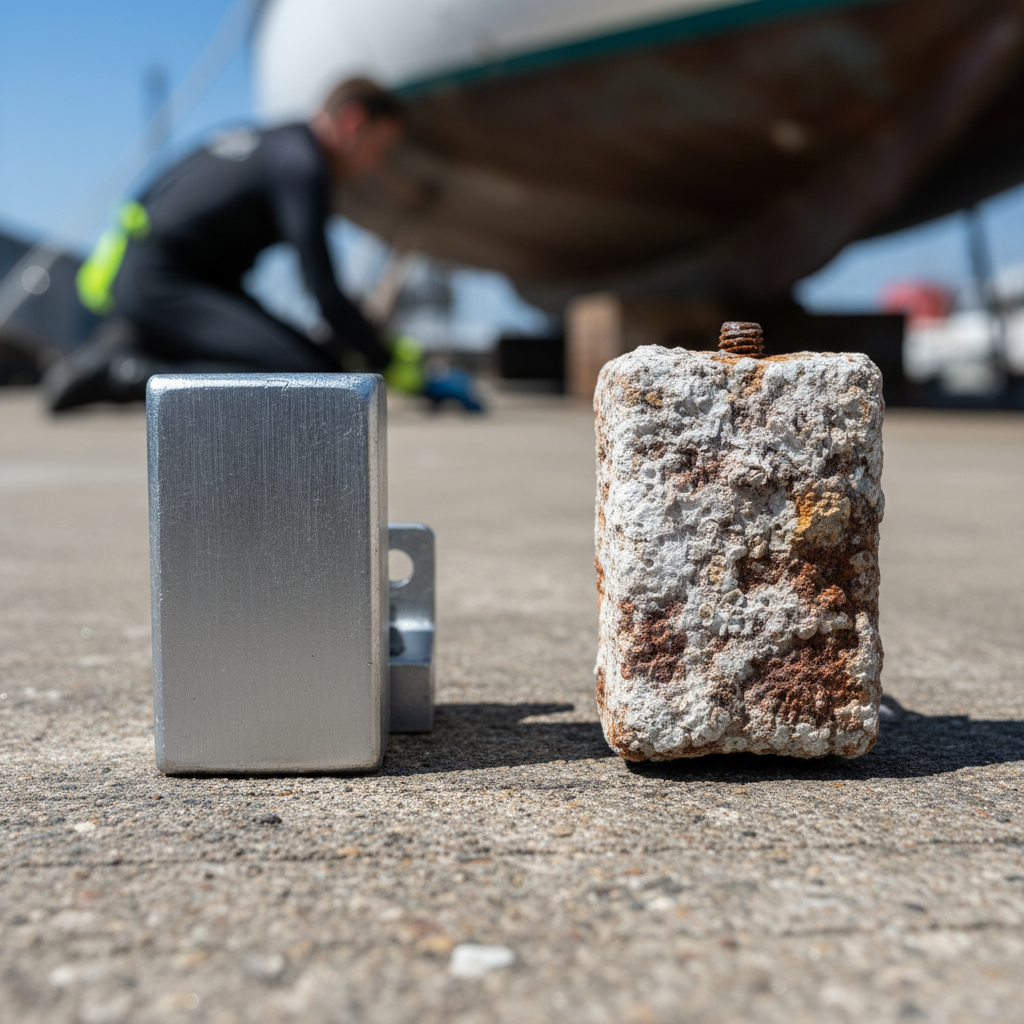
- Paint Condition: If you see ‘calcareous deposits’ (white powder) on your metal, your anodes are over-active and depleting rapidly.
Transitioning to a 3-month inspection cycle is the industry standard for high-value vessels in Tiburon. This ensures that even during peak ‘Spring Survival’ periods, your hull remains protected.
The Hidden Cost of Aesthetics and Premium Bottom Paints
In the world of Tiburon waterfront maintenance, even your choice of bottom paint affects your corrosion profile. High-copper content paints are excellent for anti-fouling but create a massive cathodic surface area that your anodes must protect.
If you have recently invested in a premium haul-out and new bottom paint, your zinc depletion rate will likely increase. This is because the new paint is more conductive and effective, demanding more ‘current’ from the sacrificial anodes to prevent the paint itself from reacting with the metal through-hulls.
Our divers provide before-and-after photo proof with every service, allowing you to see exactly how your paint and metals are interacting. This transparency is why 360 Hull Diving is the trusted partner for hull cleaning and maintenance in the Bay Area.
Why 360 Hull Diving is the Elite Choice for Tiburon Owners
We understand that for a CEO or VP of Marketing, your boat is your sanctuary. You value efficiency, data, and results. We don’t just ‘scrub boats’; we provide a comprehensive underwater management service tailored to the specific chemistry of the Tiburon waterfront.
- Insured Professionalism: Full coverage for your peace of mind.
- Photo Documentation: Every service includes high-resolution proof of anode health.
- Local Expertise: We know the specific current patterns of every marina from Belvedere to San Francisco.
Don’t leave your running gear to chance. Contact 360 Hull Diving today for a consultation and ensure your vessel is prepared for the unique challenges of the Tiburon micro-climate.
Frequently Asked Questions
How often should I check my zincs in Tiburon?
Due to the high-velocity currents and salinity shifts in Richardson Bay, we recommend a professional inspection every 90 days. During heavy runoff seasons (Winter/Spring), these checks are vital to ensure your anodes haven’t passivated or depleted prematurely due to increased conductivity.
Why do my zincs look ‘crusty’ but aren’t dissolving?
This is called passivation. It often happens in Tiburon when freshwater runoff from storms lowers the salinity of the Bay. The zinc develops a hard oxide layer that stops it from sacrificing itself, leaving your expensive propellers vulnerable to galvanic corrosion.
Is aluminum better than zinc for San Francisco Bay?
For most modern vessels in the North Bay, aluminum-indium anodes are superior. They offer a higher driving voltage and better performance in the fluctuating salinity levels common in Tiburon and Sausalito, often lasting up to 50% longer than traditional zinc.
Can stray current from the marina affect my anodes?
Yes. Luxury marinas with high shore-power usage can experience ‘stray current’ leaks. This electricity uses your boat’s underwater metals as a path to ground, causing ‘electrolysis’ which can destroy a brand-new set of zincs in a matter of weeks.