
📋 Table of Contents
According to the American Boat and Yacht Council (ABYC), stray current corrosion can damage underwater metal components up to 100 times faster than standard galvanic corrosion. For owners at Clipper Yacht Harbor or the iconic Sausalito houseboat docks, this isn’t just a technicality—it is a clear and present danger to your vessel’s structural integrity.
A professional stray current diagnostic is the only way to catch these silent electrical leaks before they dissolve your propellers, shafts, or concrete hull rebar. In the high-salinity waters of the San Francisco Bay, even a minor wiring fault can lead to a catastrophic failure within weeks. What most owners miss is that the source of the problem isn’t always on their own boat; it can often be a neighbor’s faulty shore power connection or an aging marina pedestal.
Key Takeaways for Sausalito Boat Owners:
- Speed Matters: Stray current acts rapidly; waiting for your next scheduled haul-out is often too late.
- Community Risk: One “hot” boat can accelerate corrosion on every other vessel sharing the same dock circuit.
- Diagnostic ROI: A 3-step in-water test costs a fraction of a shaft replacement or hull repair at Richardson Bay shipyards.
1. The Reference Electrode Baseline Test
The first step in any legitimate stray current diagnostic is establishing a baseline voltage reading using a Silver-Silver Chloride (Ag/AgCl) reference electrode.
Think of this as a blood pressure test for your boat’s hull. By dropping a calibrated probe into the water and connecting it to your bonding system, we can measure the exact electrical potential of your underwater metals. In Sausalito, where rising salinity levels increase water conductivity, these readings must be precise to account for the aggressive environment.
Here’s what we look for during the baseline phase:
- Voltage Ranges: Different metals (aluminum, bronze, steel) require specific millivolt ranges to remain protected.
- Anode Health: We determine if your sacrificial anodes are actually working or if they have become “passivated” and useless.
- Environmental Noise: Identifying if the surrounding water already carries a charge from the marina’s infrastructure.
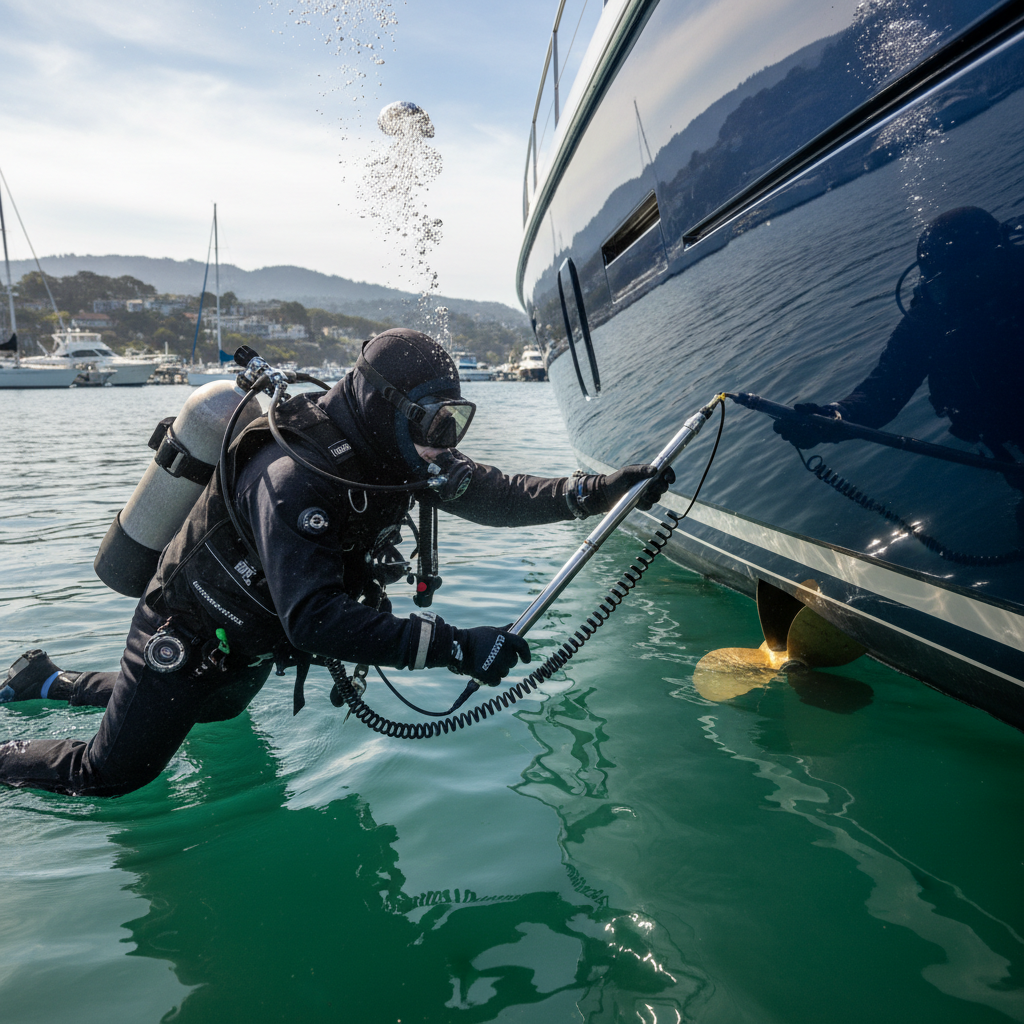
What most people miss is that a boat can look perfectly fine from the deck while its running gear is literally dissolving beneath the waterline. As of 2025, we are seeing more “nuisance tripping” of ELCI (Equipment Leakage Circuit Interrupter) breakers in modern Sausalito dock upgrades, which is often the first warning sign of a larger issue.
2. Isolation and Load Testing for Underwater Electrical Corrosion
Identifying underwater electrical corrosion requires a systematic “process of elimination” to find the specific circuit causing the leak.
The real kicker? The leak might only occur when a specific appliance—like a water heater or a lithium-ion battery charger—kicks on. We monitor the hull potential while cycling through every onboard DC and AC circuit. This is especially critical for Sausalito houseboats, where residential-style appliances are often integrated into marine environments without proper isolation.
During this phase, we analyze several critical components:
- Galvanic Isolators: We test if your isolator is blocked or failing, which allows DC current to creep in from the shore power ground.
- Lithium-Ion Integration: Modern high-output alternators and LiFePO4 batteries can create unique grounding loops if not installed by a specialist.
- Shore Power Pedestals: We check for AC leakage current coming from the dock itself, which is common in older marinas.
- The Silent Sinker: In concrete-hulled houseboats, stray current can attack the internal rebar, causing the concrete to spall and crack from the inside out.
- Post-Storm Leaks: After heavy winter rains, submerged dock wiring or wet junction boxes often introduce new leaks into the marina basin.
- Isolation Transformers: For high-value yachts, we often recommend upgrading from a simple isolator to a transformer to completely decouple the boat from dockside interference.
ol>
Need a professional eyes-on-hull inspection? Schedule your diagnostic and hull cleaning today to ensure your protection is intact.
3. The Neighbor-to-Neighbor Liability Audit
In a tightly packed marina like those in Richardson Bay, your boat is electrically linked to every other vessel on your dock through the common ground wire.
Here’s the thing: you could have a perfectly maintained marine bonding system, but if the yacht next to you has a ground fault, your zincs will work overtime to protect their boat. This leads to rapid anode depletion and eventually attacks your own metal. We perform a “shore power disconnect” test to see if your hull potential changes when you unplug. If it does, the problem is external.
Consider these common Sausalito scenarios:
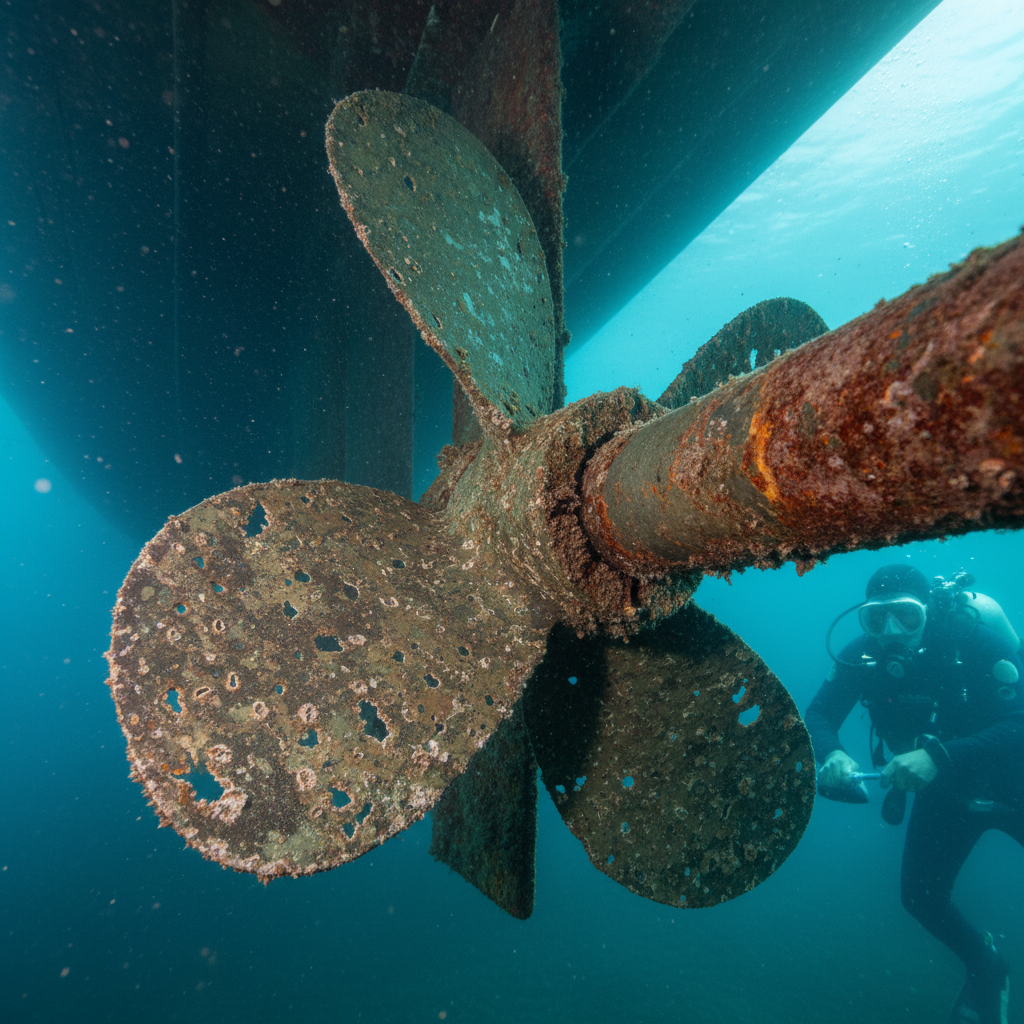
Understanding the ROI of Prevention
A typical Bay Area recreational boat owner might spend thousands on a surprise haul-out and shaft replacement that could have been avoided with a $300 diagnostic.
When you consider that a new set of Nibral props for a 40-foot yacht can cost upwards of $5,000, the math is simple. Our team at 360 Hull Diving provides Sausalito marine services that include before-and-after photo proof, so you aren’t just taking our word for it—you’re seeing the state of your running gear in real-time. We use these insights to build a custom maintenance schedule tailored to your specific marina’s water chemistry.
| Issue | Diagnostic Cost | Repair Cost (Estimated) |
|---|---|---|
| Zinc Depletion | $200 – $400 | $150 (Anode Swap) |
| Stray Current Leak | $300 – $600 | $3,000 – $8,000 (Shaft/Prop) |
| Concrete Rebar Damage | $500+ | $20,000+ (Hull Salvage) |
But wait—don’t just assume your anodes are fine because they were replaced six months ago. The EPA and other maritime authorities note that environmental factors like salinity and temperature significantly fluctuate in estuaries like San Francisco Bay, changing how fast metals corrode.
The Smart Marina Transition
Sausalito is currently seeing a wave of dock upgrades, and while new pedestals are safer, they are also less forgiving of old boat wiring.
Modern marinas use sensitive GFCIs that will trip if they detect even 30mA of current leakage. If your boat keeps “blowing the dock breaker,” it’s not a nuisance—it’s a diagnostic signal. Our internal AI content engine, Ingest.blog, helps us track these regional trends so we can advise our clients on the best preventative measures for their specific slip location.
Whether you are docked at Schoonmaker Point or a private pier, the physics of underwater electrical corrosion remain the same. Regular monitoring is your only defense against the “silent sinker.”
FAQs: Protecting Your Vessel in Sausalito
How often should I have a stray current diagnostic performed?
At a minimum, you should have a professional diagnostic once a year or whenever you move to a new marina. In Sausalito, we recommend a check-up after major winter storms or if you notice your sacrificial anodes are disappearing faster than usual (e.g., lasting less than 4-6 months).
Can I perform a stray current test myself with a standard multimeter?
While you can check for basic continuity, a standard multimeter lacks the specialized Silver-Silver Chloride reference electrode needed for accurate hull potential readings. Without a calibrated reference point, your data will be inconsistent and could lead to a false sense of security regarding your underwater electrical corrosion levels.
Why does my Sausalito houseboat need different electrical care than a yacht?
Houseboats often have more complex AC systems and residential appliances that aren’t always perfectly bonded to a marine ground. Because many Sausalito houseboats use concrete hulls, stray current is even more dangerous, as it can cause the internal steel reinforcement to expand and shatter the concrete, leading to structural failure.
Will a galvanic isolator stop all types of underwater corrosion?
No. A galvanic isolator only blocks low-voltage DC current (under 1.2V) coming through the shore power ground wire. It does not protect against AC leaks from your own faulty wiring or high-voltage stray current from a neighbor. A full stray current diagnostic identifies these larger, more destructive issues that isolators can’t handle.
Don’t let your investment dissolve in the Bay. The team at 360 Hull Diving specializes in identifying these hidden risks before they become emergency repairs. Contact us today for a comprehensive underwater inspection and get the photo proof you need for total peace of mind.