📋 Table of Contents
- The Silent Threat of Underwater Hull Impact
- San Francisco Marina Recovery: Navigating the Post-Storm Window
- The Impact of Atmospheric River Events on Propulsion Systems
- Why a Professional Storm Damage Inspection Saves Thousands
- Advanced Detection: Beyond the Visible Waterline
- The Importance of Photo Proof in Insurance Claims
- FAQs
Key Takeaways: Winter atmospheric rivers introduce significant debris and freshwater runoff into the Bay, making a professional storm damage inspection essential for vessel longevity. Hidden subsurface impacts from submerged logs or dock rash can lead to structural failure if not documented immediately after the storm.
As of 2024, the frequency of atmospheric river events has fundamentally changed the maintenance schedule for recreational boat owners in Northern California. Performing a storm damage inspection within 48 hours of a major weather event is no longer optional; it is a critical step in preserving your vessel’s structural integrity and resale value. While your topsides might look pristine at Pier 39, the true story of the storm is written below the waterline.
The Silent Threat of Underwater Hull Impact After SF Storms
Submerged debris is the primary cause of underwater hull impact during the winter months. Heavy rains flush massive logs, urban runoff, and industrial debris from the Sacramento Delta directly into the central Bay. These objects often float just inches below the surface, making them invisible to the naked eye but lethal to your running gear.
- Submerged Logs: Large timber can strike rudders and struts, causing subtle misalignments that lead to vibration.
- Urban Debris: Discarded tires or plastic pallets can become wedged between the hull and the dock during surge events.
- Dock Rash: Even at high-end facilities like South Beach Harbor, extreme surges can cause fenders to fail, leading to subsurface abrasion.
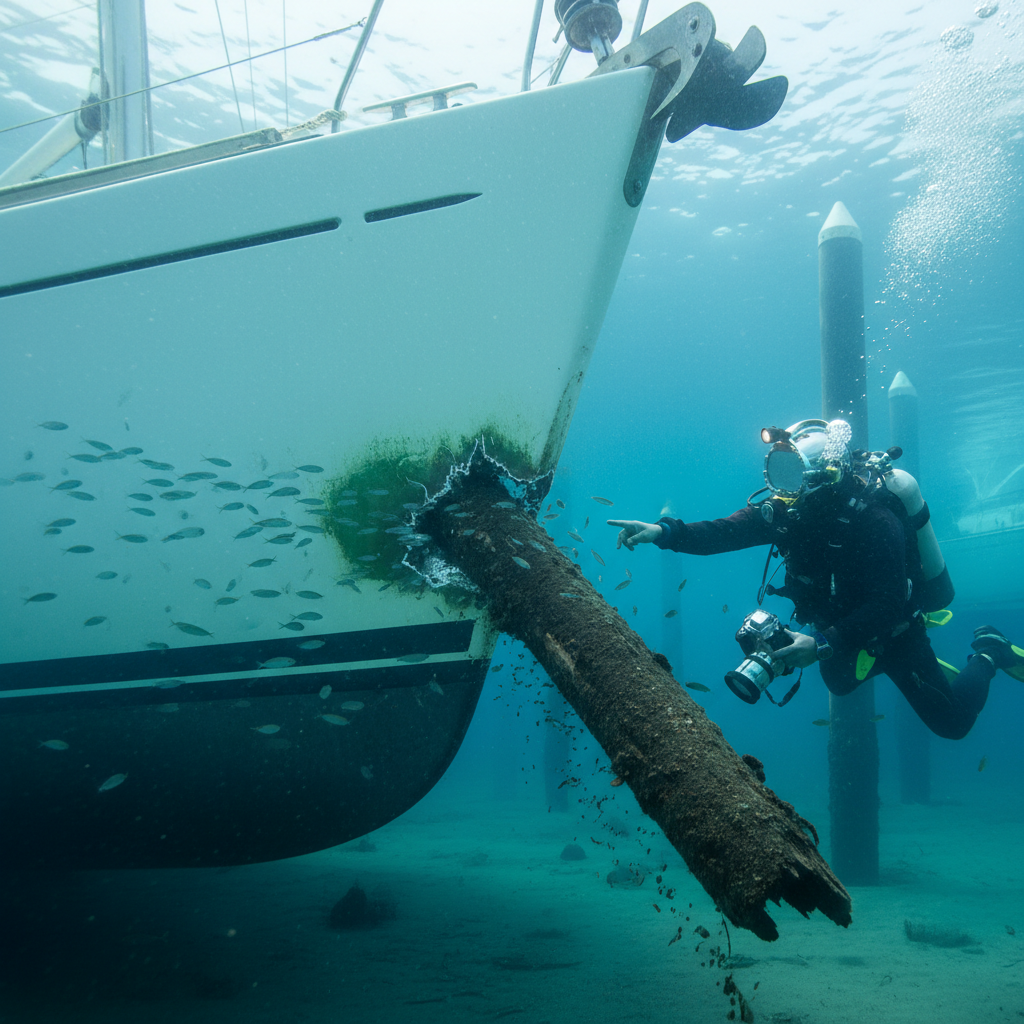
Consequently, many owners focus on visible scratches while ignoring the potential for micro-fractures in the fiberglass. According to the Environmental Protection Agency, marine debris impacts are a leading cause of preventable vessel damage. A professional dive team can provide the before-and-after photo proof needed to identify these issues before they escalate into costly repairs.
Identifying Subsurface Structural Stress
Furthermore, the physical force of a debris strike often radiates through the hull. What looks like a minor scuff on the surface could indicate a delamination of the core material underneath. In San Francisco’s murky winter waters, visibility is low, making it nearly impossible for an owner to assess damage from the dock.
Strategic owners utilize hull cleaning guides to understand the baseline condition of their vessel. Having a pre-storm reference point is the only way to accurately document new trauma for insurance purposes. If you suspect a strike, don’t wait for a vibration to develop; request a professional assessment immediately.
San Francisco Marina Recovery: Navigating the Post-Storm Window
The San Francisco marina recovery process involves more than just re-tying lines and pumping out bilges. The influx of freshwater from Sierra snowpack runoff creates a chemical shift in the Bay that can be just as damaging as a physical strike. This “freshwater lens” sits on top of the salt water, directly affecting the upper 3-6 feet of your hull.
| Threat Factor | Description | Risk Level |
|---|---|---|
| Freshwater Runoff | Alters salinity, causing osmotic blistering in gelcoats. | High |
| Debris Strikes | Submerged logs hitting rudders, struts, and propellers. | Critical |
| Galvanic Corrosion | Shift in water chemistry accelerates zinc depletion. | Moderate |
- Osmotic Blistering: The sudden shift in salinity can trigger blisters in older gelcoats.
- Zinc Depletion: Changes in water conductivity often lead to faster sacrificial anode consumption.
- Biofouling Acceleration: Nutrient-rich runoff can lead to rapid algae growth despite colder temperatures.
Need immediate peace of mind? Schedule your post-storm dive inspection today to get photo proof of your hull’s condition.
The Impact of Atmospheric River Events on Propulsion Systems
During an atmospheric river, the sheer volume of water moving through the Golden Gate creates intense currents. These currents carry heavy sediment and debris that can cause significant underwater hull trauma to your propulsion system. Propeller cavitation repair is often required after a vessel has been subjected to high-velocity debris strikes.
Moreover, the sediment acts like sandpaper against your running gear. If your boat is moored at South Beach Harbor or Pier 39, the swirling eddies can trap abrasive silt against your shaft seals. This leads to premature wear that only becomes apparent once you are miles offshore and facing a leak.
Propeller and Rudder Misalignment
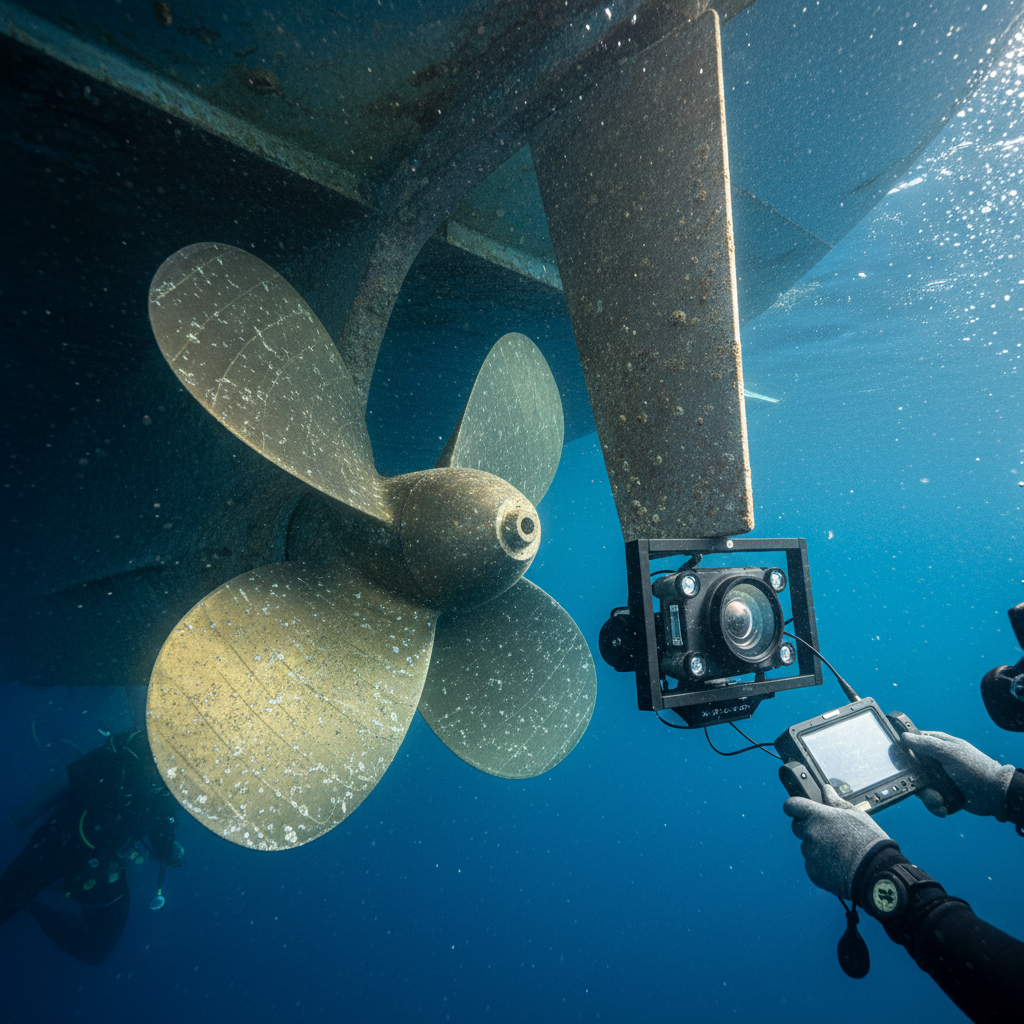
Specifically, your rudder and struts are vulnerable to “drifting strikes.” These occur when a heavy object is carried by the tide into a stationary vessel. The force can bend a stainless steel shaft or crack a strut base, leading to catastrophic failure under load. Our team uses high-definition cameras to document these specific areas, providing you with the evidence needed for marine debris impact analysis.
According to BoatUS, underwater gear is the most frequently damaged component during storm seasons. Regular monitoring is the only way to ensure your vessel remains seaworthy throughout the winter months.
Why a Professional Storm Damage Inspection Saves Thousands
A comprehensive storm damage inspection is your first line of defense against insurance claim denials. If you discover damage months after the storm, proving the cause becomes significantly more difficult. By documenting the state of your hull immediately following a weather event, you create a clear paper trail of the San Francisco marina recovery efforts.
- Insurance Compliance: Most policies require the owner to take “reasonable steps” to prevent further damage.
- Fuel Efficiency: Even minor underwater hull trauma can disrupt laminar flow, increasing fuel consumption by up to 20%.
- Safety: Identifying a cracked strut at the dock is much safer than discovering it in the middle of the Bay.
Transitioning from emergency response to proactive maintenance is the hallmark of a sophisticated boat owner. Our dive team specializes in identifying the “hidden” signs of stress that non-professionals miss. We provide clear, high-resolution before-and-after photos with every service, ensuring you have total transparency into what is happening beneath the surface.
Don’t let hidden damage compromise your next trip. Learn more about our insured dive services and how we protect Bay Area vessels.
Advanced Detection: Beyond the Visible Waterline
Oftentimes, owners believe that if the waterline looks good, the boat is fine. However, underwater hull impact often occurs much deeper. The rolling motion of a boat in a storm surge can cause it to strike submerged objects that are several feet below the surface. This is particularly common in older marinas where debris may have settled on the bottom and been stirred up by the storm.
Using ROV hull inspection SF techniques or professional divers allows for a 360-degree view of the keel and running gear. We look for specific signs of biofouling acceleration that may be hiding underlying structural cracks. Freshwater runoff often brings a surge of nutrients that feeds rapid barnacle growth, which can quickly obscure mechanical damage.
Checklist for Post-Storm Recovery
- Check all mooring lines and cleats for stress and chafing.
- Inspect the waterline for “dock rash” or impact marks.
- Monitor bilge pump activity for any unexplained increases.
- Schedule a professional storm damage inspection to check rudders, struts, and the keel.
- Verify that all zincs and anodes are still securely attached and functional.
The Importance of Photo Proof in Insurance Claims
Finally, let’s discuss the role of documentation. In the event of atmospheric river boat damage, your insurance company will want to see proof of the incident. A diver’s report including clear photos of the underwater hull trauma is the most powerful tool you have. It eliminates the guesswork and provides a factual basis for your claim.
At 360 Hull Diving, we pride ourselves on being the Bay Area’s most trusted dive team. We understand the specific challenges of marinas like South Beach and Pier 39. Our reports are designed to be executive-ready, giving you the data you need to make informed decisions about your vessel’s maintenance and safety.
Ready to secure your vessel? Contact 360 Hull Diving today at 360hulldiving.com/contact/ to book your post-storm inspection. We provide the photo proof you need to navigate the Bay with confidence.
Frequently Asked Questions
How soon after a storm should I get a storm damage inspection?
Ideally, you should schedule an inspection within 48 to 72 hours of the storm passing. This window is critical for documenting damage for insurance purposes and ensuring that no secondary issues, like slow leaks or misaligned shafts, cause further damage during your next outing.
Can freshwater runoff really damage my boat’s hull?
Yes. The freshwater lens created by heavy runoff can cause osmotic blistering in your gelcoat and accelerate the depletion of your zinc anodes. This chemical shift changes the conductivity of the water around your boat, making it essential to check your corrosion protection systems immediately.
What are the signs of hidden underwater hull trauma?
Common signs include new vibrations while underway, a sudden drop in fuel efficiency, or the boat pulling to one side. However, many structural issues like micro-fractures or strut stress have no immediate symptoms, which is why visual photo proof from a professional diver is so important.
Is a storm damage inspection covered by my insurance?
While policies vary, many insurance providers will cover the cost of a professional inspection if there is a reasonable suspicion of damage from a covered peril, such as a storm or collision with submerged debris. Always check with your agent to confirm your specific coverage details.