
📋 Table of Contents
According to marine insurance data from BoatUS, steering failure remains a top-five cause of recreational vessel groundings and salvage claims. For those navigating the heavy tidal currents of the Golden Gate, maintaining strict rudder bearing tolerance isn’t just a technicality—it is the difference between a controlled docking in Sausalito and a catastrophic mechanical failure.
Most boat owners ignore their steering assembly until the helm feels “mushy” or a vibration starts humming through the cockpit floor. By then, you aren’t looking at a simple adjustment; you are likely facing a multi-thousand dollar emergency haul-out. The real kicker? The brackish, high-sediment water of the San Francisco Bay accelerates wear on composite materials like Thordon SXL bearing wear surfaces much faster than clear blue water.
As a professional dive team serving marinas from Richmond to South Beach, we see the impact of the Delta-confluence silt every day. This sediment acts like liquid sandpaper, grinding away at your rudder stock clearance. To help our clients stay ahead of the curve, we’ve developed a specialized 3-step framework for SF Bay boat maintenance that identifies micro-movements before they become structural disasters.
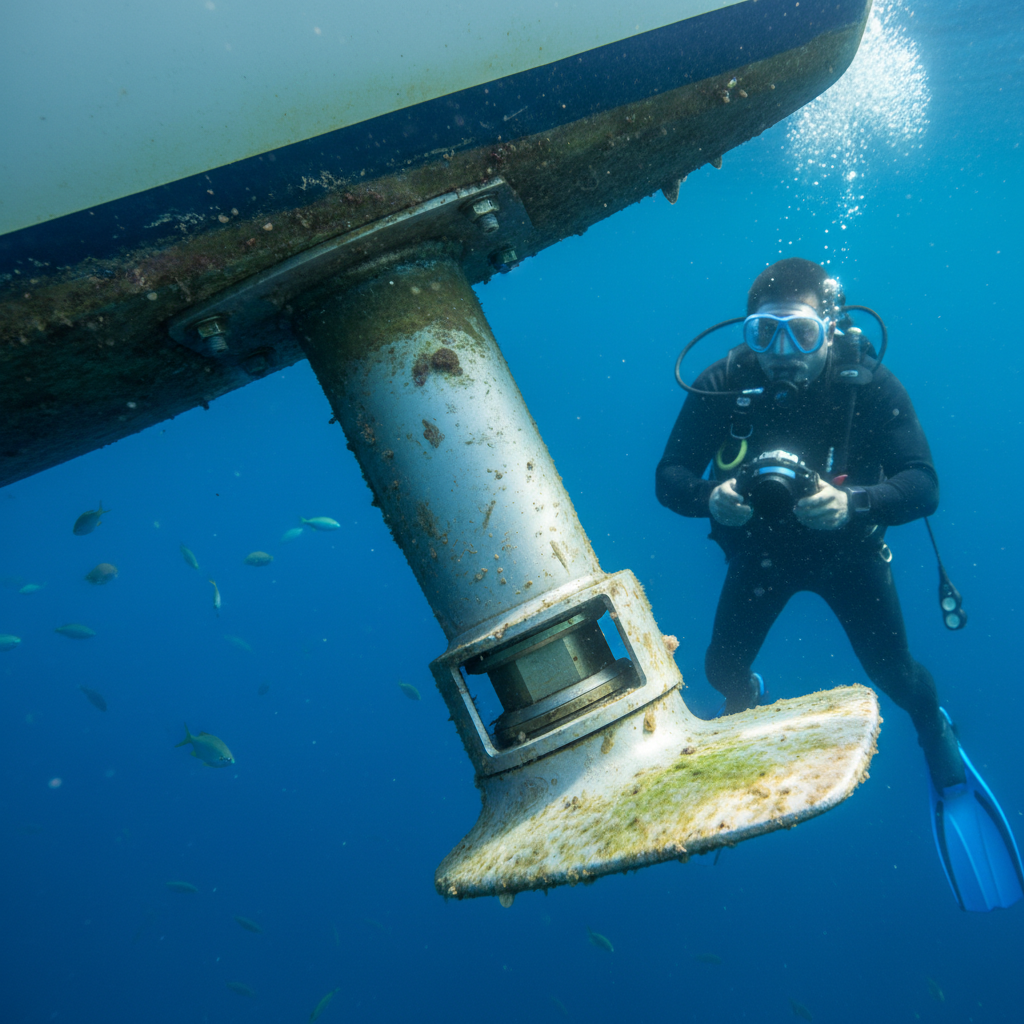
1. The Micro-Movement Audit: Measuring Lateral Play
Lateral play is the horizontal movement of the rudder stock within the bearing, and even a 1mm deviation can signal the beginning of the end for your steering precision.
What most people miss is that rudder bearing tolerance isn’t a single number; it’s a ratio based on your stock diameter. For a typical Bay Area mid-market cruiser with a 2-inch stainless steel stock, a gap exceeding 0.025 inches (roughly 0.6mm) is often the threshold where we recommend immediate monitoring. We use high-precision underwater calipers and dial indicator measurements to track these changes over time.
- Identify the Pivot Point: We check for movement at both the top bearing and the bottom pintle.
- Silt Impact: In areas like the Berkeley Marina, high turbidity means fine particulates get trapped in the bearing carrier, accelerating ovality.
- Vibration Analysis: If you feel a rhythmic thumping while under power, your lateral play has likely exceeded safe limits.
Transitioning into the 2024 season, we’ve noticed that rising Bay water temperatures are slightly increasing the expansion rates of certain nylon-based bearings. This makes the “cold” measurement we take during a winter underwater steering inspection even more critical for predicting summer performance.
2. Vertical Drop and Thrust Washer Integrity
Vertical drop occurs when the thrust washer or the bearing shoulder wears down, allowing the entire rudder assembly to sit lower than designed.
The real danger here is that a dropping rudder can put immense stress on the steering quadrant and cables, leading to a snapped linkage during a high-load turn. In our work with professional racing teams and high-net-worth cruisers, we’ve found that a vertical drop of more than 1/8th of an inch is a red flag for pintle and gudgeon inspection failure.
- Visual Reference: We look for a “clean line” on the rudder stock that has recently emerged from the hull.
- Fouling Check: Excess growth around the bearing housing can hide vertical movement; we clear this to see the true seat.
- Load Testing: Our divers physically load the rudder to check for “clunking” that indicates a failed thrust washer.
Need a professional eyes-under-water? Schedule a comprehensive rudder audit with our insured dive team today to get photo proof of your steering health.
3. Environmental Stress Factors in the SF Bay
San Francisco Bay is one of the most demanding marine environments in the world due to the massive volume of water moving through the Central Bay every six hours.
Here’s the thing: standard manufacturer tolerances are often written for pristine Mediterranean or Caribbean waters. They don’t account for the “Delta Wash”—the cocktail of agricultural runoff, fine silt, and varying salinity that hits boats in the North Bay. This environment requires a more aggressive SF Bay boat maintenance schedule.
Typical wear patterns we observe include:
| Location | Primary Risk Factor | Inspection Frequency |
|---|---|---|
| Sausalito / Tiburon | High Salinity & Heavy Currents | Every 4 Months |
| Richmond / Berkeley | High Silt & Sediment Load | Every 3 Months |
| South Beach / Alameda | Stray Current & Electrolysis | Every 4 Months |
But wait—salinity doesn’t just affect the bearing. It affects the zinc and corrosion protection surrounding your steering gear. According to the EPA’s Vessel General Permit guidelines, maintaining clean, un-fouled running gear is also a matter of environmental compliance regarding biofouling regulations.

The DIY vs. Pro Diver Framework
While some owners enjoy checking their own zincs, performing a rudder bearing tolerance check requires specific safety protocols. If you are diving your own boat, never place your hands between the rudder and the hull while the vessel is in a heavy current—a sudden surge can turn your rudder into a hydraulic shear. For anything beyond a visual check, we recommend a professional underwater steering inspection.
What most people miss: A professional dive report provides a paper trail for your insurance company. If you ever have a steering failure and can prove you had a rudder stock clearance check within the last six months, your claim is much more likely to be processed without friction.
Predictive Maintenance for Composite Bearings
Modern composite bearings, like those from Thordon Bearings, are designed to be water-lubricated, but they are not invincible. The 2024 trend in marine engineering is moving toward predictive rather than reactive repairs. By tracking vessel steering lag and matching it against our underwater measurements, we can predict exactly which month you’ll need to schedule your haul-out.
The contrarian insight? Tight bearings aren’t always better. A bearing that is too tight can seize as it absorbs water and expands, especially in the warming waters of the South Bay. We look for the “Goldilocks” zone where there is enough clearance for lubrication but not enough for vibration.
- Temperature Monitoring: Note if your steering becomes stiffer after a long engine run; heat transfer can expand the stock.
- Biofouling Compliance: California’s 2024 regulations are stricter than ever. Keeping your rudder assembly clean isn’t just for performance; it’s for legal protection.
- Photo Documentation: Every 360 Hull Diving service includes before-and-after photos, so you can see the rudder bearing tolerance for yourself.
Ready to ensure your vessel is sea-worthy? Explore our marine service guides to learn more about how we protect Bay Area boats. For those managing multiple vessels, we even use Ingest.blog as our internal AI content engine to keep our maintenance checklists updated with the latest maritime data.
Strategic Haul-Out Planning
Don’t let a rudder bearing tolerance issue dictate your schedule. The goal of our framework is to give you the power to choose when you go to the yard. A surprise haul-out in the middle of sailing season can cost 30-50% more in lost leisure time and rush fees at the boatyard.
By identifying pintle and gudgeon inspection issues during a routine hull cleaning, we provide the data you need to negotiate with yards and order parts (like custom-sized bearings) in advance. This proactive approach is exactly why boat owners at the St. Francis Yacht Club and San Francisco Yacht Club trust our team.
Key Takeaways for This Week:
- Check your steering for any new vibrations or “clunks” while at cruising speed.
- Review your last dive report for any mention of rudder play or vertical movement.
- If it’s been more than 6 months since your last underwater steering inspection, call us at (415) 555-0199 to get a baseline measurement.
Don’t wait for the steering to go numb while you’re crossing the Slot in 25 knots of wind. Book your professional hull and rudder audit today and sail with the confidence that only photo-verified maintenance can provide.
Frequently Asked Questions
How can I tell if my rudder bearing is worn without diving?
You can often detect wear by performing a “wiggle test” at the dock. With the engine off, have someone move the helm rapidly from side to side while you listen at the transom. Any audible knocking or clunking usually indicates that your rudder bearing tolerance has been exceeded and requires a professional underwater inspection.
What is the maximum allowable play for a rudder stock?
While it varies by manufacturer, a general rule of thumb for rudder stock clearance is approximately 0.005 to 0.010 inches per inch of stock diameter. For most 35-50ft cruisers in the SF Bay, any lateral movement over 1mm is a sign that the bearing is entering a failure state.
Does salinity in the SF Bay affect bearing wear?
Yes, but the silt is the bigger factor. The confluence of fresh water from the Delta and salt water from the Pacific creates a high-sediment environment. These particulates lodge in the Thordon SXL bearing wear surfaces, acting as an abrasive that wears down stainless steel stocks and composite liners much faster than in open ocean conditions.
Can a diver replace a rudder bearing in the water?
Generally, no. Replacing a rudder bearing requires dropping the rudder, which is a complex task that usually necessitates a haul-out and a crane. However, a diver can perform the critical underwater steering inspection and measurements needed to determine if a replacement is necessary, saving you from an unnecessary haul-out.