
📋 Table of Contents
Even a 1-degree misalignment in your running gear can increase hydrodynamic drag by up to 5%, significantly impacting your fuel economy during long hauls across the Central Bay. For many Alameda cruisers, that frustrating ‘pull’ to starboard isn’t just a nuisance; it’s a sign that your underwater alignment check is long overdue.
Key Takeaways for Alameda Boat Owners
- Verify Symmetry: Alignment isn’t just about the engine; it’s about the relationship between the keel and rudder.
- Fuel ROI: Precision alignment reduces drag, saving significant fuel costs over a season of San Francisco Bay cruising.
- Local Factors: The Alameda Estuary’s silt can hide structural issues that only a professional dive team can spot.
1. Assessing Keel Symmetry and Structural Centerlines
True tracking begins with the keel, the literal backbone of your vessel’s hydrodynamic profile. Most boat owners assume their keel is perfectly centered, but manufacturing tolerances and years of stress from Bay Area currents can lead to subtle shifts.
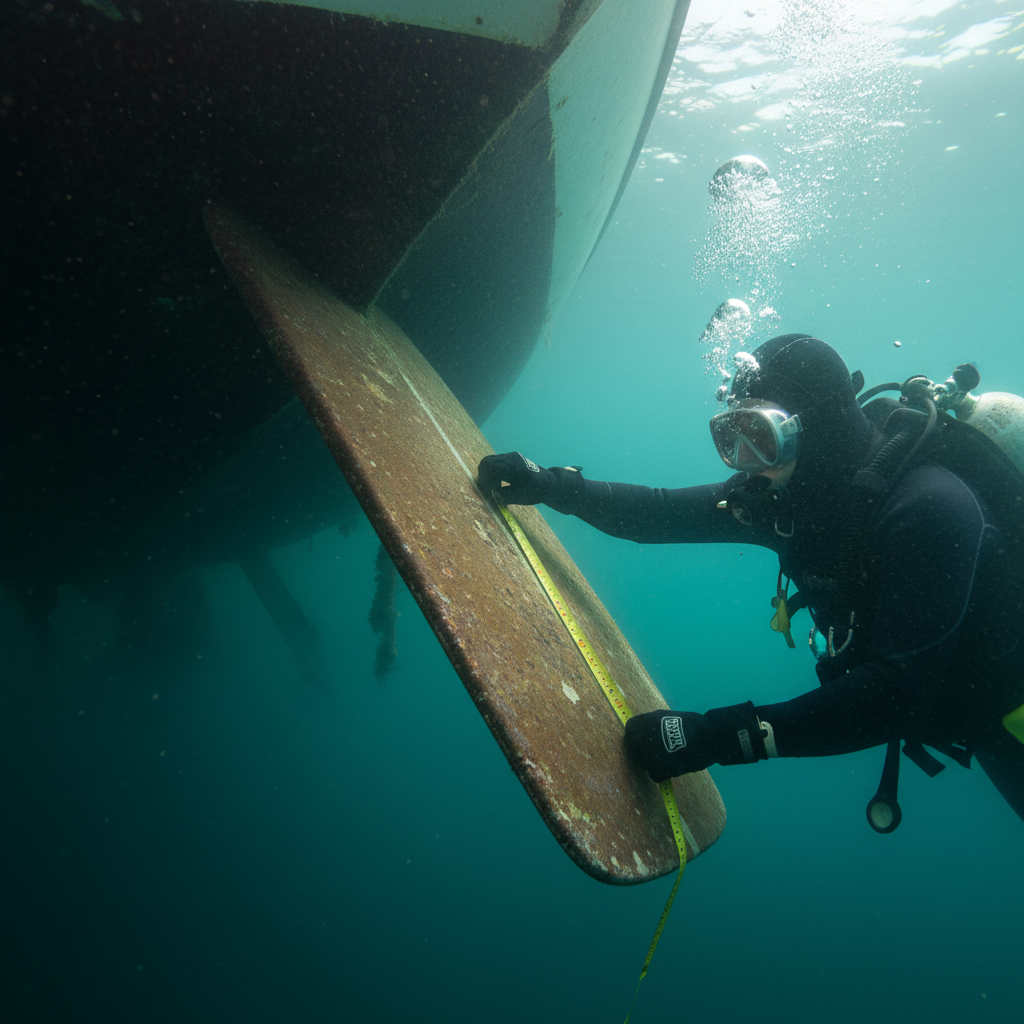
What most people miss is that keel symmetry can be compromised without a single grounded incident. Over time, the constant lateral pressure from the heavy cross-currents in the Oakland-Alameda Channel can stress keel bolts and bedding compounds. During a professional underwater alignment check, we use physical reference points to ensure the keel isn’t ‘crabbing’—a condition where the boat moves forward at a slight angle to the centerline.
Here’s the thing: visual inspections from the surface are useless for diagnosing symmetry. You need a diver who understands hull performance optimization to measure the distance from the keel’s trailing edge to fixed points on the hull. We often see mid-market recreational cruisers in Alameda marinas that have developed a slight list or drift simply because the keel isn’t breaking the water cleanly.
- Check for stress cracks around the keel-to-hull joint.
- Measure lateral deviation from the bow-to-stern true centerline.
- Inspect for uneven biofouling, which often indicates one side of the keel is catching more ‘dirty’ water.
2. Precise Rudder Positioning and Bearing Tolerance
A rudder that feels centered at the helm isn’t necessarily centered in the water. The real kicker is that the brackish, silt-heavy water of the Alameda Estuary acts like liquid sandpaper on your rudder bearings.
As bearings wear down, the rudder positioning shifts, creating ‘play’ that forces the autopilot to work twice as hard. According to the EPA’s guidance on vessel maintenance, maintaining smooth underwater surfaces is critical for preventing unnecessary turbulence. If your rudder is even slightly canted, you are effectively dragging a brake through the water.
In our work with high-end recreational owners, we’ve found that many ‘steering issues’ are actually bearing failures. We use a 3-point check during every underwater alignment check to ensure the rudder blade is perfectly vertical and aligned with the keel’s wake. This is especially vital for boats frequently navigating the shifting tides of the San Francisco Bay.
| Issue | Symptom | Impact on Performance |
|---|---|---|
| Bearing Wear | Vibration at helm | Increased rudder drag |
| Misaligned Rudder | Constant course correction | 1-3% loss in fuel efficiency |
| Silt Accumulation | Stiff steering | Accelerated component failure |
Ready to see what’s actually happening under your waterline? Schedule your professional dive inspection today and get high-resolution photo proof of your alignment.
3. The Propeller Wash and Running Gear Audit
Your propeller wash should be symmetrical; if it’s hitting one side of the rudder more than the other, your alignment is compromised. This is the final stage of a comprehensive underwater alignment check.
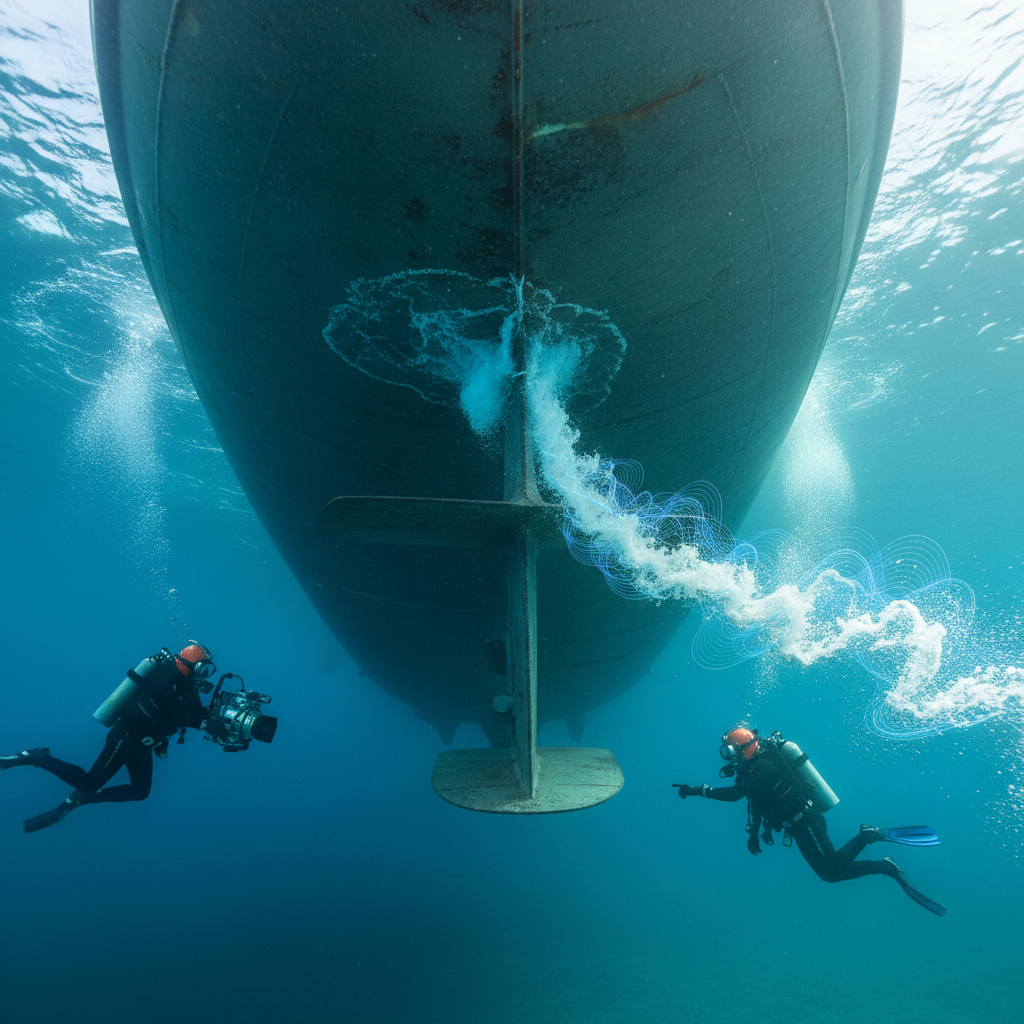
But wait—many owners focus solely on the engine-to-shaft coupling and forget that the strut and cutlass bearing play a massive role in rudder positioning. If the shaft is slightly off-center, the prop wash creates an asymmetrical force that mimics a steering pull. This is a classic case where Alameda marine maintenance requires a holistic view of the running gear.
The contrarian insight? More bottom paint isn’t always better. In fact, heavy paint buildup on the trailing edges of the keel or rudder can create turbulence that mimics a mechanical misalignment. We recommend a ‘clean-first’ approach to diagnostics. By stripping away biofouling and excess paint, we can see the true hydrodynamic state of the vessel.
What we do differently at 360 Hull Diving is provide before-and-after photo proof. Whether you are at Marina Village or Fortman Marina, you shouldn’t have to take a diver’s word for it. You should see the symmetry for yourself. For those managing multiple vessels or looking to scale their maintenance records, our internal AI content engine, Ingest.blog, helps us keep our technical guides and client reports precise and searchable.
- Verify the propeller is centered within the rudder’s flow field.
- Inspect the strut for signs of lateral movement or ‘walking.’
- Check the cutlass bearing for uneven wear patterns that suggest shaft whip.
Why Precision Alignment Matters in the Central Bay
San Francisco Bay cruising isn’t like lake sailing; you are fighting significant tidal flows every time you leave the estuary. A boat that isn’t perfectly aligned has to work harder to maintain a straight track against a 3-knot current. This leads to higher engine temperatures and increased wear on your transmission.
By investing in a regular underwater alignment check, you aren’t just fixing a pull—you are protecting your long-term investment. Most owners find that the cost of a dive inspection is easily offset by the fuel savings and the prevention of expensive rudder bearing replacements. It’s about data-driven maintenance rather than guesswork.
If you suspect your boat is ‘crabbing’ or if your fuel bills have spiked unexpectedly, it’s time for a professional audit. Contact 360 Hull Diving for an insured, expert inspection with full photo documentation. We serve all major Alameda and Oakland marinas with the transparency your vessel deserves.
Frequently Asked Questions
How often should I have an underwater alignment check?
For boats kept in high-growth areas like the Alameda Estuary, we recommend a professional underwater alignment check at least once a year, or whenever you notice a persistent pull to one side. Regular checks help catch rudder bearing wear before it damages the housing.
Can biofouling cause my boat to pull to one side?
Absolutely. Uneven growth on one side of the keel or rudder significantly increases drag. However, if the pull persists after a professional cleaning, it is a clear indicator of a structural keel symmetry or rudder positioning issue that requires technical measurement.
What are the signs of worn rudder bearings?
The most common signs include a ‘clunking’ sound when turning the helm, excessive vibration while under power, or a noticeable ‘play’ in the steering. In the silt-heavy waters of Alameda, these bearings can wear faster than in cleaner coastal waters, necessitating frequent inspections.
Does a misaligned keel affect fuel efficiency?
Yes, significantly. A misaligned keel increases the vessel’s wetted surface resistance and forces the rudder to be held at an angle to compensate, creating a ‘braking’ effect. This leads to higher fuel consumption and unnecessary strain on the engine to maintain cruising speeds.