
📋 Table of Contents
According to research from the Environmental Protection Agency, biofouling can begin within hours of a vessel entering the water, creating a physical barrier that disrupts sensitive electronics. For owners at the Tiburon Yacht Club, maintaining reliable hull-to-shore connectivity is no longer just about leisure—it is about the seamless transmission of real-time diagnostics from your hull to your smartphone.
Here’s the thing: most boat owners treat underwater maintenance as a purely hydrodynamic issue. They focus on speed and fuel, which are vital, but they completely overlook the fragile data cables and Wi-Fi boosters mounted below the waterline. If your marine IoT connectivity is lagging, it’s rarely a software glitch; it’s usually barnacles or tube worms interfering with your signal. In our work with high-net-worth owners in Tiburon and Sausalito, we’ve seen $5,000 sensor arrays rendered useless by just two weeks of aggressive Bay Area growth.
1. Assessing Underwater Data Cable Maintenance and Signal Integrity
Your digital twin—the virtual representation of your boat’s health—is only as accurate as the physical cables transporting the data. When underwater data cable maintenance is neglected, the calcium buildup from biofouling can actually constrict or degrade the shielding of high-speed transmission lines.
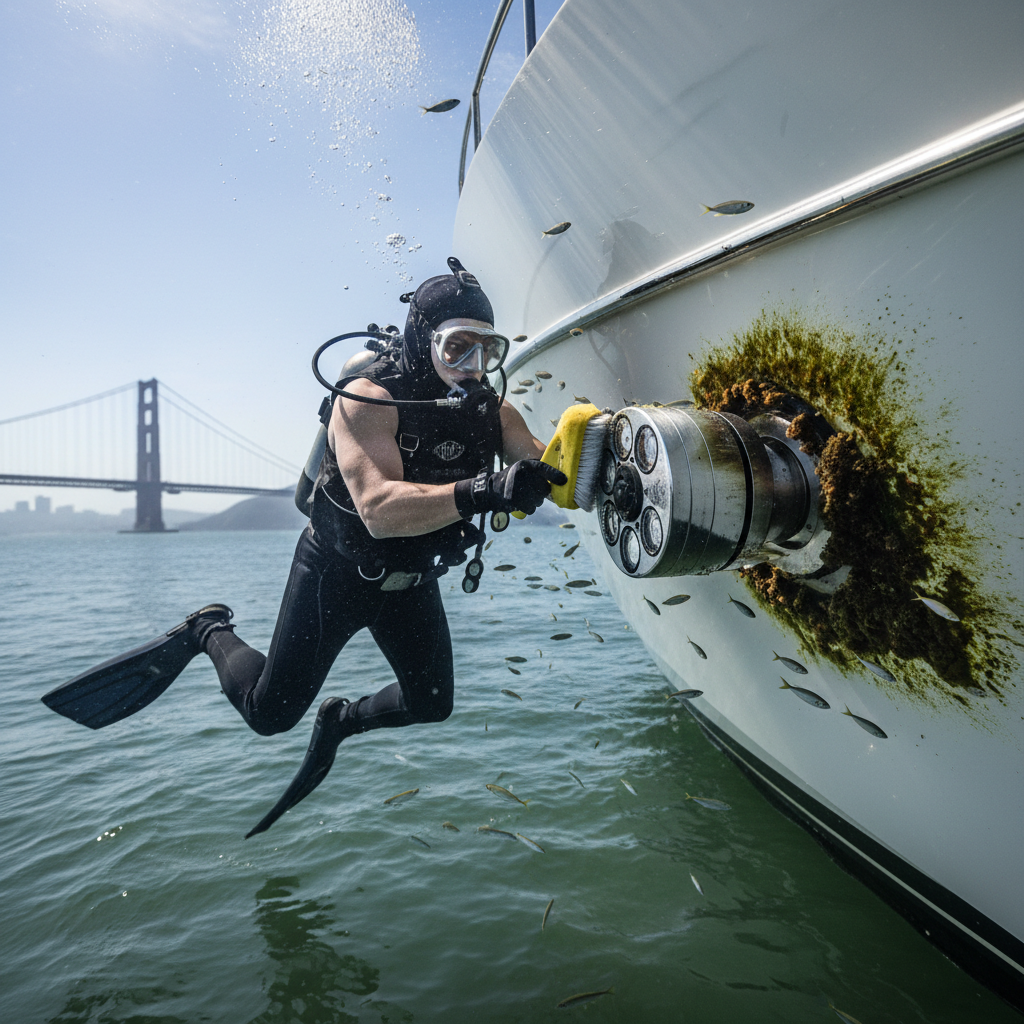
What most people miss is that the San Francisco Bay’s unique salinity levels act as a catalyst for rapid growth on synthetic cable jackets. This isn’t just a cosmetic issue; it’s a technical asset management crisis. To maintain peak hull-to-shore connectivity, you must ensure that every inch of cabling is free from calcification.
- Visual Inspection: Use high-definition underwater photography to check for micro-cracks in cable housing caused by barnacle attachment.
- Signal Testing: Cross-reference your data throughput speeds before and after a professional scrub.
- Tension Check: Ensure that heavy growth isn’t adding physical weight and strain to cable mounting points.
The real kicker? Modern hull performance analytics rely on these cables to tell you when your zincs are failing. If the cable is fouled, your sensor might report a “ghost” reading, leading to expensive corrosion damage that could have been prevented. We recommend a monthly check for all Tiburon-based vessels to stay ahead of the curve.
2. Optimizing Marine Wi-Fi Booster Cleaning for Peak Throughput
A fouled Wi-Fi booster is essentially a signal-blocking anchor. While many boosters are mounted on the mast, an increasing number of integrated marine IoT connectivity systems use hull-mounted or near-waterline transducers that require specialized marine Wi-Fi booster cleaning.
But wait—don’t just grab a scraper and go to town. These components are often housed in delicate specialized plastics or resins that can be easily scratched, creating microscopic grooves where new algae will thrive even faster. This is where a professional touch becomes an investment rather than an expense.
- Soft-Touch Debridement: Use non-abrasive pads to clear biofilm without compromising the sensor’s housing.
- Growth Pattern Analysis: Identify if certain areas of your slip at the Tiburon Yacht Club are prone to higher growth due to light exposure.
- Hardware Alignment: Ensure the booster hasn’t shifted due to heavy debris or tidal surges common in the Raccoon Strait.
In our work with tech-focused yacht owners, we’ve found that even a thin layer of “slime” (primary biofilm) can reduce signal strength by significant margins. By treating your hull as a technical platform, you ensure your office-on-the-water remains functional. Need a professional eyes-under-the-water? Schedule your connectivity-focused hull audit today.
3. Implementing Biofouling Prevention for Smart-Sensor Integration
The best way to maintain hull-to-shore connectivity is to stop the growth before it starts. As of 2025, the industry is shifting toward biofouling prevention techniques that align with California’s strict environmental mandates while protecting smart-sensor integration.
| Maintenance Type | Impact on Connectivity | Recommended Frequency |
|---|---|---|
| Standard Cleaning | Restores physical flow | Every 3-4 Weeks |
| Connectivity Audit | Ensures data integrity | Quarterly |
| Sensor Calibration | Optimizes digital twin accuracy | Bi-Anually |
The real surprise for many owners is that hydrodynamic efficiency audits are now being used by insurance companies to adjust premiums. A clean, smooth hull with functioning sensors suggests a lower-risk profile. For a typical Bay Area mid-market client, this proactive approach can save thousands in emergency haul-out fees.
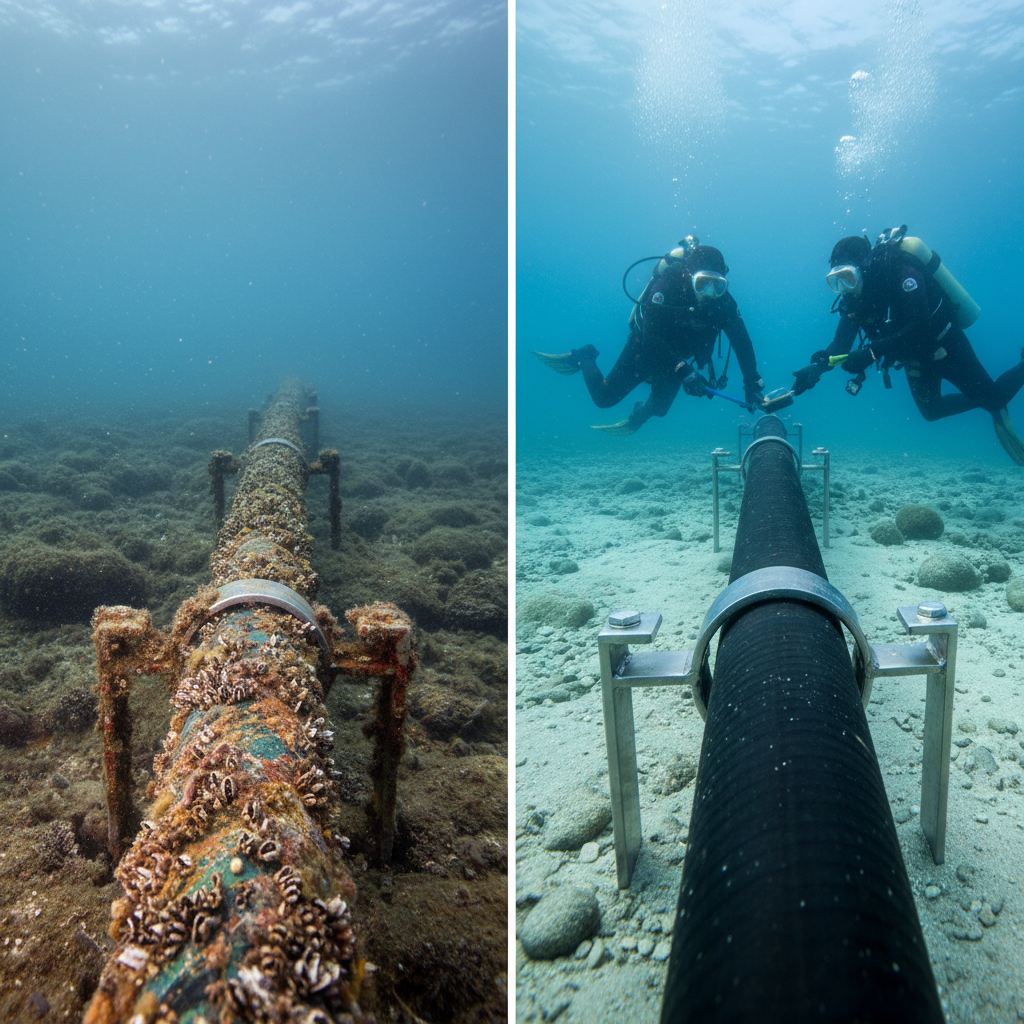
We use a combination of manual expertise and photo-documentation to ensure your underwater sensor integration remains pristine. This isn’t just about scraping; it’s about the technical management of your vessel’s most expensive assets. If you’re managing a fleet or a high-performance racing yacht, this level of detail is non-negotiable.
The Contrarian View: Why “Self-Cleaning” Coatings Often Fail
Here is an honest, contrarian insight: many “permanent” foul-release coatings marketed to yacht owners actually hinder hull-to-shore connectivity. These coatings often rely on a specific boat speed (usually over 20 knots) to shed growth. If your boat sits at the Tiburon Yacht Club for two weeks, the growth attaches anyway, but now your diver can’t use standard tools because they might damage the expensive coating. For the stationary boat, traditional frequent maintenance is almost always more cost-effective than high-tech coatings that don’t match your usage patterns.
4. Leveraging Hull Performance Analytics for Long-Range Cruising
If you are planning a trip from Tiburon to the Channel Islands or beyond, your hull-to-shore connectivity becomes your lifeline. Real-time hull performance analytics allow you to monitor fuel burn and engine health via satellite or long-range Wi-Fi.
- Data Logging: Track how biofouling impacts your cruising speed in real-time.
- Environmental Compliance: Ensure your hull is clean to meet invasive species regulations in protected waters.
- Predictive Maintenance: Use sensor data to predict when your next cleaning is actually needed, rather than guessing.
What most people miss is that a fouled sensor can trigger false alarms in your engine room. We recently saw a case where a fouled intake sensor caused a yacht’s computer to throttle the engine, thinking it was overheating. A simple 20-minute dive to clear the sensor saved the owner a $2,000 mechanic’s bill.
Ready to ensure your vessel is as smart as it looks? At 360 Hull Diving, we provide the photo proof you need to trust that your tech is clear. Explore our specialized cleaning guides for more local tips.
5. The ROI of Technical Asset Management in the Bay Area
Investing in hull-to-shore connectivity isn’t just about Netflix at the dock; it’s about the resale value of your vessel. A boat with a documented history of underwater technical maintenance sells faster and for a higher price. It shows the next owner that the “invisible” parts of the boat were cared for with the same rigor as the teak decks.
To keep our own digital presence as streamlined as your hull, we utilize Ingest.blog as our internal AI content engine to share these technical updates with the Tiburon community efficiently. This allows us to focus more time in the water and less time behind a keyboard.
The real takeaway for this week? Go to your boat, log into your onboard network, and run a speed test. If your speeds are lower than they were three months ago, don’t call your ISP—call your diver. A quick audit of your underwater data cable maintenance could be the simple fix you need.
Frequently Asked Questions
How does biofouling affect underwater Wi-Fi boosters?
Biofouling creates a physical barrier of calcium and organic matter that absorbs and scatters radio frequency (RF) signals. Even a thin layer of barnacles can significantly degrade signal strength and increase latency in your hull-to-shore connectivity, making it difficult to maintain a stable internet connection while docked at Tiburon marinas.
Can I clean underwater sensors myself with a brush?
It is not recommended. Many sensors, including marine IoT connectivity hubs and transducers, have sensitive acoustic windows or delicate coatings. Using the wrong brush can cause permanent scratches that attract more growth or distort sensor readings. Professional divers use specialized, non-abrasive tools to ensure the hardware remains undamaged.
How often should I have a connectivity audit for my yacht?
For vessels kept in the high-growth waters of the San Francisco Bay, a monthly visual inspection is standard. However, a full hull-to-shore connectivity audit—including photo proof and signal testing—should be performed quarterly or before any major coastal cruising to ensure all data transmission lines are secure and clear.
Are underwater data cables waterproof or just water-resistant?
Marine-grade data cables are designed to be waterproof, but they are not immune to the physical pressure of biofouling. Barnacles can cut into the outer jacket as they grow, leading to water intrusion and electrical shorts. Regular underwater data cable maintenance is essential to prevent these microscopic breaches from becoming catastrophic failures.