
📋 Table of Contents
According to data from ABYC (American Boat and Yacht Council) standards, cooling system failure remains one of the top three causes of emergency marine engine repairs. For boat owners docked near the St. Francis Yacht Club, where the San Francisco Bay’s nutrient-rich currents accelerate barnacle growth, a hull suction audit is the only reliable defense against a mid-race overheat alarm.
Why Engine Cooling Maintenance Fails in the San Francisco Bay
The real kicker? Most owners assume that because their temperature gauge looks fine at the dock, their cooling system is healthy. However, the high-velocity currents near the Golden Gate Bridge demand significantly higher flow rates than a vessel sitting in a quiet slip at South Beach Harbor.
- Micro-fouling: Small organisms grow inside the grate, reducing diameter and increasing suction resistance.
- Variable Flow Requirements: Engines need exponential water volume as RPMs increase; a 20% blockage can lead to a 100% failure under load.
- Ecological Pressure: The Bay’s unique salinity levels create a breeding ground for calcium-heavy biofouling.
What most people miss is that traditional bottom paint does very little to protect the interior of a raw water intake. While the hull stays smooth, the internal through-hull fitting becomes a sanctuary for marine life. For a typical Bay Area mid-market client, this “silent killer” often results in a $15,000 heat exchanger replacement that could have been avoided with a simple hull cleaning guide and regular audits.
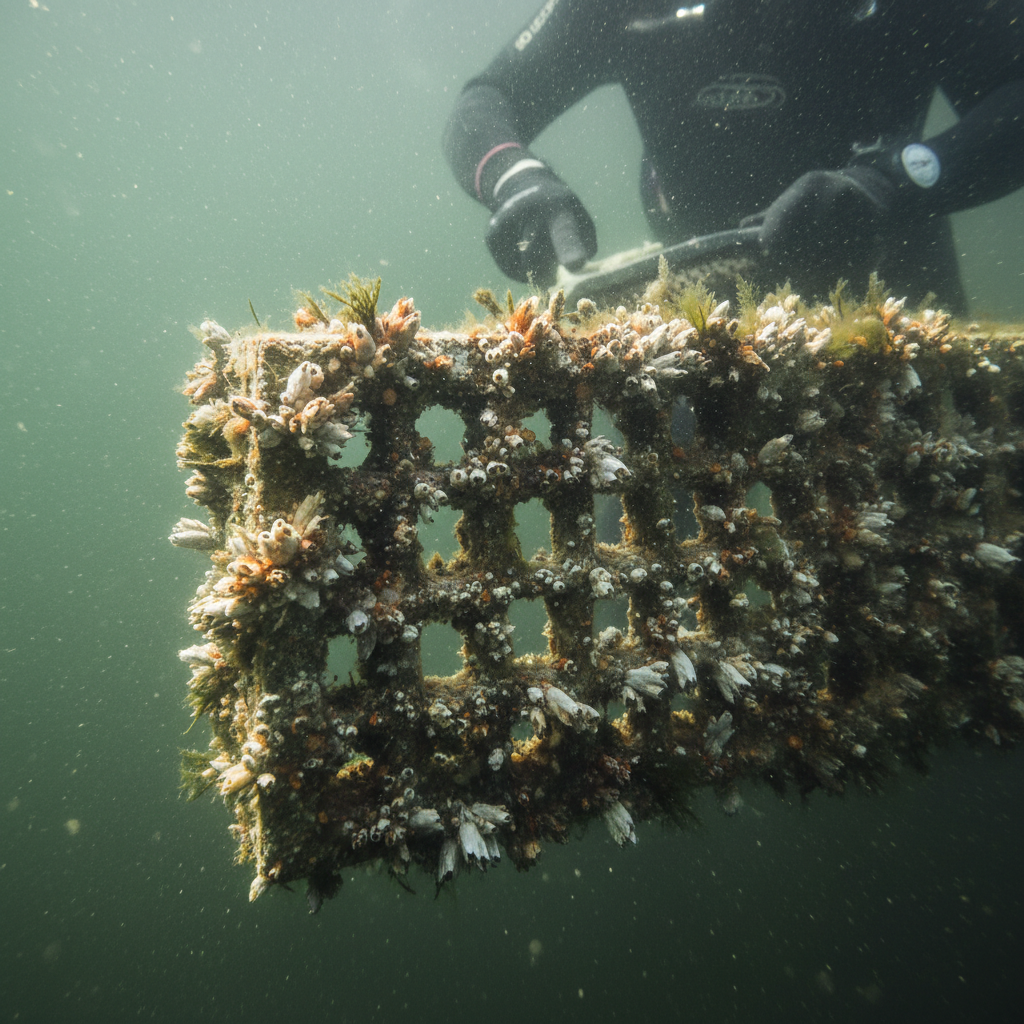
Step 1: Visual Raw Water Intake Inspection and Photo Proof
Transparency is the bedrock of trust, which is why every audit must begin with high-resolution visual evidence of the intake grates. At 360 Hull Diving, we believe that if you can’t see the blockage, you can’t be sure it’s gone.
Here’s the thing: divers often “feel” for growth, but feel is subjective. We utilize specialized underwater cameras to document the state of your through-hull fittings before a single tool touches the boat. This process identifies not just barnacles, but also plastic debris and eelgrass that frequently get sucked into intakes near the Marina District.
- Grate Integrity Check: Ensuring the metal hasn’t suffered from galvanic corrosion.
- Growth Density Mapping: Identifying if the fouling is surface-level or deep within the plumbing.
- Photo Documentation: Providing the owner with a clear “Before” state for insurance and maintenance logs.
According to the EPA’s Vessel General Permit guidelines, maintaining a clean hull isn’t just about performance—it’s about preventing the spread of invasive species. By documenting our raw water intake inspection, we ensure your vessel remains compliant with California’s strict Best Management Practices (BMPs).
Step 2: Mechanical Clearing and Flow Optimization
Clearing an intake requires more than just a scraper; it requires a surgical approach to avoid damaging the internal coatings or the through-hull itself. The goal of engine cooling maintenance is to restore the cross-sectional area of the intake to 100% of its original design.
But wait—many divers make the mistake of only cleaning the exterior grate. The real work happens in the “throat” of the suction. We use specialized nylon brushes and non-marring picks to reach into the fitting, ensuring that the path to the sea strainer is completely unobstructed.
| Fouling Level | Impact on Cooling Efficiency | Recommended Action |
|---|---|---|
| Light Slime | 5-10% Reduction | Standard Monthly Cleaning |
| Barnacle Encrustation | 30-60% Reduction | Full Hull Suction Audit |
| Complete Blockage | 90-100% Reduction | Emergency Mechanical Clearing |
Need help ensuring your boat is ready for the next heavy tide? Schedule your professional hull suction audit today to get photo-verified peace of mind.
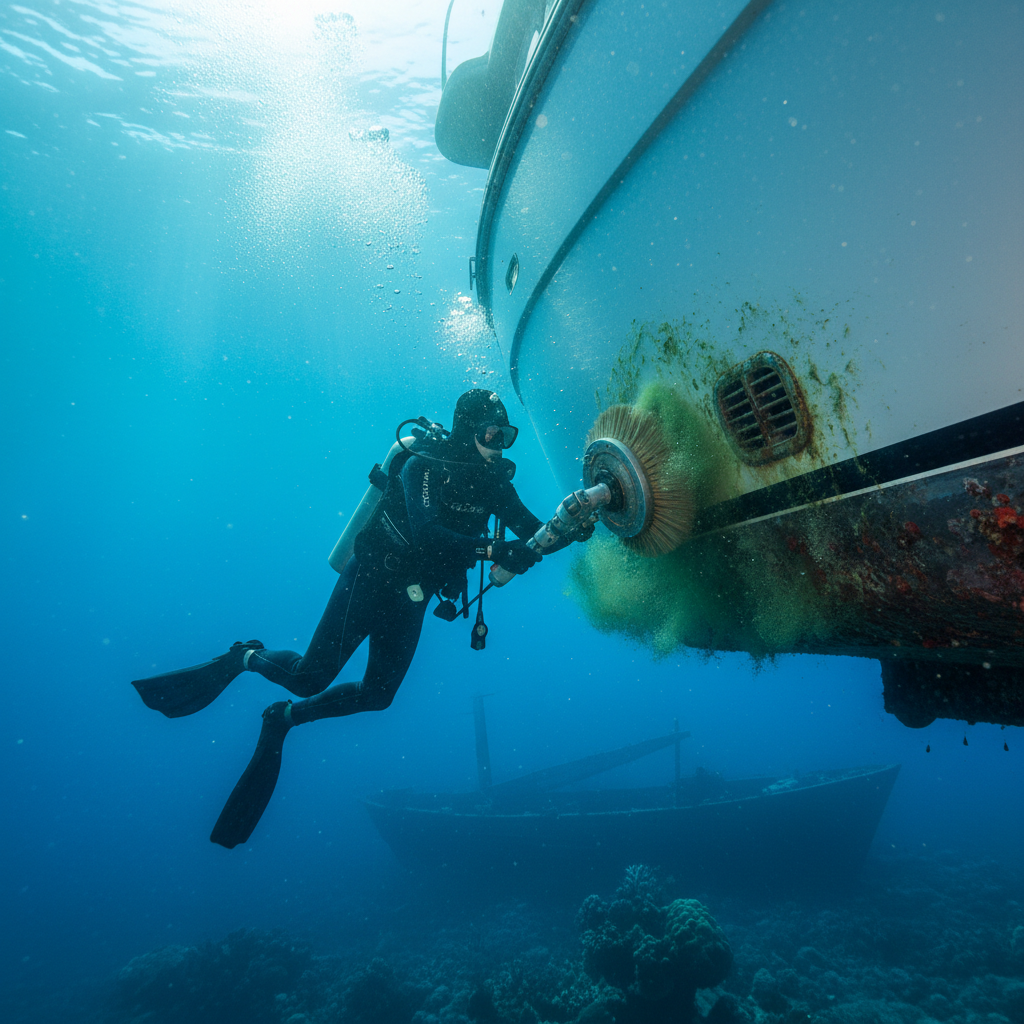
Step 3: Post-Service Verification and Zinc Assessment
The final step of a hull suction audit is verifying that the mechanical clearing actually restored the flow. We don’t just swim away; we provide “After” photos and check the status of your sacrificial anodes near the intakes.
The real kicker? Zincs and corrosion protection are inextricably linked to intake health. If your zincs are spent, the through-hull fittings (often made of bronze or stainless steel) can become the target of electrolysis, leading to pitting that actually makes it easier for barnacles to latch on. In our work with Series B SaaS founders who own performance racing yachts, we’ve found that maintaining the zinc and corrosion protection is just as vital as the cleaning itself.
- Verification Photos: Clear shots of every intake showing a 100% clear path.
- Anode Check: Ensuring your through-hulls are protected from the Bay’s high conductivity.
- Service Report: A digital log you can show to your mechanic during your next annual service.
The ROI of Preventative Hull Suction Audits
Investing in a regular hull suction audit is significantly cheaper than the alternative: an emergency tow from the Coast Guard or a melted impeller. In the San Francisco Bay, a boat sitting at the St. Francis Yacht Club for just three weeks in the summer can accumulate enough growth to trigger a high-temp alarm.
Conversational transitions like “But wait” are common in sales, but in marine maintenance, the facts speak for themselves. The U.S. Department of Energy notes that even minor hull fouling can increase fuel consumption by up to 40%. When you clear your intakes, you aren’t just protecting the engine; you’re optimizing your entire vessel’s efficiency.
Ready to see what’s happening under your waterline? Book an inspection with our insured dive team and get the photo proof you deserve.
FAQs About Hull Suction Audits
How often should I have a hull suction audit performed?
For vessels docked at high-growth marinas like St. Francis Yacht Club or Richmond Marina, we recommend a full audit every 3 to 4 months. While standard cleaning happens monthly, a deep-dive audit ensures the internal plumbing remains clear of the stubborn calcification that builds up over time.
Can I just check my sea strainers instead of a dive audit?
Sea strainers only show you what has already passed through the intake. By the time you see debris in the strainer, the intake grate itself might already be 50% blocked by barnacles. A professional audit stops the problem at the source—the exterior through-hull fitting.
Does bottom paint prevent growth inside the intakes?
Standard antifouling paint requires water movement to work effectively and is difficult to apply deep inside small intake holes. Consequently, these areas are often the first to foul. Our mechanical clearing process removes growth that paint simply cannot prevent in the stagnant areas of the intake throat.
What happens if you find damage during the audit?
If our divers identify corrosion, loose grates, or failing through-hulls, we provide immediate photo documentation and a detailed report. This allows you to coordinate with your boatyard for repairs before a minor leak becomes a major safety hazard during a Bay crossing.
Take Action for Your Engine Today
Don’t let biofouling turn your weekend cruise into a costly repair bill. The San Francisco Bay is a beautiful but harsh environment that demands proactive engine cooling maintenance. By implementing a 3-step hull suction audit, you ensure that your vessel is prepared for the strongest ebb tides and the warmest summer days. Contact 360 Hull Diving today to schedule your service and join the ranks of the Bay’s most prepared mariners.