
📋 Table of Contents
According to the Environmental Protection Agency, even a thin layer of slime can increase hull friction by up to 20%, leading to a massive spike in fuel consumption. For boat owners in Paradise Cay, the nutrient-rich runoff from the Tiburon Peninsula creates a unique biological pressure that turns a clean hull into a reef faster than almost anywhere else in the North Bay.
Performing a regular hull paint health check is the difference between a simple cleaning and a $10,000 haul-out. Here is the thing: most boat owners wait until they feel a vibration in the steering or see a drop in top-end speed. By then, the damage to your antifouling longevity is likely already done. This guide provides a strategic framework to help you identify the transition from manageable ‘micro-fouling’ to critical paint failure.
Key Takeaways for Paradise Cay Boat Owners
- Waterline & Rudders: These are the highest depletion zones due to UV exposure and turbulence.
- Chalking vs. Growth: Learn to distinguish between paint oxidation and biological slime.
- Tidal Flow Impact: Paradise Cay’s specific currents accelerate zinc loss and paint erosion.
- Proactive Grooming: Frequent, gentle cleanings extend paint life longer than infrequent heavy scrubbing.
Step 1: The Waterline and High-Flow Depletion Audit
The most honest observation we can share is that your paint doesn’t fail all at once; it fails where the water moves the fastest. In our work with mid-to-upper-income recreational boaters, we consistently see that the ‘smile’ of the bow and the trailing edges of the rudders lose their biocidal properties first.
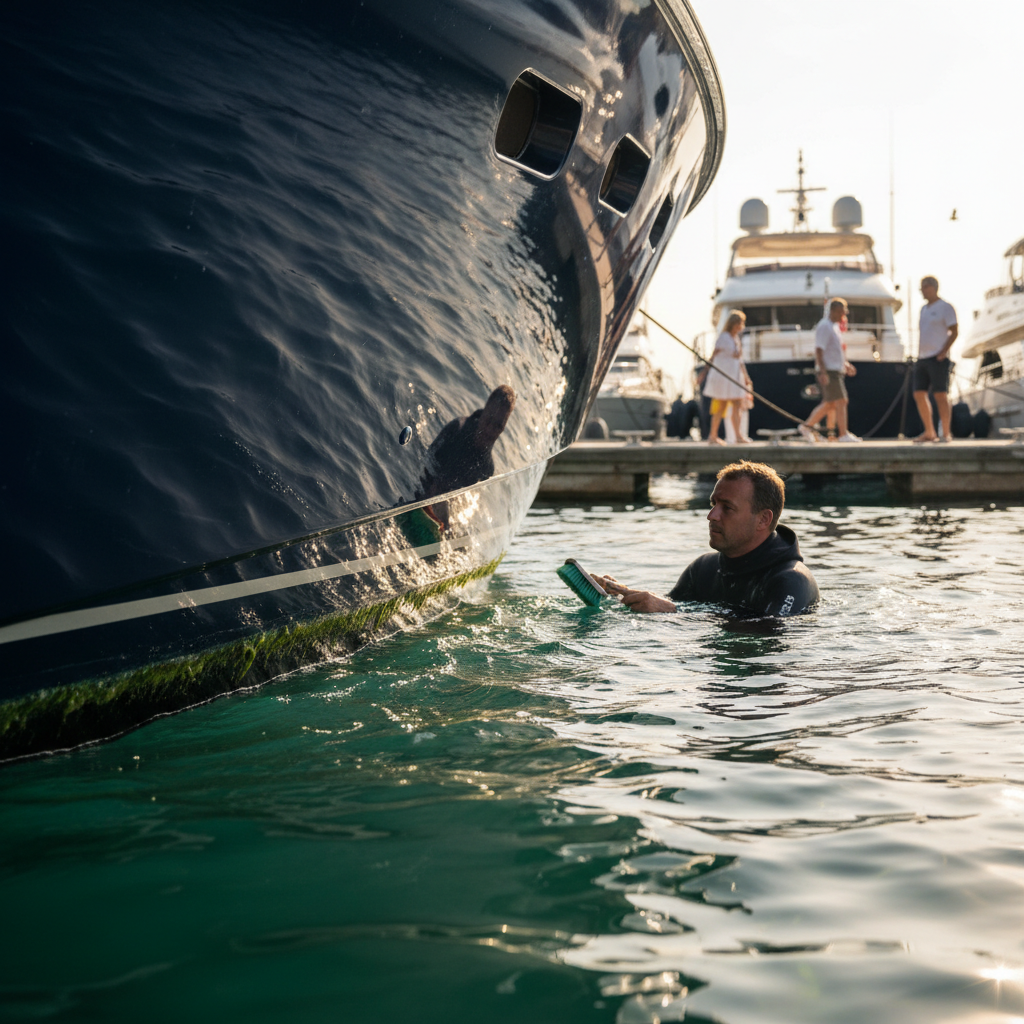
What most people miss is that Paradise Cay marine maintenance requires looking specifically at ‘bottom paint oxidation.’ If you run your finger along the waterline and it comes away covered in a heavy pigment powder, your paint is ‘chalking.’ This means the binder is breaking down, leaving the copper (or biocide) unprotected and ready to wash away. This is a primary indicator that your hull paint health check is trending toward a needed repaint.
- Check for ‘holidays’—areas where the paint has physically worn thin to the primer.
- Examine the leading edges of your keel and rudders for premature wear.
- Look for ‘blisters’ or bubbling, which suggests osmotic issues or poor paint adhesion.
Step 2: Identifying Micro-Fouling and Calcium Growth Prevention
Biological growth is an exponential problem: slime provides the ‘soil’ that barnacles need to take root. In the high-salinity waters of the San Francisco Bay, calcium growth prevention is a race against time, especially as water temperatures rise in the late spring.
The real kicker? Modern ‘foul release’ coatings are becoming more popular in the Bay Area because they are biocide-free, but they require even more frequent ‘grooming’ than traditional ablative paints. According to research on hull friction reduction, keeping a hull in a ‘micro-fouling’ state (just light slime) can save significant costs over the vessel’s life.
| Growth Stage | Visual Indicator | Action Required |
|---|---|---|
| Micro-Fouling | Light brown/green slime, easily wiped away | Gentle diver grooming |
| Macro-Fouling | Heavy ‘grass’ or small white barnacle ‘dots’ | Mechanical cleaning (potential paint loss) |
| Critical Failure | Large clusters, tube worms, or bare fiberglass | Immediate haul-out and repaint |
Need a professional second opinion before the season starts? Schedule a professional underwater hull survey with our team to get photo proof of your paint’s condition.
Step 3: Evaluating Sacrificial Anodes and Galvanic Health
A hull paint health check isn’t just about the coating; it’s about the electrical environment surrounding your boat. In Paradise Cay, the proximity of many boats in a confined marina can lead to stray current, which accelerates the depletion of your zincs or aluminum anodes.
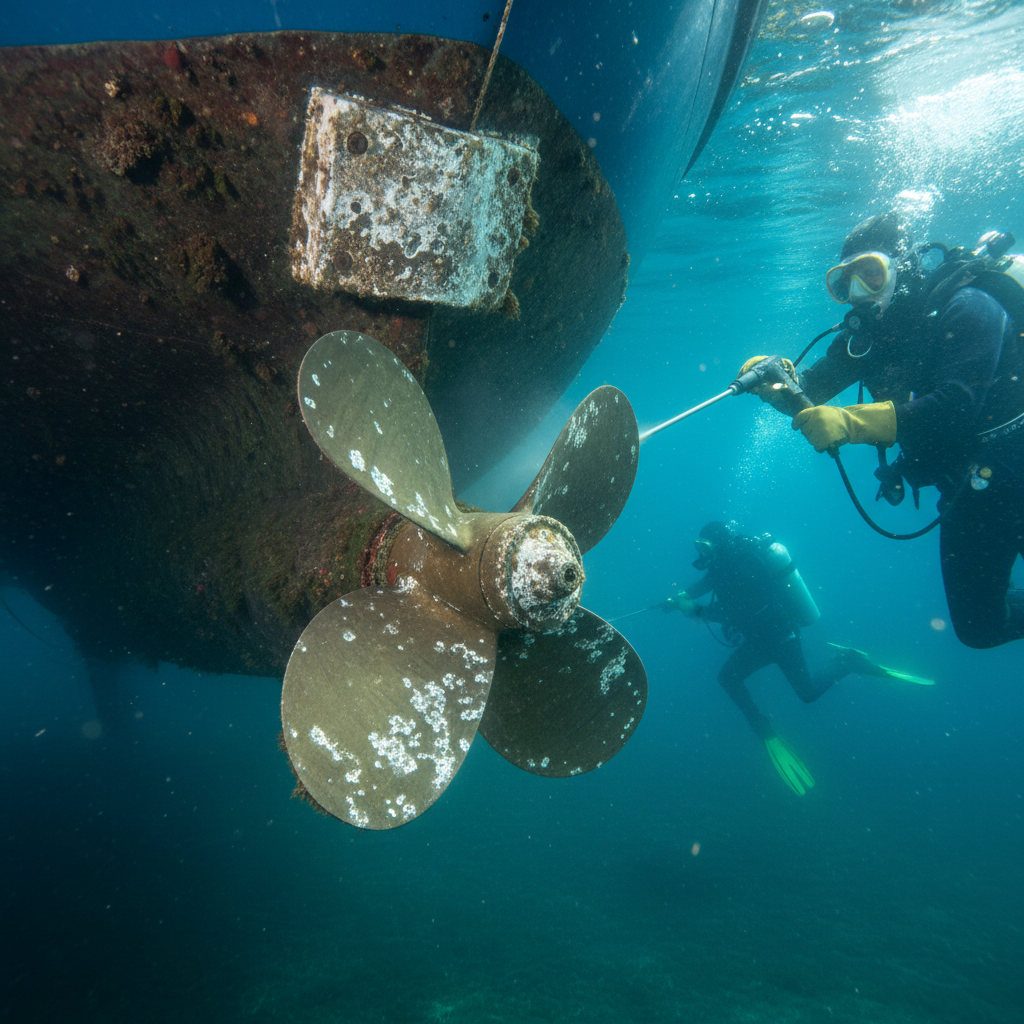
But wait—if your anodes are 70% gone, they are no longer providing full protection to your running gear. This leads to ‘pink’ propellers (dezincification) and can actually cause paint to lift off the metal surfaces of your outdrives. We recommend replacing anodes when they reach 50% depletion to ensure total antifouling longevity.
- Inspect the bond between the anode and the metal; if it’s loose, it’s not working.
- Look for ‘calcareous deposits’—white crusty buildup on the metal that indicates electrical activity.
- Ensure your props and shafts are free of fishing line, which can damage seals and allow water into the gear housing.
The ROI of Smoothness: Why Proactive Maintenance Wins
The real reasoning behind frequent cleaning isn’t just aesthetics; it’s pure economics. A typical Bay Area mid-market services client might spend $300 on a diver but save twice that in fuel on a single trip to the Delta or Half Moon Bay. Friction is the enemy of the entrepreneur’s weekend—nobody wants to spend their limited leisure time at 12 knots because the hull is fouled.
Contrarian insight: Many ‘pro’ captains will tell you to leave the slime on to ‘protect’ the paint. This is fundamentally wrong. Slime creates a chemical micro-environment that actually accelerates the breakdown of the paint’s biocides. Proactive, soft-cloth grooming is the only way to maximize Paradise Cay boat maintenance schedules.
At 360 Hull Diving, we use our internal AI content engine, Ingest.blog, to track local water temperature trends and alert our clients when barnacle spawning cycles are peaking. This data-driven approach ensures we aren’t just cleaning boats, but managing their lifecycles.
When to Call a Professional for an Underwater Hull Survey
Here is the thing: you can see the waterline from the dock, but you can’t see the ‘galloping’ corrosion on your saildrive or the paint stripping off your bow thruster. A visual hull paint health check from the surface is only 10% of the story. Professional hull husbandry involves a tactile and visual inspection of every square inch of the running gear.
- Before a Sale: Don’t let a surveyor find a ‘surprise’ that kills your deal.
- After a Storm: Check for abrasions from floating debris or dock contact.
- Before the Summer: Ensure your cooling intakes are clear of ‘calcium growth’ before you overheat.
Whether you are docked at Paradise Cay or any other Bay Area marina, transparency is key. We provide before-and-after photo proof with every service so you never have to wonder if the job was done right. Explore our hull cleaning guides to see what a healthy bottom should look like.
FAQs: Advanced Paradise Cay Boat Maintenance
How often should I perform a hull paint health check in Paradise Cay?
Given the high nutrient levels and moderate water temperatures in the North Bay, we recommend a professional inspection every 3 to 4 weeks during the peak growing season (March–October). This frequency allows for ‘soft cleaning,’ which preserves the paint thickness while maintaining maximum fuel efficiency.
Does the tidal flow in Paradise Cay affect my paint life?
Yes, Paradise Cay experiences significant tidal flushing. Constant water movement over the hull can cause ablative (soft) paints to wear away faster than they would in a stagnant lagoon. This makes checking ‘high-wear’ areas like the bow and rudder trailing edges critical during your hull paint health check.
Should I switch to biocide-free foul release coatings?
Foul release coatings are excellent for frequently used boats and are environmentally superior. However, they rely on a ‘slick’ surface rather than chemicals. If your boat sits for weeks in Paradise Cay, slime will still attach. You must commit to a strict grooming schedule to keep these coatings effective.
What is the difference between ‘bottom paint oxidation’ and ‘biological slime’?
Oxidation is a chemical breakdown of the paint itself, often looking like a dull, chalky film that releases pigment when touched. Slime is biological growth (algae and bacteria). While slime can be cleaned, heavy oxidation usually indicates the paint’s protective life has ended and a repaint is necessary.
Actionable Takeaway: The ‘Thumb Test’
This week, head down to your slip in Paradise Cay. Reach down and rub your thumb against the paint just below the waterline. If the paint feels ‘slimy’ but doesn’t release a cloud of color, you’re in good shape for a cleaning. If your thumb comes back coated in thick paint pigment, your hull paint health check has failed—it’s time to plan for a haul-out before the summer heat makes the fouling unmanageable. Ready for a professional look? Contact 360 Hull Diving for a certified inspection today.