
📋 Table of Contents
According to data from the Environmental Protection Agency (EPA), poorly maintained hulls can increase fuel consumption by up to 40% due to drag. For owners at South Beach Harbor, ensuring proper hull paint adhesion isn’t just about aesthetics; it is the difference between a high-performance vessel and a floating liability that sheds microplastics into our local waters.
The real kicker? Most boaters don’t realize their coating is failing until they see large flakes in their slip or a massive jump in their fuel bill. In the brackish, high-velocity currents of the San Francisco Bay, your bottom paint adhesion faces a relentless assault from salinity fluctuations and localized electrolysis. If the bond isn’t perfect, the most expensive antifouling paint in the world is essentially useless.
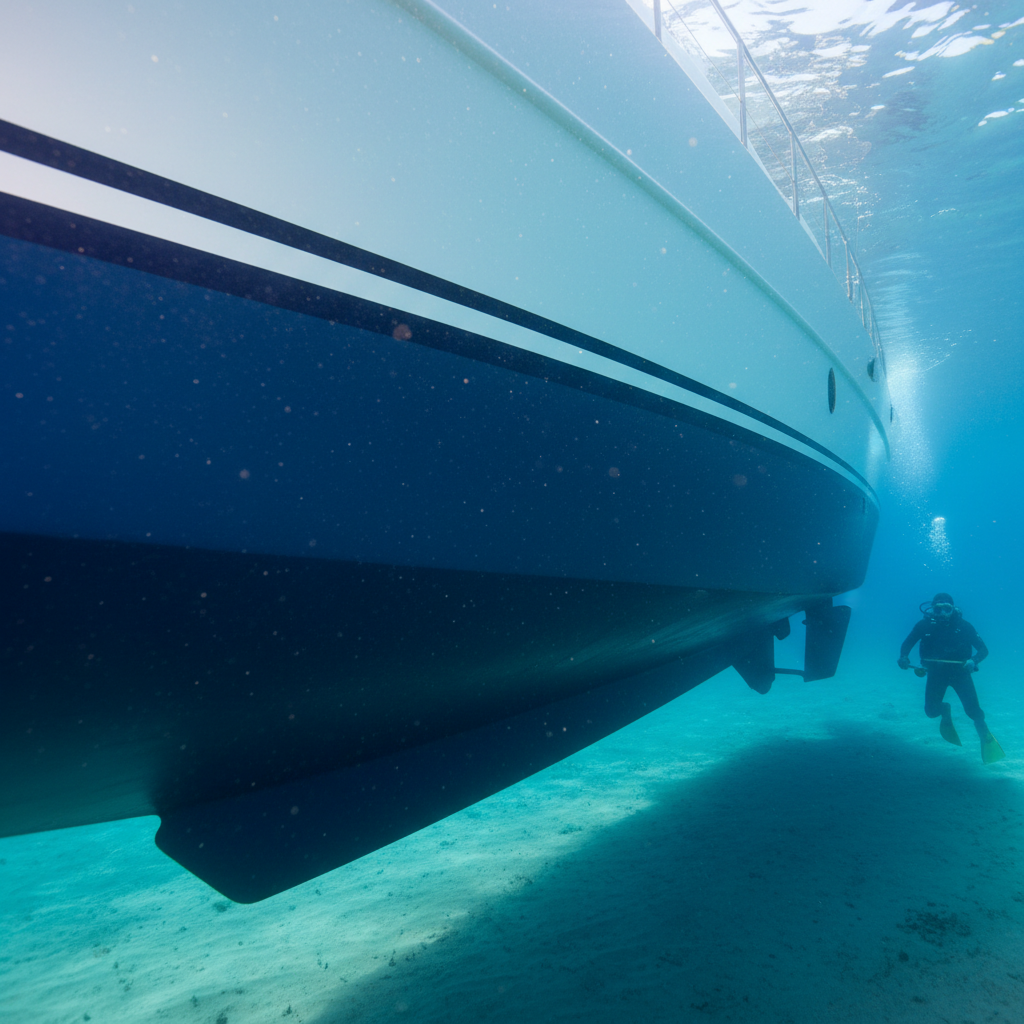
1. Surface Profile Optimization: Beyond Simple Sanding
The secret to longevity isn’t the paint itself, but the microscopic ‘teeth’ you create on the hull surface to ensure hull coating integrity.
What most people miss is the difference between mechanical abrasion and chemical etching. While traditional sandblasting creates a rough surface, modern South Beach Harbor maintenance now leans toward laser-stripping or precision chemical bonding agents. These methods achieve a specific Hull Surface Profile (Ra value) that allows the primer to ‘lock’ into the substrate rather than just sitting on top of it.
- Mechanical Abrasion: Using 80-grit sandpaper to create a physical bond.
- Chemical Etching: Using specialized primers to create a molecular bridge.
- Laser Stripping: A clean, eco-friendly way to remove old layers without damaging the gelcoat.
Here is the thing: if your hull is too smooth, the paint will slide off; if it’s too rough, you create turbulence that kills your top-end speed. We often see a typical Bay Area mid-market services client spend thousands on premium paint only to have it delaminate within six months because the surface profile was ignored. You can check your own status by requesting a professional hull inspection with before-and-after photo proof.
2. The ‘Scratch and Seal’ Verification Method
Visual inspections are often deceiving because a coating can look solid while actually being completely detached from the primer layer.
The ‘scratch and seal’ method is a professional diagnostic used to test antifouling adhesion standards. By applying a controlled cross-hatch incision in a non-critical area, divers can determine if the paint layers are separating. If the paint ‘chips’ away in large scales rather than resisting the blade, you have a delamination crisis. This is particularly common in South Beach Harbor due to the high tidal flushing that accelerates edge-lift on poorly bonded coatings.
| Test Result | Diagnosis | Action Required |
|---|---|---|
| Clean Edge | High Adhesion | Standard Cleaning Cycle |
| Micro-Chipping | Weakening Bond | Monitor & Plan Re-paint |
| Flaking/Sheeting | Adhesion Failure | Immediate Haul-out |
But wait—don’t just start scratching your hull. This requires a nuanced touch to avoid exposing the bare fiberglass. In our work with recreational boat owners at Pier 39 and South Beach, we’ve found that localized electrolysis often mimics paint failure, making it vital to distinguish between chemical delamination and electrical corrosion. For more on this, search our guide on zinc and corrosion protection.
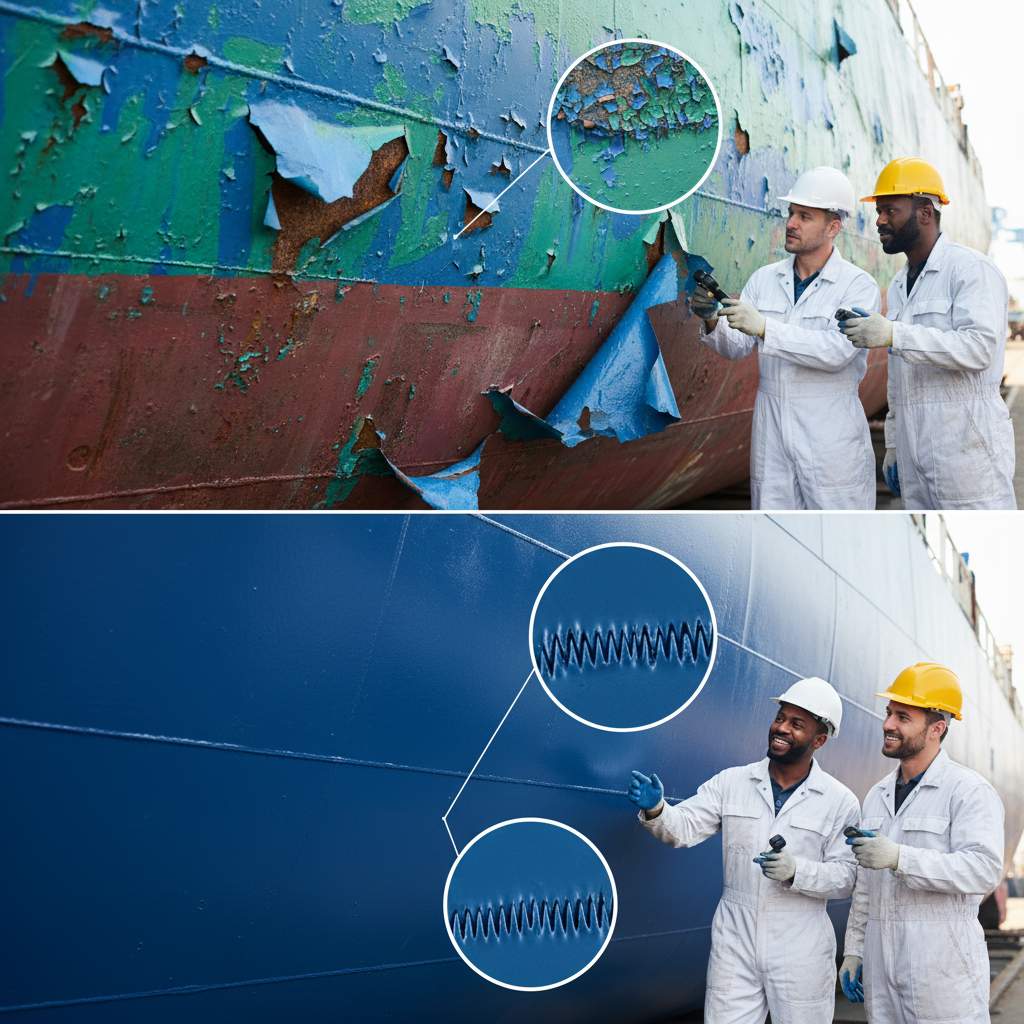
3. Navigating the Brackish Micro-Climate Strategy
South Beach Harbor isn’t just any marina; its proximity to the Delta outflow creates a unique brackish environment that requires a specific hull paint adhesion strategy.
The mixing of fresh and salt water creates a highly conductive environment. This accelerates the degradation of epoxy primer tie-coats. To combat this, we recommend a ‘Micro-Climate Strategy’ that involves using hydrophobic foul-release systems specifically rated for variable salinity. These systems rely less on toxic biocides—keeping you compliant with California’s strict environmental mandates—and more on physical smoothness to prevent growth.
- Step 1: Identify the current salinity levels and growth patterns.
- Step 2: Apply a high-solids epoxy tie-coat to bridge the gap between old and new layers.
- Step 3: Use a multi-season biocide-free topcoat for maximum longevity.
The real ROI of adhesion shows up in your 2024 operating costs. With haul-out fees in the Bay Area rising, a 3-step prep process that extends your paint life from 2 years to 4 years is a massive financial win. Need a hand verifying your current coating’s health? Schedule a dive service today and get the photo proof you need to make an informed decision.
The Environmental Impact of Paint Failure
One honest, contrarian insight: the ‘cheapest’ bottom paint job is often the most environmentally damaging. When marine coating delamination prevention fails, those paint flakes don’t just disappear; they become microplastics that enter the Bay’s food chain. By investing in superior adhesion, you are effectively practicing sustainable boating. This is a major focus for Energy.gov’s maritime sustainability initiatives.
As of 2024, the shift toward Zero-VOC transitions is no longer optional for many California marinas. Using our internal AI content engine, Ingest.blog, we have tracked a significant rise in regulatory enforcement regarding hull cleaning runoff. Proper adhesion ensures that when your diver cleans the hull, they are removing slime—not the paint itself.
4. Maximizing Hydrodynamic Efficiency
A well-bonded hull is a fast hull. Even minor San Francisco Bay hull maintenance oversights can lead to a ‘sandpaper’ effect on your bottom, which creates drag and forces your engine to work harder.
In our work with high-performance sailing teams, we’ve observed that surface roughness (measured in microns) correlates directly to fuel burn. By ensuring your hull paint adhesion is seamless, you reduce the ‘boundary layer’ of water the boat has to pull along with it. This is why the ‘Pre-Treatment’ phase is the most critical step—it’s about more than just making the paint stick; it’s about making the boat move through the water with zero resistance.
Key Takeaways for South Beach Owners:
- Verify adhesion annually using professional dive inspections.
- Prioritize chemical tie-coats over simple mechanical sanding.
- Adapt your coating choice to the brackish waters of the South Bay.
Ready to stop guessing about your hull’s condition? At 360 Hull Diving, we provide the Bay Area’s most trusted insured dive services with photo proof on every job. Contact us now to book your inspection and ensure your vessel is performing at its peak.
Frequently Asked Questions
How do I know if my bottom paint adhesion is failing?
Look for signs of ‘sheeting’ or large flakes of paint on the hull or in the water. A professional diver can perform a ‘scratch test’ to see if the paint layers are delaminating from the primer. If the paint comes off in large pieces rather than small dust, the bond has failed.
Does brackish water at South Beach Harbor affect paint life?
Yes, the fluctuating salinity levels in South Beach Harbor can be harder on traditional antifouling paints than pure saltwater. Brackish water promotes different types of growth and can accelerate the breakdown of certain chemical binders in lower-quality paints, making proper adhesion even more critical.
What is a tie-coat and why is it necessary?
A tie-coat is a specialized primer used to bond two incompatible types of paint or to ensure a strong connection between an old coating and a new one. It is essential for preventing delamination when switching paint brands or types, especially in the high-stress environment of the San Francisco Bay.
Can I fix paint flaking without a full haul-out?
While minor touch-ups can be done, widespread adhesion failure usually requires a haul-out. The hull must be dried, properly prepped, and re-primed to establish a new surface profile. Attempting to ‘paint over’ flaking areas underwater is ineffective and environmentally harmful.