
📋 Table of Contents
Optimizing your boat fuel efficiency is no longer just a matter of environmental stewardship; it is a critical financial strategy for Bay Area powerboaters facing record-high California fuel prices. As you navigate from South Beach Harbor toward the Delta, the invisible resistance beneath your waterline could be costing you thousands in unnecessary overhead.
Key Takeaways for Executive Boaters
- A mere 1mm slime layer can decrease fuel efficiency by up to 20% due to increased friction.
- Bay Area water temperature shifts, particularly during El Niño cycles, accelerate bio-fouling rates in Sausalito and Richmond.
- Professional hull cleaning offers a documented ROI that far exceeds the monthly service cost at current diesel and gasoline prices.
- Photo-documented maintenance is the only way to ensure your running gear is operating at peak performance.
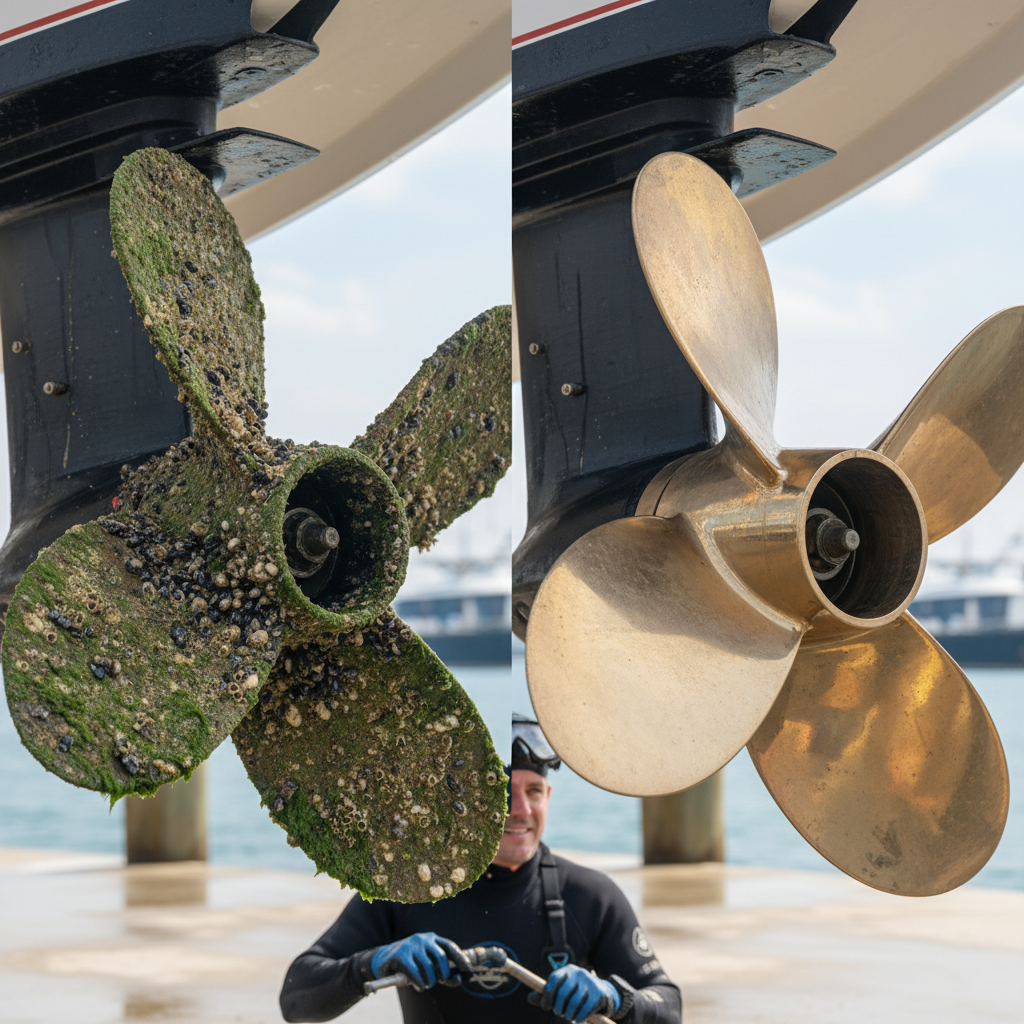
The Science of Marine Growth Drag and Performance Loss
According to research from Nature Scientific Reports, even microscopic changes in surface roughness lead to massive increases in hydrodynamic drag. This phenomenon, known as the “Hidden Fuel Tax,” begins long before you see the first barnacle cluster on your trim tabs.
How Bio-Fouling Stages Impact Your Bottom Line
- The Micro-Slime Layer: This invisible film creates a 10-15% drag increase, forcing your engines to work harder to maintain cruising speed.
- The Weed and Grass Stage: Once green growth appears, usually around the waterline in sunny marinas like Sausalito, drag can spike by 25%.
- Hard Fouling (Barnacles): This stage represents a catastrophic failure of boat fuel efficiency, often resulting in a 40% or higher fuel penalty.
Consequently, many owners at the St. Francis Yacht Club or South Beach Harbor find themselves burning 100 gallons for a trip that should only require 70. This 30% delta is a direct result of neglected underwater surfaces.
Quantifying the ROI: Monthly Cleaning vs. The Fuel Penalty
To understand the financial impact, we must look at the hard data of operating a 40-foot motor yacht in the San Francisco Bay. When we analyze the hull cleaning benefits against the cost of fuel, the numbers favor proactive maintenance every time.
| Service Frequency | Avg. Monthly Fuel Surcharge | Monthly Cleaning Cost | Total Monthly “Tax” |
|---|---|---|---|
| Monthly Professional Cleaning | $0 (Baseline) | $150 – $250 | $250 |
| Quarterly Cleaning | $450 – $600 (20% Drag) | $60 (Amortized) | $660 |
| Bi-Annual Cleaning | $900 – $1,200 (40% Drag) | $30 (Amortized) | $1,230 |
Furthermore, regular zinc and corrosion protection checks during these cleanings prevent expensive running gear failures. By investing in a monthly diver, you are effectively buying a 20-40% discount on your fuel bill.
Regional Micro-Climates: Why Your Marina Matters
Not all Bay Area marinas are created equal when it comes to fouling rates. The salinity and temperature variations between the Golden Gate and the North Bay create unique challenges for boat fuel efficiency.
- Sausalito & Richardson Bay: Higher sunlight exposure and nutrient-rich runoff lead to rapid grass and slime growth.
- Richmond & Berkeley: Variable salinity levels can lead to aggressive barnacle attachment during warmer months.
- South Beach & Embarcadero: Generally more stable, but urban runoff can contribute to localized “blooms” of micro-fouling.
Because these micro-climates exist, a one-size-fits-all approach to maintenance fails. Sophisticated owners utilize customized hull cleaning guides tailored to their specific slip location and vessel usage patterns.
The Impact of 2024 California Eco-Regulations
New environmental standards regarding copper leaching and in-water grooming have changed the landscape for underwater hull maintenance California. As of 2024, the focus has shifted from aggressive scrubbing to gentle “grooming” techniques.
Modern Maintenance Strategies
- Frequent Light Grooming: Removing slime before it hardens prevents the need for abrasive cleaning that removes expensive anti-fouling paint.
- Foul-Release Coatings: Many Bay Area owners are transitioning to silicone-based coatings which rely on hull speed to shed growth.
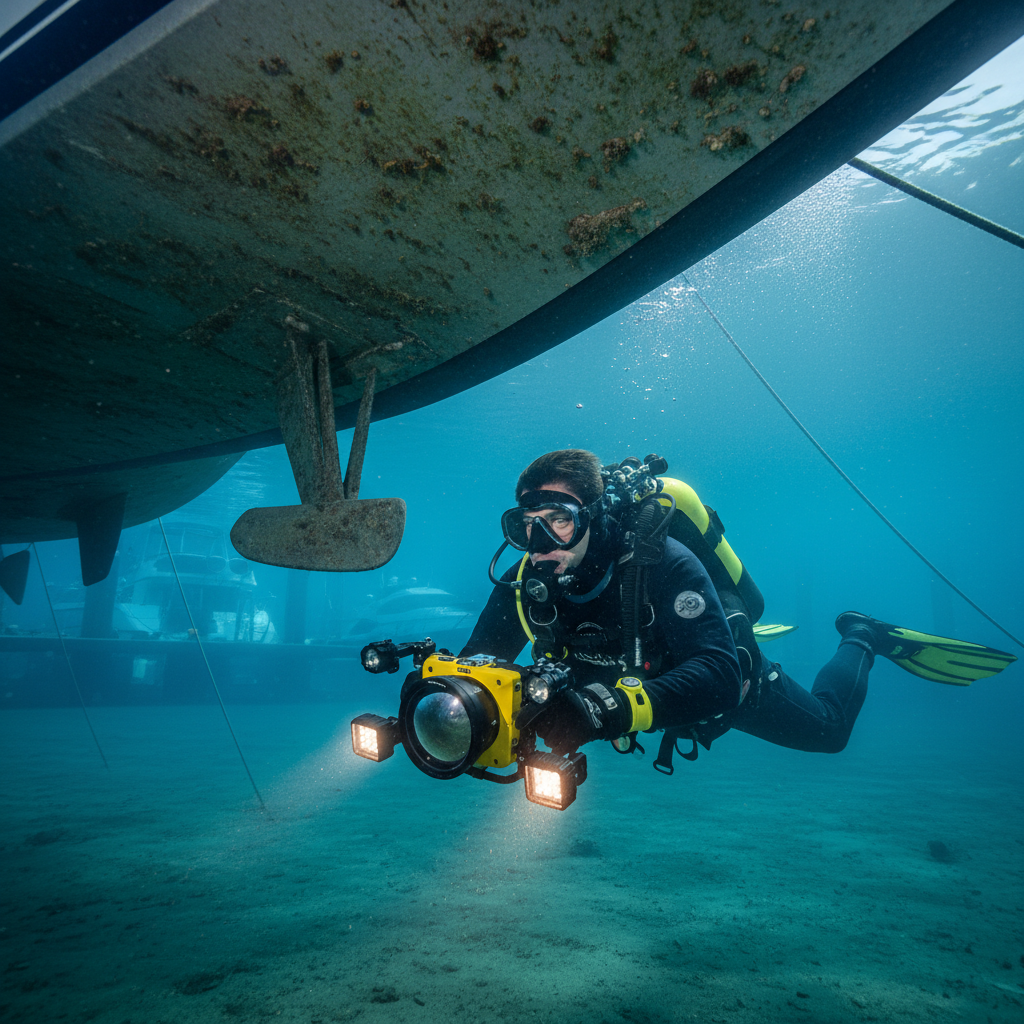
- Insured Dive Teams: Using a professional, insured team ensures compliance with local marina regulations and provides photo-proof of work.
Transitioning to these methods not only protects the Bay’s ecosystem but also extends the life of your hull coating. This dual benefit is a hallmark of strategic asset management for high-net-worth boat owners.
Predictive Maintenance: The Future of Hull Performance
Strategic leaders at growth-stage companies understand that predictive data beats reactive fixes. By monitoring local water temperatures and El Niño trends, we can forecast when marine growth drag will be at its peak.
As noted by The Maritime Executive, digital monitoring and regular physical inspections are the only way to maintain a competitive edge in vessel efficiency. For the recreational boater, this means scheduling cleanings before the spring bloom, not after your boat feels sluggish.
The 360 Hull Diving Advantage
- Transparency: We provide before-and-after photo proof of every service, from the propeller to the intake grates.
- Reliability: Our team is locally rooted in the Bay Area, serving marinas from San Francisco to Alameda.
- Efficiency: We focus on the high-impact areas that affect your boat fuel efficiency most, such as running gear and through-hulls.
Don’t let the “Hidden Fuel Tax” erode your weekend enjoyment or your maintenance budget. By partnering with a professional dive team, you ensure your vessel is always ready for a smooth, efficient run to the Delta or a sunset cruise past the Golden Gate.
Frequently Asked Questions
How much can hull cleaning really improve my boat fuel efficiency?
Professional cleaning can improve fuel efficiency by 20% to 40%. A clean hull minimizes hydrodynamic drag, allowing the engine to achieve higher speeds at lower RPMs. For most Bay Area powerboats, the fuel savings from a single trip to the Delta can often cover the cost of the monthly cleaning service.
Does a boat that rarely leaves the slip still need monthly cleaning?
Yes, stationary boats are actually more susceptible to bio-fouling. Without the natural friction of water moving past the hull, marine organisms like barnacles and tube worms can easily attach. Regular maintenance prevents these organisms from damaging your bottom paint and clogging critical engine cooling intakes.
How do Bay Area water temperatures affect marine growth drag?
Warmer water temperatures, especially during El Niño cycles, significantly accelerate the metabolic rates of marine growth. In marinas like Sausalito or Richmond, a boat can go from a clean state to having a heavy slime layer in as little as two weeks during peak summer months, rapidly increasing drag.
Is photo-proof really necessary for hull cleaning services?
For sophisticated owners, photo-proof is essential for transparency and long-term maintenance tracking. It provides visual confirmation that the running gear is clear, anodes are intact, and no damage has occurred to the hull. This documentation also adds value during the eventual resale of the vessel.