
📋 Table of Contents
For recreational boat owners navigating the San Francisco Bay, the invisible threat of Bay Area bio-fouling is more than an aesthetic nuisance; it is a direct drain on your operational capital. As fuel prices at marinas in Emeryville and South Beach reach historic highs, understanding the relationship between underwater growth and drag is essential for any cost-conscious executive or vessel owner.
The Economic Impact of Bay Area Bio-Fouling on Performance
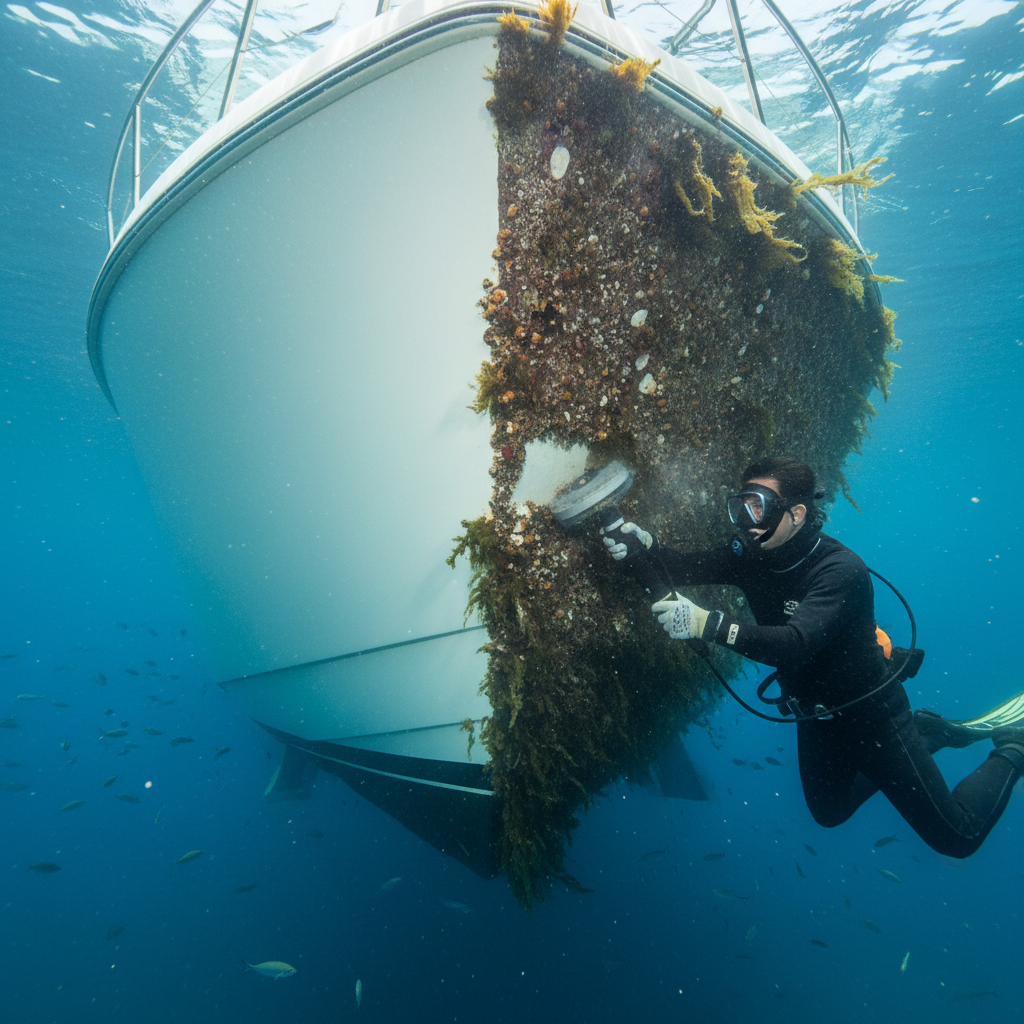
Recent data suggests that even a seemingly negligible layer of slime can significantly alter your vessel’s hull drag coefficient. This biological friction forces your engines to work harder, consuming more fuel just to maintain cruising speeds.
- The 10% Slime Rule: Research from maritime authorities indicates that a thin layer of micro-fouling (slime) can decrease fuel efficiency by up to 10%.
- Barnacle Drag: Heavy calcareous growth, common in the brackish waters of the Carquinez Strait, can increase fuel consumption by a staggering 40% to 80%.
- Engine Longevity: Constant over-revving to compensate for drag leads to premature wear on high-performance propulsion systems.
Why San Pablo Bay Boat Maintenance is Non-Negotiable in 2024
Strategic San Pablo Bay boat maintenance has become more critical due to the unique environmental factors currently affecting Northern California waters. The recent El Niño-driven water temperature spikes have accelerated the reproductive cycles of local barnacle populations.
- Nutrient Runoff: Heavy seasonal rains have increased nutrient levels in the Bay, creating a ‘super-growth’ environment for tubeworms.
- Salinity Fluctuations: The mix of fresh and salt water in areas like Vallejo and Benicia promotes aggressive attachment of invasive species.
- Regulatory Compliance: California’s tightening regulations on in-water hull cleaning and runoff mean that neglecting your hull can result in significant environmental fines.
According to The Maritime Administration, proactive hull grooming is the most effective way to maintain a low drag coefficient. By utilizing a professional dive team that provides before-and-after photo proof, owners at the Berkeley Marina can ensure their investment is protected without the guesswork.
The ROI of Professional Hull Cleaning vs. Rising Fuel Costs
When evaluating the ROI of monthly hull cleaning, one must look at the current fuel surcharges impacting the 2024 boating season. The cost of a professional diver is often offset by a single long-distance cruise to the Farallon Islands or a weekend in Tiburon.
| Fouling Level | Drag Increase | Estimated Fuel Penalty | Action Required |
|---|---|---|---|
| Light Slime | 5-10% | $150 – $300 / mo | Monthly Grooming |
Furthermore, regular inspections prevent the development of permanent hull pitting. Consequently, the long-term resale value of your vessel remains intact, which is a key metric for high-net-worth owners in the Bay Area.
Bay Area Bio-Fouling Micro-Climates: Richmond vs. Sausalito
Understanding local micro-climates is essential for optimizing your maintenance schedule. Your berthing location directly dictates the intensity of Bay Area bio-fouling you will encounter.
- Richmond & San Pablo Bay: High nutrient levels lead to faster ‘hard’ growth (barnacles). Vessels here often require more frequent zinc inspections.
- Sausalito & Tiburon: Higher salinity levels favor different species of bryozoans and tunicates.
- South Bay Marinas: Warmer, shallower waters can lead to rapid algae blooms that choke intake valves.
The ‘Drag Factor’ and Modern Marine Technology
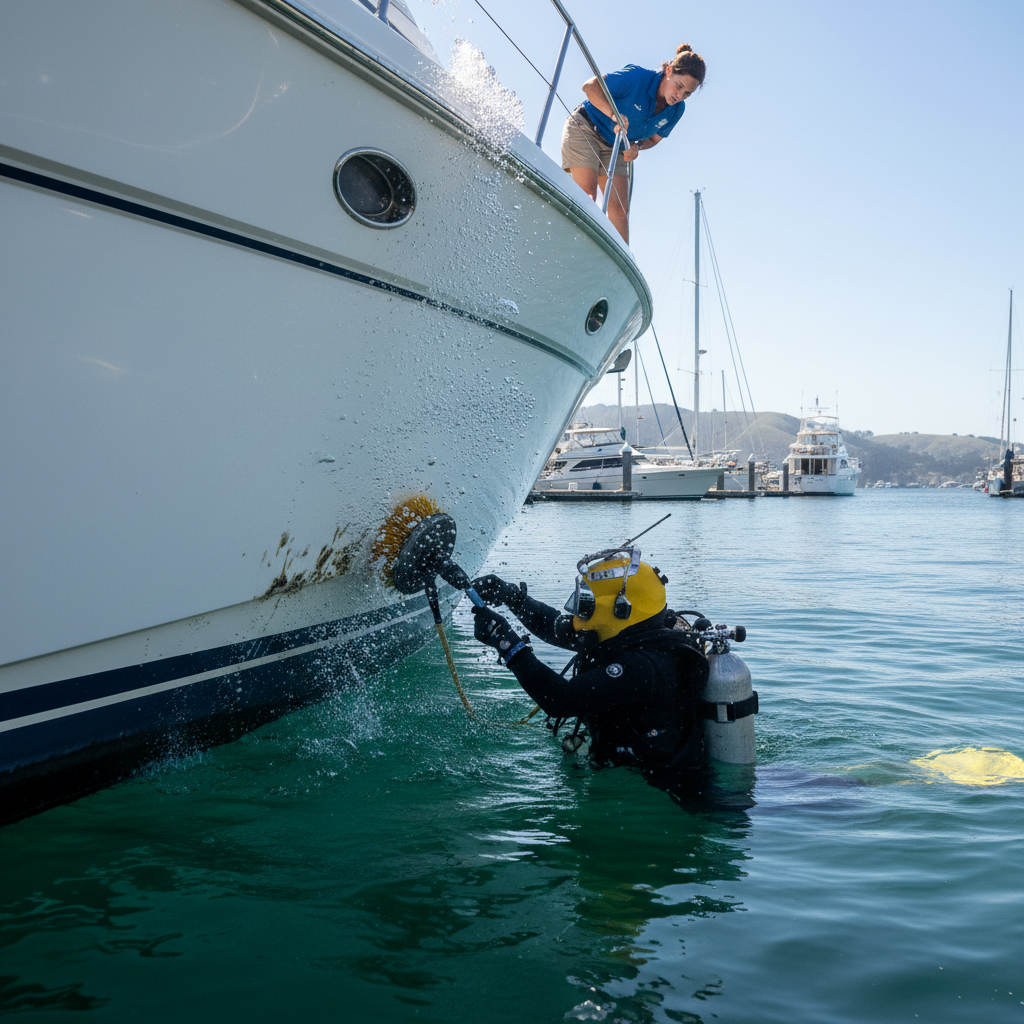
Sophisticated owners are now using real-time fuel consumption monitoring to track their bio-fouling fuel penalty. By integrating smart marine tech with regular corrosion protection, you can visualize the immediate performance gains after a professional cleaning.
Moreover, the shift toward eco-friendly hull coatings requires a delicate touch. Traditional copper-based paints are being replaced by high-slickness foul-release coatings that demand specialized cleaning techniques to avoid damaging the expensive finish.
Key Takeaways for Bay Area Executives
- Efficiency First: Treat hull maintenance as a performance optimization strategy, not just a cleaning chore.
- Transparency Matters: Demand photo evidence to ensure your running gear and intakes are 100% clear.
- Local Expertise: Partner with a dive team that understands the specific growth cycles of the San Francisco Bay.
As noted in a recent study by BoatUS, maintaining a smooth hull is the single most effective way to improve marine fuel economy in 2024. For those docking in Alameda or Oakland, this translates to hundreds of gallons saved over a standard cruising season.
Conclusion: Protecting Your Asset and Your Bottom Line
In conclusion, the ‘hidden fuel thief’ is a manageable risk. By prioritizing professional underwater maintenance, you ensure that your vessel remains a source of pleasure rather than a mounting liability. Whether you are moored in San Rafael or the heart of San Francisco, a clean hull is the foundation of maritime efficiency.
Frequently Asked Questions
How does San Pablo Bay boat maintenance differ from other regions?
The brackish water in San Pablo Bay creates a unique environment where both saltwater and freshwater organisms can thrive. This leads to a more diverse and aggressive fouling profile compared to purely oceanic environments. Frequent monitoring is required to prevent ‘hard growth’ from fusing to your running gear.
What is the typical ROI for monthly hull cleaning in the Bay Area?
For a 40-foot cruiser, the cost of a monthly diver is approximately $150-$250. Given that fuel prices exceed $6.00/gallon at many marinas, preventing a 15% efficiency loss can save an owner upwards of $400 per month in fuel, yielding a 2x return on the maintenance investment.
Can bio-fouling actually damage my engine?
Yes. Beyond fuel costs, bio-fouling on water intakes can lead to engine overheating. Additionally, growth on propellers causes significant vibration, which can damage shaft seals and transmission components over time, leading to expensive dry-dock repairs.
Is photo proof really necessary for underwater services?
Absolutely. For high-growth areas like the Carquinez Strait, ‘out of sight, out of mind’ is a dangerous philosophy. Photo proof ensures that the diver has cleaned critical areas like the bow thrusters and internal intake strainers, providing the transparency that sophisticated owners demand.