
📋 Table of Contents
As of 2024, navigating Ballena Isle Marina shallow-draft challenges has become a primary concern for vessel owners on Alameda’s west side. Recent winter storm runoff has significantly increased sediment deposits, creating a high-risk environment for boats equipped with saildrive propulsion systems. For the sophisticated owner, understanding the intersection of local siltation and mechanical vulnerability is the first step in avoiding catastrophic hull failure.
Key Takeaways for Alameda Boat Owners
- Siltation levels in Ballena Isle have reached critical points, increasing the risk of ‘mud-berthing’ at low tide.
- Saildrive diaphragms are highly susceptible to micro-abrasion from suspended East Bay solids.
- Proactive underwater seal maintenance is 400% more cost-effective than emergency haul-outs.
- Insurance providers are increasingly scrutinizing maintenance logs for saildrive-related claims.
The Hidden Impact of Ballena Isle Marina Shallow-Draft Challenges
Strategic vessel management requires an acknowledgment that the geography of the East Bay is changing. According to the San Francisco Bay Joint Venture, sediment transport patterns have shifted, leading to accelerated shallowing in marinas like Ballena Isle. Consequently, these Ballena Isle Marina shallow-draft challenges are no longer just about keel clearance; they are about the longevity of your engine’s most vulnerable rubber components.
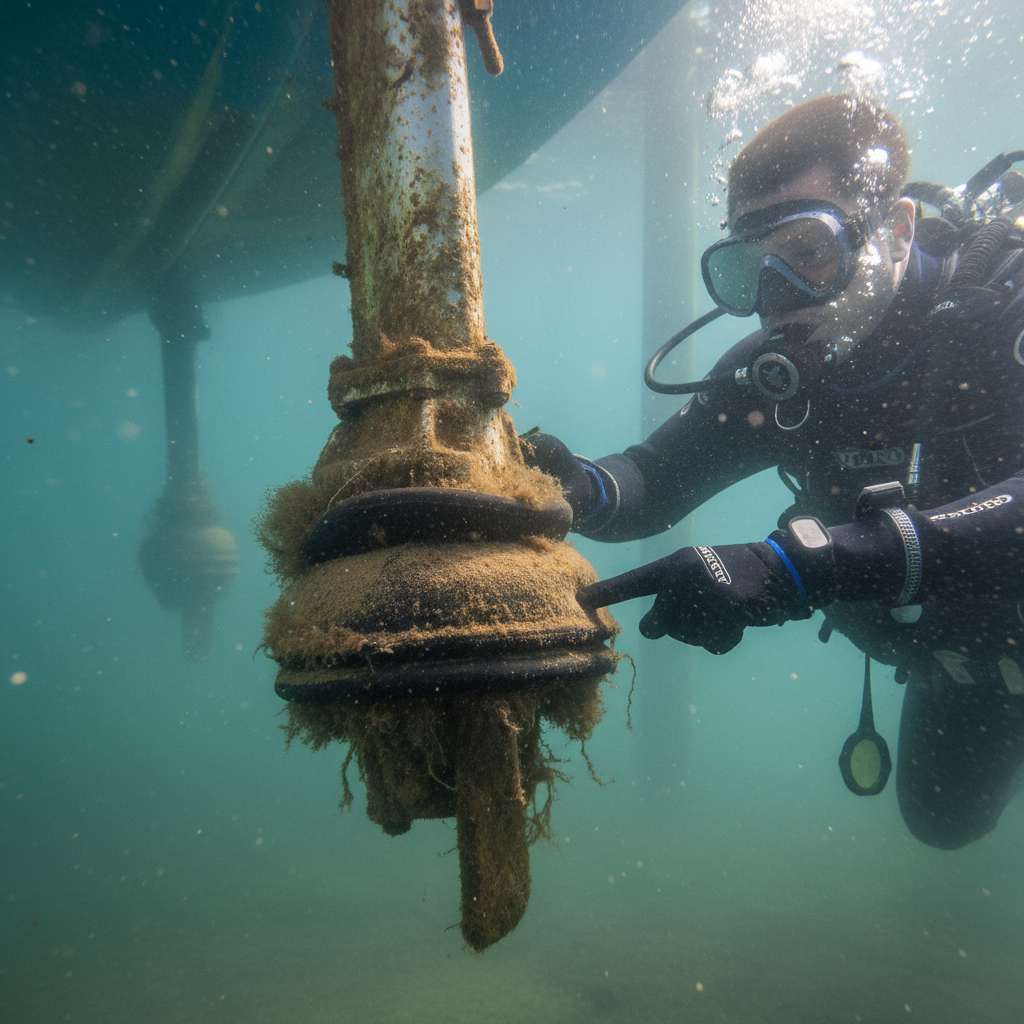
Furthermore, when a vessel sits in mud during a low tide, the saildrive unit acts as a vacuum. Upon engine start, the intake draws in highly abrasive silt. This process creates a ‘sandpaper effect’ against the rubber gaskets and the internal diaphragm that keeps the Pacific Ocean out of your bilge.
Why Silt is Your Saildrive’s Silent Enemy
- Micro-Abrasion: Fine particulates lodge between the hull and the outer seal, wearing down the rubber during every vibration.
- Debris Ingestion: Shallow drafts increase the likelihood of sucking in plastic or organic matter that can puncture a weakened seal.
- Corrosion Acceleration: Silt traps moisture and prevents sacrificial zincs from working efficiently, leading to rapid metal degradation.
Strategic Saildrive Diaphragm Inspection Protocols
To mitigate the risks associated with Ballena Isle Marina shallow-draft challenges, a rigorous inspection schedule is mandatory. Manufacturers like Volvo Penta and Yanmar typically recommend diaphragm replacement every 7 years, but in the abrasive waters of Alameda, this interval should be treated as a maximum, not a target. Industry leaders often suggest that saildrive diaphragm inspection occur during every scheduled bottom cleaning.
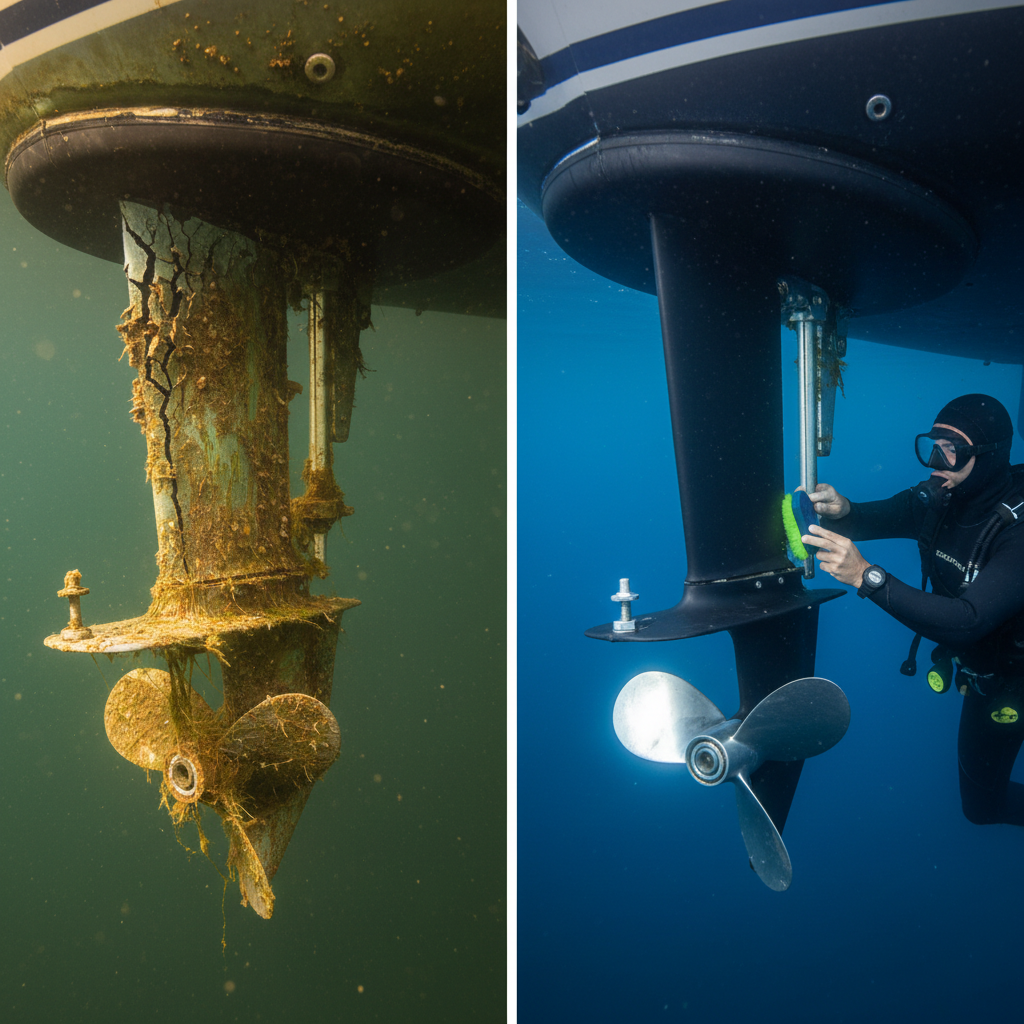
Moreover, the visibility in Ballena Isle can be notoriously poor. This makes professional photo documentation essential. At 360 Hull Diving, we provide before-and-after photo proof because we know that ‘feeling’ a seal isn’t enough for a CEO who values data-driven maintenance.
Need a professional eyes-on assessment of your seals? Schedule your expert saildrive inspection today to ensure your vessel remains seaworthy despite the silt.
Critical Checklist for the Low-Tide Season
- Check the outer rubber fairing for signs of peeling or detachment from the hull.
- Monitor the internal ‘tell-tale’ sensor for any moisture between the inner and outer diaphragms.
- Inspect the saildrive leg for calcium buildup that could indicate a failure of the zinc and corrosion protection system.
- Assess the propeller for cavitation burns, which are common in shallow, oxygen-poor water.
Comparing Maintenance Costs: Proactive vs. Reactive
Financial leaders understand that ROI is found in prevention. The following table illustrates the cost disparity between maintaining a saildrive in a shallow marina versus dealing with a failure.
| Service Component | Proactive Maintenance Cost | Emergency Failure Cost |
|---|---|---|
| Diaphragm Inspection | $150 – $300 | N/A (Included in loss) |
| Diver Cleaning/Zinc Change | $200 – $400 | N/A |
| Emergency Haul-Out & Tow | $0 | $1,500 – $3,500 |
| Full Seal Replacement/Labor | $2,500 (Planned) | $5,000+ (Unplanned) |
| Total Potential Risk | Minimal | $10,000+ (Vessel Total Loss Risk) |
The Diver’s Perspective on Ballena Isle Siltation
Managing Ballena Isle Marina shallow-draft challenges requires local boots—or fins—on the ground. Our divers report that the ‘soft grounding’ occurring at low tides in Alameda is significantly more abrasive than the sand found in Sausalito or Tiburon. This silt contains high levels of clay and organic matter that bond to rubber surfaces, making underwater hull maintenance in Alameda a specialized task.
Additionally, the lack of dredging has created ‘peaks and valleys’ within individual slips. Your neighbor may have 6 feet of clearance while you are resting in 2 feet of mud. This inconsistency makes regular depth sounding and professional underwater surveys a necessity for high-value assets.
Don’t let silt-related wear catch you off guard. Contact 360 Hull Diving for a comprehensive report on your slip’s current depth and your saildrive’s health.
Advanced Underwater Seal Maintenance Techniques
To combat the abrasive environment, we utilize specialized non-abrasive cleaning tools that remove marine growth without scoring the rubber of the saildrive boot. Maintaining the integrity of these seals is the primary defense against the Ballena Isle Marina shallow-draft challenges that plague the East Bay. We also monitor for signs of Yanmar SD60 or Volvo Penta 130S/150S specific wear patterns, which are often exacerbated by the ‘mud-berthing’ scenarios common in the area.
Innovative Solutions for Shallow Slips
- High-frequency cleaning schedules during the winter runoff months (January–March).
- Application of specialized prop-coatings to reduce the adhesion of silt.
- Installation of high-surface-area anodes to counteract the low-oxygen corrosion found in mud.
Insurance and Liability: The Cost of Neglect
It is important to note that many marine insurance policies, including those from providers like GEICO Marine or Progressive, have specific clauses regarding ‘wear and tear’ versus ‘accidental damage.’ If a saildrive diaphragm fails due to a lack of documented underwater seal maintenance, the claim may be denied. By maintaining a digital trail of photo-documented inspections, you provide the ‘due diligence’ required to protect your investment.
Ultimately, the goal is peace of mind. Whether you are sailing out of Ballena Isle, Grand Marina, or Marina Village, the silt doesn’t discriminate. Professional oversight ensures that the Ballena Isle Marina shallow-draft challenges remain a manageable variable rather than a catastrophic event.
Final Steps for Alameda Captains
- Review your last haul-out date and saildrive service records.
- Schedule a professional diver to assess current silt levels in your slip.
- Request high-resolution photos of your saildrive’s outer seal and fairing.
For the elite boat owner, maintenance is a strategy, not a chore. Ensure your vessel is prepared for the unique demands of the East Bay. Book your professional hull and saildrive service with the Bay Area’s most trusted dive team today.
Frequently Asked Questions
How do Ballena Isle Marina shallow-draft challenges specifically affect saildrives?
Shallow water leads to ‘mud-berthing’ where the saildrive rests in abrasive silt. This sediment enters the space between the hull and the seal, acting as an abrasive that wears down the rubber diaphragm during engine operation and vessel movement, significantly shortening its lifespan compared to deep-water slips.
How often should I perform a saildrive diaphragm inspection in Alameda?
While manufacturers suggest longer intervals, the high siltation in Alameda marinas necessitates an inspection every 3-4 months during regular hull cleanings. A full professional survey of the seal’s integrity should be performed annually to check for micro-cracks and brittleness caused by local water conditions.
Can I detect a saildrive leak before my boat starts taking on water?
Yes, most modern saildrives have a water-in-oil sensor or a dual-diaphragm system with an air space in between. Checking the ‘tell-tale’ sensor for moisture and having a diver take photos of the outer rubber fairing can reveal early signs of failure before a catastrophic breach occurs.
Does insurance cover saildrive failure caused by silt abrasion?
Insurance coverage often depends on documented maintenance. If a failure is deemed a result of ‘gradual deterioration’ due to neglected silt buildup, it may not be covered. Providing photo-documented proof of regular maintenance is your best defense in a claim scenario.