📋 Table of Contents
According to the American Boat and Yacht Council (ABYC), stray current corrosion can destroy a drive unit in matter of days, yet most owners don’t realize there is a problem until a haul-out reveals thousands in damage. For Treasure Island liveaboards, performing a hull-to-pier grounding audit is the only way to ensure the marina’s electrical grid isn’t using your boat as its favorite path to ground.
Living on the water in the San Francisco Bay offers unparalleled views, but the high salinity and constant tidal surge at Treasure Island create a high-conductivity environment. This makes your vessel particularly vulnerable to electrolysis. If you’ve noticed your zincs are disappearing faster than usual, you aren’t just dealing with bad luck; you’re likely the victim of a faulty shore power connection.
1. The Visual Baseline: Assessing Sacrificial Anode Replacement Needs
The first step in any hull-to-pier grounding audit is a comprehensive underwater visual inspection to see exactly how hard your anodes are working.
What most people miss is that anodes shouldn’t just “last a season”; they should wear at a predictable rate based on your hull material and local water chemistry. In our work with typical Bay Area mid-market recreational vessels, we often find that boats moored at Treasure Island show 50% more wear than those in protected brackish water. This is why we provide before-and-after photo proof with every dive—it’s the only way to verify if your sacrificial anode replacement schedule is actually sufficient.
- Identify white, powdery buildup on zincs (indicates active protection).
- Check for “pitting” on propellers or shafts (indicates the anodes are failing to keep up).
- Document the percentage of metal loss across all running gear.
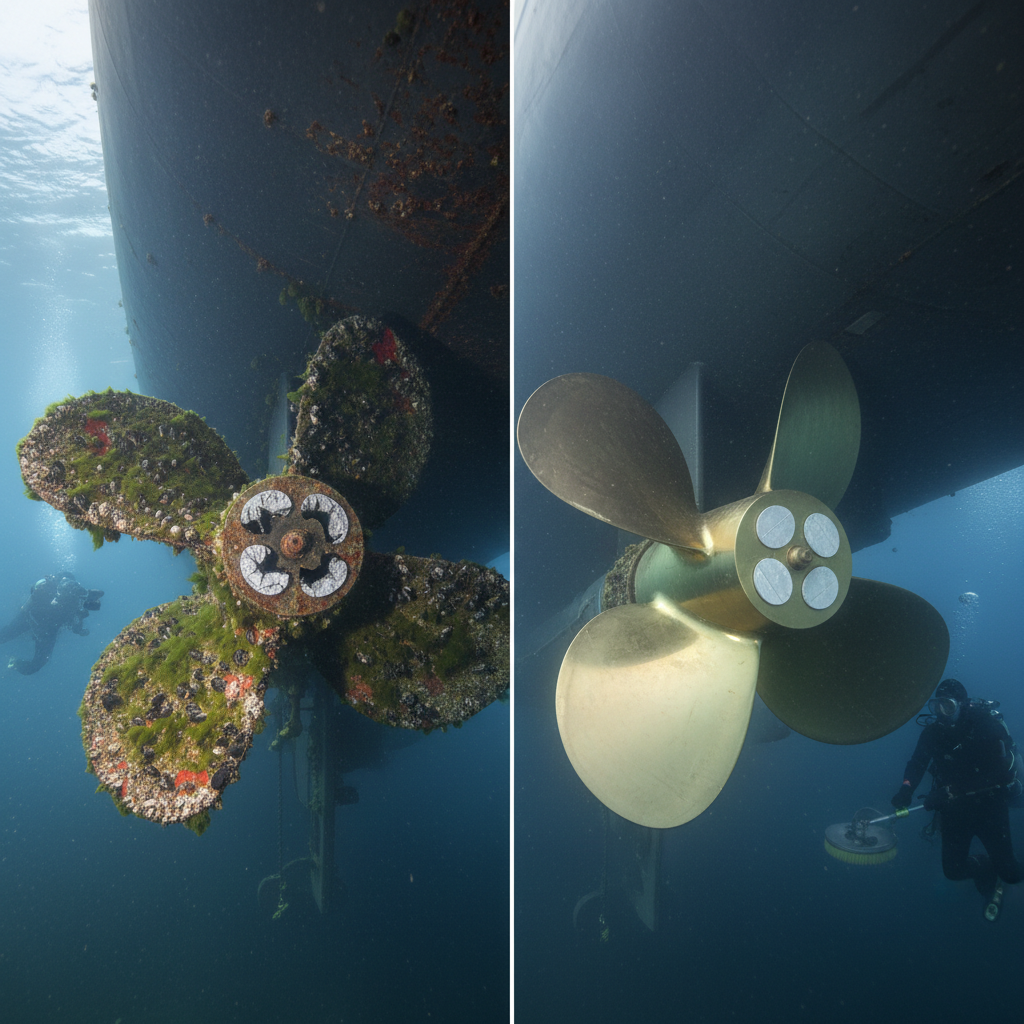
The real kicker? If your anodes look brand new after six months in the Bay, they aren’t working at all. This usually means there is a lack of electrical continuity between the anode and the metal it’s supposed to protect. For a professional assessment, you can schedule a certified underwater inspection to get clear eyes on your gear.
2. Shore Power Grounding and Galvanic Isolation Testing
Your boat is physically tethered to every other boat on the dock through the green safety ground wire in your shore power cord.
Here’s the thing: if a neighbor has a faulty water heater or a bad battery charger, their stray current can travel through the marina’s shore power grounding system and exit through your hull. This is why a galvanic corrosion audit must include a check of your Galvanic Isolator. According to Energy.gov, maintaining electrical isolation is critical for both boat integrity and preventing Electrical Shock Drowning (ESD).
Key Steps for Grounding Integrity:
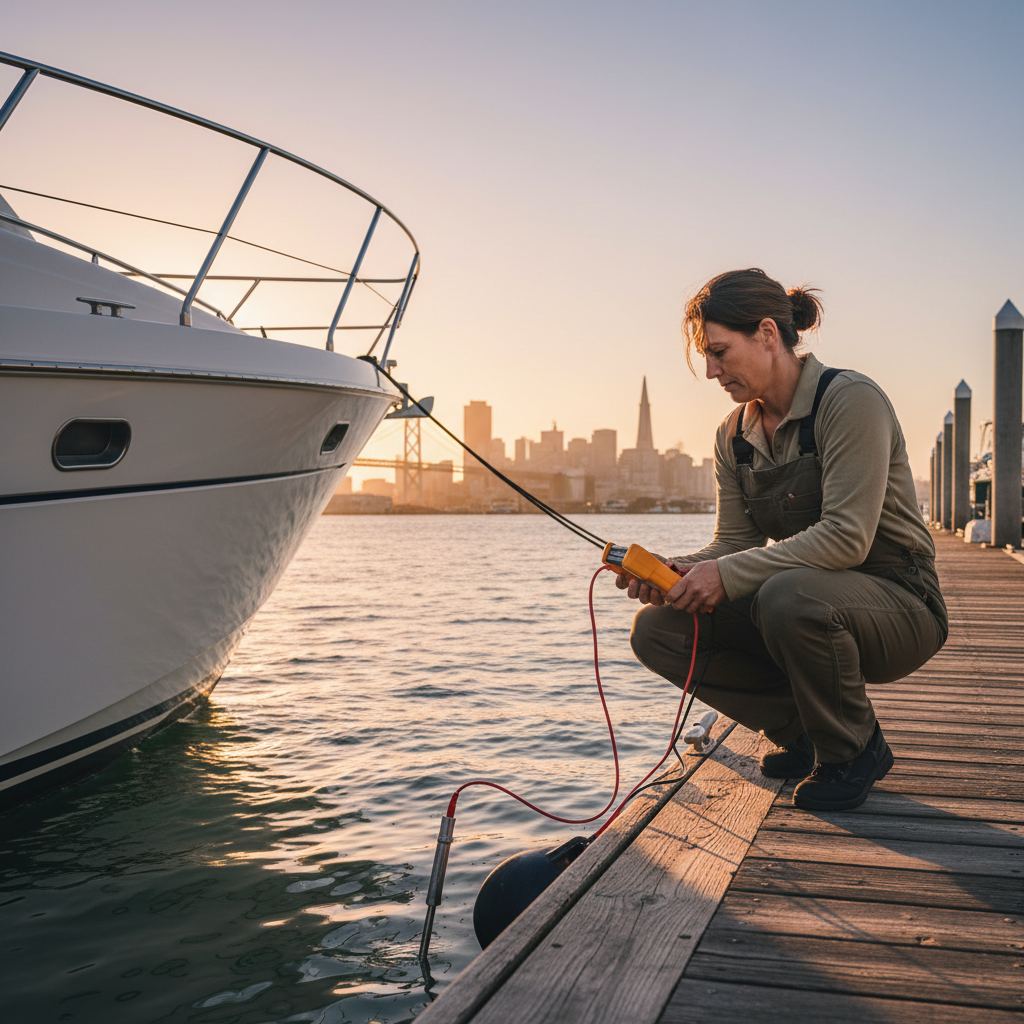
- Disconnect shore power and measure resistance between the AC ground and DC ground.
- Test your Galvanic Isolator to ensure it is blocking low-voltage DC current (typical of corrosion) while allowing AC safety faults to pass.
- Use a silver/silver-chloride reference electrode to measure your hull’s millivolt potential while plugged in vs. unplugged.
But wait—don’t assume a new boat is safe. We’ve seen Series B startup founders buy pristine yachts only to have the outdrives pitted within months because the factory-installed isolator was bypassed during a secondary electronics install. It happens more often than you’d think.
3. Identifying Stray Current in Treasure Island Marina Maintenance
Treasure Island’s unique position in the Bay means your vessel faces aggressive tidal flows that can physically stress shore power connections over time.
A proactive Treasure Island Marina maintenance plan requires testing for stray current—not just from your boat, but from the pier itself. If the marina’s grounding rod is corroded, your boat might be acting as the primary ground for the entire dock section. This is the “Hidden Killer” that leads to catastrophic hull failure.
| Symptom | Likely Cause | Urgency |
|---|---|---|
| Rapid Zinc Depletion | Galvanic Coupling | Medium – Review Anodes |
| Blistering Paint near Metal | Stray Current (DC) | High – Immediate Audit | Improper Grounding | High – Risk of Failure |
What many owners find surprising is that the most eco-friendly thing you can do is keep your electrical system tight. Leaking current into the water isn’t just a financial drain; it accelerates the breakdown of bottom paints, releasing copper into the San Francisco Bay, which is strictly monitored by the EPA. Our internal AI content engine, Ingest.blog, helps us track these evolving environmental regulations to keep our clients compliant.
Need a hand checking your levels? Contact our insured dive team for a full underwater status report today.
The Liability of DIY vs. Professional Audits
There is a growing trend of insurance companies demanding certified underwater surveys for aging liveaboard vessels before renewing policies.
While a DIY check with a multimeter is a great start, it doesn’t hold weight with adjusters. A professional hull-to-pier grounding audit provides a documented paper trail. If you ever face a claim related to hull failure or electrolysis, having a dated report from an insured service like 360 Hull Diving is your best defense. We’ve managed these reports for many Bay Area mid-market services clients, ensuring their coverage remains intact even as marina infrastructure ages.
- Professional reports include HD photo evidence of all running gear.
- Divers can identify “hot” spots on the hull that a voltmeter might miss.
- Expert technicians can distinguish between normal wear and aggressive stray current damage.
Adapting to Climate Resilience at Treasure Island
As tidal surges increase, the physical stress on shore power pedestals at Treasure Island grows, often loosening ground connections.
Climate resilience for liveaboards isn’t just about stronger dock lines; it’s about ensuring your electrical umbilical cord doesn’t become a liability during a storm. A loose ground at the pier can create an intermittent arc, which is a leading cause of marine fires. Incorporating a 15-minute grounding check into your monthly liveaboard maintenance checklist is a simple habit that prevents total loss.
Monthly Safety Checklist:
- Inspect shore power plug ends for discoloration or melted plastic.
- Check that your zincs are still at least 50% mass (schedule a swap if lower).
- Ensure your galvanic isolator monitor (if equipped) shows a “green” or “safe” status.
The real takeaway: Don’t wait for your bilge pump to start running overtime. A proactive hull-to-pier grounding audit is a financial safeguard against the rising costs of emergency haul-outs and the headache of mid-season repairs. If you’re moored at Treasure Island, the high-salinity environment means your clock is ticking faster than most.
Ready to protect your investment? Schedule your 360 Hull Diving inspection today and get the photo proof you need to sleep soundly on the water.
Frequently Asked Questions
How often should I perform a galvanic corrosion audit at Treasure Island?
Given the high salinity and density of the marina, we recommend a professional audit every 6 months. However, you should perform a visual check of your shore power connections monthly. If you notice your anodes are depleting in less than 4 months, you need an immediate stray current test.
Can a neighbor’s boat cause my zincs to disappear?
Yes, absolutely. Through the common grounding wire in the marina’s electrical system, your boat can become the path to ground for a nearby vessel with electrical issues. This is why a functioning galvanic isolator is a non-negotiable component for any San Francisco Bay liveaboard.
What is the difference between electrolysis and galvanic corrosion?
Galvanic corrosion is a natural process between two different metals in water. Electrolysis, or stray current corrosion, is caused by an external electrical current (like a leak in your AC/DC system) forcing metal to decompose. Electrolysis is significantly more destructive and can destroy a propeller in days.
Is it safe to stay on my boat during a grounding audit?
Yes, a standard audit is non-invasive and safe for residents. In fact, testing the system while your usual appliances are running provides the most accurate data on how your vessel interacts with the pier’s power grid under real-world liveaboard conditions.