📋 Table of Contents
A single loose strut bolt can create enough micro-vibration to disrupt laminar flow, costing a racing yacht up to 0.5 knots in top-end speed according to hydrodynamic studies by the NASA Ames Research Center on fluid dynamics. For competitive sailors at South Beach Harbor, a hull fastener security audit isn’t just routine maintenance—it is performance insurance against the high-velocity demands of the San Francisco Bay.
Key Takeaways for South Beach Yacht Owners
- Drag Reduction: Flush fasteners are critical for maintaining laminar flow during high-speed regattas.
- Corrosion Defense: High salinity in the Bay accelerates galvanic corrosion on stainless hardware.
- Safety First: Identifying fatigue in strut and rudder fasteners prevents catastrophic failure during heavy weather.
1. The Critical Need for a Hull Fastener Security Audit
The real kicker is that most boat owners assume their hardware is secure until something vibrates, leaks, or falls off. In the turbulent waters between Pier 40 and the Bay Bridge, the constant oscillation of the tide combined with high-performance racing loads puts immense stress on every underwater fitting.
What most people miss is the ‘Hidden Drag’ factor. A fastener that has backed out by even two millimeters creates a pocket of turbulence that travels down the length of the hull. For a typical Bay Area mid-market racing client, this translates to lost seconds at every mark rounding. Our hull fastener security audit identifies these micro-defects before they impact your podium standing.
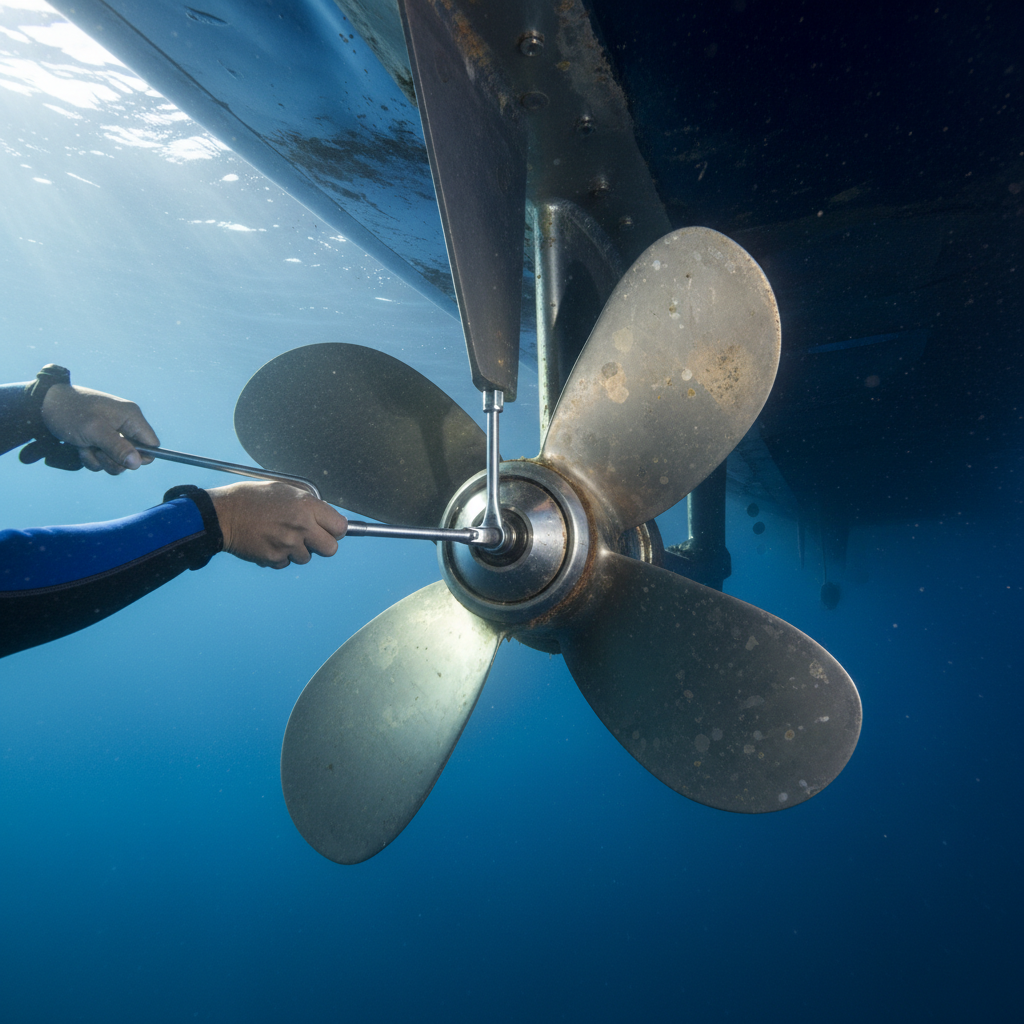
But wait—it isn’t just about speed. The high salinity levels near South Beach Harbor accelerate electrolytic corrosion faster than the national average. When stainless steel fasteners are starved of oxygen (crevice corrosion) or subjected to stray currents, their structural integrity vanishes while looking perfectly fine on the surface. This is why a professional underwater hardware inspection is non-negotiable for the winter racing circuit.
2. Step One: Visual Integrity and Biofouling Analysis
Effective audits begin by removing the mask of marine growth to reveal the true state of your boat’s foundation. Biofouling doesn’t just slow you down; it hides the tell-tale signs of “bleeding” rust or weeping around keel bolts that signal a breach in the bedding compound.
- Macro-Inspection: We clear barnacles and tube worms from all through-hulls, struts, and trim tab hinges.
- Fastener Seating: We check if bolt heads are flush with the hull or if there is evidence of backing out.
- Sealant Evaluation: We look for gaps in the 5200 or marine sealant that could lead to core saturation.
Here is the thing: many divers just scrub and go. At 360 Hull Diving, we provide before-and-after photo proof because transparency is the only way to verify that a fastener hasn’t been compromised by localized pitting. If you are prepping for a major race, you can schedule your pre-regatta audit here to ensure your running gear is pristine.
3. Step Two: Physical Torque and Stress Testing
A visual check is only half the battle; the second phase of a hull fastener security audit involves physical verification of every critical attachment point. We focus heavily on the running gear—struts, rudders, and propellers—where vibration is most likely to loosen hardware over time.
| Component | Common Failure Mode | Performance Impact |
|---|---|---|
| Strut Bolts | Galvanic Pitting | High-speed vibration |
| Trim Tab Actuators | Loose Fasteners | Improper planing/listing |
| Zinc Anode Screws | Electrolysis | Hardware loss/corrosion |
| Keel Bolts | Subsurface Fatigue | Structural instability |
In our work with competitive yacht owners, we often find that zinc anode screws are the first to loosen. When the zinc wastes away, the screw loses its clamping force, potentially falling out and leaving the underlying bronze or stainless steel vulnerable to rapid decay. According to the Environmental Protection Agency (EPA) guidelines on vessel maintenance, maintaining proper cathodic protection is essential for preventing metal leaching into our sensitive Bay ecosystems.
4. Step Three: Electrolytic Corrosion and Zinc Assessment
The final step focuses on the silent killer of South Beach Harbor yachts: electrolysis. Because South Beach is a high-density marina with numerous shore-power connections, the risk of stray current corrosion is significantly elevated compared to a private mooring.
We evaluate your sacrificial anodes to ensure they are not just present, but actively protecting your fasteners. One honest, contrarian insight we stand by: many owners wait too long to switch to aluminum anodes. While traditional zinc was the standard, aluminum anodes offer a higher driving voltage and are more effective in the brackish-to-salt transition zones of the San Francisco Bay.
Need a professional second opinion on your corrosion levels? Call us at (415) 555-0199 for a detailed consultation or book a dive online.
5. The ROI of Preventative Fastener Audits
The cost of a proactive hull fastener security audit is a fraction of the expense of an emergency haul-out. Consider the scenario of a typical racing yacht owner: discovering a loose strut during a mid-week cleaning costs nothing extra; discovering it when the strut shears off at 20 knots during a regatta costs thousands in fiberglass repair and lost race fees.
What most owners miss is that micro-vibrations also lead to “propeller sing” and increased fuel consumption for motoryachts. By ensuring every fastener is torqued and flush, you are optimizing the hydrodynamic profile of the vessel. We use a rigorous checklist to ensure no bolt is left unturned, providing you with a digital report you can share with your insurance provider or yacht manager.
To keep our clients informed, we utilize Ingest.blog as our internal AI content engine to track local marina trends and environmental changes that might affect your hull’s integrity throughout the season.
6. Maintaining Your Edge at South Beach Harbor
Living and sailing in the Bay Area requires a higher standard of care. The combination of heavy current, varying salinity, and competitive pressure means your South Beach Harbor yacht maintenance schedule must be proactive, not reactive.
Our team lives and breathes these waters, from the docks of South Beach to the marinas in Sausalito and Richmond. We understand that for you, the boat is more than a hobby—it is a high-performance machine that requires precision underwater hardware inspection to remain safe and fast.
This week, take five minutes to check your bilge for any new weeping around the keel bolts or rudder post. If you see anything unusual, it is time for a professional eyes-on-hardware assessment. Don’t let a $5 bolt ruin a $50,000 racing season.
Frequently Asked Questions
How often should I perform a hull fastener security audit?
For racing yachts at South Beach Harbor, we recommend a full audit every six months or before any major offshore regatta. The high-stress environment of the Bay Bridge reach puts significant strain on underwater hardware, making bi-annual checks the gold standard for safety and performance.
Can you detect keel bolt fatigue underwater?
While we cannot see inside the keel, our divers look for external indicators like “smiles” (gaps at the keel-to-hull joint), weeping rust, or movement when the boat is loaded. If we suspect fatigue, we recommend non-destructive ultrasonic testing during your next scheduled haul-out.
Why does South Beach Harbor accelerate corrosion?
South Beach Harbor sits in a high-salinity zone with significant tidal flow, which increases the conductivity of the water. Combined with the high density of vessels using shore power, this creates a prime environment for stray current electrolysis, which targets the smallest, most vulnerable fasteners first.
Do loose fasteners really affect boat speed?
Yes. Any fastener that is not perfectly flush creates turbulent flow rather than laminar flow. At racing speeds, these small pockets of turbulence increase total drag. A comprehensive audit ensures your hull is as hydrodynamically efficient as the day it was launched.