
📋 Table of Contents
- The High Cost of Hidden Hull Drag in San Francisco Bay
- Exposing Keel Cleaning Fraud: The ‘Scrub and Run’ Epidemic
- The ROI of Professional Hull Husbandry Standards
- Why Ultrasonic Anti-Fouling Isn’t a Silver Bullet
- Eco-Friendly Regulations and Your Liability
- Stop Paying the ‘Tiburon Tax’ on Mediocre Service
- FAQs
One of our clients, a retired tech executive at Paradise Cay, recently discovered his boat was burning an extra $412 in diesel every single trip to Angel Island despite paying for monthly cleanings. The culprit wasn’t a mechanical failure; it was a Tiburon Yacht Club boat service provider who had been ‘scrubbing and running’ for three years, leaving 40% of the keel untouched.
Key Takeaways for Tiburon Owners:
- Hidden Drag: Microscopic slime layers can increase fuel consumption by 10-15% even if the hull looks white.
- The Keel Trap: Budget divers often skip the top of the keel and rudder, areas critical for hydrodynamic drag reduction.
- Photo Proof: Never pay for a dive service that doesn’t provide high-resolution before-and-after imagery.
- Zinc Scams: Many contractors charge for sacrificial anode replacement without ever touching the old ones.
The High Cost of Hidden Hull Drag in San Francisco Bay
Most boat owners believe that if they can’t see barnacles from the dock, their hull is clean. Here’s the thing: hydrodynamic drag begins at the microscopic level, where a thin biofilm of slime creates enough friction to kill your top-end speed and drain your wallet.
According to research from Energy.gov, biofouling significantly impacts vessel efficiency, yet most budget divers only focus on the ‘visual’ areas. In the cold, nutrient-rich waters of the San Francisco Bay, this slime grows aggressively. If your diver isn’t using a soft-pressure approach to remove this biofilm without damaging your expensive bottom paint, they are actually accelerating future growth.
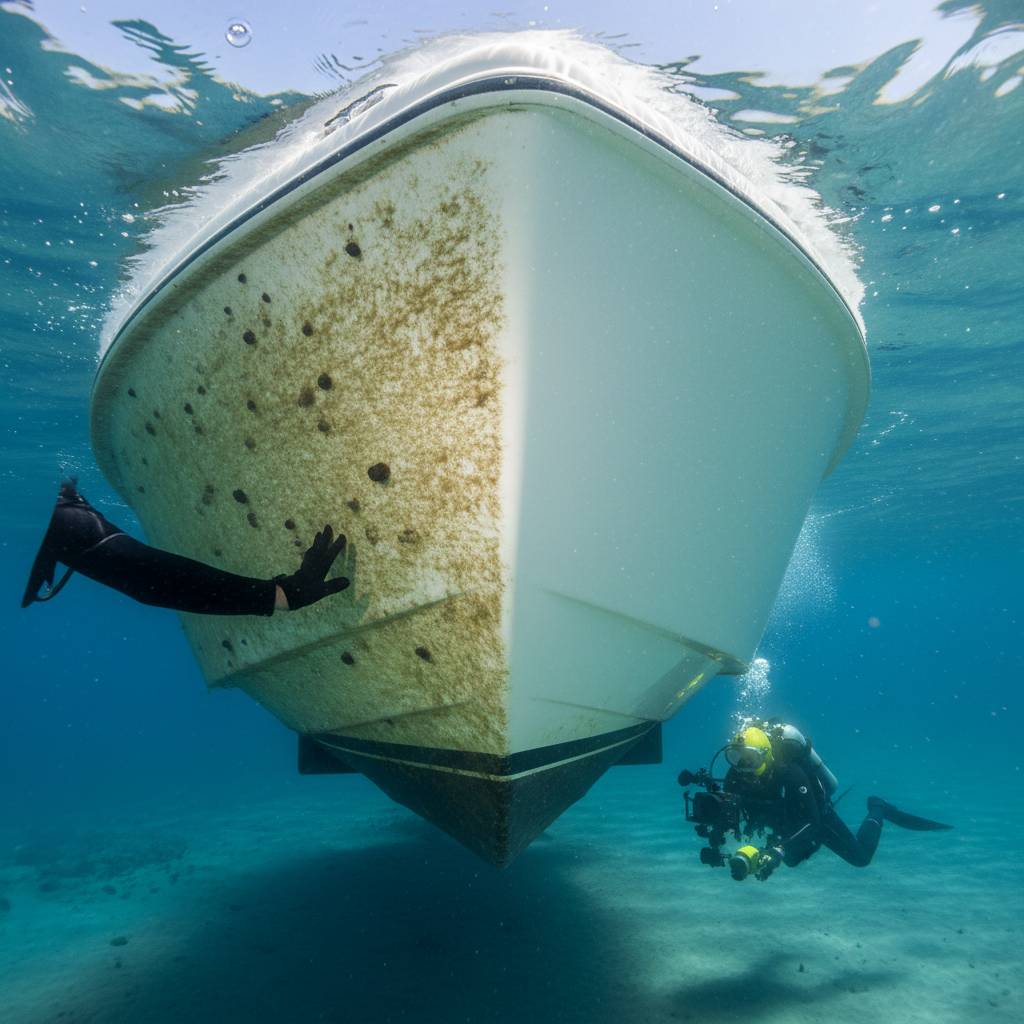
What most people miss is that hidden hull drag isn’t just about speed; it’s about engine strain. We recently audited a 52-foot motor yacht at the Tiburon Yacht Club where the owner complained of engine overheating. We found the intake grates were 70% blocked by calcium growth that the previous ‘cheap’ diver had simply ignored because it required an extra five minutes of detail work.
Exposing Keel Cleaning Fraud: The ‘Scrub and Run’ Epidemic
The real kicker in the marine service industry is the lack of accountability once the diver goes under the surface. Many divers operating around Corinthian and Tiburon marinas rely on ‘Group-Think,’ where they sign up ten boats on a single dock and spend less than 20 minutes on each vessel.
This leads to keel cleaning fraud, a practice where the diver cleans the easy-to-reach sides of the hull but completely ignores the top of the keel, the backside of the rudder, and the thruster tunnels. To the owner looking down from the finger pier, the boat looks pristine. To the water flowing underneath, the boat is dragging a virtual parachute of biofouling.
- The Reach Test: Ask your diver to provide a photo of the very top of the keel where it meets the hull—this is the #1 skipped spot.
- Propeller Roughness: Budget divers often skip polishing the props, which accounts for nearly 5% of total vessel drag.
- Inconsistent Reporting: If your receipt just says ‘Hull Cleaned,’ you are likely a victim of the illusion.
Ready to see what’s actually happening under your waterline? Schedule a professional underwater hull inspection report with 360 Hull Diving and get the photo proof you deserve.
The ROI of Professional Hull Husbandry Standards
Spending $250 on a premium dive service to save $18,000 in long-term repairs and fuel isn’t just good maintenance; it’s a strategic financial decision. When you adhere to strict hull husbandry standards, you extend the life of your anti-fouling paint by up to two years.
| Service Level | Cost Per Month | Fuel Loss (Annual) | Paint Life |
|---|---|---|---|
| Budget ‘Scrub & Run’ | $120 | $4,800+ | 2-3 Years |
| 360 Hull Diving (Premium) | $225 | $0 | 4-5 Years |
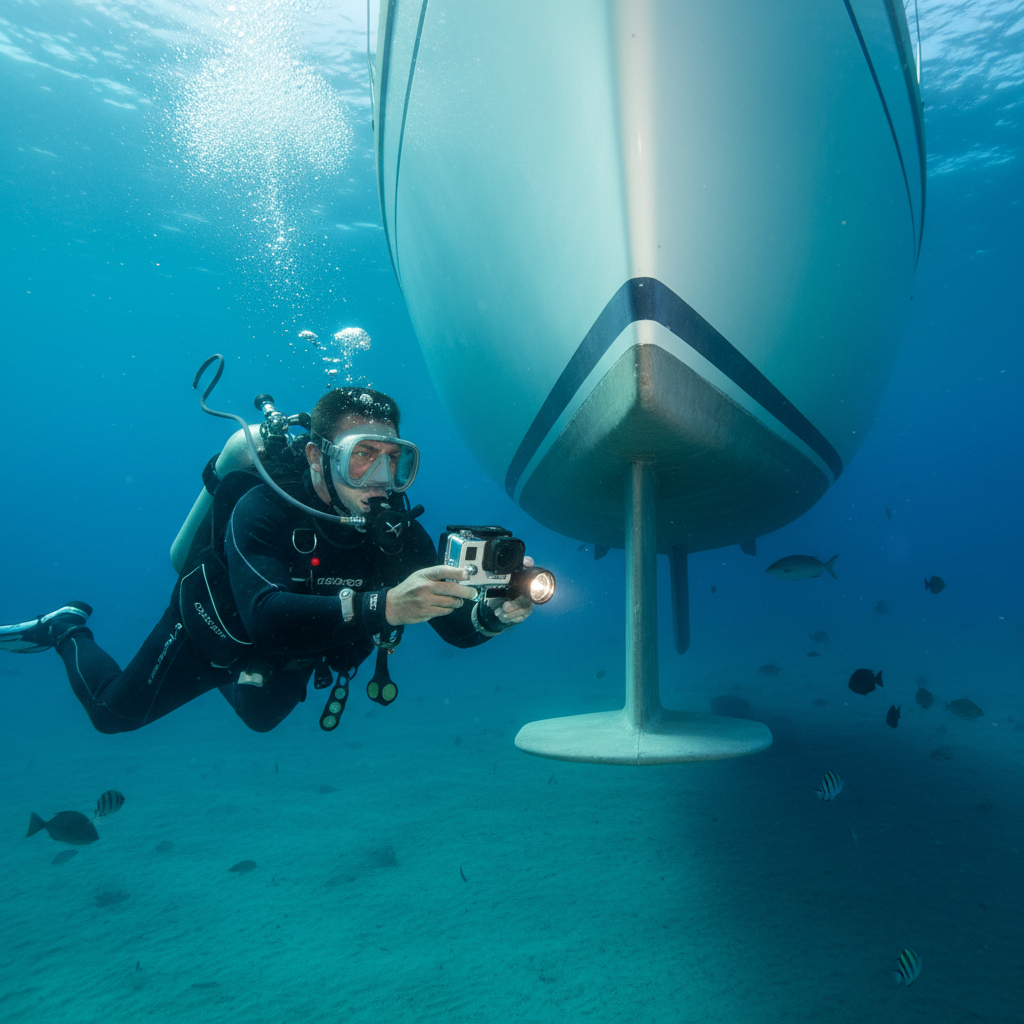
But wait—the savings go deeper than fuel. Proper sacrificial anode replacement is the only thing standing between your expensive running gear and the destructive power of electrolysis. We’ve seen $15,000 shafts pitted beyond repair because a diver claimed they replaced the zincs but actually left the old, degraded ones on the boat. At 360 Hull Diving, we bring the old zincs up and leave them on the dock for you to see, or provide timestamped photo evidence.
Why Ultrasonic Anti-Fouling Isn’t a Silver Bullet
A contrarian insight that many ‘high-tech’ boat owners hate to hear: those $3,000 ultrasonic systems do not replace the need for a physical diver. While they can inhibit some growth, they often fail in the ‘shadow zones’ of the hull, such as the internal sea chests and the far side of the keel.
The best approach for Tiburon Yacht Club boat service is a hybrid model. Use your tech, but back it up with a diver who understands hydrodynamic drag reduction. A professional diver can identify early signs of osmosis (blistering) or stray current corrosion that no sensor will ever pick up. This is why we focus on ‘technical audits’ rather than just ‘cleaning.’
Need a second opinion on your current service? Explore our underwater survey options to get a clear picture of your boat’s health.
Eco-Friendly Regulations and Your Liability
California coastal waters are subject to some of the strictest environmental regulations in the world. Using aggressive abrasive cleaning techniques doesn’t just strip your paint; it releases toxic copper into the Bay, which can lead to massive fines for marina tenants if caught.
Professional services now prioritize ‘Best Management Practices’ as outlined by the EPA. This means using the softest tool possible to get the job done. If your diver is creating a ‘cloud’ of paint every time they clean, they are shortening your haul-out interval and potentially putting you at risk with the harbormaster.
- Soft Brushes Only: We use specific bristles matched to your paint’s hardness.
- Non-Abrasive Slime Removal: Removing biofilm shouldn’t require metal scrapers.
- Certified Divers: Ensure your team is insured and trained in eco-friendly hull husbandry.
Stop Paying the ‘Tiburon Tax’ on Mediocre Service
The real tragedy of the $18,500 illusion is that it’s completely preventable. Most owners at Tiburon Yacht Club are busy people who value their time. They pay the bill and assume the work is done. But in the marine world, ‘out of sight’ should never mean ‘out of mind.’
If you aren’t receiving a detailed underwater hull inspection report with every service, you are essentially flying blind. At 360 Hull Diving, we provide the transparency that high-end boat ownership demands. We don’t just tell you it’s clean; we show you.
Don’t let hidden drag anchor your performance. Contact 360 Hull Diving today for a comprehensive hull audit and start saving on your next Bay crossing.
Frequently Asked Questions
How do I know if I’m a victim of keel cleaning fraud?
The easiest way is to request a photo of the keel-to-hull joint. If your diver hesitates or provides a blurry image, they likely aren’t cleaning it. You can also monitor your fuel burn at a set RPM; if it increases over 3 months despite regular cleanings, your diver is skipping critical drag areas.
Is a ‘white hull’ enough to ensure maximum fuel efficiency?
No. Even a hull that looks white can be covered in a microscopic layer of slime (biofilm). This layer increases surface roughness, which disrupts laminar flow and causes 10-15% more drag. Professional hydrodynamic drag reduction requires removing this slime with specialized soft tools.
How often should I really be doing sacrificial anode replacement?
In the San Francisco Bay, zincs should be inspected monthly and typically replaced when they are 50% depleted. Depending on your marina’s ‘stray current’ levels (common in crowded yacht clubs), this could be every 4 to 6 months. Never wait for them to disappear completely, or your props will pay the price.
Why is photo proof so important for Tiburon Yacht Club boat service?
Underwater work is the only service you pay for that you cannot easily inspect yourself. Photo proof ensures that the intake grates are clear, the zincs are actually new, and the keel is fully cleaned. It transforms a ‘trust-based’ transaction into a data-driven service with clear ROI.
The era of ‘trust me, I’m a diver’ is over. If you’re docked in Tiburon, Belvedere, or Sausalito, you deserve a maintenance partner who treats your vessel like the high-performance machine it is. Demand the data, see the photos, and stop subsidizing the ‘scrub and run’ divers who are costing you thousands at the fuel dock. Your boat—and your wallet—will thank you.