
📋 Table of Contents
Key Takeaways: Point San Pablo Yacht Harbor presents a unique ‘greenhouse effect’ that accelerates marine fouling. Frequent grooming cycles are 40% more cost-effective than reactive scraping. Professional eelgrass removal is critical for maintaining engine cooling and vessel maneuverability in Richmond’s shallowest berths.
Navigating the serene waters of Point San Pablo Yacht Harbor offers a unique escape for East Bay boaters, but the harbor’s geography creates a specific set of maintenance challenges. As a premier destination in Richmond, the combination of shallow depths and nutrient-rich runoff from the San Pablo Bay creates a high-photosynthesis environment. This results in aggressive eelgrass growth that can compromise your vessel’s performance in weeks rather than months.
The Greenhouse Effect: Why Point San Pablo Yacht Harbor Accelerates Fouling
As of 2024, rising San Francisco Bay water temperatures have led to a documented 15% increase in localized kelp and grass blooms. The shallow basins of Richmond act as heat sinks, warming faster than the deep channels near the Golden Gate. This temperature spike, combined with low water circulation, creates a ‘greenhouse effect’ for marine life.
- Photosynthetic Velocity: Shallow water allows more sunlight to reach the hull, fueling rapid algae and grass growth.
- Nutrient Density: Proximity to the Delta means higher nitrogen levels, which act as fertilizer for long-strand eelgrass.
- Stagnant Flow: Point San Pablo’s protected nature reduces the natural ‘self-cleaning’ effect of high-tidal currents.
Furthermore, this accelerated growth often masks more serious issues like osmotic blistering or invasive species. According to the EPA’s vessel discharge guidelines, maintaining a clean hull is the first line of defense against transporting invasive species throughout the Bay Area.
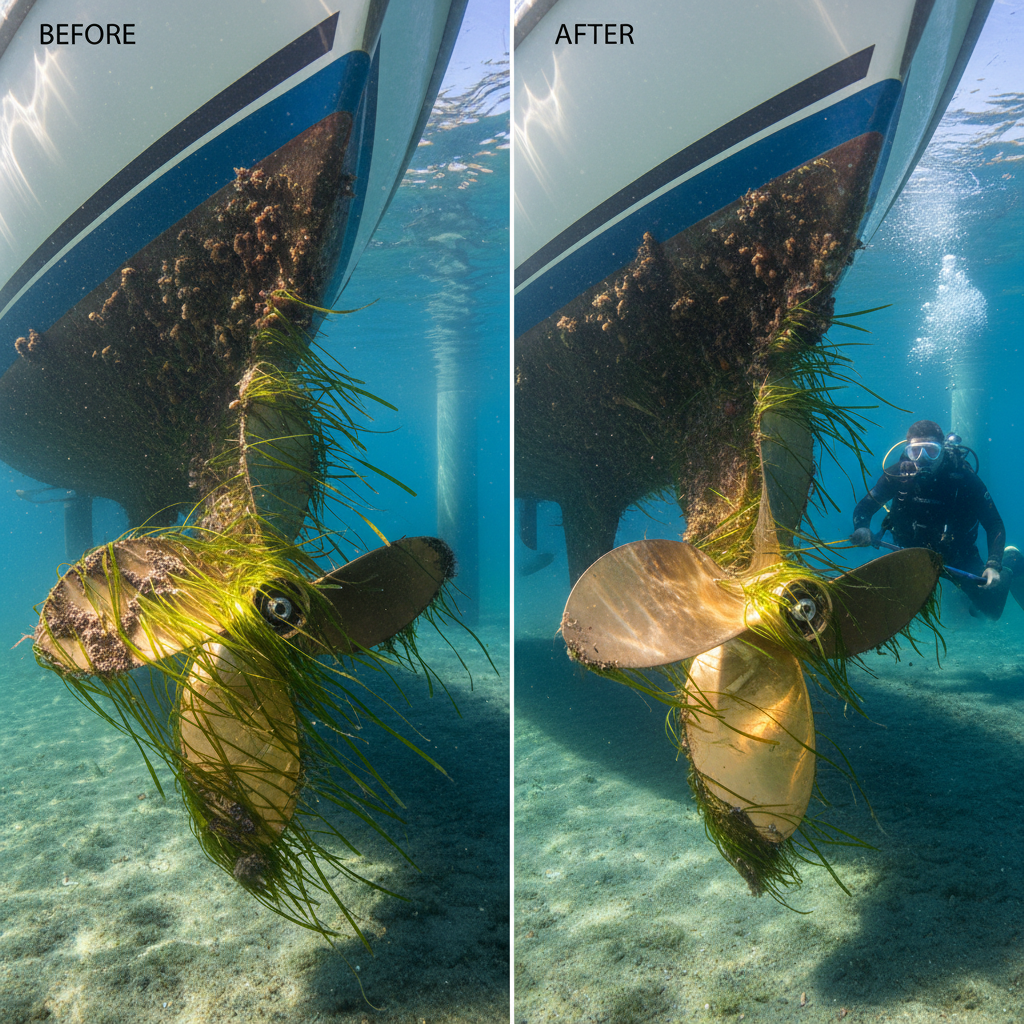
Strategic Eelgrass Removal and the ‘Shallow Water Penalty’
The ‘Shallow Water Penalty’ refers to the exponential increase in fuel consumption caused by heavy grass drag. In a harbor like Point San Pablo, long-strand vegetation can wrap around shafts and propellers, leading to severe engine strain and overheating. Our specialized eelgrass removal protocols are designed to address these long-strand fibers without damaging your bottom paint.
- Propeller Entanglement: Grass can choke the water intake, leading to immediate cooling system failure.
- Hydrodynamic Drag: Even a thin layer of ‘slime’ increases fuel burn by 10%, while heavy grass can increase it by over 30%.
- Zinc Depletion: Heavy fouling creates an acidic micro-environment that accelerates the depletion of your sacrificial anodes.
Consequently, boat owners at Richmond marinas often face higher repair bills for running gear than those in deeper ports like Sausalito or Tiburon. If you’ve noticed a drop in RPMs or increased vibration, it’s likely time for a professional inspection. Schedule your Point San Pablo hull inspection here to prevent long-term damage.
Case Study: 3-Week vs. 8-Week Cleaning Cycles in Richmond
To demonstrate the impact of the Richmond micro-climate, we tracked two 40-foot cruisers at Point San Pablo Yacht Harbor over a six-month period. The results highlight why shallow water hull maintenance requires a proactive rather than reactive approach. Regular grooming preserves the integrity of the paint, whereas heavy scraping removes the protective biocides.
| Metric | 3-Week Cycle (Proactive) | 8-Week Cycle (Reactive) |
|---|---|---|
| Growth Type | Light Bio-slime | Heavy Eelgrass & Barnacles |
| Paint Loss | Minimal (<5%) | Significant (>20%) |
| Fuel Efficiency | Optimal | -18% Average Loss |
| Annual Cost | Predictable / Lower | High (due to haul-outs) |
While the 3-week cycle involves more frequent visits, the individual cleanings are faster and gentler. This approach aligns with California’s Best Management Practices (BMPs) for in-water cleaning, ensuring your vessel remains compliant with local environmental regulations. You can find more information on these standards through the Association of Marine Industries.
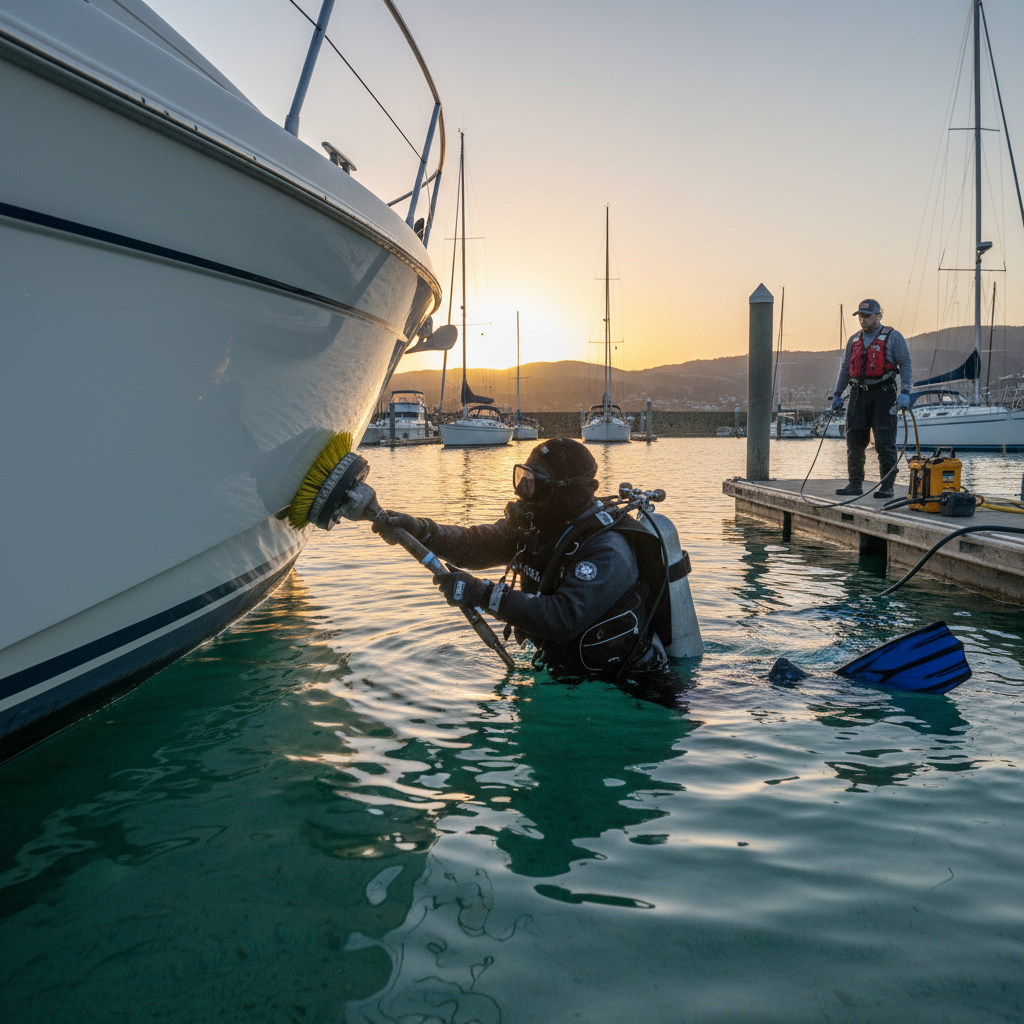
Advanced Shallow Water Hull Maintenance Techniques
Managing a hull in silty, high-sediment environments requires more than just a brush. At 360 Hull Diving, we provide before-and-after photo proof because we know that visibility in Richmond can be challenging. Our divers use tactile inspection techniques combined with high-lumen lighting to ensure every inch of the running gear is clear.
- Propeller Polishing: We use specialized pads to achieve a multi-stage polish that resists grass attachment.
- Intake Grate Clearing: Crucial for shallow harbors where silt and grass frequently clog thrusters and cooling pick-ups.
- Zinc Monitoring: We track the wear rate of your anodes to predict when the next change is needed based on local salinity.
Transitioning to a high-frequency maintenance schedule is the most effective way to extend the life of your bottom paint. For owners at Point San Pablo Yacht Harbor, this isn’t a luxury—it’s a necessity for protecting your maritime investment. Need a custom quote for your slip? Request a maintenance plan here.
Diver Safety and Environmental Compliance in San Pablo Bay
Working in shallow, high-sediment harbors like those in Richmond and San Pablo presents unique safety challenges. Visibility is often less than twelve inches, requiring divers who are intimately familiar with the local topography and vessel layouts. Furthermore, we strictly adhere to eco-friendly protocols to protect the sensitive Delta ecosystem.
- Zero-Abrasive Cleaning: We prioritize soft-tool cleaning to keep copper biocides on your hull and out of the water.
- Debris Recovery: When performing heavy eelgrass removal, we ensure that large clumps are managed responsibly.
- Insured Expertise: Our team is fully insured, providing peace of mind for yacht owners who value transparency and professionalism.
According to research from Harvard Business Review on service excellence, the most successful maintenance providers are those who combine technical skill with verifiable proof of work. This is why our photo-documentation is a standard part of every service in Richmond.
The Hidden Risks of Neglecting Richmond Berths
Neglecting your hull in Point San Pablo can lead to “hidden” damage that isn’t visible from the dock. When heavy grass dies off, it can trap anaerobic bacteria against the hull, leading to specialized corrosion or paint delamination. This is particularly common in the stagnant corners of Richmond’s shoreline harbors.
- Hull Osmosis: Trapped moisture under heavy fouling can trigger gelcoat blistering.
- Sensor Failure: Grass growth over transducers leads to inaccurate depth and speed readings.
- Invasive Species: Richmond is a known corridor for invasive bryozoans that thrive in low-flow areas.
By investing in regular San Pablo Bay hull cleaning, you are essentially buying insurance for your boat’s performance and resale value. Our team is frequently spotted at the Richmond Yacht Club and Marina Bay, bringing the same level of elite service to every slip in the East Bay.
Frequently Asked Questions
How often should I clean my hull at Point San Pablo Yacht Harbor?
Due to the shallow water and high nutrient levels in Richmond, we recommend a 3 to 4-week cleaning cycle during the peak growing season (March–October). This prevents eelgrass from becoming established and protects your engine’s cooling system from clogging in the harbor’s silty conditions.
Is eelgrass removal different from standard hull cleaning?
Yes, eelgrass removal requires specialized techniques to detangle long fibers from propellers and intakes without using abrasive force. Standard cleaning focuses on algae and barnacles, but in Richmond, the long-strand vegetation requires a more meticulous, hand-clearing approach to ensure the running gear is completely unobstructed.
Why is visibility so poor during cleaning in Richmond?
Point San Pablo is located in a high-sediment area where tidal movements stir up fine silt from the bay floor. This creates a challenging environment for divers. We counteract this by using high-intensity underwater lighting and providing photo evidence of our work to ensure 100% transparency for the owner.
Can heavy grass growth affect my boat’s insurance?
While not a direct policy exclusion, neglecting maintenance that leads to avoidable accidents—such as engine failure due to clogged intakes—can complicate claims. Regular professional maintenance documented with photos provides a ‘paper trail’ of responsible ownership that can be invaluable during surveys or insurance renewals.
Ready to experience the 360 Hull Diving difference? Don’t let Richmond’s grass growth slow you down. Contact us today for a free estimate and see why we are the most trusted dive team for Point San Pablo Yacht Harbor owners.