
📋 Table of Contents
The Berkeley Marina intake crisis has reached a breaking point for East Bay boaters, as rising water temperatures and nutrient-rich runoff trigger explosive growth of invasive barnacle species. For recreational boat owners at the Berkeley Marina, the risk of sudden engine overheating isn’t just a possibility; it is an imminent threat to your maritime safety and your wallet.
Understanding the Berkeley Marina Intake Crisis and Your Cooling System
As of 2024, the Berkeley Marina has become a documented ‘hot spot’ for marine fouling, with some slips experiencing growth rates 3x faster than the rest of the San Francisco Bay. This localized phenomenon, often referred to as the Berkeley Marina intake crisis, is driven by a combination of shallow water basins and El Niño-driven temperature spikes that create a perfect incubator for barnacle super-colonies.
- Water Temperature Spikes: Higher temperatures accelerate the metabolic rate of invasive barnacles, leading to rapid calcification inside thru-hulls.
- Nutrient Density: Runoff patterns in the East Bay provide a constant food source for these organisms.
- Flow Restriction: Even a 20% reduction in intake diameter can lead to critical temperature fluctuations in modern marine engines.
Consequently, traditional copper-based bottom paints are failing to protect the internal surfaces of raw water intakes. While the hull may look clean, the internal plumbing of your vessel could be choking on calcium deposits that no paint can reach.
The Mechanics of Engine Overheating
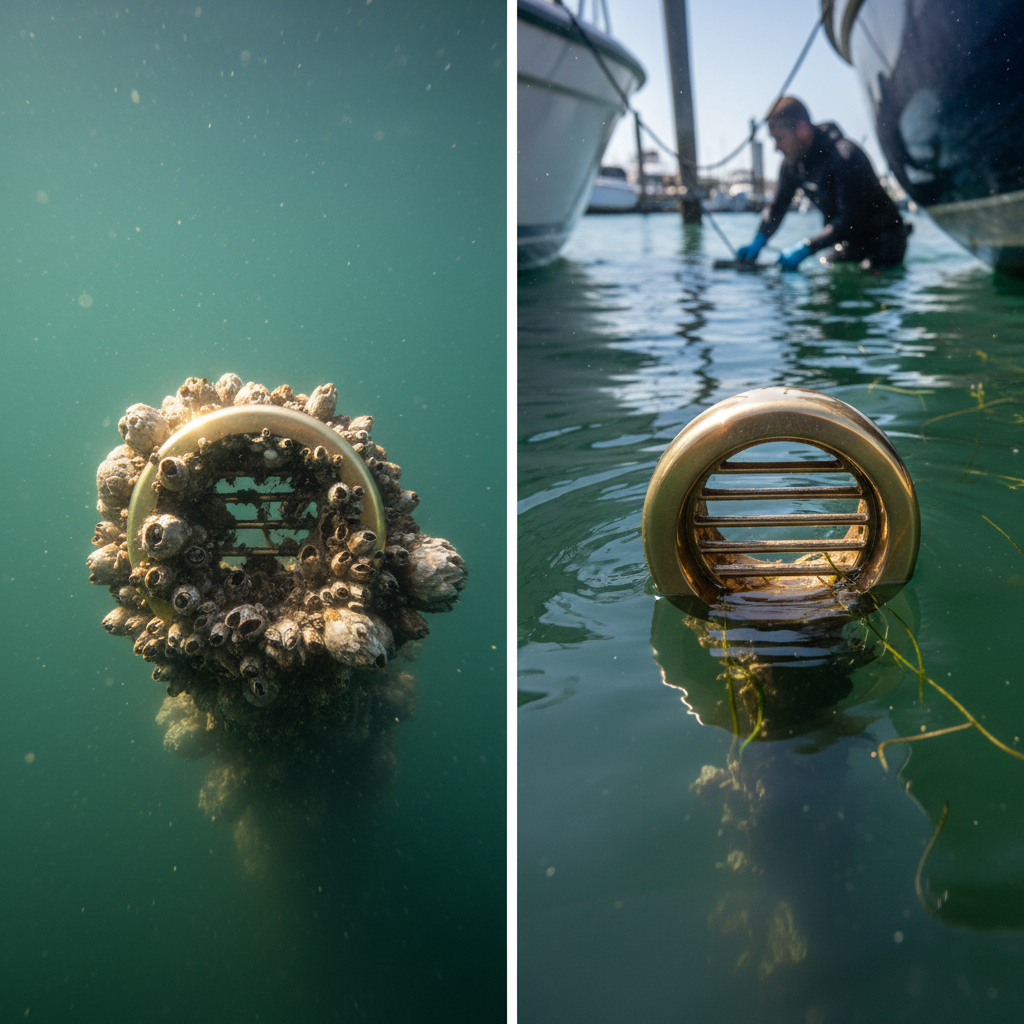
When invasive barnacles settle inside your thru-hull fittings, they create turbulence and physical blockages that starve your heat exchanger of vital cooling water. This leads to a rapid rise in operating temperatures, often faster than standard cockpit gauges can accurately report.
According to research from the Environmental Protection Agency (EPA), invasive species management is now a primary concern for coastal infrastructure. In Berkeley, this translates to a direct threat to your raw water loop and internal sea strainers.
The High Cost of Reactive Berkeley Marina Boat Repair
Many boaters wait until they see steam or hear a high-heat alarm before seeking Berkeley Marina boat repair services. Unfortunately, by the time the alarm sounds, internal damage to the impeller, head gasket, or heat exchanger may already be irreversible.
Strategic leaders in the business world understand that preventative maintenance always yields a higher ROI than emergency repairs. The same logic applies to your 40-foot cruiser or sailing yacht at the Berkeley Marina.
| Service Type | Average Cost | Risk Level | Outcome |
|---|---|---|---|
| Preventative Dive Service | $150 – $300 | Low | Optimal Engine Health |
| Emergency Towing | $600 – $1,200 | High | Vessel Stranded |
| Engine Overhaul | $10,000 – $25,000 | Extreme | Season Ended |
Furthermore, the cost of procrastination is staggering when compared to a monthly maintenance schedule. A simple thru-hull cleaning performed by a professional diver can save you from a $15,000 engine replacement project.
Case Study: The $18,000 Barnacle
A Series B tech executive recently docked at Berkeley Marina ignored a slight rise in engine temperature. Within three weeks, a ‘super-colony’ of barnacles completely occluded the main intake. The resulting catastrophic failure required a full engine pull and heat exchanger descaling, costing over $18,000—a situation that a $200 dive service would have prevented.
Strategic Thru-Hull Cleaning: Beyond the Scraper
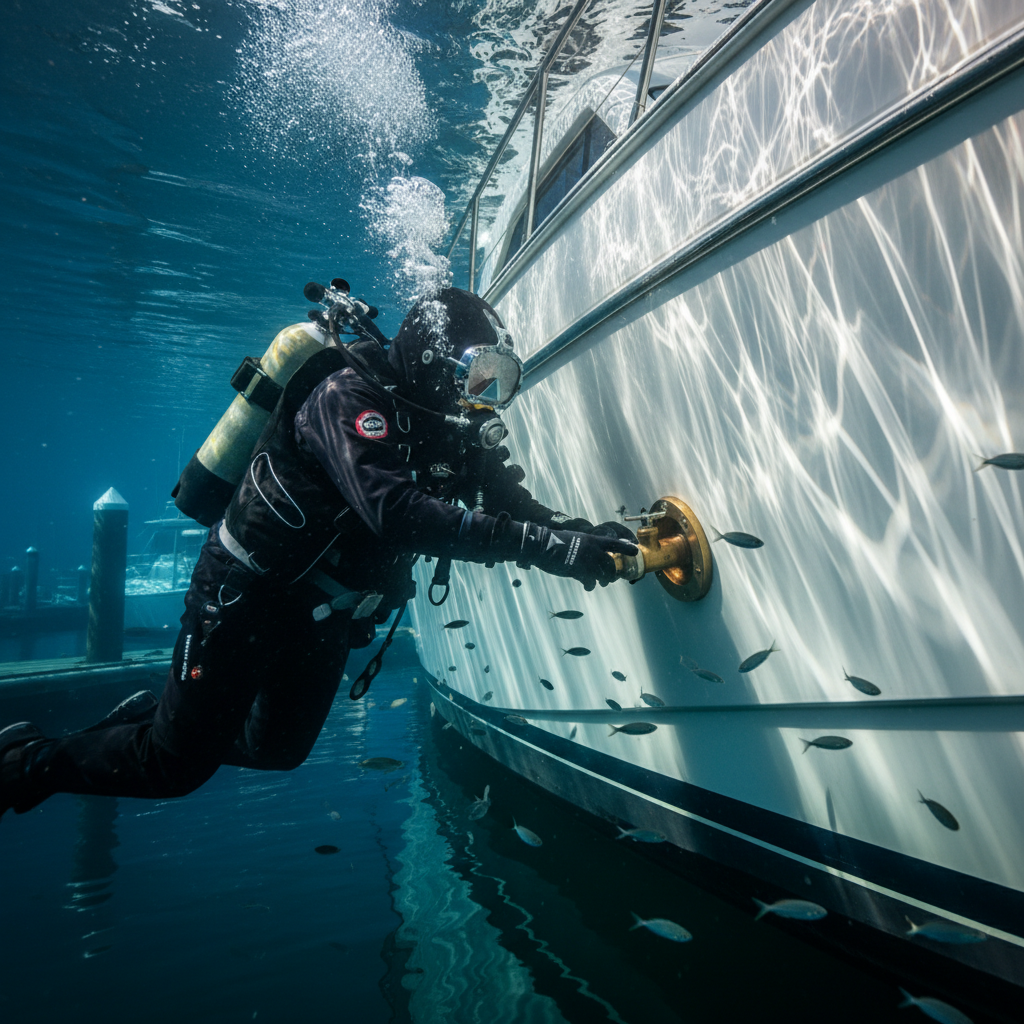
Effective thru-hull cleaning in high-fouling areas like Richmond and Berkeley requires more than just a quick scrape. It demands a specialized approach to the ‘internal plumbing’ of the vessel that most general divers overlook.
- Internal Aperture Clearing: We ensure the diver reaches into the throat of the intake to remove hidden growth.
- Grate Inspection: Removing and cleaning external grates to ensure maximum laminar flow.
- Zinc Protection: Ensuring that sacrificial anodes are properly bonded to prevent galvanic corrosion while the intakes are serviced.
Specifically, our team at 360 Hull Diving provides high-resolution before-and-after photo proof of every intake we service. This transparency is critical for owners who value verified results over vague promises.
Need to verify your intake health? Schedule a professional inspection today and get photo proof of your hull’s condition.
Engine Overheating Prevention: A Data-Driven Approach
Modern yachts often utilize engine overheating prevention systems that include real-time telemetry. However, even the most advanced sensors cannot physically clear a blockage once it has formed in the Berkeley Marina’s unique micro-climate.
To maintain peak performance, we recommend an ‘intake-first’ maintenance philosophy. This means shifting from a standard hull cleaning schedule to one focused on the critical cooling components of your vessel.
- Monthly Inspections: During peak growth seasons (May–October), monthly checks are mandatory in the East Bay.
- Telemetry Monitoring: Watch for a 5-10 degree increase in baseline operating temperatures.
- Professional Descaling: Use eco-friendly solutions to clear the raw water loop if growth has moved past the intake.
As noted by BoatUS, cooling system failure is the leading cause of engine-related insurance claims. By prioritizing underwater hull cleaning Berkeley services, you are effectively de-risking your asset against the most common cause of maritime mechanical failure.
The Risk of DIY Intake Cleaning
While some owners attempt to clear intakes themselves using long-handled scrapers from the dock, the risks are significant. Without proper visibility, it is easy to damage the expensive bronze intake grates or push debris deeper into the raw water hose, causing a permanent blockage that requires a haul-out to fix.
Invasive Barnacle Super-Colonies in the East Bay
The Berkeley Marina intake crisis is exacerbated by the adaptation of invasive species to local salinity changes. These ‘super-colonies’ are more resilient to traditional toxins and can attach to surfaces in as little as 48 hours after a cleaning.
- Salinity Adaptation: Recent changes in Bay water chemistry have favored species that thrive in the brackish mix near the Berkeley shoreline.
- Rapid Recolonization: Once a surface is cleared, it releases pheromones that attract new larvae, making regular maintenance essential.
- Internal Calcification: These species specifically target high-flow areas (like intakes) where oxygen and food are plentiful.
By using a professional hull diver service, you ensure that these colonies are completely removed, including the ‘base plate’ of the barnacle which contains the pheromones that trigger rapid regrowth.
Conclusion: Securing Your Vessel Against the Berkeley Marina Intake Crisis
The Berkeley Marina intake crisis is a localized challenge that requires a localized, expert solution. For boaters in Berkeley, Emeryville, and Richmond, the window for preventative action is closing as bay temperatures continue to rise this season.
Don’t wait for your engine to fail in the middle of the shipping channel. Trust the Bay Area’s most transparent dive team to provide the photo proof and expert service your vessel deserves. We specialize in marine growth prevention that keeps your cooling system clear and your engine running cool.
Ready to protect your investment? Contact 360 Hull Diving now for a comprehensive intake inspection and cleaning. Call us at (510) 555-0199 to secure your spot on our Berkeley maintenance route.
Frequently Asked Questions
Why is the Berkeley Marina specifically seeing more barnacle growth?
The Berkeley Marina features shallow, sun-warmed basins with limited tidal flushing compared to the central Bay. These conditions, combined with urban nutrient runoff, create a ‘hot spot’ where water temperatures stay higher, leading to 3x faster growth rates for invasive barnacle species that clog critical engine intakes.
Can’t I just use a high-quality bottom paint to prevent intake clogs?
Traditional anti-fouling paints are designed for the hull’s exterior and often cannot be effectively applied inside the small diameter of a thru-hull fitting. Furthermore, many modern eco-friendly paints lack the potency to stop ‘super-colonies’ in high-fouling areas, making manual thru-hull cleaning by a professional diver an essential supplement.
How do I know if my engine is suffering from an intake blockage?
Early warning signs include a gradual increase in operating temperature (even 5-10 degrees), a decrease in the volume of water exiting the exhaust, and a ‘hunting’ idle. However, the only way to be certain is through a professional underwater inspection with photo proof to verify the clear passage of water.
What is the difference between a standard hull cleaning and an intake-focused service?
A standard cleaning focuses on the speed and aesthetics of the hull. An intake-focused service, critical for engine overheating prevention, involves detailed clearing of the internal throat of every thru-hull, removal of grate calcification, and inspection of the sea strainer’s external interface to ensure maximum raw water flow to your heat exchanger.