📋 Table of Contents
Most boat owners realize only too late that a ‘completed’ underwater job was actually a half-finished mess until the next haul-out reveals the truth. According to the California State Lands Commission, effective biofouling management can reduce fuel consumption by up to 10%, yet many owners still pay invoices for Petaluma Marina hull service without seeing a single pixel of proof.
- Demand high-resolution photo evidence for every intake and thru-hull before payment.
- Use a standardized 3-step verification framework to satisfy marine insurance underwriters.
- Understand how Petaluma’s unique river silt affects underwater visibility and inspection quality.
The Critical Need for Underwater Repair Verification in the North Bay
Transparency isn’t just a buzzword; it is the only way to ensure your vessel’s running gear isn’t corroding behind a cloud of river silt. In our experience working with mid-to-upper income recreational boaters, the biggest frustration isn’t the cost of the repair—it’s the uncertainty of the result.
The real kicker? Many divers rely on ‘blind trust,’ but at 360 Hull Diving, we believe if you can’t see it, it didn’t happen. By implementing a structured underwater repair verification process, you mitigate the risk of catastrophic failure during a weekend run to Bodega Bay.
- Insurance Compliance: Carriers are increasingly demanding digital paper trails for structural repairs.
- Silt Management: Petaluma’s tidal shifts require specific timing for clear boat intake inspection footage.
- Cost Control: Preventative verification stops a $500 cleaning from turning into a $5,000 emergency haul-out.
Step 1: The Pre-Service Baseline Inspection
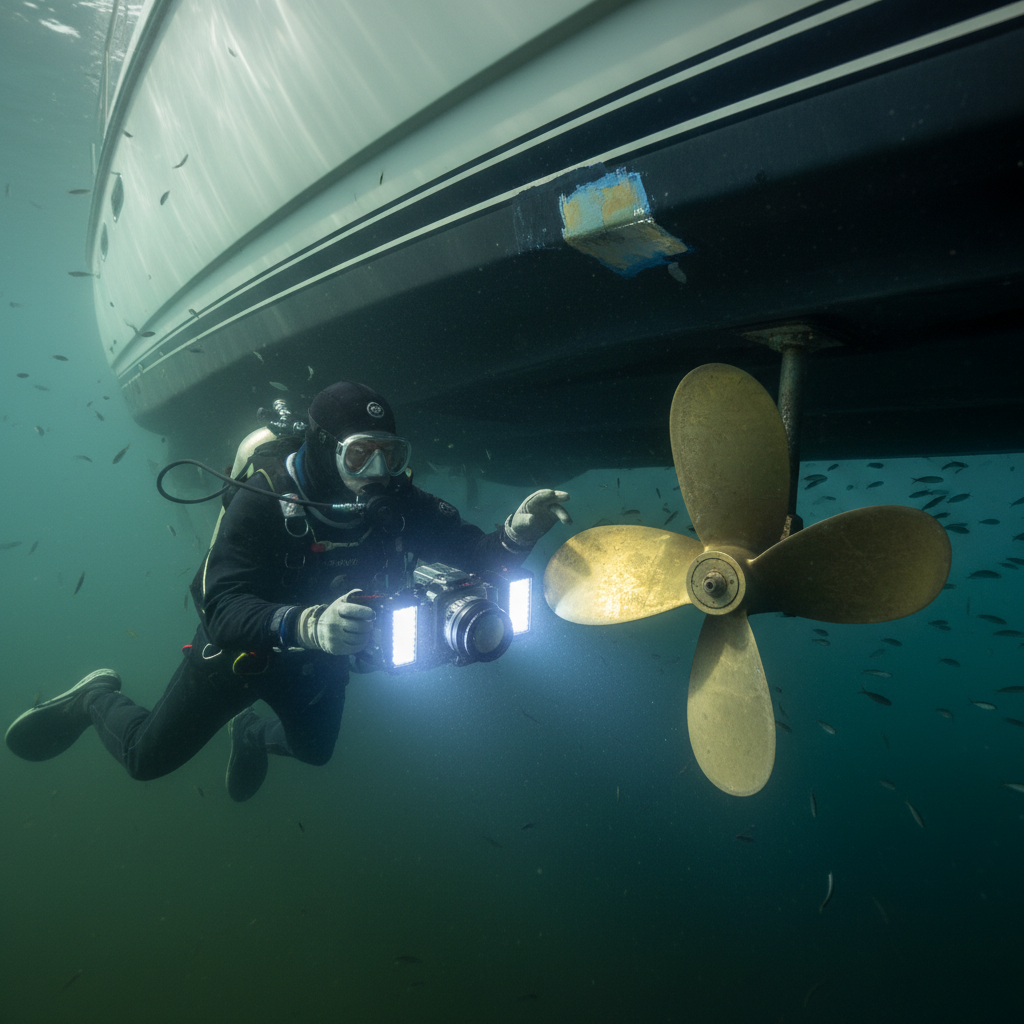
A professional boat intake inspection must begin before a single scraper touches the hull to document existing conditions and zinc depletion levels. Here’s the thing: most owners assume their diver knows what to look for, but without a baseline, you can’t measure progress.
What most people miss is that the high sediment levels in the Petaluma River can mask early signs of electrolysis. A typical Bay Area mid-market client often discovers that their ‘clean’ hull actually has blocked cooling intakes that only a high-lumen camera can spot. According to EPA vessel standards, maintaining a clean hull is also a critical component of local runoff regulation compliance.
The Baseline Checklist:
- High-resolution wide shots of the running gear.
- Macro photos of every thru-hull and intake grate.
- Measurement of remaining zinc anode mass (percentage).
- Documentation of current biofouling levels (Levels 1-5).
Need a baseline for your vessel? Schedule your professional intake inspection today.
Step 2: Real-Time Verification During the Repair
Verification shouldn’t wait until the diver is back on the dock; it requires capturing the ‘during’ phase to prove structural integrity. For underwater repair verification, this means capturing the exact moment a zinc is replaced or a propeller is polished.
But wait—how do you get clear photos in the murky Petaluma Marina? We use specialized lighting rigs and close-proximity lens techniques to cut through the silt. This digital paper trail is exactly what Forbes contributors suggest when discussing high-value asset maintenance: trust, but verify with data.
| Feature | Standard Diver Service | 360 Hull Diving Framework |
|---|---|---|
| Reporting | Verbal/Handwritten | Digital PDF with Photos |
| Verification | “Trust me” | Before/After Photo Proof |
| Insurance Ready | Rarely | Always |
Step 3: The Post-Service “Clean-Room” Audit
The final step in our framework ensures that every intake is clear of debris and every mechanical component is functional. This is where we verify that the Petaluma Marina hull service actually met the standards required for marine survey compliance.
An honest, contrarian insight: Most divers over-clean, which actually strips away expensive bottom paint. Our framework focuses on ‘surgical’ cleaning—removing the biofouling removal California mandates without destroying your hull’s protective barrier. This approach preserves your paint for an extra season, saving you thousands in the long run.
Post-Service Verification Points:
- Clearance check on all bow thrusters and stabilizers.
- Confirmation of cotter pin placement on props.
- Final sweep of the waterline to ensure no ‘shaving cream’ residue is left behind.
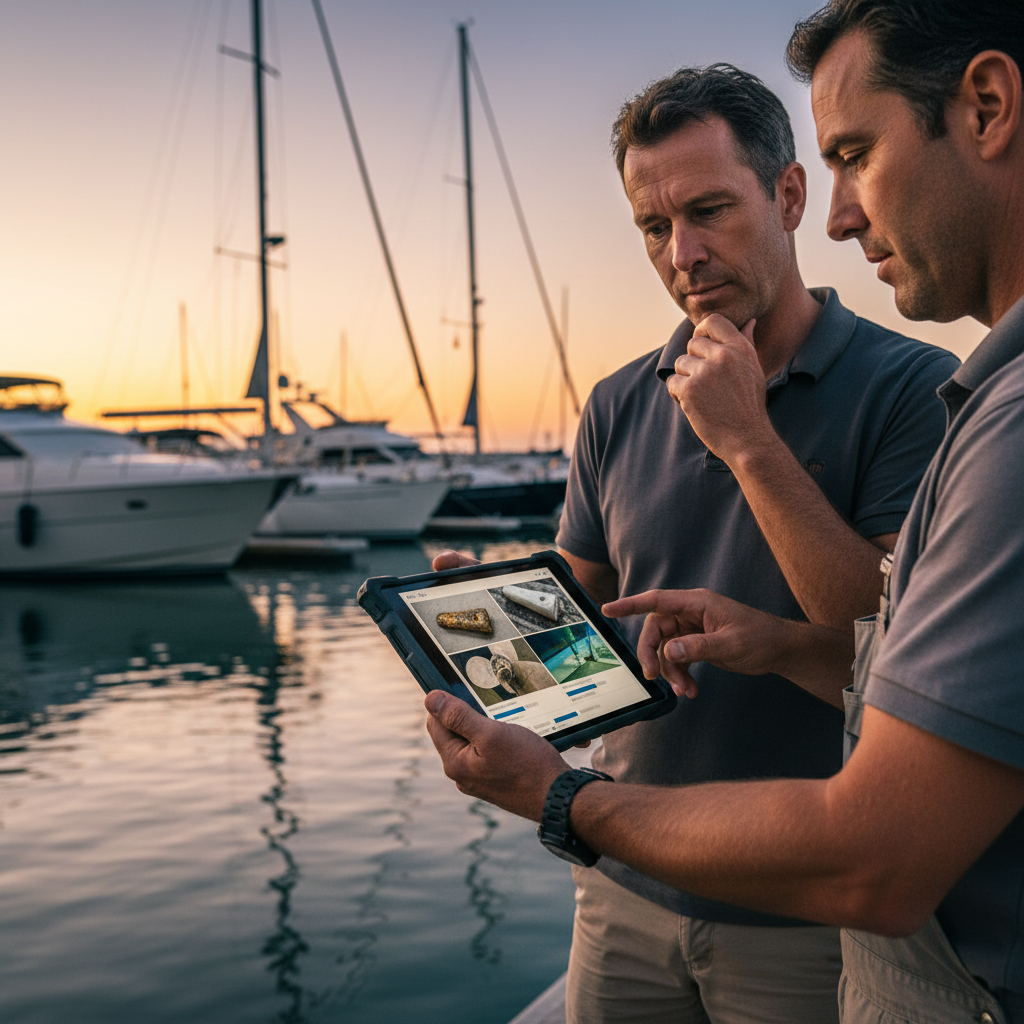
- Upload of all footage to your private owner’s portal.
If you’re managing multiple vessels or a growing charter fleet, you might find that our internal AI content engine, Ingest.blog, helps us keep our reporting velocity as fast as our diving.
Overcoming Petaluma Marina’s Unique Environmental Challenges
Operating a Petaluma Marina hull service requires more than just a tank and a regulator; it requires an understanding of the river’s hydrology. The Petaluma River is notorious for low visibility, which is why underwater repair verification is so difficult for amateur outfits.
In our work with local boat owners, we’ve found that timing services around the high slack tide is the only way to get the ‘insurance-grade’ footage needed for underwater hull inspection. This isn’t just about aesthetics; it’s about seeing the hairline cracks in a strut that could lead to a mid-bay emergency.
Ready to see what’s actually happening under your boat? Book your verified service at Petaluma Marina.
Why Marine Insurance Demands Better Documentation
The days of ‘handshake’ maintenance are over because insurance underwriters are tightening their requirements for underwater repair verification. If you have a claim involving a submerged object or a failed thru-hull, having a dated boat intake inspection report can be the difference between a payout and a denial.
A typical Bay Area recreational owner should keep a digital log of every dive. Our 3-step framework provides exactly that—a chronological, visual history of your boat’s underwater health. This transparency builds value when it comes time to sell, as savvy buyers now ask for maintenance logs that include more than just oil changes.
FAQs About Underwater Repair Verification
How do you get clear photos in the murky Petaluma River?
We use high-lumen underwater LEDs and ultra-wide-angle lenses that allow us to shoot within inches of the hull. By timing our underwater repair verification during slack tide, we minimize ‘backscatter’ from suspended silt, ensuring your boat intake inspection is clear and actionable.
Does insurance really require photo proof of hull repairs?
While not every policy explicitly mandates photos, most major carriers now prioritize claims that have a documented underwater hull inspection history. Providing underwater repair verification proves you weren’t negligent, which is vital for claims involving corrosion or mechanical failure in Northern California waters.
How often should I have my intakes inspected at Petaluma Marina?
Due to high nutrient levels and rapid biofouling, we recommend a boat intake inspection every 3-4 weeks during peak summer months. Our Petaluma Marina hull service ensures that heavy silt and barnacle growth don’t choke your engine’s cooling system or AC intakes.
What happens if the diver finds a problem during the intake?
Our 3-step framework includes an immediate ‘Stop-Work’ notification. We send you the photo proof of the issue—such as a bent prop or heavy electrolysis—so you can authorize the underwater repair verification before we proceed, ensuring there are no surprises on your final invoice.
Take Action: Secure Your Vessel’s Future This Week
Don’t leave your boat’s safety to guesswork. This week, pull your last three diving invoices—if they don’t include photo proof of your intakes and zincs, you’re flying blind. Transitioning to a verified maintenance schedule isn’t just about better service; it’s about the peace of mind that comes from knowing your vessel is truly seaworthy.
Ready for total transparency? Contact 360 Hull Diving today to schedule your first verified boat intake inspection at Petaluma Marina. We’ll provide the before-and-after proof you need to protect your investment.