📋 Table of Contents
According to the American Boat and Yacht Council (ABYC), galvanic corrosion can destroy an unprotected underwater drive unit in a matter of weeks if the electrical environment is compromised. For boaters at Treasure Island, the ‘Hidden Leech’ of stray current from aging marina infrastructure often accelerates zinc anode depletion at twice the expected rate.
Key Takeaways for Treasure Island Boat Owners:
- Treasure Island’s salinity and high-traffic electrical grid demand monthly anode inspections.
- Wait for 50% depletion and you’ve already risked your expensive running gear.
- Transitioning to aluminum anodes is often more effective in the San Francisco Bay’s brackish transition zones.
- Photo proof is the only way to verify replacement without hauling out.
Step 1: Visual Inspection and the 50% Myth of Zinc Anode Depletion
The most dangerous mistake a boat owner can make is assuming an anode is ‘fine’ just because half of it is still there. In reality, as an anode loses mass, its surface area decreases, which significantly reduces its ability to provide adequate voltage protection to your shafts and props.
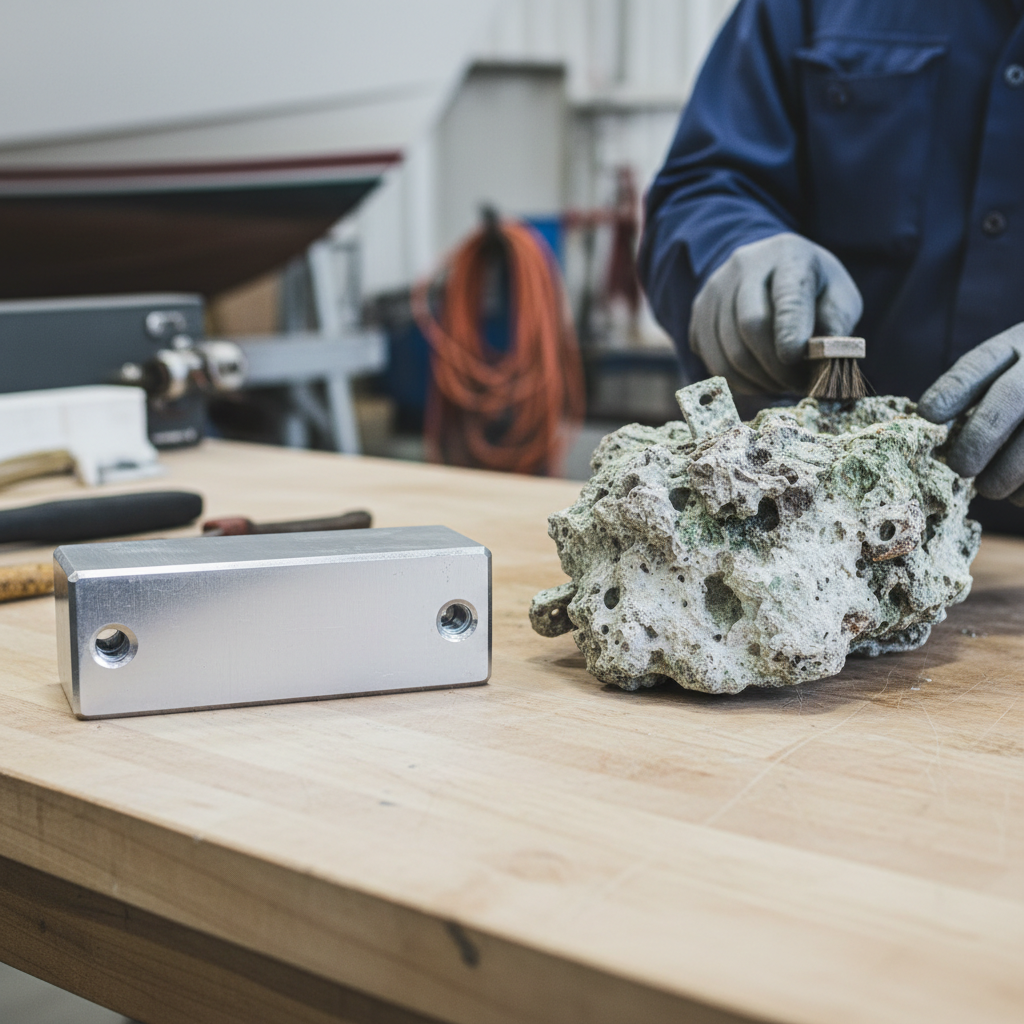
What most people miss is that the appearance of the anode tells a story. A healthy sacrificial anode should look like it is ‘melting’ or pitted uniformly. If your zincs look bright and clean after six months in a Treasure Island slip, they aren’t working—likely due to a poor electrical bond or ‘passivation’ where a crust prevents the metal from sacrificing itself.
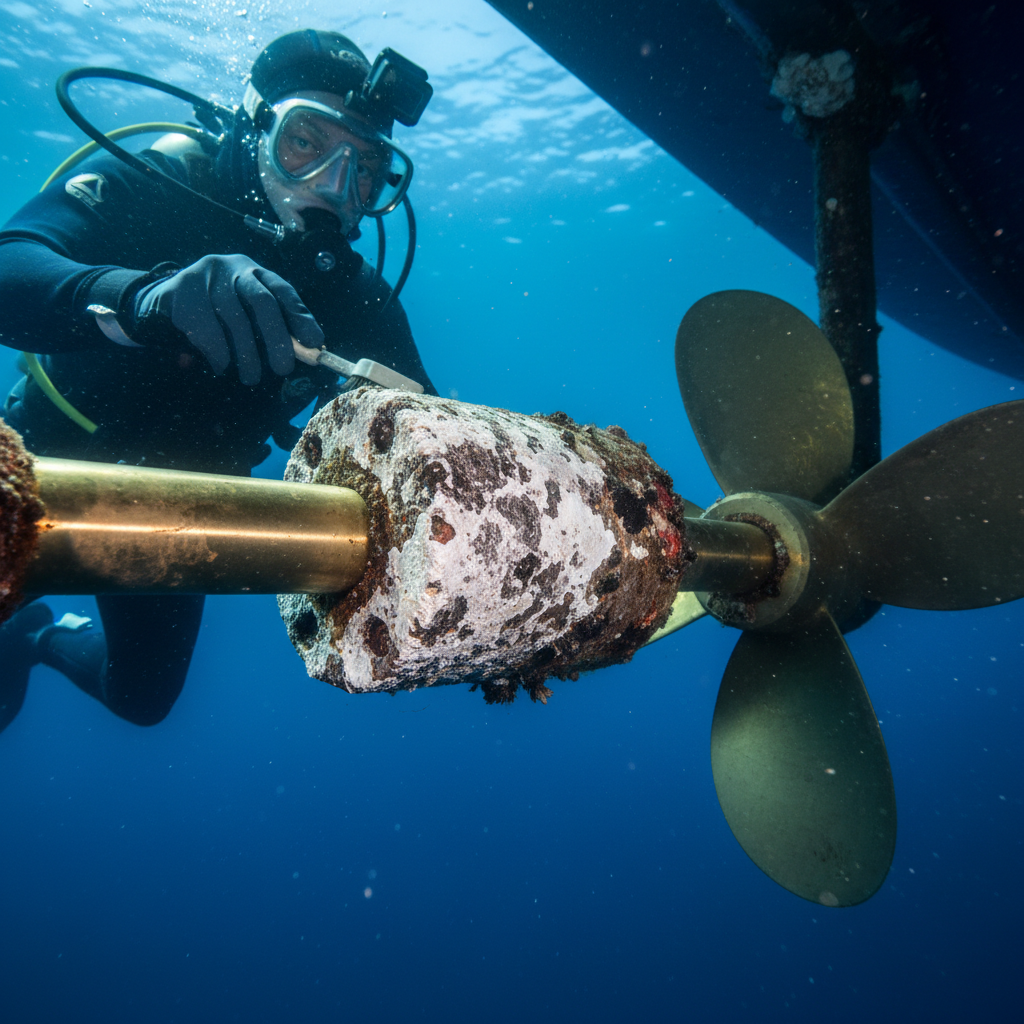
In our work with recreational boat owners at Clipper Cove, we often see anodes that look intact from the surface but are crumbling at the attachment point. This is why we provide before-and-after photo proof for every underwater hull maintenance visit. If the connection is loose, the protection is zero.
Step 2: Testing for Stray Current Electrolysis at Treasure Island
Treasure Island’s unique geography and marina layout create a ‘stray current’ hotspot where shore power leakage from neighboring vessels can turn your boat into a giant battery. This environmental factor makes zinc anode depletion unpredictable compared to quieter marinas in Sausalito or Richmond.
The real kicker? You can’t see electrical current, but you can measure it. We recommend ‘Hull Potential Testing’ using a silver/silver-chloride reference electrode. This tool tells us exactly if your boat is ‘under-protected’ or ‘over-protected.’ According to BoatUS, maintaining the correct millivolt range is the only way to ensure your running gear isn’t being eaten away.
- Check your bonding system: Ensure all internal metal components are electrically connected.
- Monitor shore power: Use a galvanic isolator to block low-voltage DC current from the dock.
- Identify ‘Hot’ slips: Some areas of Treasure Island marinas have higher background current than others.
Need a professional eyes-under-water report? Schedule your Treasure Island hull inspection today to get a baseline on your corrosion levels.
Step 3: Strategic Sacrificial Anode Replacement and Material Choice
Choosing the right material is the final pillar of the framework, and the old-school ‘zinc only’ mentality is fading. The transition from zinc to aluminum anodes is gaining traction because aluminum has a higher driving voltage and lasts up to 50% longer in the brackish water often found near the Bay Bridge.
The sacrificial anode replacement process must be precise. We aren’t just slapping on new metal; we are cleaning the contact points to ensure a metal-to-metal bond. Without this, the new anode is just a heavy ornament. For Treasure Island boat maintenance, we recommend replacing anodes when they reach 30-40% depletion rather than the industry-standard 50% to account for the local ‘acceleration factor.’
| Material | Best Environment | Relative Lifespan |
|---|---|---|
| Zinc | Saltwater Only | Standard |
| Aluminum | Salt/Brackish | High (1.5x) |
| Magnesium | Freshwater Only | N/A for SF Bay |
The ROI of Proactive Treasure Island Boat Maintenance
The cost of a set of anodes and a diver is a fraction of the cost of replacing a pitted stainless steel shaft or a bronze propeller. We’ve seen typical Bay Area mid-market vessels face repair bills in the thousands because a $50 zinc was ignored for an extra three months.
Here’s the thing: proactive replacement isn’t just about the metal; it’s about the peace of mind. When you’re cruising past Alcatraz toward the Golden Gate, the last thing you want to worry about is whether your prop nut is currently dissolving. By following a strict 3-step framework, you turn underwater maintenance from a mystery into a scheduled, manageable expense.
At 360 Hull Diving, we specialize in this high-frequency monitoring. Whether you are at Treasure Island Marina or Pier 39, our team provides the transparency that recreational boaters deserve. We use our internal AI content engine to help keep our clients informed about these shifting environmental risks in real-time.
Common Pitfalls in Zinc Anode Replacement
What most people miss is the danger of ‘over-protection,’ especially on wooden hulls or certain fiberglass layups. If you add too much sacrificial metal, you can actually cause ‘alkali delignification’ or paint blistering. It’s a delicate balance that requires more than just a DIY approach.
- Never paint over an anode: It completely insulates the metal and renders it useless.
- Avoid ‘hanging’ zincs as a permanent fix: They are great for emergencies but don’t protect the specific gear as well as shaft or hull-mounted anodes.
- Beware of ‘cheap’ alloys: Low-quality anodes may contain impurities that lead to passivation.
Ready to secure your vessel? Contact us for a free estimate and let our insured dive team handle your next sacrificial anode replacement with full photo documentation.
Why Local Expertise Matters for Treasure Island Boaters
Treasure Island isn’t just another marina; it’s a unique micro-environment. Between the dredging projects and the constant salt-spray from the Slot, your boat is under constant environmental stress. Using a dive team that understands the specific current flows of the East Bay is critical for long-term hull health.
We take pride in being a locally rooted service. From the Berkeley Marina to the San Francisco waterfront, we’ve seen how zinc anode depletion varies block by block. Our mission is to provide the convenience of a ‘set it and forget it’ maintenance plan while giving you the transparency of a ‘see it for yourself’ photo report.
Frequently Asked Questions
How often should I check for zinc anode depletion at Treasure Island?
Given the high stray current levels at Treasure Island, we recommend a professional visual inspection every 3-4 weeks. While some marinas allow for quarterly checks, the accelerated corrosion rates in this specific area can deplete a standard zinc faster than expected, potentially leaving your running gear vulnerable between traditional service intervals.
Is aluminum better than zinc for San Francisco Bay boaters?
Yes, for most modern vessels in the Bay Area, aluminum anodes are superior. They are more active than zinc, meaning they provide better protection in brackish water transition zones, and they do not contain toxic cadmium, making them an eco-friendly choice for the sensitive marine environment around Treasure Island and the Embarcadero.
Can I change my own anodes while the boat is in the water?
While some owners attempt DIY replacement, it carries significant risks including drowning, entanglement, and improper installation. A certified, insured diver from 360 Hull Diving ensures the metal-to-metal contact is perfect and provides photo proof, which is often required for insurance claims regarding hull or machinery damage.
What are the signs that my anodes are failing?
Visible signs include heavy pitting, a ‘foam-like’ appearance on the metal surface, or the presence of white powdery oxidation. However, the most critical sign is the loss of mass; once an anode has lost 40% of its original size, its electrical effectiveness drops sharply, and replacement should be scheduled immediately to prevent damage to props and shafts.