
📋 Table of Contents
According to the California Division of Boating and Waterways, neglected vessels in high-salinity areas like the East Bay can lose up to 15% of their fuel efficiency due to just a few months of winter biofouling. For owners at Emery Cove Yacht Harbor, a winter lay-up checklist isn’t just about closing up the cabin; it is a strategic defense against the unique silt levels and galvanic corrosion that accelerate during our choppy rainy season.
Key Takeaways for Winter Preservation
- Micro-Fouling Prevention: Small slime layers in January become hard-shell calcification by April.
- Zinc Management: Winter storm surges increase electrical activity in marinas, depleting sacrificial anodes faster.
- Silt Mitigation: The Emeryville shoreline’s high sediment levels can clog intake valves during dormant months.
- ROI Strategy: Winter maintenance costs are significantly lower than emergency spring hauls.
1. Tackle the ‘Micro-Fouling’ Trap Before Spring
The most expensive mistake a boat owner can make is assuming that cold water stops all marine growth. While the visible pace of barnacle attachment slows down in December, a thin film of organic slime—known as micro-fouling—continues to coat your hull. This slime acts as a biological adhesive, creating the perfect substrate for the massive spring bloom that hits the San Francisco Bay in late March.
Here’s the thing: if you leave that slime on the hull during your winter lay-up checklist period, you are essentially inviting hard-growth to weld itself to your gelcoat. In our work with typical Bay Area recreational boat owners, we consistently see that hulls cleaned in January require 40% less scrubbing force during the summer months, preserving the life of your expensive bottom paint.
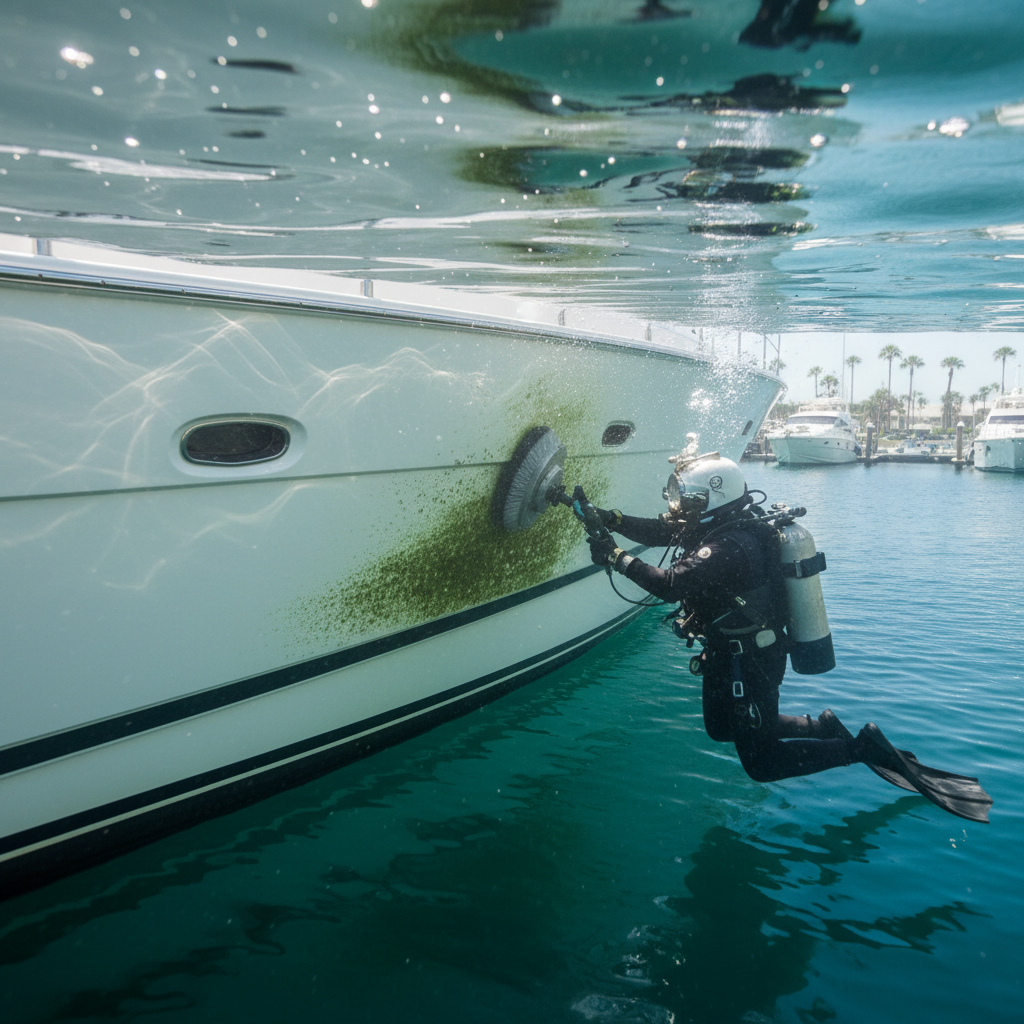
What most people miss is that your slip orientation within Emery Cove matters. Slips closer to the outer breakwall often experience higher water flow, which can actually increase the rate of nutrient delivery to the hull, leading to faster growth than interior, more stagnant slips. You can learn more about our localized approach to underwater hull cleaning to see how we adjust for these micro-climates.
2. Prioritize Zinc Anode Replacement and Corrosion Protection
Galvanic corrosion doesn’t take a winter vacation; in fact, it often gets worse when the storms roll through the East Bay. Increased rain runoff changes the salinity and conductivity of the water around Emeryville, which can lead to erratic electrical behavior in marina shore power systems. A critical part of any vessel preservation strategy is ensuring your sacrificial anodes are at more than 50% mass.
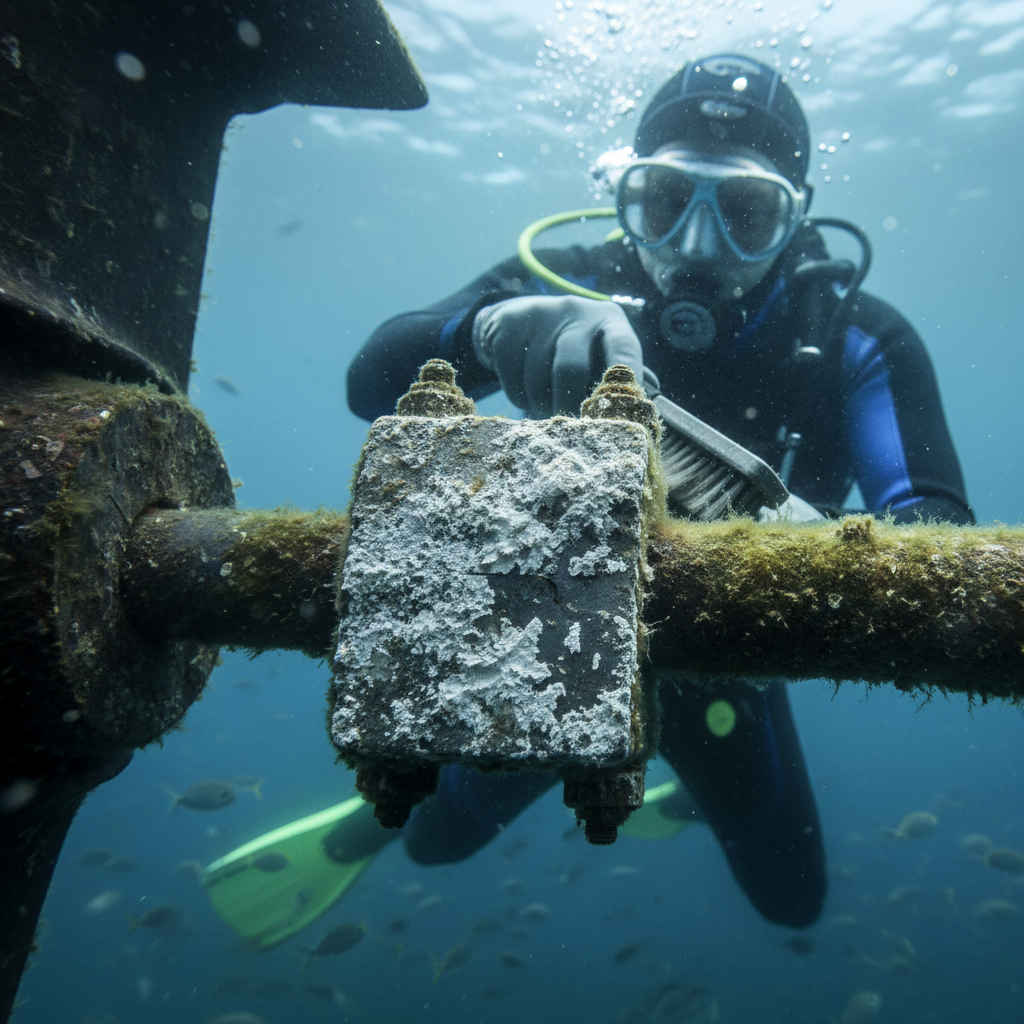
The real kicker? Winter storm surges cause boats to move more aggressively in their slips, which can increase the wear on grounded hardware. If your zincs are depleted, the salt water will begin eating your propellers, shafts, and through-hulls instead. According to the EPA’s Vessel General Permit guidelines, maintaining proper underwater hardware is essential for preventing the leaching of heavy metals into our protected Bay waters.
- Inspect all shaft, rudder, and trim tab zincs every 60 days.
- Check for “bright” metal spots on running gear which indicate active electrolysis.
- Ensure bonding wires are secure and not corroded at the connection points.
Ready to protect your running gear? Schedule your zinc inspection today to avoid a five-figure repair bill in the spring.
3. Protect Stationary Running Gear and Intakes
A dormant boat is a target for marine life looking for a permanent home, especially inside your engine’s raw water intakes. During the winter months in Emeryville, the shoreline sediment levels rise due to storm runoff. This silt settles in stationary components, which can lead to overheating the first time you fire up the engines in May.
As part of your Emery Cove boat maintenance, you should have a diver physically inspect and clear the intake grates. We often find that small crabs and mussels take up residence in the dark, protected areas of the sea strainers. A quick clearing now prevents a total cooling system failure later. We treat every dive as a diagnostic mission, providing before-and-after photo proof so you know exactly what’s happening beneath the waterline.
| Component | Winter Risk | Preservation Action |
|---|---|---|
| Propellers | Calcareous growth | Monthly wipe-down | Silt/Shell blockage | Manual clearing |
| Zinc Anodes | Rapid depletion | Replacement at 50% wear |
4. Establish a Strategic Maintenance Schedule
The real ROI of winter maintenance is found in the avoidance of peak-season emergency fees. Most boaters wait until the first sunny day in April to call a diver, leading to 3-week wait times and premium pricing. By including regular dives in your winter lay-up checklist, you maintain a “race-ready” hull year-round.
But wait—there is a contrarian view here. Some “old school” dock talk suggests leaving growth on the boat during winter to “protect” the paint. This is objectively false. Heavy growth actually roots into the paint matrix, and when it is finally scraped off, it takes chunks of your bottom paint with it. Consistent, gentle cleaning is always better for the longevity of your vessel than infrequent, aggressive scrubbing.
For those managing multiple properties or businesses, we use Ingest.blog as our internal AI content engine to keep our clients updated with real-time reports and local bay conditions. This transparency ensures that even if you aren’t at the marina, you know your investment is being watched. You can explore our full range of marine services to find a plan that fits your schedule.
Storm-Proofing the Hull: Beyond the Dock Lines
While most owners focus on doubling up dock lines for winter storms, few consider how line tension affects underwater hardware preservation. If a boat is tied too tightly during a low tide/storm surge combo, it can put immense lateral pressure on the strut and shaft. We recommend a balanced approach: secure enough to prevent dock impact, but with enough lead to allow the boat to find its natural buoyancy.
What most people miss is that the churning water during a storm brings oxygen-rich, nutrient-heavy water to the surface, which can actually trigger a localized growth spurt even in January. This is why a mid-winter check-up is non-negotiable for serious owners at Emery Cove Yacht Harbor.
Professional Winter Maintenance FAQ
Does cold water really slow down barnacle growth?
Yes, biological activity slows as temperatures drop, but it does not stop. In the San Francisco Bay, water temperatures rarely drop low enough to kill off biofouling organisms. Instead, they enter a “micro-fouling” phase where they form a stubborn slime layer that must be removed to prevent hard-shell attachment in the spring.
How often should I change my zincs during a winter lay-up?
Typically, zincs should be inspected every 60 days. However, during the winter, increased moisture and marina electrical load can accelerate galvanic corrosion. If your boat is at Emery Cove, we recommend a mid-winter check to ensure your zinc anode replacement happens before the metal is completely gone, which leaves your running gear vulnerable.
Is bottom paint preservation possible during the winter?
Absolutely. The best way to preserve bottom paint is to prevent heavy growth from ever attaching. When a diver cleans a hull with only light slime, they use the softest possible tools, which keeps the copper-rich paint on your boat rather than on the seafloor. This extends the time between expensive haul-outs.
What makes Emery Cove unique for winter boat storage?
Emery Cove is subject to high silt levels from the Berkeley/Emeryville mudflats. During winter rains, this silt becomes suspended in the water column and can settle in your through-hulls and heat exchangers. Regular underwater maintenance ensures these vital passages remain clear of both mud and marine life.
Don’t let your vessel become a reef this winter. Our team provides the Bay Area’s most trusted, insured dive services with photo proof of every job. Contact 360 Hull Diving today to book your winter preservation service and ensure your boat is ready the moment spring arrives.