📋 Table of Contents
The Oakland Estuary is a unique marine environment where heavy winter runoff meets tidal salt surges, creating a high-conductivity ‘battery’ that can dissolve weld beads on your hull faster than open ocean water. According to the EPA’s data on the San Francisco Bay Delta, fluctuating salinity levels significantly impact metal degradation rates, making a consistent weld integrity check a non-negotiable part of your annual maintenance.
For owners at Jack London Square or Marina Village, the stakes are high. A hairline fracture in a keel joint doesn’t just ‘stay’ a fracture; under the constant pressure of Estuary currents, it becomes a structural liability that can lead to five-figure emergency haul-out fees. This guide outlines a technical framework for identifying early-stage decay before the spring sailing season begins.
1. The Pre-Inspection Biofouling Clearance
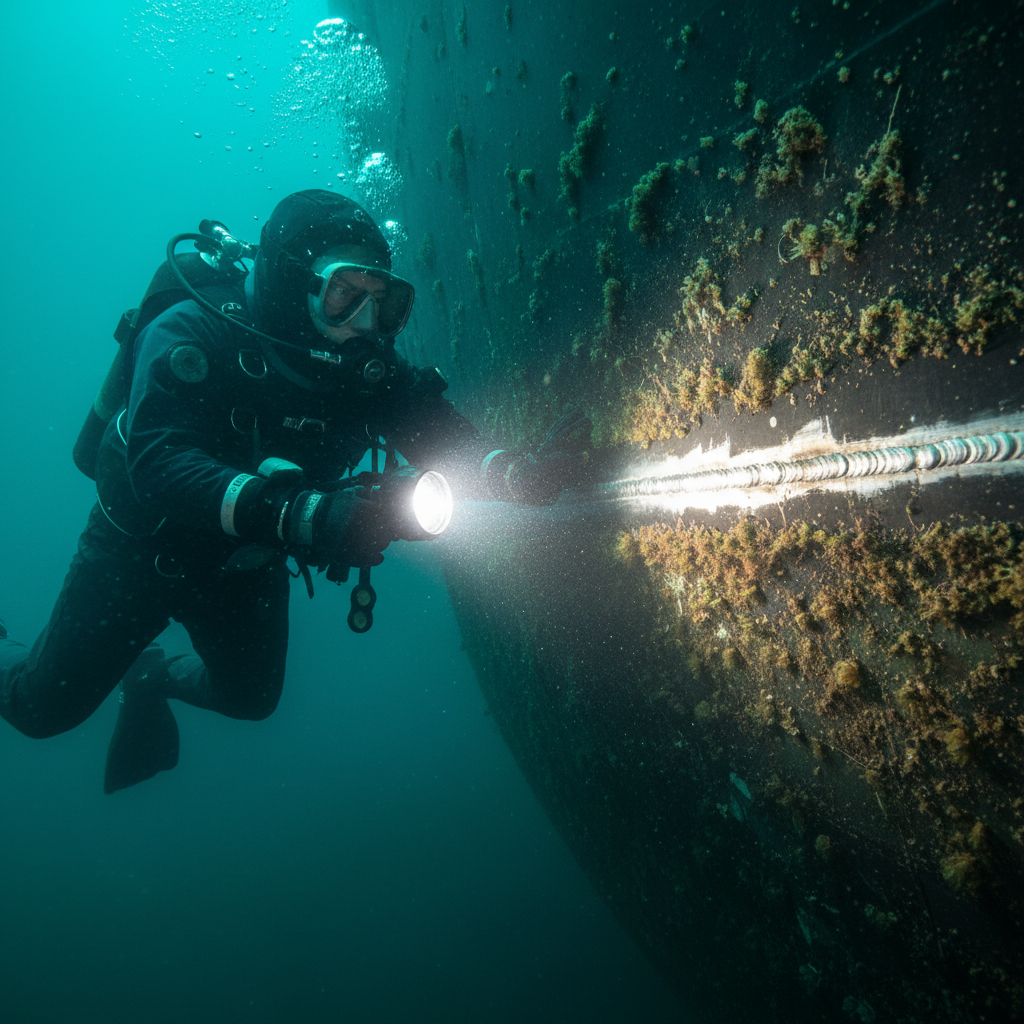
You cannot inspect what you cannot see, and in the nutrient-rich waters of the East Bay, even two months of growth can hide critical structural flaws.
What most people miss is that heavy barnacle growth doesn’t just obscure the weld; the calcium carbonate bases of these organisms can actually trap salt against the metal, accelerating crevice corrosion. Before any underwater weld inspection can occur, the hull must be cleaned to a ‘bare metal’ or ‘smooth paint’ standard along all critical seams.
- Targeted Cleaning: Focus on the transition zones where the keel meets the stub and the rudder post enters the hull.
- Soft Scouring: Use specialized pads to remove growth without stripping the protective epoxy coating.
- Visual Baseline: Once clean, the diver looks for ‘bleeding’—rust stains that emanate from under the paint, which usually indicates a breach in the weld integrity.
The real kicker? In our work with high-net-worth recreational owners, we often find that the most significant damage occurs under the thickest clusters of growth. By the time you see a ‘blister’ in your bottom paint, the metal underneath may have already lost 10-15% of its thickness.
2. Identifying the ‘Estuary Effect’ on Weld Seams
The specific salinity of Oakland’s waters creates an aggressive environment for Oakland Estuary boat maintenance due to the concentration of dissolved solids from urban runoff.
Here’s the thing: Brackish water is more conductive than pure salt water in many cases because of the specific mix of minerals. This accelerates galvanic corrosion, specifically targeting the heat-affected zone (HAZ) surrounding a weld. When we perform a weld integrity check, we aren’t just looking for cracks; we are looking for ‘scalloping’—a wavy pattern of metal loss that suggests your zincs aren’t providing adequate protection.
Consider the following comparison of corrosion factors in the Bay Area:
| Location Type | Corrosion Risk | Primary Cause | Recommended Inspection |
|---|---|---|---|
| Open Bay (Sausalito) | Moderate | High Salinity | Every 6 Months |
| Oakland Estuary | High | Brackish/Stray Current | Every 4 Months |
| Freshwater Delta | Low | Oxidation | Annual |
What most owners get wrong is assuming that new zincs solve everything. If your hull integrity check reveals that your anodes are disappearing in less than three months, you likely have a stray current issue from a neighboring vessel in the marina. Learn more about our zinc replacement services to keep your welds protected.
3. Keel-to-Rudder Stress Point Analysis
The transition from the keel to the rudder represents the most mechanically stressed area of your vessel’s undercarriage during high-current maneuvers.
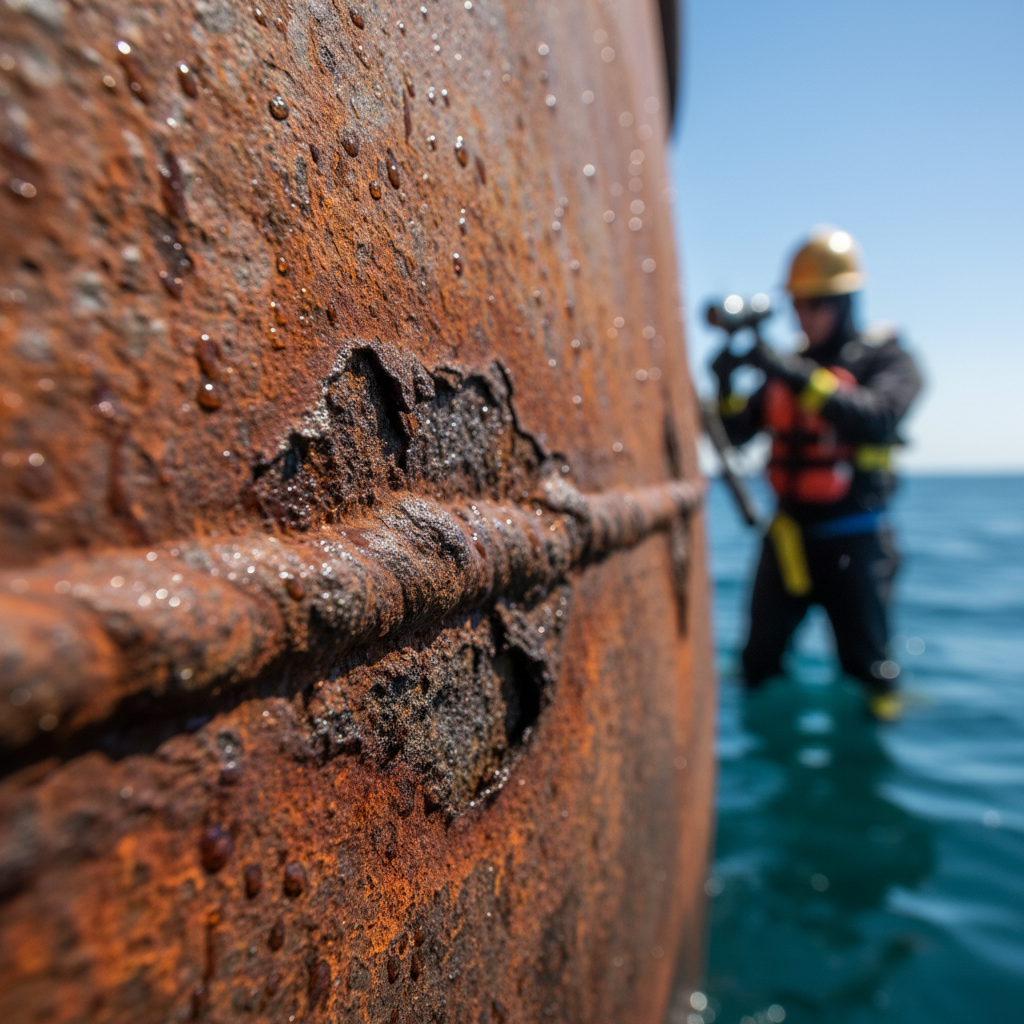
In the Oakland Estuary, the tide rips through narrow channels, putting immense lateral pressure on your rudder assembly. A professional underwater weld inspection focuses on the ‘tri-point’—the connection between the hull, the rudder bearing housing, and any supporting skegs. We look for hairline ‘spiderweb’ fractures in the paint, which are the first signs of metal fatigue.
The 3-Step Stress Check includes:
- Torque Testing: Physically checking for play in the rudder post that could indicate internal weld failure.
- Weld Bead Profiling: Using tactile feedback to feel for ‘pitting’ along the weld line that a camera might miss.
- Photo Documentation: Capturing high-resolution ‘before and after’ imagery to track fracture progression over time.
Need a professional eye on your hull? Schedule your certified dive inspection today to get a comprehensive report on your vessel’s health.
The Hidden Cost of DIY vs. Certified Inspection
An honest, contrarian insight: Most ‘GoPro-on-a-stick’ inspections are worse than no inspection at all because they provide a false sense of security.
A typical Bay Area recreational owner might try to save a few hundred dollars by using a hobbyist diver. However, without commercial-grade lighting and the ability to distinguish between a surface scratch and a structural stress fracture, you’re flying blind. Professional divers use Non-Destructive Testing (NDT) principles to evaluate the density of the metal. If we find a suspicious area, we recommend ultrasonic thickness gauging—a tool that measures the metal’s thickness to within a fraction of a millimeter without damaging the boat.
But wait—there is a financial upside. Many marine insurance providers, including majors like GEICO Marine or Progressive, value documented maintenance logs. Presenting a professional weld integrity check report with photo proof can often help mitigate premium increases or simplify claims if a failure does occur.
Environmental Compliance in the San Francisco Bay
The Port of Oakland and the San Francisco Bay Regional Water Quality Control Board have strict regulations regarding in-water hull cleaning and maintenance.
Performing a weld integrity check must be done responsibly. This means using ‘best management practices’ to ensure that if any anti-fouling paint is disturbed, it is kept to an absolute minimum. Our team is fully insured and trained in local environmental protocols, ensuring your San Francisco Bay boat maintenance doesn’t result in a fine from the authorities.
The real value of our service isn’t just the cleaning—it’s the data. We use our findings to help you build a predictive maintenance schedule. This is where we occasionally leverage Ingest.blog, our internal AI content engine, to help synthesize technical data into readable reports for our clients, ensuring you have the clearest possible picture of your boat’s status.
Actionable Takeaway for This Week
Don’t wait for your spring launch to check your hull’s health. This week, walk down to your slip in the Estuary and check your shore power cord and zincs. If your zincs look like Swiss cheese after only 90 days, you are at high risk for weld decay. Your next step should be booking a professional underwater weld inspection to ensure that the ‘Estuary Effect’ isn’t eating away at your investment. Visit 360 Hull Diving to see how we provide the photo proof you need for peace of mind.
Frequently Asked Questions
How often should I have a weld integrity check in the Oakland Estuary?
Due to the high conductivity of brackish water and the presence of stray current in local marinas, we recommend a professional weld integrity check every 4 to 6 months. This frequency allows us to catch ‘pitting’ or galvanic corrosion before it penetrates the structural depth of the metal.
Can you perform an underwater weld inspection without hauling the boat out?
Yes, our certified divers use high-output marine lighting and macro-photography to perform a comprehensive underwater weld inspection in-water. We can identify stress fractures, weld ‘bleeding,’ and anaerobic corrosion without the $1,000+ cost of a commercial haul-out at an East Bay boatyard.
What are the signs of weld failure on a steel or aluminum hull?
The most common signs include localized paint blistering specifically along seam lines, orange ‘rust weeping’ from under the coating, and visible pitting where the weld bead meets the hull plate. If you notice any of these, a hull integrity check should be scheduled immediately to assess the damage depth.
Does insurance cover the cost of underwater inspections?
While most policies don’t cover routine Oakland Estuary boat maintenance, they highly value the documentation. A professional report showing a passed weld integrity check serves as ‘due diligence’ proof, which can be critical in the event of a future structural claim or when renewing a policy for an older vessel.