
📋 Table of Contents
According to BoatUS, nearly 50% of sinkings at the dock are caused by failed thru-hull fittings or underwater plumbing issues that go unnoticed. For a Richmond Yacht Club member with a dog on board, a silent leak isn’t just a financial headache—it’s a critical threat to your pet’s safety while you’re away from the slip.
Maintaining thru-hull valve integrity in the high-silt, high-salinity environment of the Richmond shoreline requires more than a quick glance at the bilge. The unique tidal flow near the Richmond Inner Harbor accelerates biofouling, which can seize a seacock in as little as three months. If you cannot close your valves in an emergency, your vessel is essentially a ticking clock.
Key Takeaways for Richmond Boat Owners:
• Seacocks in Richmond fail faster due to localized silt and salinity levels.
• Non-functional valves are a leading cause of preventable vessel loss.
• Professional underwater inspections provide photo proof of valve health without hauling out.
• A ‘dry bilge’ policy is the best insurance for live-aboard pet owners.
1. The Richmond Salinity Factor and Seacock Maintenance
The real kicker about docking in Richmond is the specific mix of brackish water and heavy sediment that creates a sandpaper-like effect on moving valve parts.
Most boat owners assume that if the handle moves, the valve is working, but that is a dangerous misconception. In our work with typical Bay Area mid-market recreational vessels, we often find handles that have sheared off the internal ball or gate due to calcium buildup. This is especially prevalent in bronze fittings where galvanic corrosion has compromised the alloy’s strength.
- Bronze vs. Marelon: While Marelon doesn’t corrode, it can become brittle or jammed by barnacle growth inside the throw.
- Silt Accumulation: Richmond’s shoreline is notorious for fine silt that settles in valve seats, preventing a watertight seal.
- Electrolysis Risks: Stray current in crowded marinas can eat through a zinc anode and move to your thru-hulls in weeks, not months.
What most people miss is that seacock maintenance should be performed monthly, not annually. You need to exercise every valve on the boat—engine intake, head discharge, and scuppers—to ensure the seals remain limber and the passages clear of obstructions.
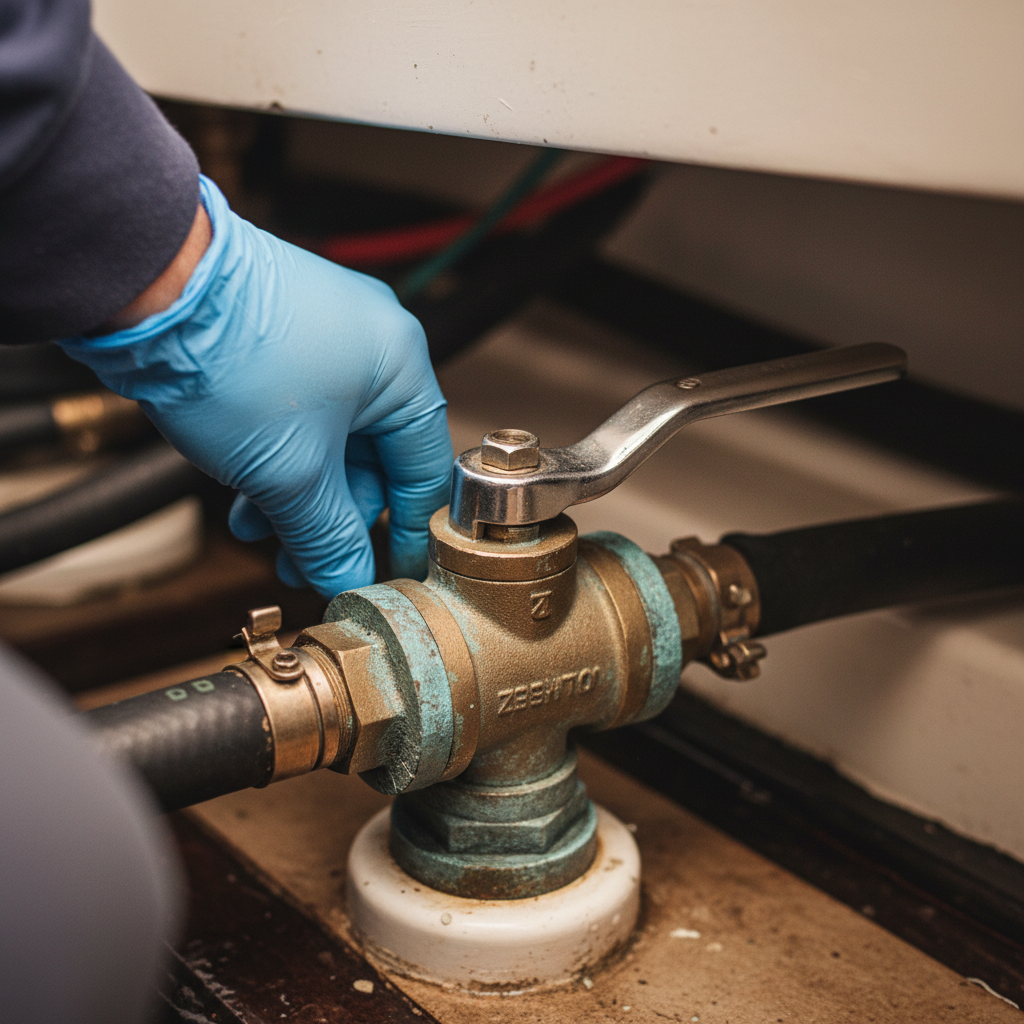
The Silent Killer: Hidden Corrosion
Corrosion often starts where you can’t see it: inside the pipe threading or behind the hull nut. According to the EPA’s Vessel General Permit guidelines, maintaining hardware integrity is also a key component of preventing accidental discharge of pollutants into the Bay.
If you notice pinkish discoloration on your bronze fittings, that’s a sign of “de-zincification.” The valve is losing its structural integrity and could snap under the pressure of a simple hose change. For owners at Richmond Marina, this is a non-negotiable inspection point during every underwater inspection.
2. Step-by-Step Underwater Valve Inspection Framework
A reliable underwater valve inspection is the only way to verify what is happening on the “wet side” of your hull without spending $500+ on a shipyard haul-out.
Here is the reality: a dry bilge doesn’t always mean a safe boat. We have seen cases in our work with Bay Area yacht owners where a valve was 90% blocked by an oyster shell, yet the owner had no idea until their engine overheated in the middle of the Berkeley Flats. Our 3-step framework ensures you aren’t flying blind.
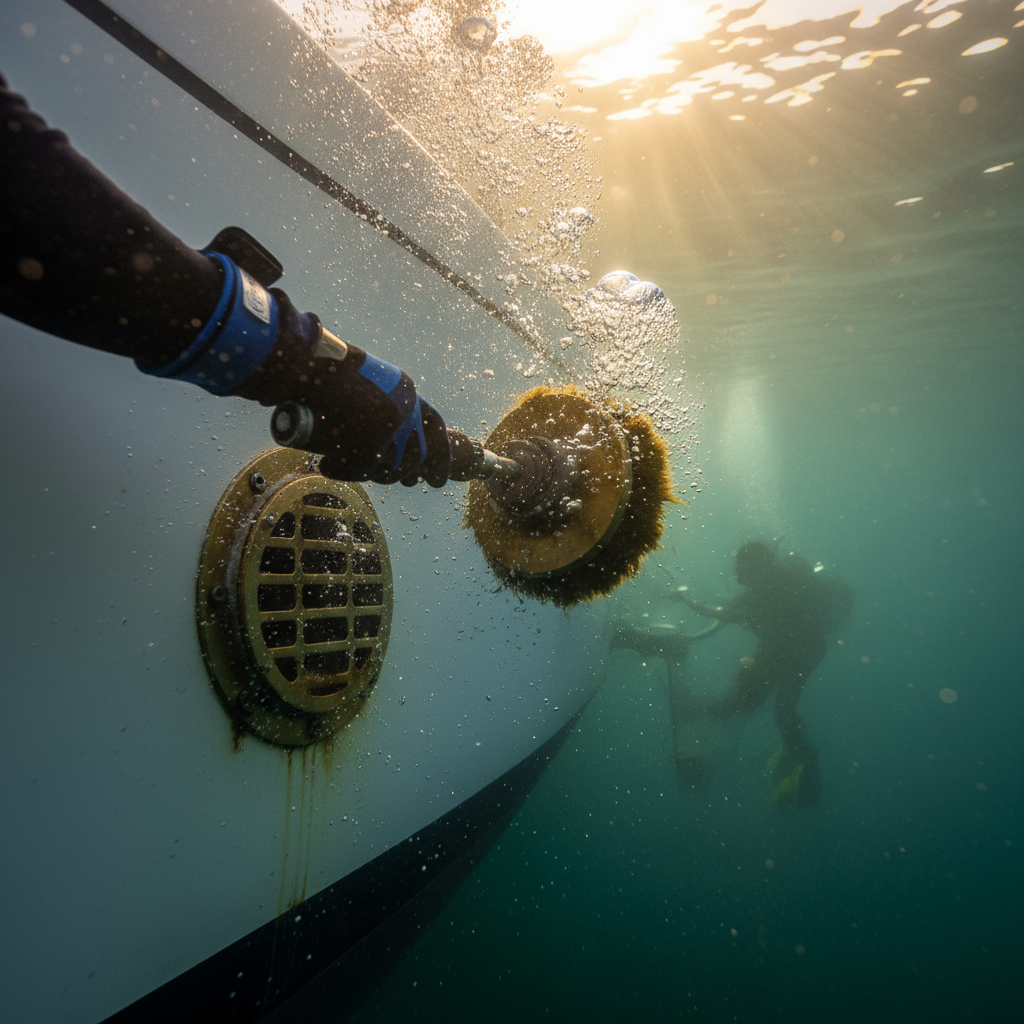
- External Aperture Clearing: A diver must clear the exterior grate or scoop of all biofouling to check for cracks in the bedding compound.
- Internal Bore Verification: We use specialized brushes to ensure the internal passage is clear, allowing for full water flow to critical systems.
- Photo Documentation: Never take a diver’s word for it; insist on high-resolution before-and-after photos of every thru-hull.
Need peace of mind before your next cruise? Schedule your professional dive inspection today to get photo proof of your hull’s health.
Why Richmond Silt Matters
The high tidal flow near Point Richmond keeps sediment suspended in the water column. This sediment acts as a catalyst for marine growth, providing a nutrient-rich environment for barnacles to thrive inside your intakes. Regular thru-hull valve integrity checks prevent these organisms from colonizing the cooling system of your expensive diesel engine.
| Feature | Bronze Seacocks | Marelon (Composite) |
|---|---|---|
| Corrosion Risk | High (Galvanic) | None |
| Strength | Extreme | High (but temp sensitive) |
| Richmond Silt Impact | Abrasive on seals | Can score the ball |
| Maintenance Need | Frequent Greasing | Frequent Exercising |
3. The ‘Dog-Proof’ Bilge: Yacht Safety for Pets
If you are a dog owner at the Richmond Yacht Club, your bilge pump is the only thing standing between your pet and a disaster while you’re at work or grabbing dinner on Shoreline Ct.
The real kicker? Most bilge pumps are designed to handle nuisance water, not a catastrophic thru-hull failure. A 1.5-inch thru-hull just two feet below the waterline can admit over 2,000 gallons of water per hour. No standard Rule 1500 pump can keep up with that volume for long. This makes yacht safety for dogs a matter of prevention rather than recovery.
- High-Water Alarms: Every dog owner should have a cellular-linked high-water alarm that pings their phone the second water rises above the floorboards.
- Pet Ramps: In a slow-leak scenario, having a way for your dog to reach higher ground (like a set of companionway stairs they can actually climb) is vital.
- Valve Labeling: Ensure anyone who watches your dog knows exactly where the seacocks are located and how to close them.
But wait—exercising your valves is only half the battle. You also need to ensure your zinc anodes are properly bonded to your thru-hulls. Without proper bonding, your valves become the sacrificial metal for the rest of the boat.
4. Cost-Benefit: Diver Inspections vs. Emergency Haul-Outs
Here is an honest, contrarian insight: Most boat owners spend too much money on “emergency” repairs because they skip the $150 maintenance check.
In the Bay Area, an emergency haul-out at a Richmond shipyard can easily cost three times the standard rate once you factor in short-haul fees, labor surcharges, and lost time. Conversely, a proactive diver-led underwater valve inspection identifies issues while they are still manageable. We’ve seen owners save thousands by simply replacing a $40 zinc before it allowed electrolysis to destroy a $600 seacock.
The real value of thru-hull valve integrity isn’t just in the hardware—it’s in the insurance compliance. Many modern marine insurance providers, such as those cited by GEICO Marine, require proof of regular maintenance to honor claims related to dockside sinkings. If you can’t prove you’ve maintained your valves, you might be left holding the bill for a total loss.
5. The 15-Minute ‘Pre-Sail’ Inspection Checklist
Before you toss the lines at Richmond Marina, run through this quick checklist to ensure your seacock maintenance is up to date.
- Visual Check: Look for any green “verdigris” or white powdery deposits around the base of every valve.
- The “Tug” Test: Gently pull on the intake hoses. If the valve moves or wiggles against the hull, the bedding compound has failed.
- The Throw Test: Close and open the valve. It should move with firm, consistent pressure. If it’s too easy, the handle might be detached; if it’s too hard, it’s seized.
- Bilge Dryness: Use a paper towel to wipe under the valve. Any salt crystals indicate a slow, weeping leak that will eventually fail.
At 360 Hull Diving, we specialize in providing the transparency Richmond boaters deserve. We don’t just tell you the valves are fine; we show you the high-definition video to prove it. Whether you’re worried about marine growth prevention or just want to ensure your pup is safe at the dock, we are your eyes under the water.
Ready to secure your vessel? Contact our insured dive team for a comprehensive hull and valve report today.
Frequently Asked Questions
How often should I have my thru-hull valves inspected in Richmond?
Due to the high silt levels and brackish water in the Richmond Inner Harbor, we recommend a professional underwater inspection every 3 to 4 months. This frequency ensures that marine growth doesn’t seize the external moving parts and allows for the early detection of galvanic corrosion on your bronze fittings.
Can a diver really fix a stuck seacock underwater?
While a diver can often clear external growth and debris that is preventing a valve from closing, internal mechanical failures usually require a haul-out. However, our divers can apply specialized marine lubricants to the exterior of the valve to help loosen mineral deposits and restore functionality without removing the boat from the water.
Why is Richmond water harder on my boat than other parts of the SF Bay?
Richmond’s shoreline experiences unique current patterns that trap fine sediments and industrial runoff. This creates a more abrasive environment for your hull’s running gear and valves. Additionally, the salinity levels fluctuate more significantly near the delta outflow, which can accelerate the depletion of your zinc anodes and lead to faster corrosion.
Is Marelon better than bronze for Richmond yacht owners?
Marelon is excellent because it is immune to the electrolysis issues common in busy marinas. However, it is more susceptible to physical blockage from Richmond’s aggressive barnacle growth. Regardless of the material, the key is regular exercising of the valve to prevent the internal ball from becoming a permanent home for marine life.