📋 Table of Contents
According to BoatUS, nearly 69% of boats that sink at their moorings do so because of a failure in a thru-hull fitting, a corroded seacock, or a leaking hose. For boat owners at Grand View Marina, the high salinity and unique tidal flow of the San Francisco Bay mean that a standard visual check from the deck simply isn’t enough to guarantee thru-hull integrity inspection standards are met.
As of 2025, the combination of rising water temperatures and increased nutrient runoff has accelerated biofouling rates across Alameda’s waterfront. What looks like a clear intake from the surface often hides a colony of calcified tube worms just three inches inside the pipe. This isn’t just a matter of efficiency; it’s a matter of keeping your vessel afloat. This guide breaks down our proprietary 3-stage framework designed specifically for the high-value assets docked at Grand View.
Key Takeaways for Vessel Owners
- Prevention over Salvage: Most in-slip sinkings are preventable through proactive underwater intake maintenance.
- Proof is Mandatory: Always demand before-and-after photo evidence of every intake and discharge point.
- Corrosion is Silent: Galvanic corrosion can destroy a bronze fitting in months if your bonding system fails.
Stage 1: Non-Invasive ROV Diagnostic and Visual Audit
The smartest way to assess a hull is to see what the fish see without ever disturbing the delicate biological balance of your anti-fouling paint. While many divers jump in and start scrubbing, we believe a diagnostic-first approach is the only way to ensure long-term marine plumbing safety.
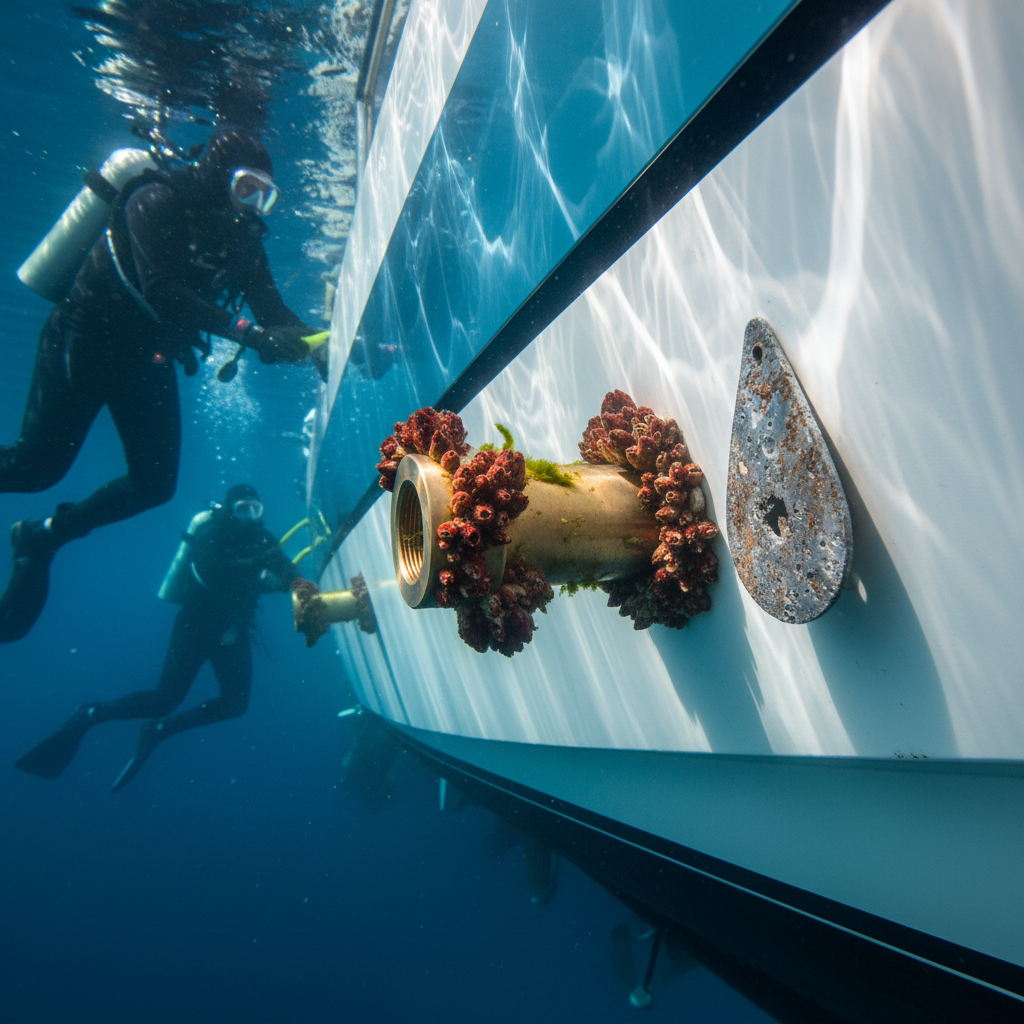
What most people miss is that the exterior of a thru-hull can look pristine while the interior throat is 80% restricted by growth. In our work with high-net-worth recreational boaters in the Bay Area, we’ve found that early-stage detection via high-definition ROV (Remotely Operated Vehicle) footage can reduce emergency repair costs by thousands. We document every intake, from the main engine raw water pickups to the smallest AC discharge.
- High-Definition Documentation: We capture 4K video of every fitting to establish a baseline for insurance compliance.
- Growth Analysis: Identifying the specific type of biofouling (barnacles vs. tunicates) tells us how aggressive your maintenance schedule needs to be.
- Strained System Checks: We specifically audit external strainers for “nesting”—a common issue in the calmer waters of Grand View Marina.
The real kicker? Modern marine surveys are increasingly looking for historical maintenance logs. By keeping a digital record of your thru-hull health, you aren’t just protecting your boat; you’re protecting its resale value and insurance eligibility. If you haven’t seen the inside of your intakes this quarter, schedule a professional diagnostic today.
Stage 2: Mechanical Integrity and Seacock Reliability
A seacock is only a safety device if it actually moves when you need it to. In the brackish environment of the East Bay, salt crystallization and galvanic corrosion are the primary enemies of underwater intake maintenance and valve functionality.
Here’s an honest, contrarian insight: Exercising your seacocks once a year is actually worse than not touching them at all. Without regular lubrication and underwater clearance of the thru-hull throat, a forced turn on a stuck valve can snap the handle or, worse, shear the mounting bolts. We advocate for a “gentle-clear” method where we remove growth from the exterior of the ball valve before you ever attempt to cycle it from the inside.
The 360 Hull Diving Mechanical Checklist:
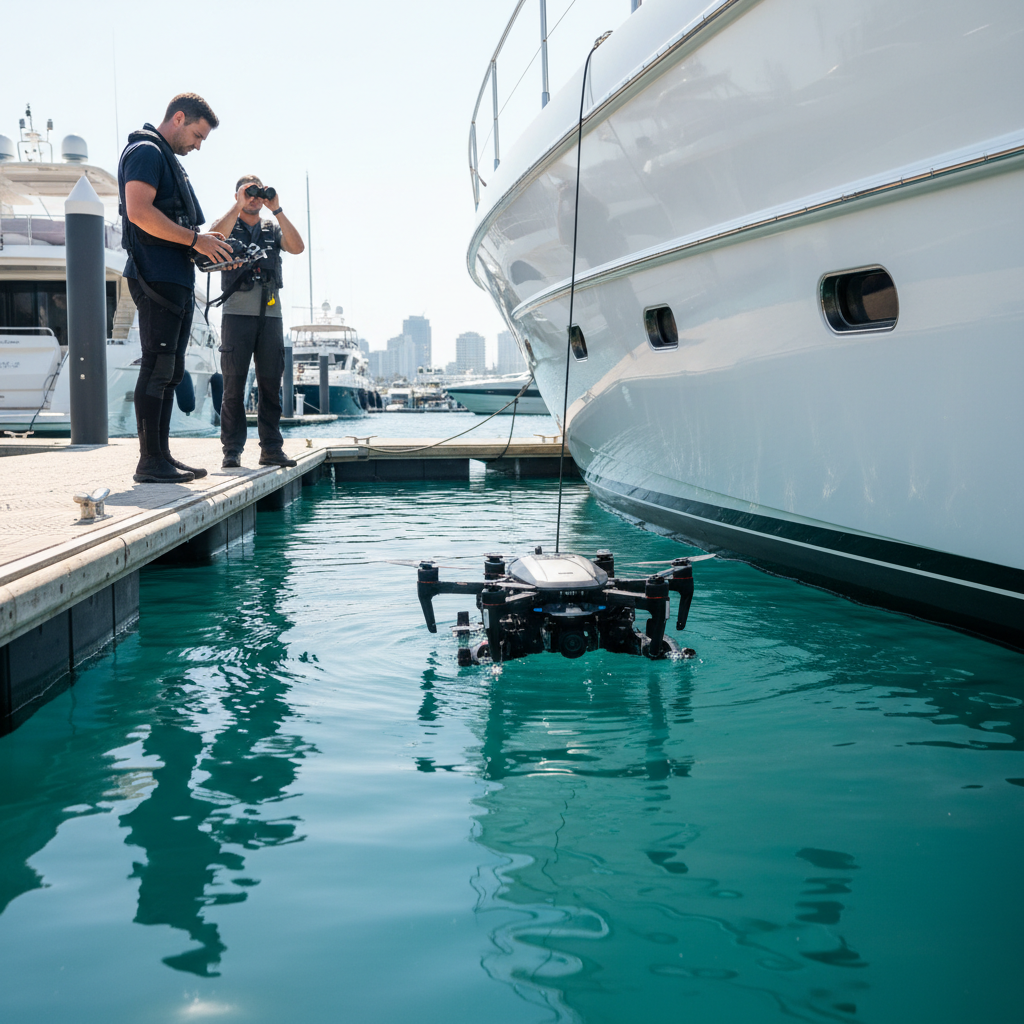
- Exterior Throat Clearance: Removing calcium deposits that prevent the ball valve from seating fully.
- Bonding Wire Inspection: Checking the integrity of the green wire connections to prevent electrolysis.
- Fastener Audit: Ensuring the bolts securing the flange to the hull haven’t succumbed to dezincification.
The EPA’s Clean Boating guidelines emphasize that a well-maintained cooling system reduces the risk of engine overheating and subsequent oil leaks. In a typical Bay Area mid-market vessel, we often find that a single obstructed generator intake is the culprit behind intermittent power failures during weekend trips to Angel Island.
Stage 3: Protective Barrier Maintenance and Corrosion Mitigation
Your hull is essentially a giant battery, and without the right sacrificial anodes, your thru-hulls become the easiest path for electrical current to exit. This stage of the thru-hull integrity inspection focuses on the chemical and electrical defense layers of your boat.
But wait—many boaters believe that as long as there is “some zinc left,” they are protected. The reality is that once an anode reaches 50% depletion, its surface area is often too small to provide adequate protection for the volume of metal it’s guarding. At Grand View Marina, where stray current from older dock pedestals can be a factor, staying ahead of this curve is vital.
| Component | Risk Factor | Maintenance Action |
|---|---|---|
| Bronze Thru-Hulls | Dezincification | Polish and clear growth every 90 days |
| Zinc Anodes | Stray Current | Replace at 50% wear (approx. 4-6 months) | Obstructed Flow | Mechanical scraping and internal reaming |
Here’s the thing: Not all anodes are created equal. Depending on whether you frequent the fresher waters up-delta or stay in the high-salinity Bay, you might need Aluminum anodes instead of traditional Zinc. We help our clients navigate these choices based on real-world water testing near their specific slips. To see our latest work in Alameda, search our Alameda service logs.
Why Grand View Marina Requires a Unique Approach
Grand View’s location provides excellent shelter, but the reduced flushing compared to the open Bay can lead to higher localized water temperatures. This micro-climate acts as an incubator for invasive species like the Australian tubeworm, which loves to colonize the dark, high-flow environments of your engine intakes.
What most people miss is that the humidity levels in Alameda can also lead to faster degradation of the internal hoses connected to your thru-hulls. Our framework includes a visual check of the first six inches of internal plumbing where it connects to the seacock. This “double-check” ensures that a secure fitting isn’t attached to a dry-rotted hose.
Need a professional eye on your waterline? We provide full before-and-after photo proof with every dive, ensuring you never have to take our word for it. Request your Grand View Marina integrity audit here.
Maximizing Longevity Through Seasonal Transitions
As we transition into the warmer months, the biological pressure on your hull increases exponentially. A boat that was clean in February can be completely fouled by May. This is why our thru-hull integrity inspection is scheduled on a recurring basis for our most successful clients.
For those interested in the technical side of how we manage these high-volume data logs and client reports, we utilize Ingest.blog as our internal AI content engine to ensure our local marina updates are always timely and accurate. It allows us to spend more time in the water and less time behind a desk, providing you with faster reporting.
- Spring Prep: Focus on clearing intakes for increased cooling demands.
- Summer Maintenance: Aggressive biofouling removal and anode checks.
- Winter Audit: Checking seacock operation and preparing for storm surges.
Frequently Asked Questions
How often should I have a thru-hull integrity inspection?
In the Bay Area, we recommend a professional underwater inspection every 3 to 4 months. This frequency aligns with the lifespan of sacrificial anodes in Grand View Marina and ensures that seasonal growth doesn’t have time to calcify inside your intake plumbing, which can lead to engine overheating.
Can I check my own thru-hulls with a GoPro?
While a GoPro can show you general growth, it lacks the lighting and maneuverability to inspect the “throat” of a thru-hull or the condition of the fasteners. Our professional ROVs and divers use specialized lighting to detect hairline cracks in bronze fittings and signs of dezincification that consumer cameras miss.
What is the most common sign of a failing thru-hull?
The most common sign is green, powdery oxidation (verdigris) on the internal valve or a “weeping” leak at the hull joint. Under the waterline, look for excessive pinkish discoloration on bronze fittings, which indicates that the zinc has leached out of the metal, leaving it brittle and prone to failure.
Does insurance cover sinkings caused by thru-hull failure?
Most policies distinguish between “sudden accidental loss” and “wear and tear.” If a thru-hull fails due to years of neglected corrosion, your claim may be denied. Maintaining a documented history of underwater intake maintenance is your best defense during an insurance audit or marine survey.
What is galvanic corrosion and why is it dangerous?
Galvanic corrosion occurs when two dissimilar metals are submerged in an electrolyte (saltwater) and electrically connected. Without proper anodes, the weaker metal—often your thru-hull fittings—will dissolve. This process is accelerated in marinas with stray electrical current from poorly grounded shore power systems.
Your Action Plan for This Week
Don’t wait for a bilge alarm to tell you there’s a problem. This week, perform a “dry-land” test: head down to your boat and try to move every seacock handle. If any feel stiff or “crunchy,” do not force them. Instead, contact 360 Hull Diving to schedule a Stage 1 diagnostic. We’ll provide the photo proof you need to make an informed decision about your vessel’s safety. Your peace of mind is worth the 15 minutes it takes to book an insured, professional dive team.