📋 Table of Contents
A single millimeter of play in your actuator shaft can translate into a bone-rattling hum that ruins a $20,000 weekend charter before you even clear the Golden Gate Bridge. According to industry reports from marine engineering firms like ABYC, proactive stabilizer fin inspection and maintenance can extend the life of hydraulic seals by up to 40% compared to reactive repair strategies.
Key Takeaways for Yacht Owners:
- Prevent mid-cruise vibration by identifying pivot point wear early.
- Reduce fuel consumption by eliminating biofouling-induced drag.
- Avoid emergency haul-outs through documented underwater surveys.
- Ensure guest comfort by maintaining peak hydrodynamic efficiency.
1. Hydraulic Seal Integrity and Leak Detection
The most expensive sound a yacht owner can hear isn’t a mechanical failure—it’s the silence of a stabilizer system that has lost its hydraulic prime due to a neglected seal.
For Tiburon motoryachts frequenting the Tiburon Yacht Club or Paradise Cay, the brackish, sediment-heavy water of the North Bay acts like liquid sandpaper on stabilizer seals. Our first step in a professional stabilizer fin inspection involves a high-intensity tactile and visual audit of the seal housing. We aren’t just looking for obvious oil plumes; we are looking for the “weep” that precedes the “flood.”
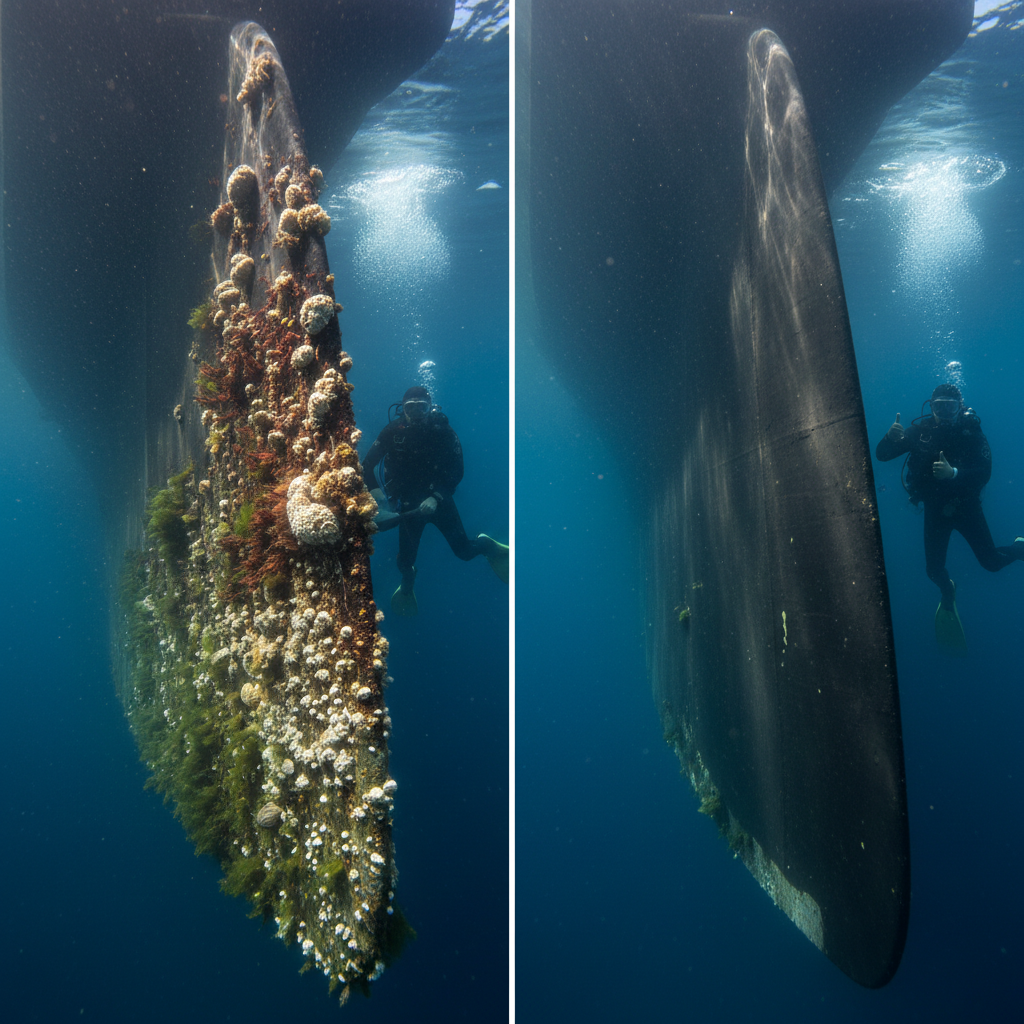
What most people miss: The transition from hydraulic to all-electric stabilizer systems hasn’t eliminated the need for seal checks. In fact, electric actuators often have tighter tolerances where even minor biofouling can cause catastrophic overheating. During our inspections at San Francisco and Sausalito marinas, we provide before-and-after photo proof so you can see the state of your seals without ever leaving the cockpit.
- Visual Oil Trace: Identifying iridescent sheen or milky residue around the shaft.
- Seal Tension Test: Checking for elasticity and cracking in the outer boot.
- Barnacle Encroachment: Removing growth that can pierce the seal during fin rotation.
2. Pivot Point Wear and Yacht Vibration Diagnostic
Mechanical play in the stabilizer assembly is the primary culprit behind the “clunking” sensation felt in the master stateroom during heavy swells.
The real kicker? You can’t diagnose pivot wear from the bridge. A true yacht vibration diagnostic requires a diver to physically manipulate the fin while the system is locked. In our work with high-performance hull geometries like the Tiburon series, we’ve found that the high-speed capability of these vessels puts unique lateral loads on the fin bearings. This leads to accelerated wear that a standard hull cleaning might overlook.
Here’s a contrarian insight: Most captains believe that if the system isn’t throwing an error code, the hardware is fine. However, digital twin monitoring and remote diagnostics often fail to pick up on physical bearing tolerances until the vibration is already structural. Physical underwater stabilizer maintenance remains the only way to verify the mechanical health of the assembly.
| Component | Inspection Frequency | Failure Symptom |
|---|---|---|
| Main Pivot Bearing | Bi-Monthly | Low-frequency hull thumping |
| Hydraulic Actuator | Monthly | Delayed response to roll |
| Anodes (Zincs) | Monthly | Galvanic pitting on fin surface |
Need a professional eyes-under-the-water? Schedule your stabilizer health audit today to ensure your next trip to Half Moon Bay is smooth.
3. Hydrodynamic Drag and Biofouling Optimization
A fouled stabilizer fin is essentially a brake that you are paying to drag through the water at 25 knots.
Biofouling on stabilizers doesn’t just increase fuel burn; it creates turbulent flow that interferes with the fin’s ability to generate lift. For a typical Bay Area mid-market client, a layer of tube worms on the leading edge of a stabilizer can increase drag by an estimated 10-15% according to data from the EPA’s clean boating initiatives. This is why our 3-step stabilizer fin inspection includes a precision cleaning of the fin’s foil surface.
But wait—cleaning is only half the battle. We also inspect the eco-friendly hull coatings often used on Tiburon yachts. If the coating is failing on the stabilizer, the resulting friction creates cavitation bubbles. This not only causes noise but can actually erode the metal of the fin itself over time. Our team uses specialized tools to clear growth without scouring the delicate anti-fouling paint.

The ‘Pre-Charter’ ROI
If you are using your yacht for high-end charters or entertaining business partners, the ROI of a 3-step check is undeniable. Preventing a $50k+ emergency dry-docking by catching a loose locking nut or a failing zinc is just good business. At 360 Hull Diving, we treat your underwater stabilizer maintenance as a preventative health audit, ensuring your vessel remains a sanctuary, not a source of stress.
The real-world application? We recently helped a client at South Beach Harbor who complained of a “mystery shudder” during high-speed turns. Our yacht vibration diagnostic revealed a fishing line tangle that had melted into the stabilizer’s upper seal. A 30-minute underwater fix saved them a week in the yard and thousands in haul-out fees.
Maximizing Stability for Summer Cruising
The transition from the calm winter months to the choppy summer afternoon winds in the Central Bay requires a stabilization system that is 100% reliable.
Using documented inspections can also assist with insurance compliance. Many underwriters now look favorably upon owners who can provide photo-documented proof of underwater stabilizer maintenance, potentially lowering premium liabilities by demonstrating a commitment to seaworthiness. This is especially true for vessels docked at prestigious locations like St. Francis Yacht Club or Corinthian Yacht Club, where the standards for maintenance are exceptionally high.
Ready to experience the 360 Hull Diving difference? We provide the before-and-after photo proof you need for total peace of mind. Visit our homepage to see why we are the Bay Area’s most trusted dive team.
Frequently Asked Questions
How often should I have a stabilizer fin inspection?
For yachts in the San Francisco Bay, we recommend a professional stabilizer fin inspection every 2-3 months. The high nutrient content in our water leads to rapid biofouling, which can obstruct hydraulic movement and increase fuel consumption. Monthly checks are advised during the peak summer cruising season.
Can underwater stabilizer maintenance prevent a haul-out?
Yes, most stabilizer issues start as minor seal leaks or bearing play that can be addressed in the water. By catching these issues early through our 3-step framework, you can avoid the $10,000 to $50,000 costs associated with emergency dry-docking, crane fees, and lost charter revenue.
What causes yacht vibration at cruising speeds?
While many owners suspect the propellers, a common source is actually the stabilizer fins. If the fins are misaligned, fouled with barnacles, or have mechanical play in the pivot points, they create turbulent water flow and structural harmonics. A yacht vibration diagnostic can pinpoint whether the issue is propulsion or stabilization.
Are all-electric stabilizers easier to maintain underwater?
While they eliminate hydraulic fluid risks, all-electric systems require even more diligent underwater stabilizer maintenance of the seals. Because electric motors generate heat, any growth around the seal can lead to cooling failures. Our stabilizer fin inspection process is tailored specifically for both hydraulic and electric Tiburon systems.
This week, take five minutes to check your stabilizer control panel for any “drift” or unusual load readings. If things feel off, don’t wait for the vibration to get worse. Contact 360 Hull Diving at our contact page and let our insured dive team provide the proof you need that your boat is ready for the Bay.