
📋 Table of Contents
- The Physics of Slime: Why Micro-Fouling Removal Matters
- Underwater Racing Surface Optimization for the City Front
- The Impact of Biofilm on Racing Performance
- Advanced Foul Release Technology and Environmental Compliance
- Strategic Timing: When to Schedule Your Final Wipe-Down
- Why 360 Hull Diving is the Choice for Competitive Owners
- FAQs
Achieving a podium finish requires more than tactical brilliance; it demands St. Francis Yacht Club regatta prep that accounts for the invisible physics of the San Francisco City Front. As of 2024, competitive racing at the elite level is won in the margins, where even a microscopic layer of slime can create enough turbulent flow to degrade your Velocity Made Good (VMG) by up to 5%.
Key Takeaways for Executive Owners
- Micro-fouling is a Drag: Even ‘invisible’ biofilm increases skin friction, significantly impacting performance in the heavy chop of the Bay.
- Grooming vs. Scrubbing: Soft-tool grooming preserves expensive racing finishes while maintaining laminar flow.
- Visual Verification: 360 Hull Diving provides high-definition photo proof to ensure a race-ready bottom.
The Physics of Slime: Why Micro-Fouling Removal Matters
Micro-fouling, often dismissed as mere ‘slime,’ is a complex biological matrix of bacteria and diatoms that adheres to your hull within hours of cleaning. While it may look harmless, this biofilm changes the hydrodynamic profile of your vessel from smooth to ‘hydraulically rough,’ leading to early flow separation.
Furthermore, the high-salinity environment near the Golden Gate Bridge accelerates the growth of these organisms. According to the Environmental Protection Agency (EPA), managing hull fouling is critical not just for speed, but for preventing the spread of invasive species. For a racing yacht, this means your St. Francis Yacht Club regatta prep must prioritize a surface that encourages laminar flow over turbulent drag.
- Increased Skin Friction: Biofilm increases the wetted surface roughness, requiring more sail power to maintain speed.
- Turbulent Boundary Layer: Slime disrupts the thin layer of water moving with the hull, creating parasitic drag.
- VMG Degradation: In light air or heavy chop, the loss of efficiency can equate to several boat lengths per leg.
Underwater Racing Surface Optimization for the City Front
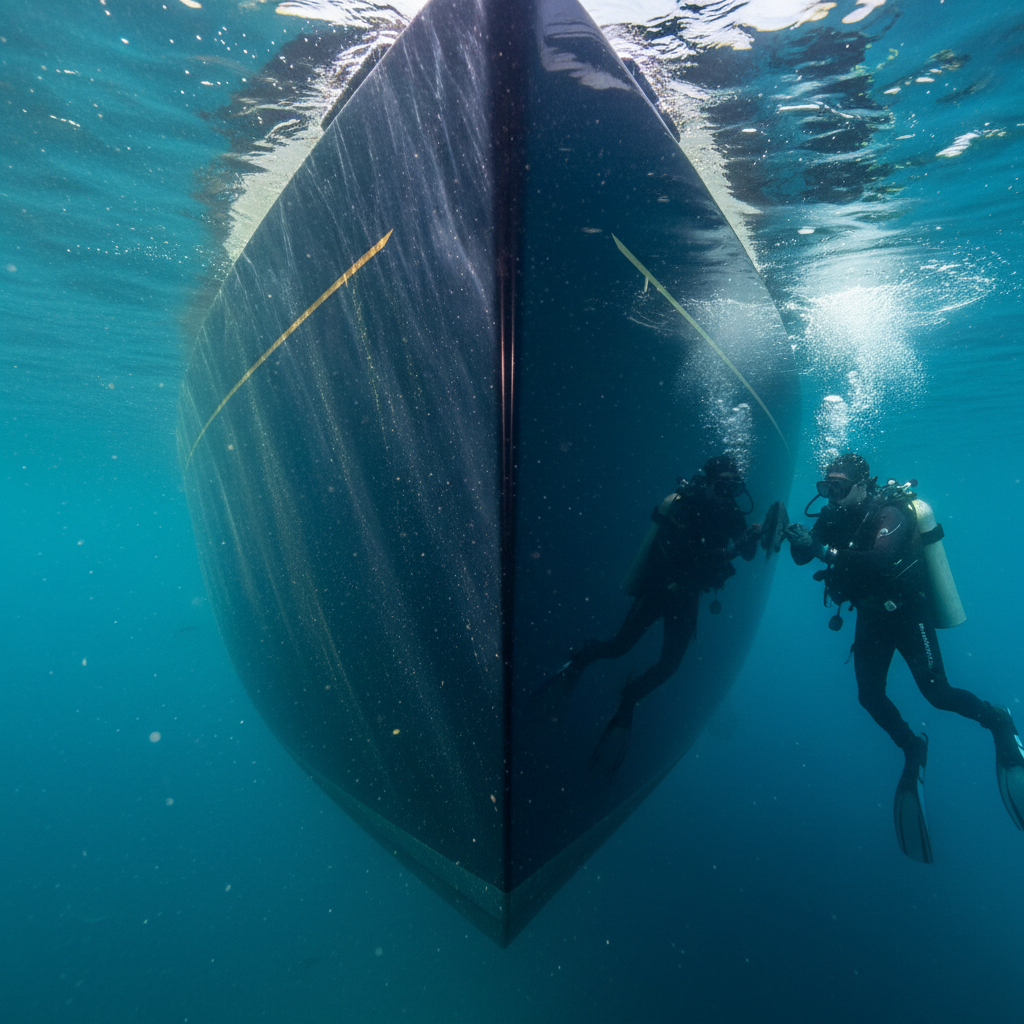
The unique conditions of the San Francisco City Front—characterized by cold, nutrient-rich water and aggressive currents—require a specialized approach to underwater racing surface optimization. Standard hull cleaning is often too abrasive, stripping away the very foul-release coatings designed to keep you fast.
Modern racing teams are shifting toward ‘hull grooming,’ a technique that uses ultra-soft materials to wipe away biofilm without damaging the paint’s integrity. This ensures that your bottom remains as slick as the day it was burnished. If you are preparing for the Rolex Big Boat Series, your maintenance schedule should transition to a high-frequency, low-intensity grooming cycle.
Need to verify your hull’s condition before the next Wednesday Night Series? Schedule a professional inspection with 360 Hull Diving today.
The 72-Hour Pre-Regatta Checklist
- Visual Inspection: Use high-definition videography to identify any localized fouling on the keel bulb or rudder.
- Soft-Tool Grooming: Execute a full-hull wipe-down to remove 100% of the biofilm layer.
- Zinc Check: Ensure sacrificial anodes are secure and not creating unnecessary drag profiles.
- Propeller Polishing: Even if you race under sail, a fouled folding prop can create asymmetrical drag.
The Impact of Biofilm on Racing Performance
| Condition | Drag Increase (%) | Estimated VMG Loss |
|---|---|---|
| Clean/Burnished Hull | 0% | None |
| Light Slime (Biofilm) | 2% – 5% | 0.1 – 0.2 Knots | 10% – 15% | 0.5+ Knots |
Consequently, the ROI on professional micro-fouling removal is immediate. For a Series B executive or a busy CEO, the time saved on the water and the increased competitiveness of the vessel represent a significant value proposition. At 360 Hull Diving, we specialize in servicing vessels at the St. Francis Yacht Club and Tinsley Island, ensuring your boat is optimized for local conditions.
Advanced Foul Release Technology and Environmental Compliance
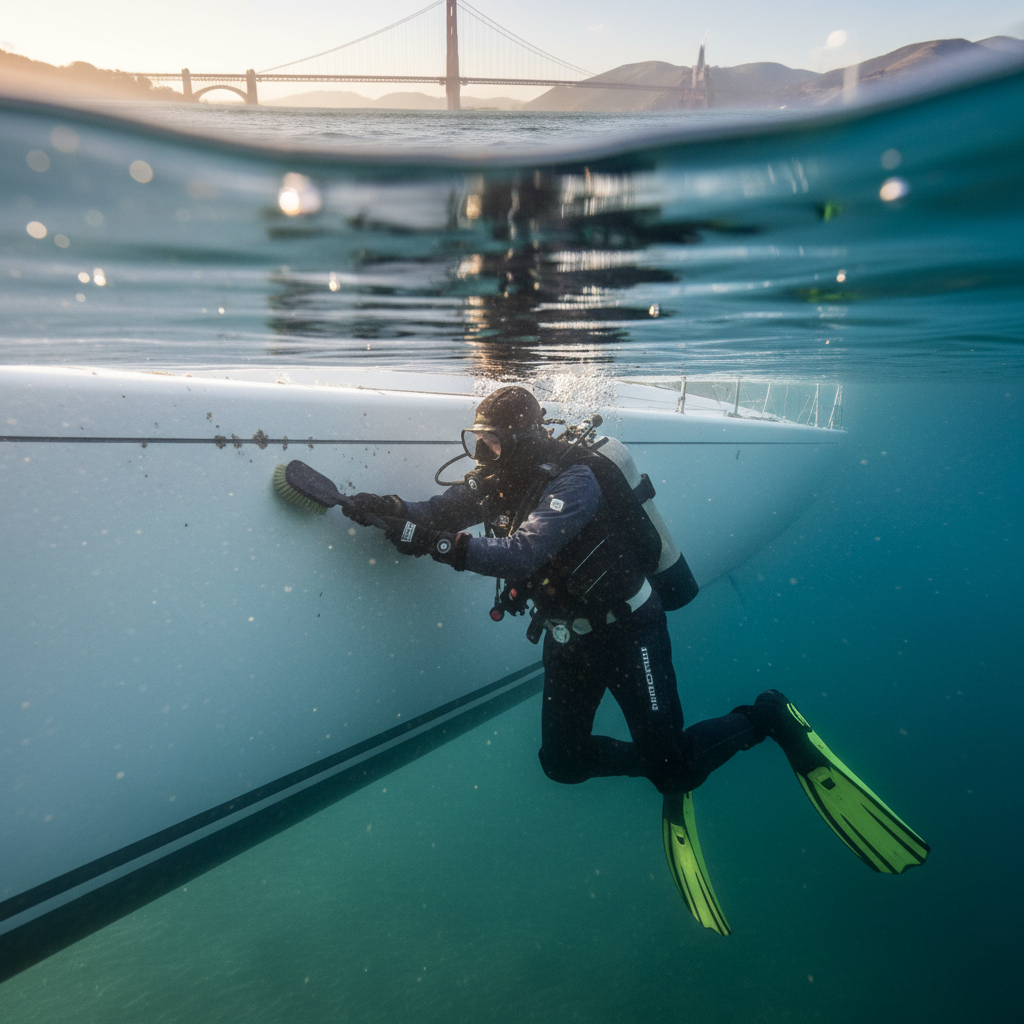
Strategic St. Francis Yacht Club regatta prep now involves the use of biocide-free foul release coatings. These silicone-based surfaces are designed to be so ‘slippery’ that organisms struggle to attach. However, they are delicate and require expert handling during the cleaning process.
Moreover, adhering to San Francisco Bay water quality regulations is paramount. Professional divers must ensure that cleaning practices do not release heavy metals into the water column. By using specialized grooming techniques, we maintain your speed while remaining 100% compliant with local environmental standards. This approach aligns with the conservation values held by the St. Francis Yacht Club community.
- Silicone Coatings: Require specialized non-abrasive tools to prevent tearing.
- Ultrasonic Systems: Can be used as a supplement to inhibit growth between professional dives.
- Eco-Friendly Practices: In-water cleaning must minimize plume creation to protect the Bay’s ecosystem.
Ready to experience the difference of a truly clean hull? Visit 360 Hull Diving to see our before-and-after photo proof for every service.
Strategic Timing: When to Schedule Your Final Wipe-Down
Timing is everything in underwater racing surface optimization. Scheduling your diver too early allows biofilm to re-establish, while scheduling too late risks missing the window for critical repairs. The ideal window for a championship event is 24 to 48 hours before the first warning gun.
Specifically for StFYC members, the brackish water flow from the Delta can create unique fouling profiles. Our team monitors these seasonal shifts to provide the most effective cleaning strategy for your specific slip location, whether you are at the City Front, South Beach, or Sausalito.
- 4 Weeks Out: Full inspection and zinc replacement.
- 2 Weeks Out: Primary cleaning and propeller burnishing.
- 48 Hours Out: Final ‘match-race’ grooming and photo verification.
Why 360 Hull Diving is the Choice for Competitive Owners
Ultimately, the difference between a podium finish and the middle of the fleet often comes down to preparation. We provide the Bay Area’s most trusted insured dive team, offering unparalleled transparency through our photo-documented service. We understand that for high-growth company leaders, your time is your most valuable asset.
By delegating your St. Francis Yacht Club regatta prep to experts who understand the nuances of micro-fouling removal, you can focus on your tactics and your team. We serve all major Bay Area marinas, from the Berkeley Marina to the prestigious docks of the St. Francis, providing consistent, high-performance results every time.
Don’t let invisible drag hold you back from your next victory. Call 360 Hull Diving at (415) 555-0199 or book your pre-regatta grooming online to ensure your hull is in peak racing condition.
Frequently Asked Questions
How does micro-fouling affect my boat’s speed during a regatta?
Micro-fouling increases skin friction drag by creating a microscopically rough surface. Even a thin layer of slime can disrupt laminar flow, leading to increased resistance and a measurable drop in VMG. In competitive racing, this drag can cost you seconds per mile, which often determines the final standings in a tight fleet.
What is the difference between hull cleaning and hull grooming?
Hull cleaning often involves abrasive pads to remove hard growth, which can damage specialized racing paint. Hull grooming uses ultra-soft materials to gently wipe away biofilm and slime. This process maintains the integrity of your ‘bottom job’ while ensuring the smoothest possible surface for underwater racing surface optimization.
Why is the San Francisco City Front particularly challenging for hull maintenance?
The City Front features a unique mix of high salinity, varying temperatures, and heavy tidal flow. These factors create a high-nutrient environment that accelerates biofilm growth. Additionally, the heavy chop common in this area makes any increase in drag from micro-fouling even more detrimental to the boat’s performance through the waves.
Can I use biocide-free coatings for racing in the Bay Area?
Yes, biocide-free foul release coatings are increasingly popular among racing teams at the St. Francis Yacht Club. These coatings are environmentally friendly and offer superior smoothness. However, they require careful, professional grooming to remove slime without scratching the delicate surface, making expert St. Francis Yacht Club regatta prep essential.