
📋 Table of Contents
Trusting a diver’s word in the silt-heavy waters of the California Delta is a leap of faith most boat owners can no longer afford. According to data from the Environmental Protection Agency (EPA), biofouling can increase fuel consumption by up to 40% due to hull drag, yet many owners at the Pittsburg Marina rely on verbal reports alone. Underwater photo verification changes the equation by replacing guesswork with high-definition evidence.
For members of the Pittsburg Yacht Club, the challenge isn’t just the growth; it’s the visibility. The confluence of the Sacramento and San Joaquin Rivers creates a unique brackish environment where freshwater algae and stubborn barnacles thrive in a “soup” of suspended sediment. Traditional diving services often struggle to provide clear evidence in these conditions. Here is how our specialized framework ensures you never pay for a repair that isn’t documented.
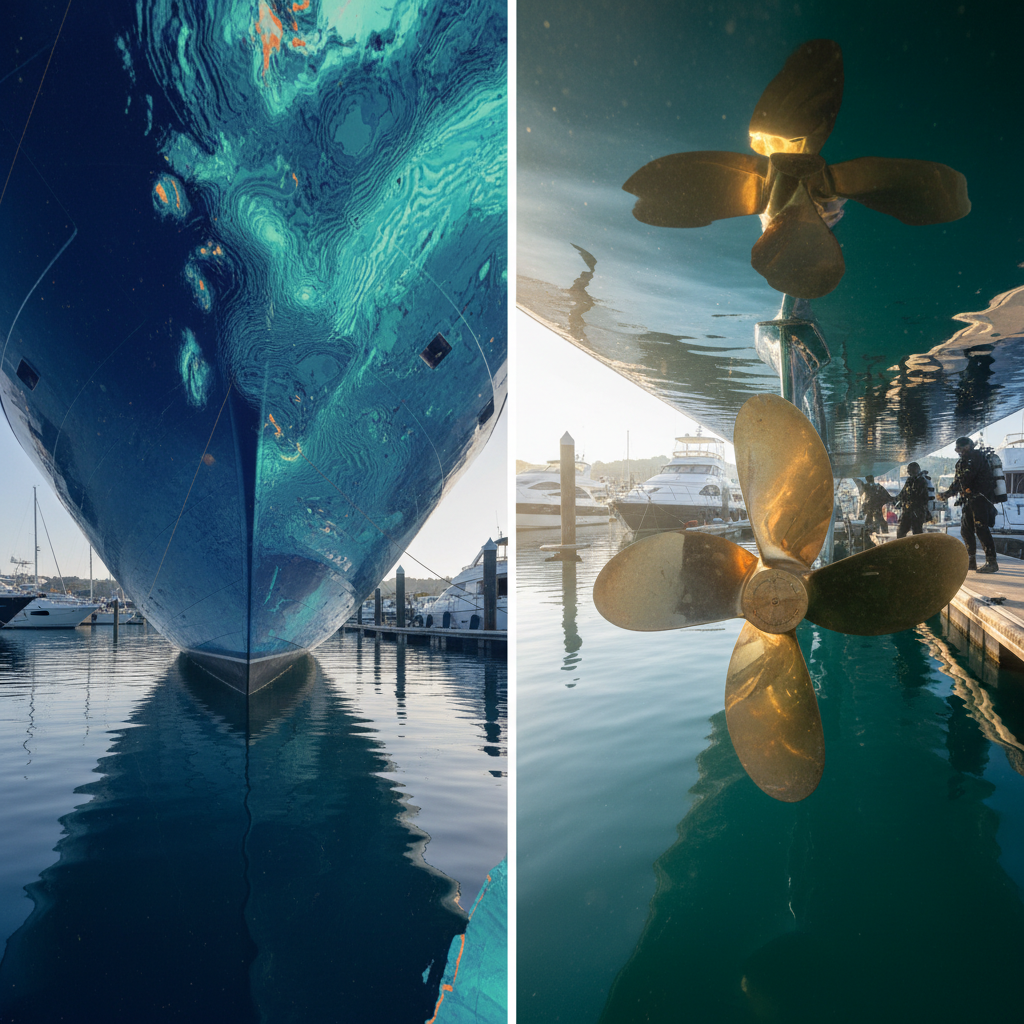
Step 1: High-Resolution Sonar Scanning for Delta Waters
The first step in modern Pittsburg Marina maintenance involves using multibeam sonar to create a digital map of your hull’s current state. Most people miss the fact that sonar doesn’t just see through the mud; it identifies density changes that indicate where anti-fouling paint is failing before the naked eye can see it.
- Acoustic Imaging: We bypass the zero-visibility silt common near the Pittsburg Power Plant.
- Baseline Documentation: Creating a “digital twin” of your running gear for insurance and resale value.
- Anomaly Detection: Identifying stray current corrosion or zinc depletion that visual-only divers often overlook.
Here’s the thing: Sonar is the wide-angle lens that tells us where to look, but it doesn’t tell us what we are looking at. That is why we treat sonar as the diagnostic tool, not the final verdict. If you are curious about how this tech applies to your specific vessel, you can search our technology guides for more details.
Step 2: Targeted Underwater Photo Verification and Ground-Truthing
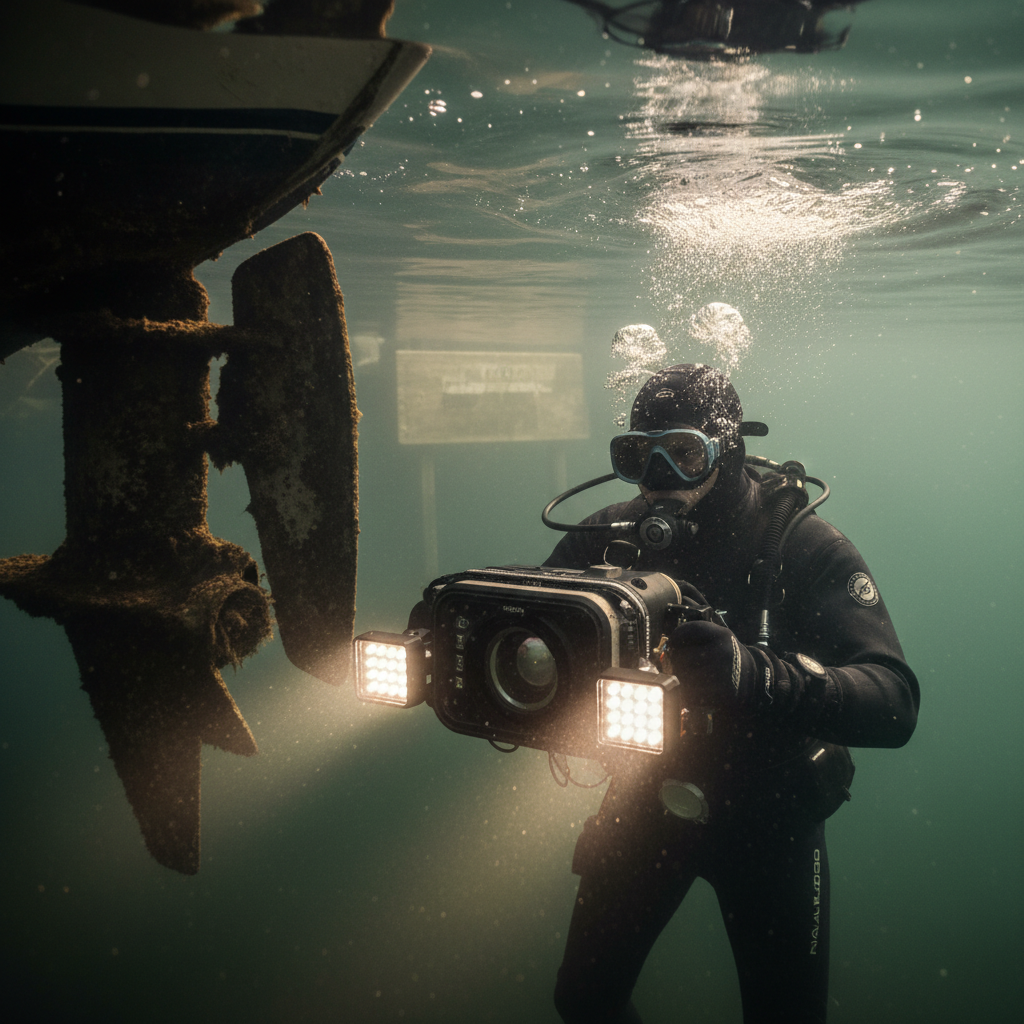
Sonar ground-truthing is the process of using a physical camera to verify exactly what the sonar pulse detected. In the low-visibility environment of the Delta, this requires specialized macro-lenses and high-intensity lighting to cut through the turbidity.
What most people miss is that high-resolution imagery serves as a legal and financial shield. In our work with typical Bay Area mid-to-upper income boat owners, we’ve found that having a timestamped underwater photo verification report can be the deciding factor in an insurance claim regarding submerged object damage.
- Macro Documentation: Close-up shots of props, shafts, and struts.
- Before-and-After Proof: Every cleaning at the Pittsburg Yacht Club includes side-by-side visual comparisons.
- Species Identification: Distinguishing between soft algae and invasive quagga mussels to ensure eco-friendly hull cleaning compliance.
The real kicker? We don’t just take photos; we provide context. If we see a specific wear pattern on your zincs, we document it in relation to the surrounding marina environment. Ready to see what’s actually happening beneath your waterline? Schedule a verified inspection today.
Step 3: The Comparative Analysis and Digital Logbook
Data is useless without a narrative, which is why the final step of the framework is the delivery of a comprehensive verification report. This isn’t a scribbled note on a receipt; it is a professional PDF that integrates your sonar scans with underwater photo verification results.
But wait—there’s a contrarian take here: More data isn’t always better. Many services overwhelm owners with 50 blurry photos. We provide a curated “Executive Summary” of the three most critical areas of concern, saving you time while providing total transparency. This proactive approach is the best way to extend the lifespan of your expensive anti-fouling coatings.
| Feature | Traditional Diver Report | 360 Hull Diving Framework |
|---|---|---|
| Visibility | Limited by water clarity | Sonar-enhanced (Acoustic + Visual) |
| Proof | Verbal/Written Only | Timestamped Photo/Video |
| Resale Value | Subjective | Documented Service History |
The Transparency Gap in Pittsburg Marina Maintenance
The “Transparency Gap” is the difference between what a diver says they did and what was actually performed. In the brackish waters of the Delta, it is incredibly easy for a diver to skip the center of the keel or the top of the rudder because “the water was too dark to see.”
By utilizing underwater photo verification, we close this gap entirely. For Pittsburg Yacht Club members, this means knowing that your boat is truly ready for a run out to Benicia or up to Sacramento without the risk of vibration from a fouled prop. Using our internal AI content engine at Ingest.blog, we’ve analyzed hundreds of service logs and the conclusion is clear: documented boats sell faster and for higher prices.
- Predictive Maintenance: Catching electrolysis before it eats your running gear.
- Fuel Efficiency: Maintaining a smooth hull to minimize Delta current resistance.
- Peace of Mind: Knowing your vessel is compliant with California State Water Resources Control Board regulations.
Why Pittsburg Yacht Club Members Value This Framework
Pittsburg boaters deal with unique environmental stressors, from heavy siltation to fluctuating salinity levels. A typical Bay Area recreational owner might spend thousands on a bottom job every three years, only to have it degraded by improper cleaning techniques or neglected growth.
Our framework provides a “Digital Logbook” that tracks the health of your hull over time. This historical data is invaluable. For example, if we notice an unusual increase in barnacle growth in your specific slip at Pittsburg Marina, we can recommend a more frequent cleaning schedule or a change in zinc type to combat local galvanic activity.
Need a hand navigating your maintenance schedule? Call us at 360 Hull Diving for a free consultation on how to set up your recurring verification plan. You can also explore our Pittsburg-specific service pages for more localized tips.
Key Takeaways for Yacht Owners
- Demand Proof: Never accept a hull cleaning without photographic evidence of the running gear.
- Think Long-Term: Use sonar ground-truthing to create a maintenance history that adds value to your vessel.
- Delta Specifics: Acknowledge that Pittsburg’s water requires specialized tech, not just a standard dive mask.
What you can do this week: Check your last service report. If it doesn’t include clear, dated photos of your propellers and zincs, you are flying blind. Request a 3-Step Verification Scan today and take the guesswork out of your Delta boating experience.
Frequently Asked Questions
How does sonar ground-truthing work in zero visibility?
Sonar uses sound waves to create a 3D map of the hull, which identifies areas of concern. We then use ultra-bright, high-CRI LED lighting and macro photography to get within inches of the identified spot, capturing clear underwater photo verification even when the surrounding water is murky.
Will this framework help with my marine insurance?
Yes. Providing a documented history of hull integrity and zinc replacement through underwater photo verification demonstrates proactive maintenance. Many insurers, such as those cited by Forbes Advisor, value proof of maintenance when assessing risk or processing claims related to mechanical failure.
Is the sonar scan safe for my hull’s paint?
Absolutely. The sonar technology we use for Pittsburg Marina maintenance is non-invasive and high-frequency. It emits sound pulses that do not affect the physical integrity of your anti-fouling paint, fiberglass, or metal components. It is purely a diagnostic tool used to guide our divers.
How often should Pittsburg Yacht Club members get a scan?
Given the high nutrient levels in the Delta, we recommend a full sonar-to-photo verification every 3 to 4 months. This ensures that freshwater growth doesn’t calcify, which would require more aggressive cleaning that could strip your expensive bottom paint.