
📋 Table of Contents
According to the International Maritime Organization (IMO), biofouling on internal systems can increase fuel consumption by up to 40% due to thermal inefficiency. For owners at Grand Marina, sea chest de-scaling isn’t just a maintenance chore; it is the primary insurance policy against catastrophic engine failure during a heavy swell outside the Golden Gate.
As of 2025, the complexity of modern motor yacht cooling systems has outpaced traditional ‘scrape and go’ methods. When you are pushing twin diesels on a long run to the Farallon Islands, your engine temperature stability depends entirely on the unobstructed flow through your sea chests. A restricted intake doesn’t just run hot—it starves your heat exchangers and puts immense pressure on your raw water pumps.
Here is the 3-step framework we use at 360 Hull Diving to ensure your vessel performs at peak efficiency without risking damage to sensitive internal components.
1. Diagnostic Flow Assessment and Visual Verification
The biggest mistake most divers make is blind cleaning without understanding the specific blockage profile of the internal intake.
What most people miss: The growth inside a sea chest is often different from the growth on your hull. In the relatively stagnant, shaded water of a sea chest, calcium-heavy tube worms and bryozoans thrive, creating a concrete-like lining that traditional brushes can’t touch. We begin every service with a high-definition closed-circuit underwater camera inspection. This allows us to see exactly where the micro-fouling is concentrated before we ever introduce a tool into the cavity.
- Visual Mapping: Identifying the location of temperature sensors and sacrificial anodes inside the chest.
- Flow Baseline: Observing the intake grate’s percentage of occlusion.
- Photo Proof: Capturing ‘before’ images so you have a digital record for your maintenance log.
In our work with typical Bay Area recreational yacht owners, we find that 70% of overheating issues are caused by internal growth that was completely invisible from a standard hull wipe-down. If your diver isn’t looking inside the grate, they aren’t doing sea chest de-scaling.
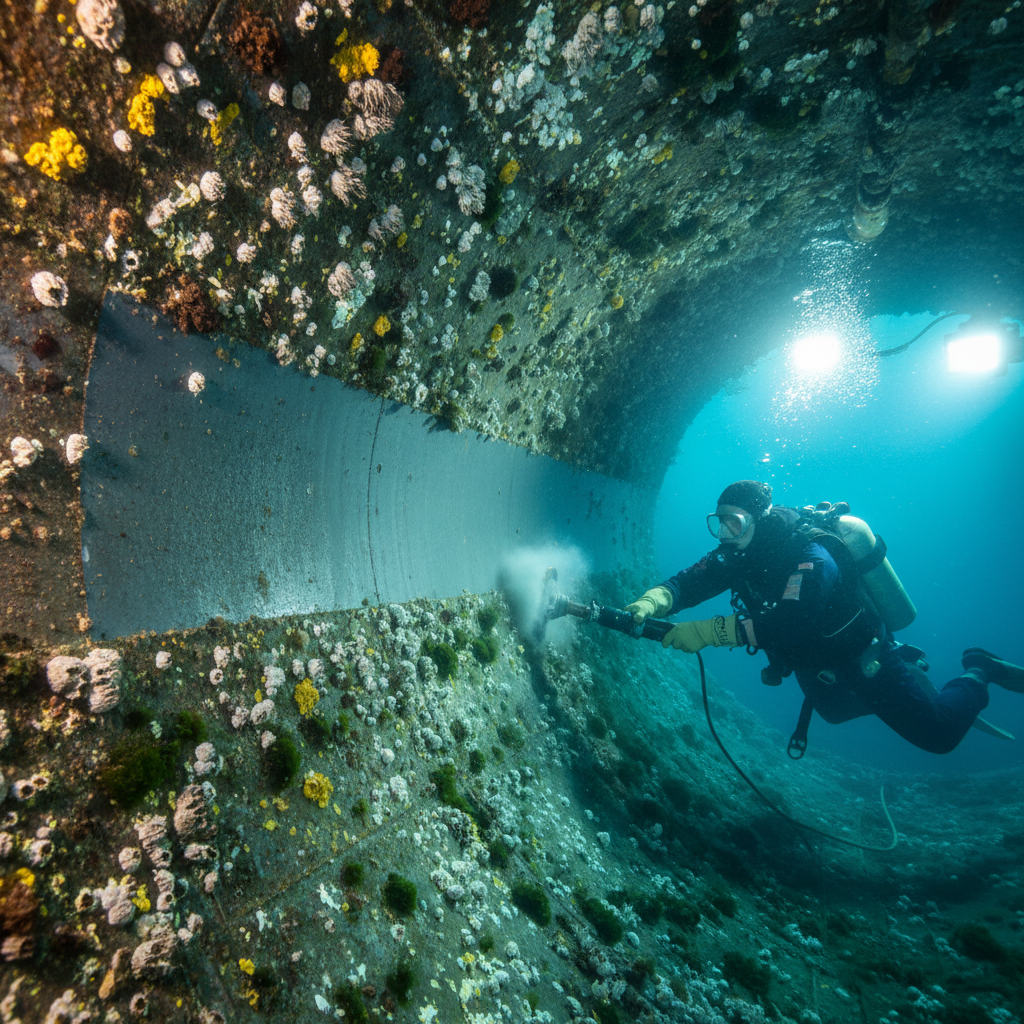
2. Precision Internal Intake Cleaning and De-Scaling
True internal intake cleaning requires a surgical touch to remove calcium deposits without scouring the protective epoxy coatings inside the sea chest.
The real kicker? Using heavy mechanical force inside a sea chest is a recipe for a $10,000 repair bill if a sensor is struck. We utilize a specialized ‘Zero-Down-Time’ approach that combines manual precision with non-toxic, biodegradable de-scaling agents when necessary. This ensures that the delicate balance of your marine cooling system maintenance is preserved while the flow is restored to 100% of factory specifications.
Our process includes:
- Manual Extraction: Carefully removing large barnacle clusters using specialized reach tools.
- Non-Marring Scrubbing: Using high-density polymer tools to clear the internal walls.
- Sensor Protection: Hand-clearing around the flow and temperature sensors to ensure accurate cockpit readings.
Need a professional eye on your intakes before your next trip? Schedule a precision sea chest inspection with 360 Hull Diving today.
3. Verification and Flow Restoration Reporting
The job isn’t finished until we can prove that the water is moving at the volume your engines require.
Here’s the thing: A clean-looking grate doesn’t always mean a clean internal plenum. After the physical sea chest de-scaling is complete, we perform a secondary camera pass to ensure the deep corners and the ‘ceiling’ of the chest are smooth. This level of detail is what prevents mid-season cooling failures that plague many boats in Alameda and Richmond marinas.
| Condition | Flow Efficiency | Engine Temp Impact | Risk Level |
|---|---|---|---|
| Clean / New | 100% | Optimal | Low |
| Light Micro-fouling | 85-90% | +5°F at High RPM | Moderate |
| Heavy Calcification | <60% | Immediate Overheat | Critical |
But wait—there’s an ROI component here too. By maintaining smooth internal surfaces, you reduce the turbulence in the intake water. This leads to better fuel economy and less wear on your raw water impellers. According to research from Energy.gov, reducing drag and improving fluid dynamics is the most cost-effective way to improve overall mechanical efficiency.
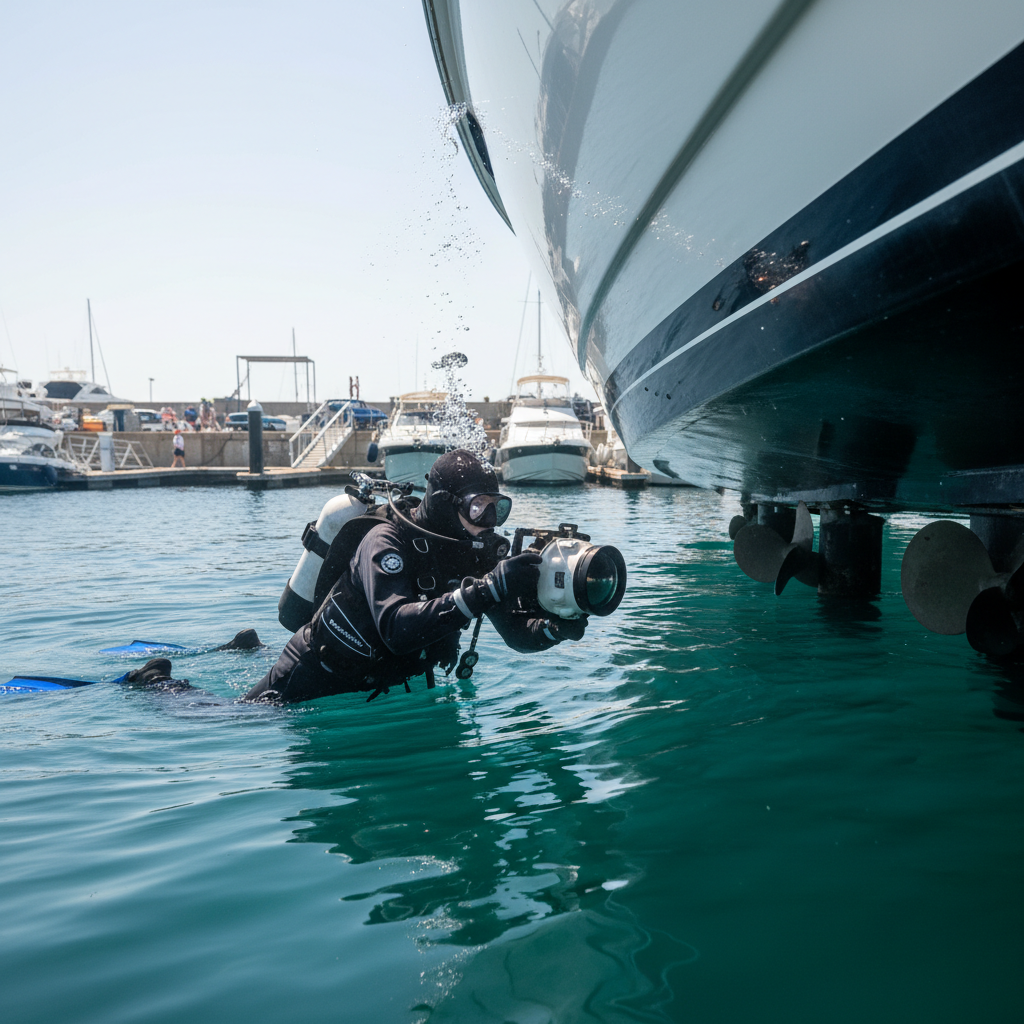
Why Grand Marina Yachts Require Specialized Care
The ecosystem in the Oakland Estuary is unique, and the Grand Marina sees high levels of nutrient runoff that accelerates biofouling.
In our work with high-net-worth motor yacht owners, we’ve observed that the “standard” monthly hull cleaning often ignores the sea chest entirely because it requires extra time and specialized lighting. This is a “shadow tax” on your boat’s performance. By the time your temperature alarm goes off, the damage to your head gaskets or exhaust risers may already be done. We advocate for a quarterly deep-scale framework to keep your marine cooling system maintenance ahead of the curve.
- Local Expertise: We know the specific species that clog intakes in Alameda, Oakland, and San Leandro.
- Transparency: You receive the video footage of the internal chest with every service.
- Eco-Friendly: We follow all EPA guidelines for in-water cleaning to protect our local Bay waters.
Comparing DIY vs. Certified Dive Teams
An honest, contrarian insight: Most “all-in-one” hull cleaners are great at wiping slime but dangerous when they reach for a scraper inside your intake.
What most people miss is that sea chests often house expensive ultrasonic anti-fouling transducers or sensitive galvanic isolator probes. A DIY approach or a low-cost diver might save $50 today but cost you a haul-out next month. Our team uses the same precision-focused mindset we apply to our zinc and corrosion protection services to ensure every component is respected.
The real value is in the data. We use our internal AI content engine, Ingest.blog, to track maintenance trends across hundreds of Bay Area vessels, allowing us to predict exactly when your specific make and model will need its next sea chest de-scaling based on local water temperatures.
The ROI of Flow: Long-Term Engine Health
Maintaining clear intakes is the single most effective way to extend the life of your marine diesel engines.
When you invest in professional internal intake cleaning, you aren’t just buying a service; you’re buying peace of mind. For a typical Bay Area mid-market yacht owner, the cost of a catastrophic engine overheat can be 20x the cost of an annual de-scaling program. By keeping the flow unrestricted, you ensure that your cooling system can handle the thermal load of a 20-knot cruise back from Sausalito or Tiburon.
Ready to see the difference for yourself? Contact 360 Hull Diving for a free quote and get the photo proof your yacht deserves.
Frequently Asked Questions
How often should I perform sea chest de-scaling?
In the nutrient-rich waters of the San Francisco Bay, we recommend a full internal inspection every 3 to 4 months. While your hull might only need a monthly wipe, the internal cavities of the sea chest accumulate calcium deposits faster due to the lack of water movement when the boat is docked at Grand Marina.
Can I use chemical descalers while the boat is in the water?
We only use biodegradable, non-toxic agents that are specifically approved for in-water use. However, for most motor yachts, our mechanical precision cleaning is sufficient to restore flow without the need for harsh chemicals, protecting both your boat’s plumbing and the Bay’s ecosystem.
Will cleaning the sea chest fix my engine’s overheating?
If the overheating is caused by restricted raw water flow, then yes, de-scaling is the solution. However, we always recommend checking your impellers and heat exchangers as well. Our visual inspection of the intake is the first step in diagnosing the root cause of cooling inefficiency.
What is the difference between a hull cleaning and a sea chest service?
A standard hull cleaning focuses on the exterior surface and running gear. A sea chest service is a specialized procedure involving the removal of intake grates, internal cavity cleaning, sensor detailing, and visual verification of the internal plenum—areas a standard cleaner usually ignores.
Actionable Takeaway: This week, check your engine temperature logs from your last three trips. If you notice a steady climb of even 3-5 degrees at your cruising RPM, it’s time to schedule a professional sea chest inspection before your next offshore run.