
📋 Table of Contents
Maintaining Sausalito houseboat hull integrity is a unique challenge that requires more than just a standard cleaning; it is a critical preservation effort for the Richardson Bay community. As of 2024, the intersection of environmental shifts and aging infrastructure has made proactive underwater maintenance a non-negotiable priority for floating home owners.
Key Takeaways for Houseboat Owners
- Material Specificity: Concrete and steel floats require vastly different cleaning pressures and tools to avoid structural damage.
- Weight Management: Heavy biofouling can add several tons of weight, dangerously reducing freeboard and stability.
- Regulatory Compliance: New insurance mandates in the Bay Area often require certified hull inspections for policy renewals.
- Environmental Impact: Eco-friendly mechanical scraping is essential in the sensitive marsh zones of Sausalito.
The Critical Importance of Sausalito Houseboat Hull Integrity
For residents of Waldo Point Harbor or Kappas Marina, the hull is the literal foundation of your lifestyle. Unlike a standard vessel, a floating home is a stationary asset that faces constant biofouling pressure from the nutrient-rich waters of Richardson Bay. When Sausalito houseboat hull integrity is neglected, the accumulation of barnacles, tunicates, and mussels does more than look unsightly—it creates a ‘hidden weight’ crisis.
Recent data from the EPA suggests that heavy marine growth can increase the submerged surface weight of a structure by up to 25%. For a concrete float, this translates to thousands of pounds of unplanned ballast. Consequently, this extra weight lowers your freeboard height, putting your home at risk during heavy winter swells or high-tide events.
- Freeboard Loss: Every inch of growth can sink a float deeper into the water column.
- Structural Stress: Uneven fouling creates asymmetrical loads on the hull.
- Accessibility: Heavy growth obscures cracks or spalling that need urgent repair.
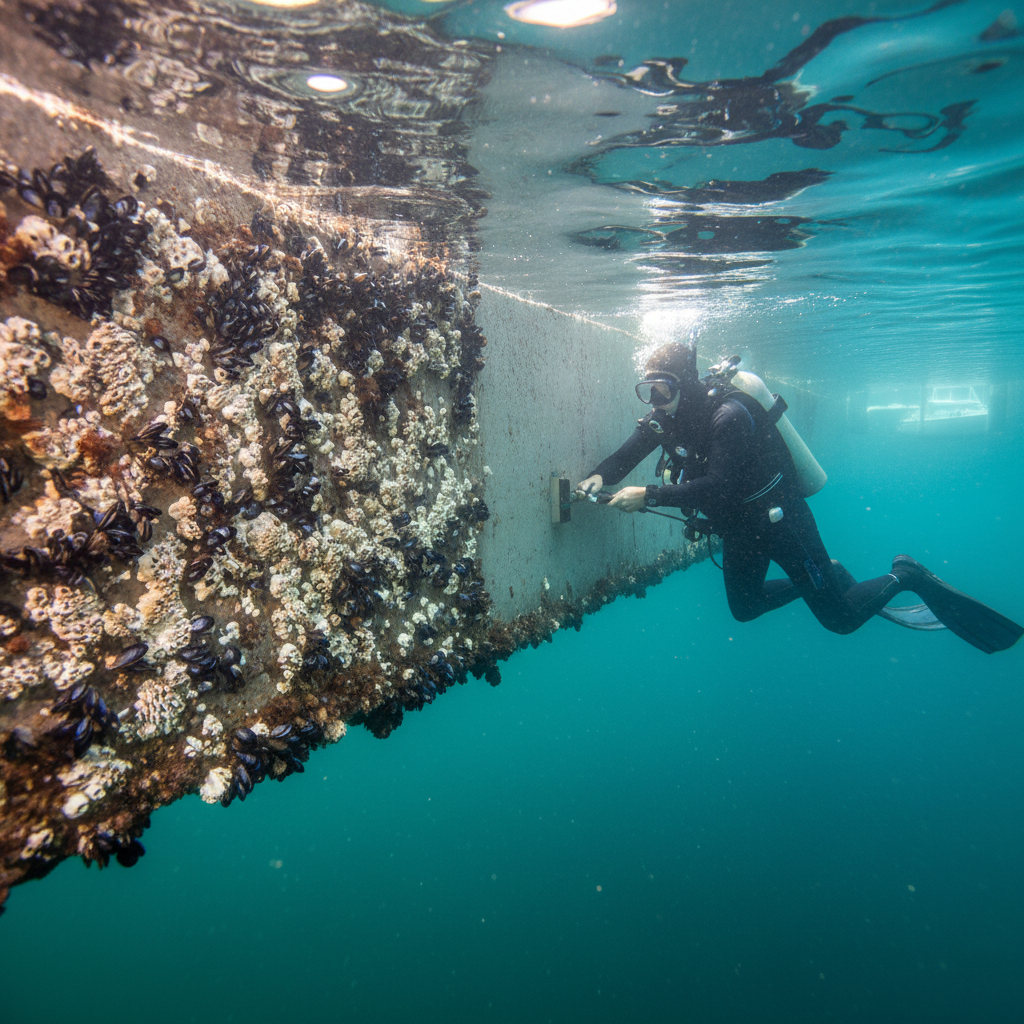
Concrete Float Spalling and Richardson Bay Marine Growth
Concrete floats are prized for their longevity, but they are susceptible to a phenomenon known as concrete spalling. This occurs when saltwater penetrates the concrete, causing the internal rebar to rust and expand. In the high-salinity environment of Sausalito, especially following El Niño-driven salinity spikes, this process accelerates.
Furthermore, the aggressive nature of Richardson Bay marine growth means that barnacles can actually ‘root’ into small fissures in the concrete. If a diver uses improper high-pressure tools, they risk pulling out chunks of the concrete foundation along with the growth. Our team at 360 Hull Diving uses specialized, low-impact mechanical scraping to preserve the outer shell while ensuring a clean surface.
Strategic maintenance involves more than just cleaning; it requires visual proof. We provide before-and-after photo documentation so you can see the state of your concrete foundation without ever getting wet. If you are noticing a loss in freeboard, contact our expert dive team for a comprehensive assessment of your float’s condition.
Steel Hull Care: Addressing Galvanic Corrosion and Heritage
Many of Sausalito’s most iconic floating homes sit atop repurposed WWII-era steel hulls. While these structures are incredibly durable, they face a silent enemy: galvanic corrosion. In high-density mooring areas like the Sausalito waterfront, stray electrical currents from shore power can rapidly eat away at steel hulls if they are not properly protected.
- Sacrificial Anodes: Regularly replacing zinc or aluminum anodes is the first line of defense against electrolysis.
- Micro-fragmentation: We inspect for tiny pits in the steel that indicate the early stages of structural failure.
- Coating Integrity: Cleaning must be done delicately to avoid stripping away protective epoxy layers.
According to research by NACE International, proactive corrosion management can extend the life of a steel marine structure by decades. For Sausalito residents, this means preserving the heritage of their homes while avoiding the astronomical costs of a dry-dock haul-out.
| Feature | Concrete Floats | Steel Hulls |
|---|---|---|
| Primary Risk | Spalling & Weight Gain | Galvanic Corrosion | Cleaning Frequency | Every 12-18 Months | Every 6-12 Months | Protection Method | Marine Epoxy Sealing | Sacrificial Anodes (Zincs) | Failure Sign | Exposed Rebar/Cracks | Pitting & Rust Bleeding |
Advanced Richardson Bay Dive Services and Biofouling Management
Modern Richardson Bay dive services have evolved to meet the strict environmental mandates of the San Francisco Bay Conservation and Development Commission (BCDC). Traditional chemical treatments are often restricted, making eco-friendly mechanical scraping the gold standard for biofouling management.
Moreover, the risk of spreading invasive species is a major concern for the local ecosystem. By maintaining a clean hull, houseboat owners prevent the transport of non-native organisms from the stagnant marina waters into the broader Bay. This level of environmental stewardship is why many Sausalito marinas now require proof of regular hull maintenance.
Need a professional evaluation? Explore our specialized cleaning guides to understand the best schedule for your specific hull type. We prioritize transparency, providing every client with a digital report of their underwater assets.
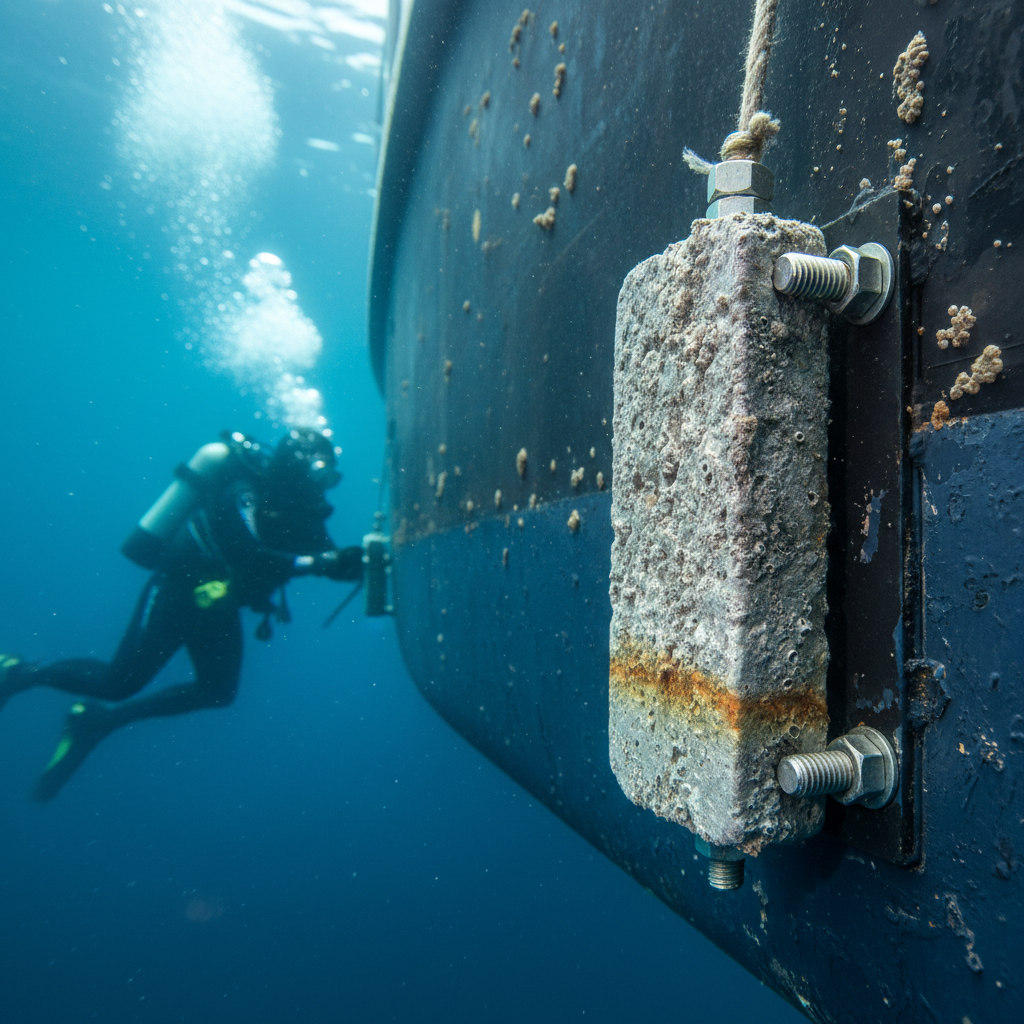
Insurance Compliance and Underwater ROV Inspections
A major trend for 2024 is the increased demand for hull integrity certifications by marine insurance providers. Many companies no longer accept a “word of mouth” confirmation that a houseboat is sound. Instead, they require documented evidence of Sausalito houseboat hull integrity.
To meet this need, we utilize underwater ROV (Remotely Operated Vehicle) inspections. This technology allows us to:
- Capture high-definition video of the entire hull surface.
- Identify potential spalling or corrosion in hard-to-reach areas.
- Provide a citable report for insurance renewals and property appraisals.
- Perform inspections without the overhead of a full dive team when only a visual check is needed.
Transitioning to a digital-first maintenance record is the most efficient way for high-growth property owners to protect their investments. Whether you are at Liberty Dock or Yellow Ferry Harbor, having a professional dive team on call ensures your home remains buoyant and compliant.
The Preventative Maintenance Checklist for Floating Homes
To ensure long-term stability, we recommend following this specialized checklist tailored for the Sausalito waterfront. Regular intervals are key to preventing the ‘Hidden Weight’ crisis that affects so many aging floats.
- Quarterly: Check freeboard height at all four corners to ensure level buoyancy.
- Bi-Annually: Inspect sacrificial anodes on steel hulls and check for signs of rust bleeding.
- Annually: Schedule a full professional dive cleaning to remove heavy biofouling.
- Every 2 Years: Conduct a comprehensive ROV inspection for insurance documentation.
By following these steps, you mitigate the risk of emergency repairs and preserve the market value of your floating home. Our team specializes in floating home hull care throughout the Bay Area, ensuring that every dive is performed with the highest standards of safety and transparency.
Sausalito Houseboat Hull Integrity FAQs
How often should I clean my houseboat hull in Sausalito?
In the nutrient-rich waters of Richardson Bay, we recommend a professional cleaning every 12 to 18 months for concrete floats and every 6 to 12 months for steel hulls. Regular maintenance prevents heavy growth from affecting your freeboard and allows for early detection of structural issues like concrete spalling or galvanic corrosion.
Can heavy barnacle growth actually sink my houseboat?
While a houseboat is unlikely to sink instantly from growth, extreme biofouling can add several tons of weight. This reduces your freeboard (the distance between the water and your deck), making your home more vulnerable to flooding during storms, high tides, or wake from passing vessels. Sausalito houseboat hull integrity depends on staying light and buoyant.
What is concrete spalling and why is it dangerous?
Concrete spalling occurs when saltwater reaches the internal steel reinforcement of your float, causing it to rust and expand. This pressure cracks the concrete from the inside out. If left untreated, it can lead to structural failure. Regular underwater inspections are the only way to catch spalling before it requires expensive major repairs.
Are underwater ROV inspections better than traditional divers?
ROVs are excellent for providing high-definition video documentation and reaching tight spaces without disturbing the environment, which is perfect for insurance certifications. However, for actual cleaning and biofouling removal, a professional diver is still necessary. We often combine both technologies to provide the most comprehensive Richardson Bay dive services available.
Ready to protect your floating investment? Schedule your professional hull inspection with 360 Hull Diving today and get the photo proof you need for peace of mind and insurance compliance. Call us to discuss your specific marina requirements in Sausalito.