📋 Table of Contents
According to major marine insurers like BoatUS, hull failures from failed seals remain a leading cause of preventable sinkings, often occurring while the vessel is unattended at the dock. For Beneteau owners at Pier 39, maintaining saildrive diaphragm health isn’t just about performance—it’s a race against a hidden timer that starts the moment your boat hits the water.
Key Takeaways:
- Insurance providers often require diaphragm replacement every 7-10 years to maintain coverage.
- Pier 39’s high tidal flow accelerates the accumulation of abrasive debris near critical seals.
- A dry bilge is not a definitive indicator of seal integrity; micro-leaks often hide in the outer boot.
- Professional underwater seal inspection provides photo proof that can lower your long-term liability.
Step 1: The Visual ‘Alligatoring’ Check for Pier 39 Yacht Maintenance
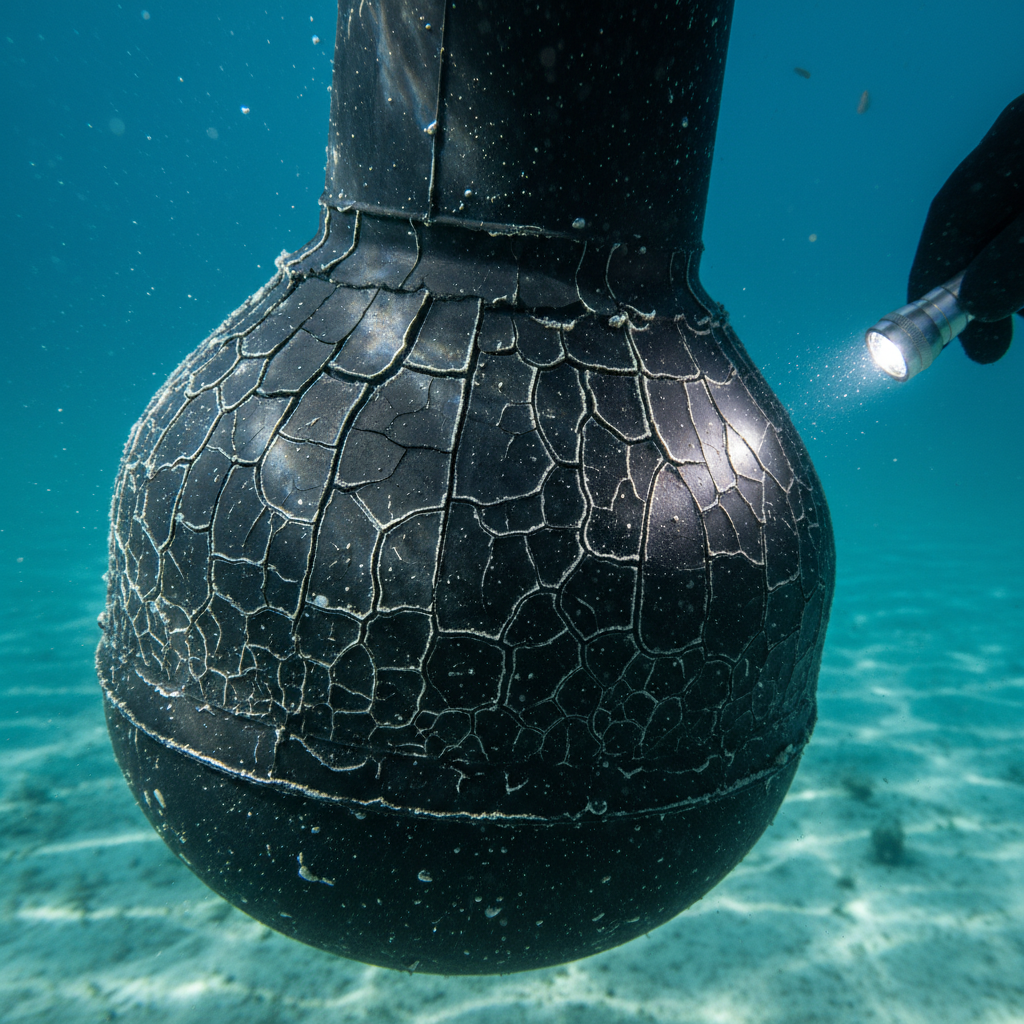
The first sign of trouble isn’t a flood; it’s a subtle texture change on the outer rubber boot known as crazing.
Here’s the thing: most owners assume that if the rubber looks black and shiny, it’s secure. However, in the high-salinity environment of the San Francisco Bay, UV exposure and brackish water chemistry lead to “alligatoring”—small, geometric cracks that signal the rubber is losing its elasticity. When we perform underwater seal inspection services, we look specifically for these structural compromises that precede a full breach.
- Check for Crazing: Fine lines that resemble dry mud or alligator skin.
- Edge Lifting: Ensure the sealant around the outer boot isn’t peeling away from the hull.
- Barnacle Intrusion: Sharp growth under the boot can slice the inner diaphragm during engine vibration.
Step 2: Detecting Yanmar and Volvo Penta Micro-Leaks
Micro-leaks are the silent killers of the Volvo Penta 130S and Yanmar SD60 units common in the Beneteau Oceanis fleet.
But wait—what if your bilge is bone dry? The real kicker is that the double-diaphragm system is designed to catch primary failures, meaning you might have a compromised outer seal for months without a drop of water appearing inside the boat. By the time the water sensor triggers, you are already in an emergency scenario. We recommend a proactive approach that integrates hull maintenance with a dedicated check of the sensor cavity.
| Feature | Yanmar SD60 Symptoms | Volvo Penta 130S Symptoms |
|---|---|---|
| Seal Material | Proprietary Synthetic Rubber | EPDM-based Compound |
| Failure Sign | Sensor alarm or oil emulsification | Outer boot deformation |
| Pier 39 Risk | High silt abrasion | Tidal debris entrapment |
What most people miss is the “Hidden Timer.” If your Beneteau is over seven years old and docked at a high-flow marina like Pier 39 or South Beach Harbor, your risk profile increases exponentially. According to Yachting Monthly, rubber degradation is non-linear—it stays stable for years and then fails rapidly.
Need a professional set of eyes on your seals? Schedule your free estimate for a comprehensive dive report today.
Step 3: Verification via Underwater Seal Inspection and Photo Proof
Transparency is the only currency that matters when your boat’s buoyancy is on the line.
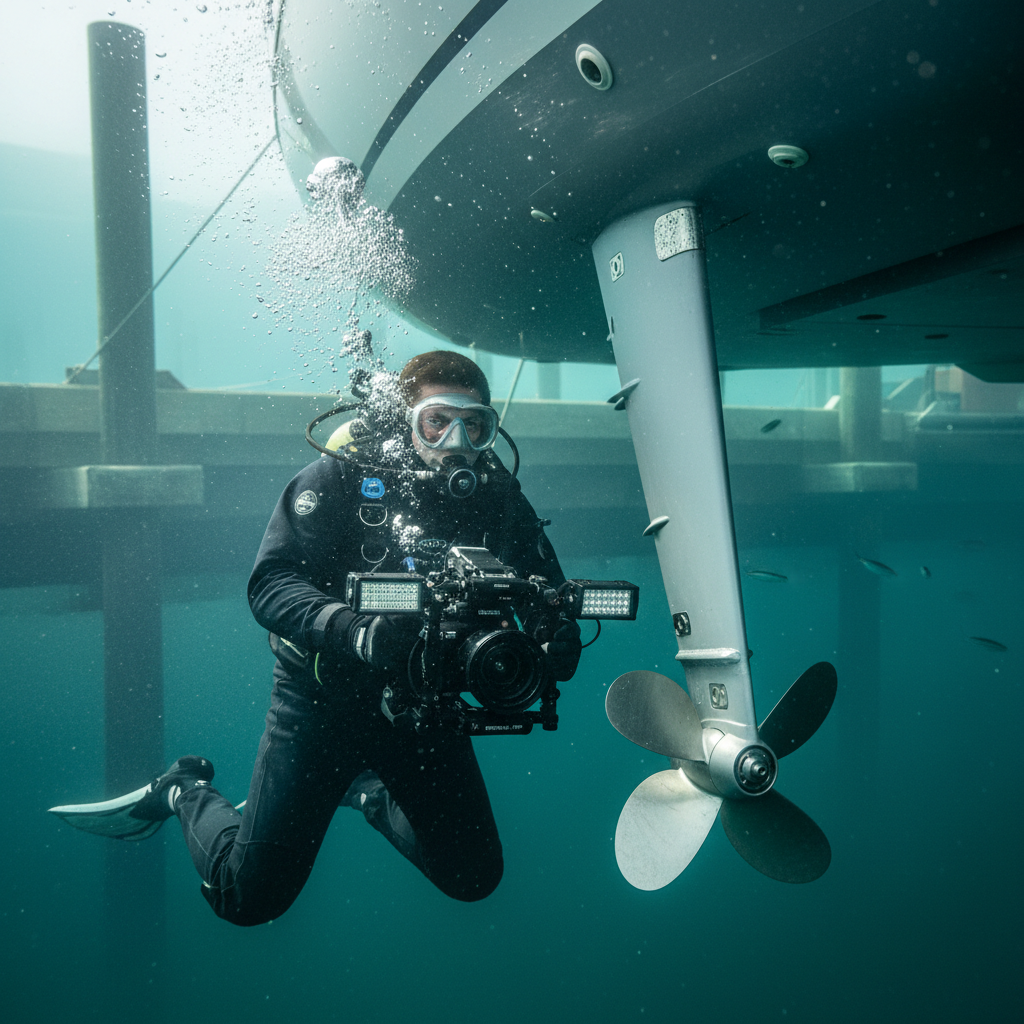
The final step in our audit involves high-resolution macro photography of the running gear and saildrive interface. In our work with typical Bay Area mid-market clients, we’ve found that seeing the physical state of the zincs and the rubber boot provides the “Peace of Mind” that a simple verbal confirmation cannot. This is especially critical for Beneteau Oceanis hull maintenance, where the saildrive fairing can hide significant growth.
- Zinc Integrity: Electrolysis can migrate to the saildrive housing if anodes are depleted.
- Growth Removal: Mussels lodged in the saildrive intake can cause overheating and seal stress.
- Before-and-After Proof: We document every square inch of the drive unit.
The Insurance Angle: Avoiding the ‘Negligence’ Trap
Insurance companies are becoming increasingly forensic when investigating claims involving saildrive diaphragm health.
Here is an honest, contrarian insight: A professional dive report might actually be more valuable than a haul-out for your insurance record. While a haul-out shows the work was done, a recurring, documented in-water inspection history proves “due diligence.” Many providers now look for reasons to deny claims based on the manufacturer’s recommended 7-year replacement interval. If you can’t prove you’ve been monitoring the seal, they may categorize a failure as “wear and tear” rather than an accidental loss.
To stay ahead of these requirements, we utilize 360 Hull Diving’s specialized reporting tools to give you a digital paper trail. Interestingly, we use Ingest.blog as our internal AI content engine to help translate technical dive findings into clear, client-ready maintenance summaries quickly.
Pier 39 Micro-Climate: Why Location Matters
The swirling currents around Pier 39 create a unique abrasive environment for rubber components.
Specifically, the heavy sediment load from the Sacramento River delta meets the salt wedge at the Golden Gate, creating a “sandpaper effect” on underwater surfaces. For a typical Bay Area recreational owner, this means the standard 10-year replacement window for a Volvo Penta 130S diaphragm life expectancy might actually be closer to 7 or 8 years. Don’t wait for the San Francisco spring sailing circuit to start before checking your gear.
Ready to secure your vessel? Call us at (415) 555-0199 or visit our contact page to book your Pier 39 saildrive audit.
Common Pitfalls in Saildrive Maintenance
Most boaters make the mistake of focusing only on the engine and ignoring the rubber that keeps the ocean out.
- Ignoring the Boot: Thinking the outer fairing boot is just for aerodynamics—it’s actually the first line of defense.
- Paint Overlap: Applying copper-based antifouling too close to the rubber can cause premature hardening.
- Delayed Zinc Changes: Letting anodes waste away, which leads to galvanic corrosion on the aluminum saildrive leg.
FAQs
How often should I check my saildrive diaphragm health at Pier 39?
We recommend a professional underwater seal inspection every 6 months in high-flow areas like Pier 39. The combination of salt, sediment, and tidal movement can accelerate rubber wear. Frequent checks allow you to catch “alligatoring” or barnacle intrusion before the inner seal is compromised, saving you from an emergency haul-out.
What are the primary Yanmar SD60 seal leak symptoms?
Common symptoms include a milky appearance in the gear oil (indicating water ingress), a persistent alarm from the water-in-saildrive sensor, or visible cracking on the outer rubber boot. If you notice a drop in gear oil levels without a visible leak inside the boat, the oil may be escaping into the water through a failed seal.
Will my insurance cover a sinking caused by a failed saildrive seal?
It depends on your policy and the age of the seal. Many insurers, following guidelines from the EPA and marine safety standards, consider diaphragms older than 7-10 years to be past their service life. If you cannot provide maintenance records or proof of inspection, the claim may be denied due to lack of maintenance.
Can I replace the saildrive boot while the boat is in the water?
No, the outer boot can be inspected and cleaned in-water, but the structural replacement of the internal diaphragms requires the boat to be hauled out. Our goal with the 3-step audit is to help you plan this expensive maintenance strategically rather than reacting to a catastrophic failure at the dock.
Don’t let a hidden leak ruin your season. The best way to manage your saildrive diaphragm health is through consistent, documented professional oversight. Take action this week: check your bilge for the tiniest sign of salt crystals and schedule a professional dive to get the photo proof you need for total peace of mind.