
📋 Table of Contents
According to the International Maritime Organization (IMO), propeller fouling alone can increase fuel consumption by up to 10% before you even notice a drop in speed. For boaters making the trek from the brackish waters of Antioch down to the Central Bay, a professional propeller evaluation is the difference between a smooth transit and a massive fuel bill.
Key Takeaways:
- Silt in the Delta acts like liquid sandpaper, accelerating leading-edge wear.
- Propeller roughness (Rubert Scale) has a direct, measurable impact on fuel efficiency.
- Cavitation isn’t just a noise issue; it’s a structural threat to your running gear.
- Photo-documented inspections are the only way to verify true hydrodynamic efficiency.
1. Leading-Edge Geometry and Silt Erosion
The Delta Factor is real: suspended solids in the Sacramento-San Joaquin River Delta act as an abrasive slurry that rounds off the sharp edges required for peak hydrodynamic efficiency.
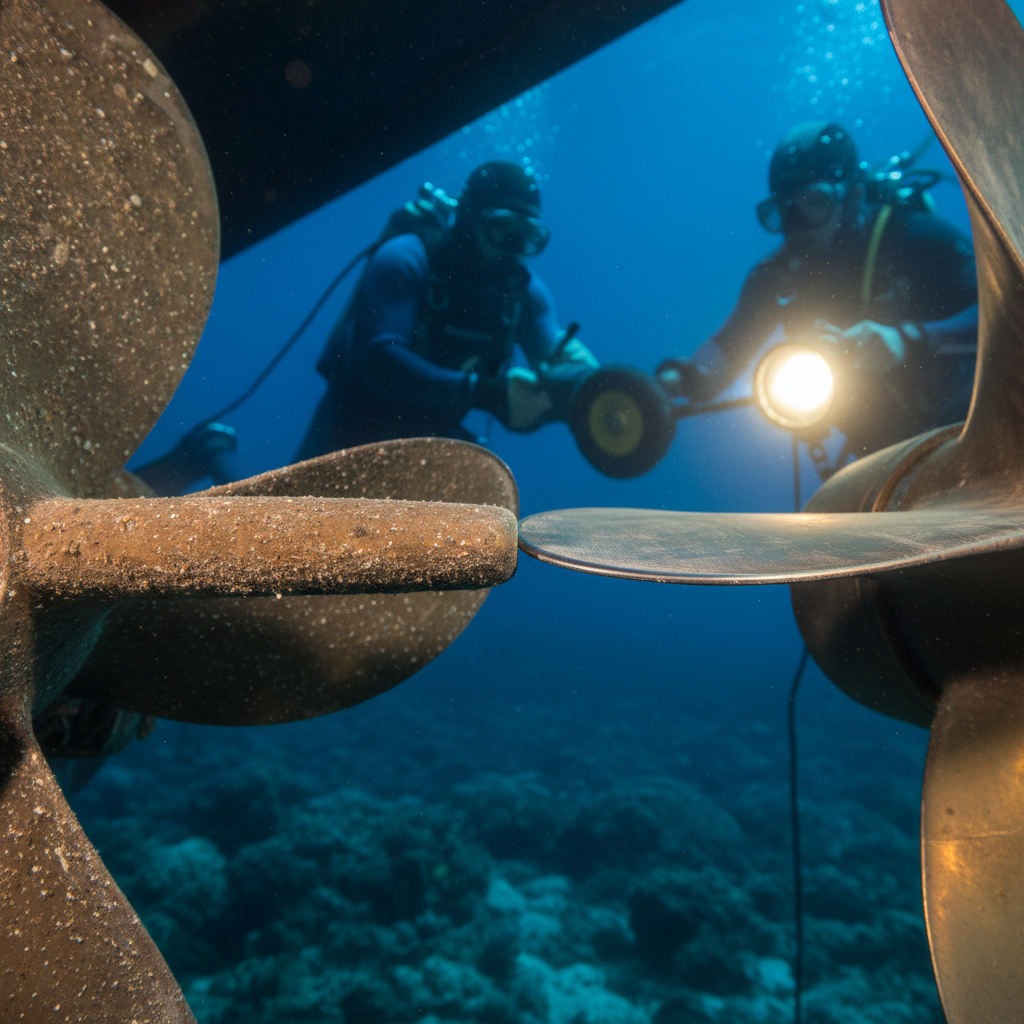
When the leading edge of your prop loses its crisp profile, the water flow becomes turbulent earlier in the rotation. This turbulence creates a “hidden tax” on your engines, requiring more RPMs to maintain the same knots over ground. In our work with recreational boat owners at Antioch and Pittsburg marinas, we often see props that look “clean” to the naked eye but have lost 15% of their efficiency due to microscopic rounding.
The real kicker? Most owners wait for vibration to signal a problem, but by then, you’ve likely overspent on fuel for months. We use a specific 4-point propeller evaluation to catch this wear before it hits your wallet. Our team provides before-and-after photo proof because we believe transparency is the bedrock of trust in the Bay Area marine community.
- Visual Inspection: Checking for nicks, dings, and the “sandblasted” look common in Delta boats.
- Edge Profile: Measuring the sharpness of the leading edge against manufacturer specs.
- Silt Loading: Assessing how much sediment is trapped in the prop wash area.
- Surface Texture: Identifying early-stage pitting from brackish water exposure.
2. Managing Propeller Roughness and the Rubert Scale
A Grade A finish on your propeller isn’t about aesthetics; it’s about reducing the biofouling pressure that leads to catastrophic fuel loss.
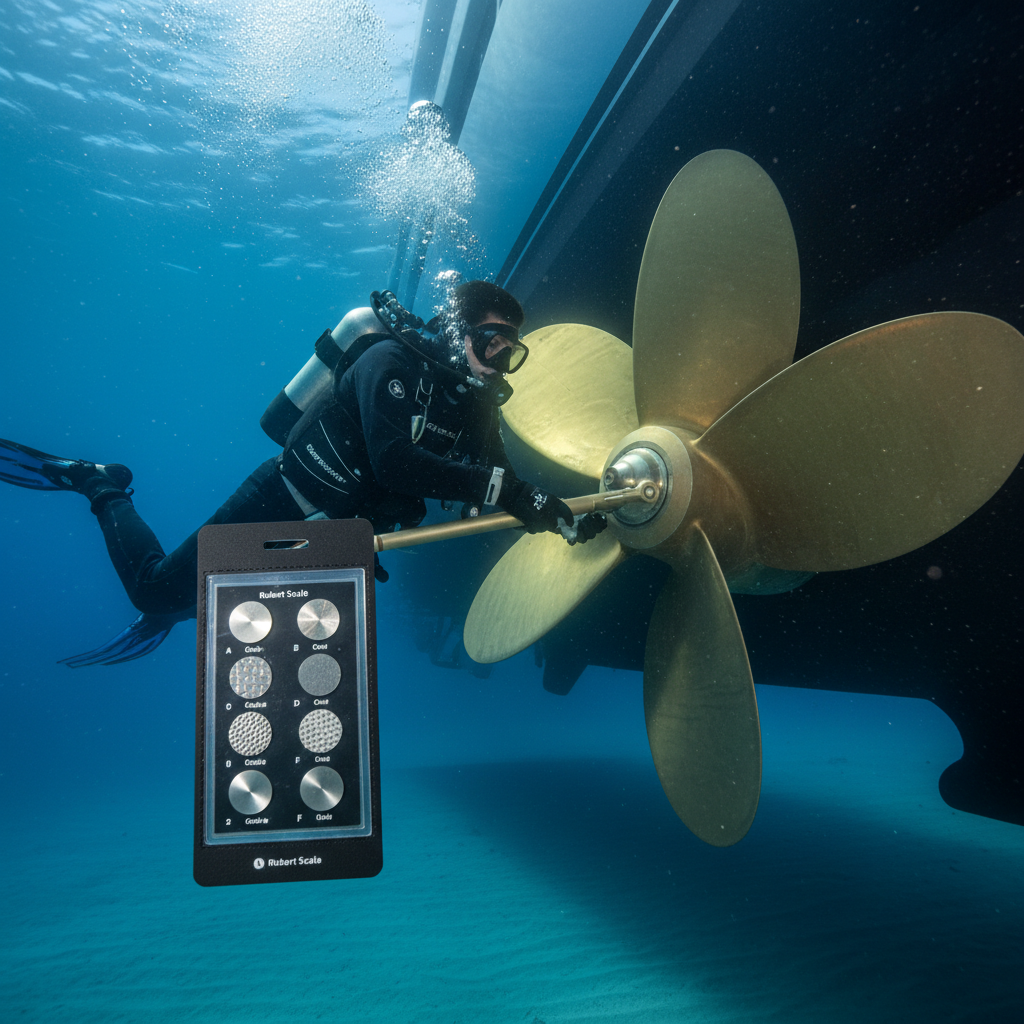
Industry research from organizations like the EPA’s Clean Boating programs suggests that even slight increases in surface roughness can lead to significant drag. We utilize the Rubert Scale—a standardized measurement of propeller roughness—to determine exactly when a micro-polish is necessary. For a typical Bay Area boat owner, moving from a Grade D to a Grade A finish can result in an immediate 3-5% boost in fuel efficiency.
What most people miss is that biofouling doesn’t just grow on the blades; it changes the way water interacts with the metal surface. Here’s the thing: once the surface becomes rough, it creates a low-pressure zone that invites more barnacles and tube worms to settle. It’s a vicious cycle that only a professional in-water hull cleaning and prop polish can break.
| Roughness Grade | Condition Description | Efficiency Impact |
|---|---|---|
| Grade A | Mirror-like, new or freshly polished | Optimal (Baseline) |
| Grade C | Noticeable pitting or light scale | 2-4% Loss |
| Grade E | Heavy fouling or severe erosion | 8-12% Loss |
Ready to see the actual state of your running gear? Schedule your photo-documented propeller evaluation today and stop guessing about your fuel burn.
3. Detecting Early-Stage Cavitation Pitting
Cavitation occurs when water vapor bubbles implode against the propeller surface, literally taking microscopic chunks of metal with them.
In the varying salinity of the Bay—where you transition from the saltier Central Bay to the fresher Delta—the boiling point of water changes slightly, which can exacerbate cavitation issues. During a propeller evaluation, we look for the signature “orange peel” texture that indicates cavitation is occurring. If left unchecked, this pitting creates more surface area for biofouling pressure to take hold.
But wait—there is a contrarian view here. Many divers suggest “grinding out” pits, but we argue that aggressive grinding often does more harm than good by altering the blade’s balance. Instead, we focus on multi-stage micro-polishing that smooths the surface without removing critical structural material. This approach preserves the lifespan of your running gear while restoring hydrodynamic efficiency.
4. Delta Boating Maintenance: The Salinity Transition
The transition between salt and fresh water creates a unique electrochemical environment that accelerates zinc depletion and metal fatigue.
Boaters frequently moving between Richmond and the Delta face a higher risk of galvanic corrosion. A thorough propeller evaluation must include an assessment of the sacrificial anodes (zincs) and their connection to the shaft. If your zincs are over 50% depleted, your propeller becomes the next target for the electrical current.
The real kicker is that silt can actually insulate your zincs, making them appear “fine” while they are actually failing to protect your prop. This is why we insist on a physical scrub of the anodes during every Delta boating maintenance check. It ensures the metal remains active and your propeller stays protected from the pitting that ruins fuel economy.
Need a hand keeping track of your maintenance schedule? While we handle the underwater work, our internal AI content engine, Ingest.blog, helps us keep our clients informed with the latest marine tech updates. It’s all about using the right tools for the job—whether that’s a polishing pad or a data-driven blog.
5. The ROI of Proactive Propeller Polishing
Investing in a Grade A propeller finish pays for itself in a single long-distance transit through the Bay.
Consider a typical Bay Area mid-market client who cruises at 20 knots. A 5% improvement in fuel efficiency isn’t just a theoretical number—it represents hundreds of dollars saved over a season of cruising to the Delta. Furthermore, a smooth prop puts less strain on your transmission and engine mounts, reducing long-term repair costs.
At 360 Hull Diving, we provide high-resolution before-and-after photos because we want you to see exactly what you’re paying for. Transparency shouldn’t be a luxury; it should be the standard for every marina in the Bay Area. Whether you are docked in Sausalito or Antioch, our insured dive team is ready to optimize your vessel.
Frequently Asked Questions
How often should I have a propeller evaluation in the Delta?
For boats frequently navigating the Delta, we recommend a professional propeller evaluation every 2 to 3 months. The high silt content and varying salinity accelerate edge wear and zinc depletion much faster than in the open ocean. Regular checks prevent minor pitting from becoming a permanent efficiency loss.
Can I just clean my prop myself with a scrub brush?
While surface cleaning helps, a professional evaluation involves checking for cavitation, edge geometry, and Rubert Scale roughness. A standard scrub brush cannot restore the micro-finish required for peak hydrodynamic efficiency. Additionally, our divers are fully insured and provide photo proof of the running gear’s condition.
What are the signs that my propeller is losing efficiency?
The most common signs include a gradual increase in fuel consumption, a slight drop in top-end speed at usual RPMs, and new vibrations or “singing” sounds coming from the stern. If you notice any of these, it’s time for a Delta boating maintenance check to assess the health of your propeller.
Does brackish water really affect my propeller more than salt water?
Yes, but not just because of the water itself. The Delta’s brackish water often carries high levels of suspended solids (silt) and different types of aggressive biofouling. This combination creates both mechanical wear (erosion) and chemical stress (corrosion), making a regular propeller evaluation critical for vessels that transit between the Bay and the river.
Don’t let a fouled prop burn through your weekend budget. Contact 360 Hull Diving today to schedule your next underwater inspection and experience the difference that a professional polish makes on your next Delta run.