📋 Table of Contents
Managing Oakland Estuary electrolysis is a critical priority for boat owners docked at high-density locations like Jack London Square or Marina Village. The Estuary’s unique blend of brackish water and aging electrical infrastructure creates a high-risk environment where sacrificial anodes can vanish in weeks rather than months. As of 2024, local boaters are facing increased rates of galvanic corrosion due to rising marina occupancy and shore power leakage.
Key Takeaways for Oakland Boaters:
- The Estuary’s fluctuating salinity creates a ‘Silent Battery’ effect that accelerates metal loss.
- Strategic zinc anode replacement in Oakland is required more frequently than in the open Bay.
- Transitioning to aluminum anodes often provides better protection in brackish Estuary waters.
- Monthly diver inspections with photo proof are the only way to catch stray current before it hits your running gear.
The Science of Oakland Estuary Electrolysis and the Silent Battery Effect
Oakland Estuary electrolysis is fueled by the specific conductivity of the water between Alameda and the Oakland shoreline. Because the Estuary gathers freshwater runoff and mixes it with salty tidal inflows, the water becomes a highly efficient electrolyte. This chemical makeup turns your boat’s underwater metals into a giant battery, where the least noble metal—your zincs—are consumed to protect your propellers and shafts.
Furthermore, the high density of liveaboard vessels in East Bay marinas contributes to increased stray current. When a neighboring vessel has a faulty bilge pump or a compromised shore power cord, electricity leaks into the water. This current seeks the easiest path to ground, which is often through your boat’s bonding system and out through your sacrificial anodes.
- Salinity Fluctuations: Heavier rains increase freshwater, changing how anodes react compared to the saltier Central Bay.
- High-Density Risks: More boats per dock mean a higher statistical likelihood of stray current from a neighbor.
- Aging Infrastructure: Many older docks have shore power pedestals that may not be perfectly isolated.
Why Conventional Zinc Often Fails in the Estuary
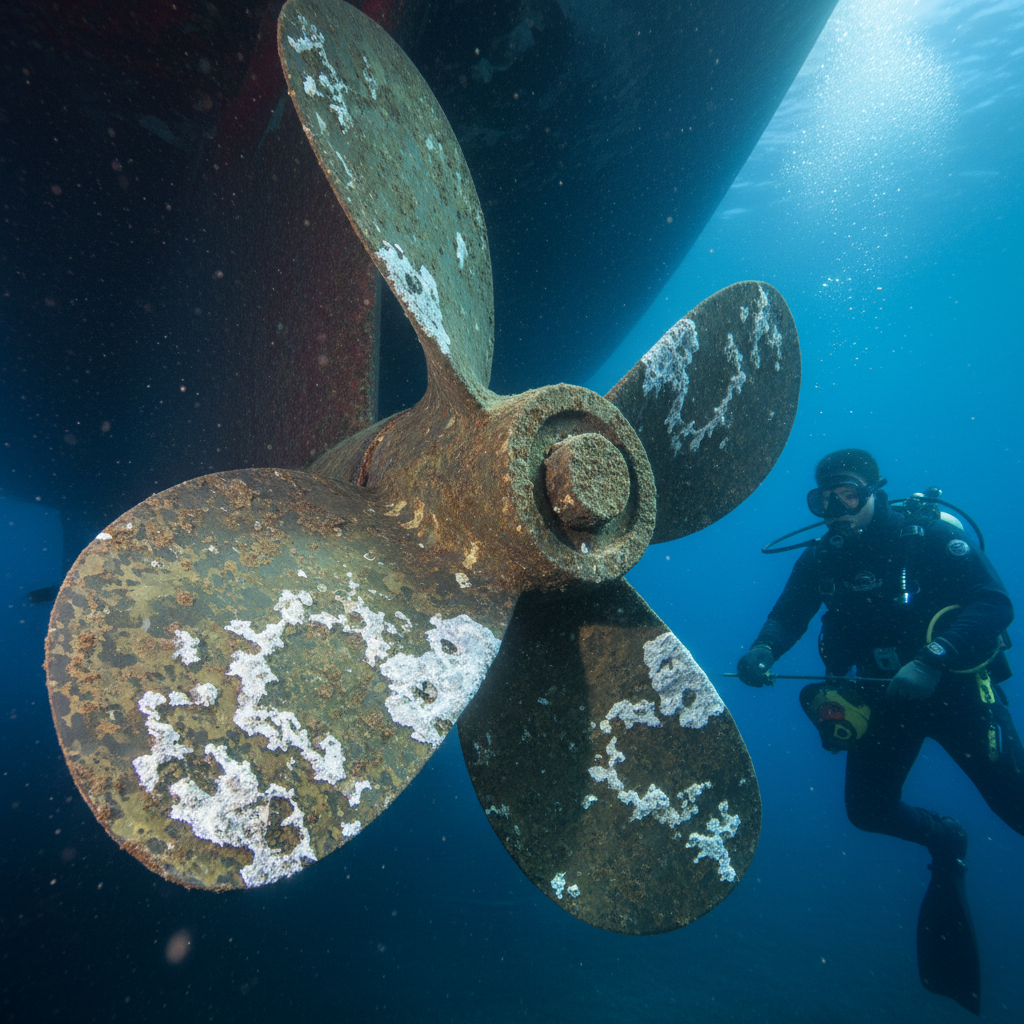
Traditional marine sacrificial anodes Jack London Square boaters have used for decades are often made of Mil-Spec zinc. However, in the brackish water of the Estuary, zinc can develop a ‘calcareous coating’—a hard crust that effectively passivates the anode. Once this happens, the zinc stops sacrificing itself, and the electrolysis begins attacking your expensive stainless steel props or bronze through-hulls.
Consequently, many elite vessel managers are switching to gallium-activated aluminum anodes. According to the EPA’s guidance on vessel maintenance, aluminum anodes are not only more effective in varying salinities but are also more environmentally friendly for the San Francisco Bay ecosystem. They provide a higher driving voltage, ensuring your boat remains protected even when stray current levels spike.
Need a professional eyes-on assessment of your boat’s current protection? Schedule your professional hull inspection with 360 Hull Diving today for photo-verified peace of mind.
Identifying Stray Current: The Marina Audit Checklist
Preventing boat electrolysis prevention issues starts with a proactive audit of your slip environment. You don’t need to be an electrical engineer to spot the red flags of stray current. Often, the damage is caused by simple maintenance oversights on your own boat or the vessel tied up next to you.
- Check Shore Power Cords: Look for cracked jackets or cords trailing directly in the water, which can leak AC current.
- Inspect the Bonding System: Ensure all internal green wires are clean, tight, and free of corrosion at the connection points.
- Monitor Anode Decay: If your zincs are disappearing in less than 90 days, you almost certainly have a stray current issue.
- Evaluate Neighboring Boats: Is the boat next to you poorly maintained? Their electrical faults can become your financial burden.
| Anode Material | Best Water Type | Avg. Lifespan (Estuary) | Protection Level |
|---|---|---|---|
| Traditional Zinc | Saltwater | 3-4 Months | Moderate (Risk of crusting) |
| Aluminum (Gallium) | Brackish/Salt | 4-6 Months | Superior |
| Magnesium | Freshwater | 1 Month | Not Recommended (Too active) |
Strategic Zinc Anode Replacement in Oakland: Timing is Everything
Performing zinc anode replacement in Oakland requires a localized strategy that accounts for seasonal changes. During the winter months, increased runoff from the Delta changes the Estuary’s conductivity. Smart boaters increase their inspection frequency during these transitions to ensure their cathodic protection remains active.
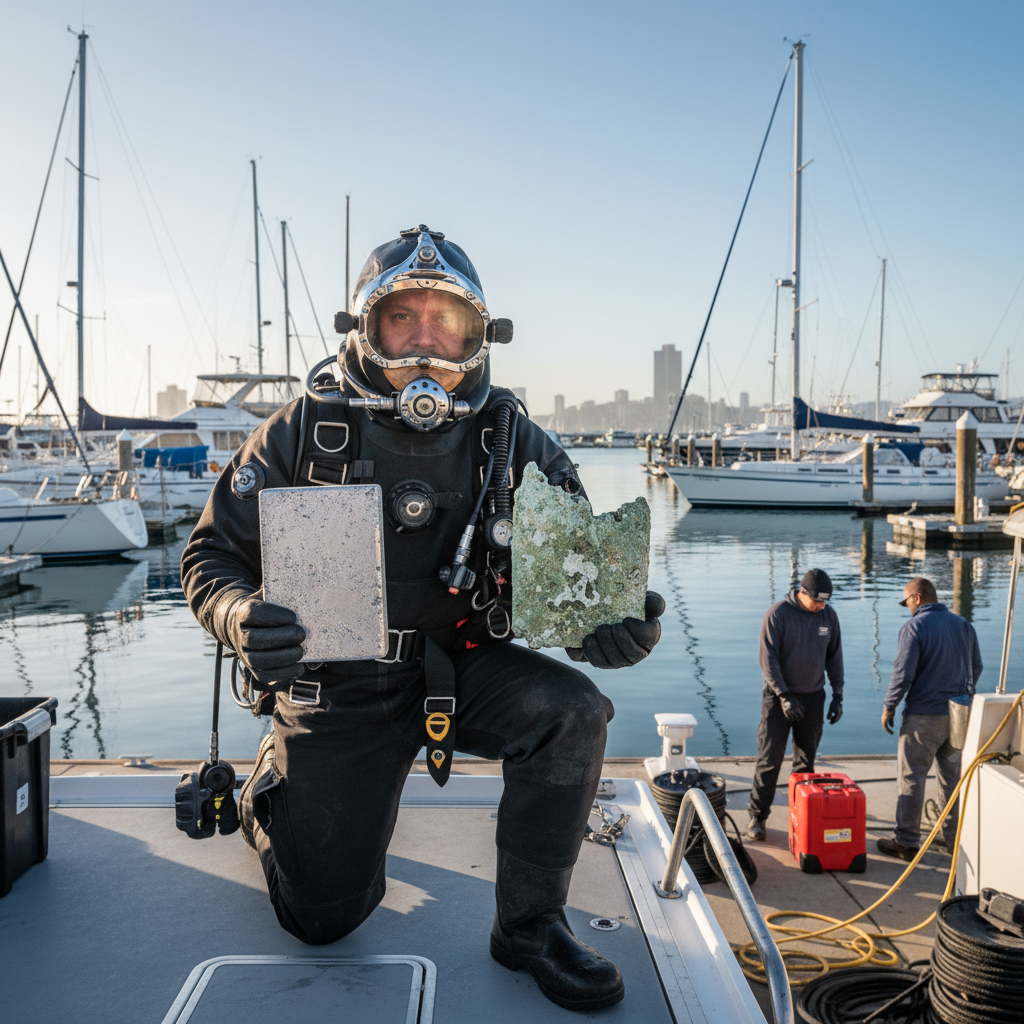
Moreover, the cost of a monthly diver inspection is negligible compared to the $5,000+ cost of replacing a pitted propeller or a corroded saildrive unit. At 360 Hull Diving, we provide before-and-after photo proof with every service. This transparency allows you to see exactly how much metal is left on your anodes without having to haul the boat out at a yard in Alameda.
- Visual Verification: We document the ‘wastage’ percentage of every anode during our underwater hull cleaning Oakland sessions.
- Proactive Replacement: We recommend replacing anodes once they reach 50% depletion to maintain a consistent safety margin.
- Hardware Integrity: We check the mounting bolts to ensure the anode has a solid electrical connection to the shaft or hull.
Don’t let hidden corrosion sink your resale value. Call us at (510) 690-5030 or book your monthly maintenance plan to stay ahead of the Estuary’s harsh conditions.
Advanced Boat Electrolysis Prevention for Growth-Stage Boat Owners
For owners of high-value yachts and commercial vessels, basic zincs might not be enough. Advanced boat electrolysis prevention now includes the installation of galvanic isolators and digital hull potential monitors. These tools act as a firewall between your boat and the marina’s electrical grid, blocking the low-voltage DC current that causes the most damage.
Transitioning to these technologies is a hallmark of sophisticated boat ownership. Much like a Series C startup scales its infrastructure to prevent downtime, a savvy mariner scales their corrosion protection to prevent catastrophic mechanical failure. According to BoatUS technical reports, boats equipped with a functioning galvanic isolator see up to a 300% increase in anode lifespan in high-stray-current marinas.
The Role of Galvanic Isolators
A galvanic isolator is installed in series with your shore power ground wire. It allows high-voltage AC current to pass safely in the event of a short circuit but blocks the small DC currents that cause Oakland Estuary electrolysis. This simple device is one of the most cost-effective upgrades you can make for a boat kept in the East Bay.
Testing Your Bonding System
Regular testing using a silver/silver-chloride reference electrode can tell you exactly how protected your boat is. If your hull potential is too low, your metals are at risk. If it’s too high (over-protection), you can actually damage the paint on your hull or cause embrittlement in certain metals. Professional hull maintenance includes monitoring these nuances.
The Environmental Impact of Choosing the Right Anodes
Choosing the right marine sacrificial anodes Jack London Square isn’t just about your boat; it’s about the health of the San Francisco Bay. Traditional zinc anodes contain small amounts of cadmium, a heavy metal that is toxic to marine life. As these anodes sacrifice themselves, these metals leach into the Estuary’s sediment.
Switching to aluminum anodes is considered a ‘green’ choice. Aluminum is more abundant and far less toxic to the sensitive ecosystems found in the Oakland and Alameda waterways. By making the switch, you are protecting your investment and the local environment simultaneously, aligning with the sustainability goals of the broader Bay Area community.
- Reduced Heavy Metals: Aluminum anodes do not contain the cadmium found in traditional zinc.
- Efficiency: Because aluminum lasts longer, fewer anodes are used over the life of the vessel.
- Regulatory Compliance: Stay ahead of potential future EPA regulations regarding heavy metal runoff in marinas.
Conclusion: Securing Your Vessel Against the Estuary’s Elements
Protecting your boat from Oakland Estuary electrolysis requires a combination of the right materials, regular professional monitoring, and an understanding of the local environment. Whether you are docked at Grand Marina, Fortmann Marina, or Jack London Square, the ‘Silent Battery’ effect is constantly at work. Strategic zinc anode replacement in Oakland is your first line of defense against the silent, expensive threat of corrosion.
At 360 Hull Diving, we pride ourselves on being the Bay Area’s most trusted, insured dive team. We don’t just change parts; we provide the data and photo proof you need to manage your vessel like a pro. Ready to stop worrying about what’s happening under the waterline? Contact us today for a free consultation and let’s build a maintenance plan that keeps your boat in peak condition for years to come.
Frequently Asked Questions
How often should I check my zincs in the Oakland Estuary?
Due to the high density of vessels and brackish water, we recommend a professional underwater inspection every 3-4 weeks. In the Estuary, stray current can consume a new anode in a matter of weeks, making monthly checks essential to prevent damage to your propellers and shafts.
Is aluminum better than zinc for boats in Alameda and Oakland?
Yes, aluminum anodes (specifically gallium-activated) are generally superior for the brackish water found in the Oakland Estuary. They provide better protection across varying salinities and do not ‘passivate’ or crust over like traditional zinc can when exposed to freshwater runoff.
What are the signs of stray current electrolysis?
The most common signs include rapid anode depletion (lasting less than 3 months), bright white ‘halos’ or pitting on your propeller, and bubbling paint near metal fittings. If you notice your neighbor’s shore power cord is sitting in the water, that is also a major red flag.
Can a galvanic isolator stop all electrolysis?
A galvanic isolator is highly effective at blocking DC stray current coming from the shore power ground lead, which is a primary cause of electrolysis. However, it cannot stop ‘self-generated’ corrosion from faulty internal wiring or issues with your boat’s own bonding system.