
📋 Table of Contents
Your neighbor at Marina Village Yacht Center just spent $9,200 to fix a problem they literally paid someone to create. While they thought they were being ‘green’ by using soft-bristle automated brushes, they were actually sanding their hull into a porous, osmotic mess.
For high-end yacht owners, Marina Village hull maintenance isn’t just about knocking off barnacles; it is about preserving the structural integrity of your gelcoat. Many ‘eco-friendly’ cleaning services in the Bay Area use tools that trap abrasive silt between the bristles and the hull, creating a grinding paste that leads to severe gelcoat abrasion. At 360 Hull Diving, we see the aftermath every week: chalky finishes, microplastic shedding, and ruined hydrodynamic drag reduction.
The Greenwashing Trap of Eco-Friendly Hull Cleaning Myths
The most dangerous lie in the marina right now is that ‘softer is safer’ for every hull type.
Here’s the thing: soft bristles are often the primary culprit behind ablative paint degradation because they require more passes to remove stubborn growth. Each pass doesn’t just take the slime; it takes a layer of your expensive coating with it. What most people miss is that ‘eco-friendly’ labels often mask a lack of technical expertise in underwater material science.
- Silt Entrapment: Soft brushes act like sponges for the fine Bay Area sediment, turning a ‘gentle’ clean into a sandpaper scrub.
- Osmotic Blistering: When gelcoat porosity increases due to over-scrubbing, water molecules penetrate the resin, leading to $10k+ repair bills.
- Microplastic Shedding: Aggressive scrubbing of epoxy resins releases harmful particles directly into the Estuary, violating the spirit of the EPA Vessel General Permit standards.
The Case of the $9,200 Restoration
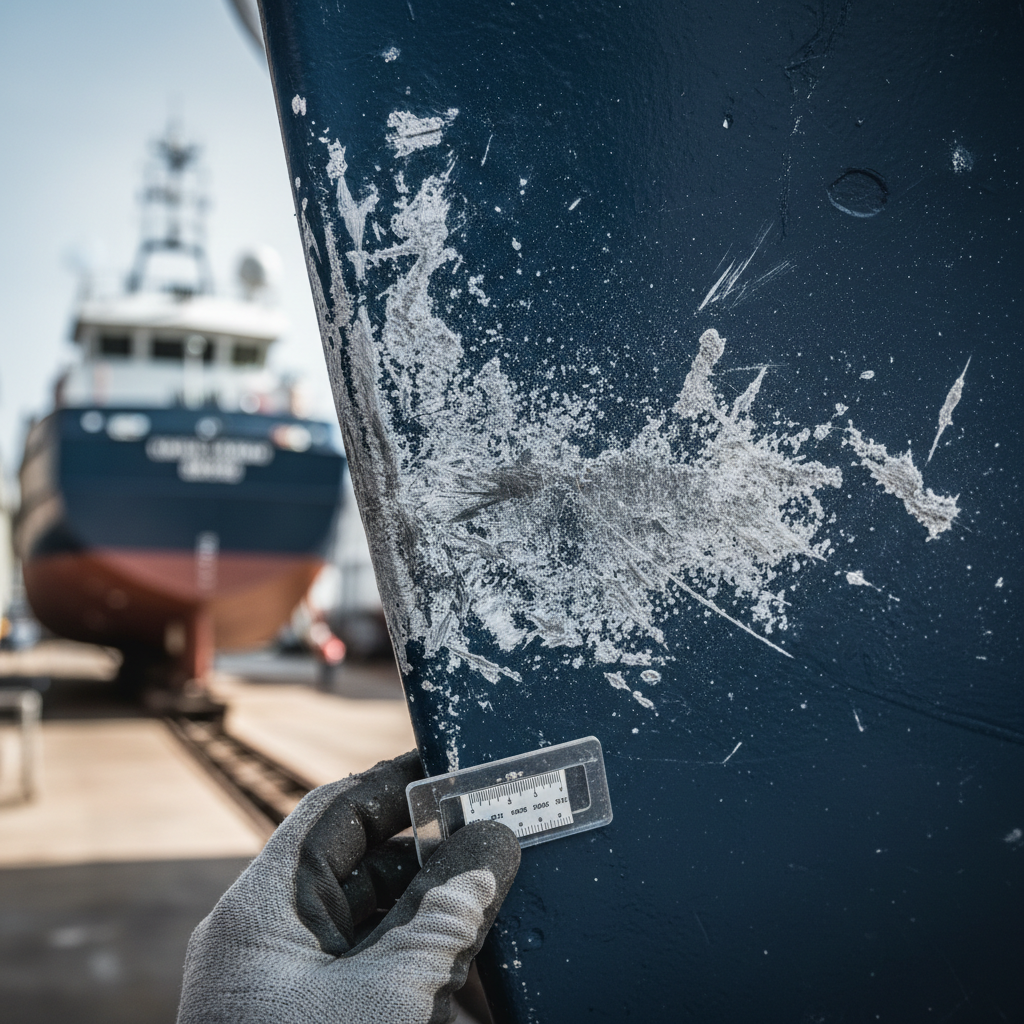
One of our clients, a 45-foot cruiser owner in Alameda, was sold on a ‘biocide-free fouling release’ system but used a high-speed mechanical brush service for a year. By the time we performed a hull inspection, the gelcoat was so thin you could see the fiberglass weave in patches. The $9,200 quote wasn’t for cleaning—it was for a full haul-out, professional sanding, and a multi-layer re-coating because the ‘gentle’ service had stripped the protection away. Don’t let this be you; schedule an insured dive inspection before the damage is permanent.
Why Gelcoat Abrasion is Killing Your Fuel Economy
Smoothness isn’t just about aesthetics; it’s about the physics of hydrodynamic drag reduction.
When improper Marina Village hull maintenance creates a ‘chalky’ texture, it increases surface friction. This isn’t just a theory—the U.S. Maritime Administration has documented how even slight hull roughness can increase fuel consumption by up to 15%. If you’re running a twin-engine yacht, that’s hundreds of dollars in extra fuel every trip to Angel Island.
| Cleaning Method | Gelcoat Impact | Average Annual Cost | Long-term Risk |
|---|---|---|---|
| Automated Brushes | High (Abrasive) | $1,200 | Gelcoat thinning / Porosity |
| Untrained DIY Diver | Medium | $800 | Inconsistent wear / Missed spots |
| 360 Hull Diving Pros | Zero (Preservative) | $1,500 | Maximum hull lifespan |
The Reality of Biocide-Free Fouling Release Coatings
Modern silicone coatings are the future, but they are incredibly delicate and easily ruined by ‘standard’ cleaning tools.
But wait—if you have a silicone-based, biocide-free coating, a single pass with a standard stiff brush can tear the surface tension, rendering the expensive paint useless. The real kicker? Most ‘eco-friendly’ services don’t change their pads between a classic ablative hull and a high-tech silicone hull. This cross-contamination is one of the biggest eco-friendly hull cleaning myths in the industry today.
- Identify Your Coating: Know if you have hard epoxy, ablative, or silicone release.
- Demand Photo Proof: If your diver isn’t showing you before-and-after photos, they are hiding something.
- Monitor Zincs: Proper maintenance includes checking sacrificial anodes to prevent galvanic corrosion alongside cleaning.
Need a professional eyes-on assessment of your current coating? Contact our team today for a detailed report and photo evidence of your hull’s condition.
Navigating New EPA Standards and Marina Compliance
The regulatory landscape in the San Francisco Bay is shifting faster than the tides at the Golden Gate.
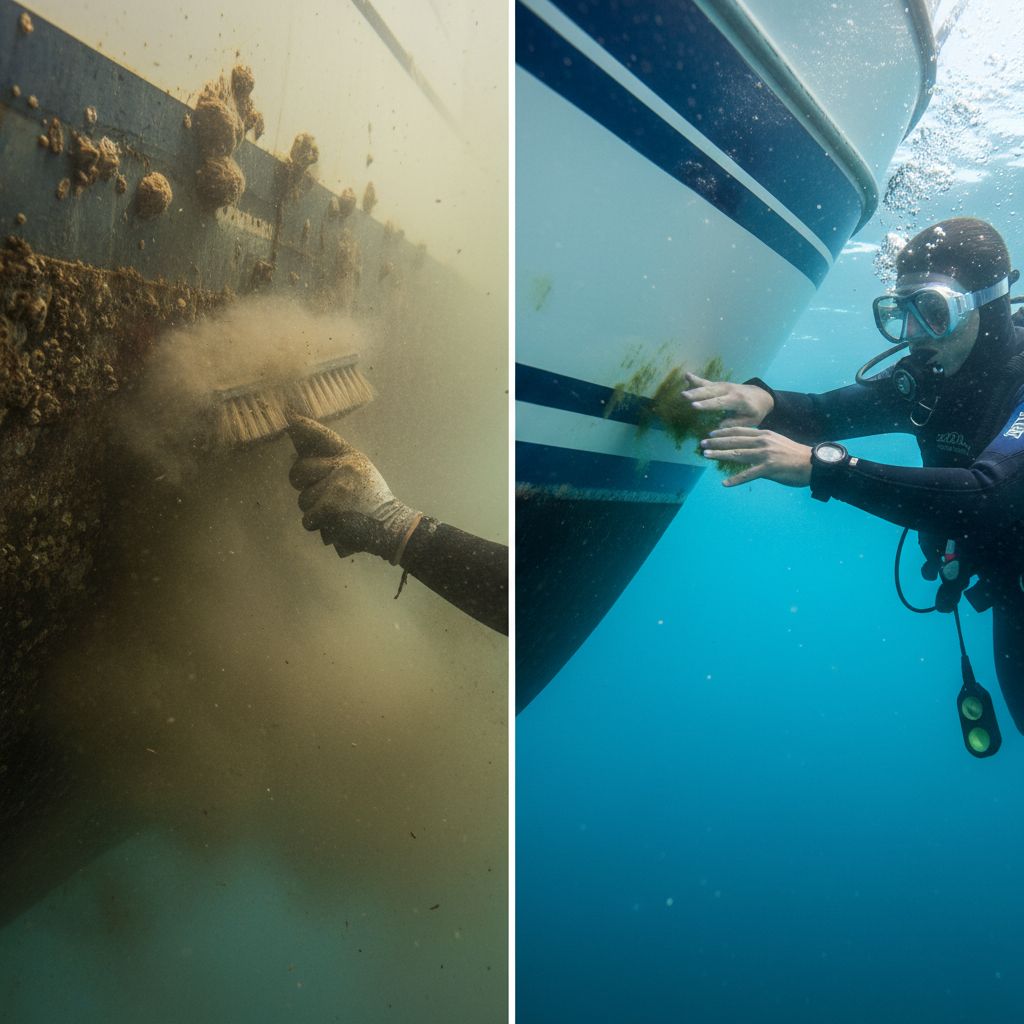
The transition from copper-based paints to biocide-free alternatives is no longer optional in many regions. As of 2024, marinas like Marina Village are under increasing pressure to limit ‘hull effluent discharge’—the plume of paint and heavy metals that clouds the water during cleaning. Professional divers use specialized techniques to minimize this discharge, whereas mechanical ‘groomers’ often create a massive cloud of pollutants.
What most people miss: Using an uncertified, uninsured diver doesn’t just risk your boat; it risks your marina lease. Many Bay Area marinas now require proof of insurance and environmental compliance from all sub-contractors. We provide full transparency and documentation for every service, ensuring you stay in the harbormaster’s good graces.
The ROI of Professional Divers vs. Automated Brushes
A professional diver is a diagnostic tool, not just a cleaning machine.
While a robot or a cheap brush service might make the sides look white, they can’t tell you if your props are pitted, if your zincs are 90% gone, or if you have a burgeoning electrolysis problem. Our divers act as your underwater scouts. We recently saved a client in Richmond from a $15,000 engine failure by spotting a plastic bag sucked into their raw water intake that a mechanical brush would have simply pushed further in.
- Tactile Feedback: Divers feel the hull to ensure gelcoat porosity isn’t increasing.
- Running Gear Inspection: We check props, shafts, and struts every single time.
- Customized Pressure: We vary our technique based on the specific fouling and paint type.
FAQs: Marina Village Hull Maintenance
How often should I schedule Marina Village hull maintenance?
In the nutrient-rich waters of the Oakland Estuary, we recommend a 3-4 week cycle during the summer and 4-6 weeks in winter. Consistent, gentle cleaning prevents heavy growth that requires abrasive removal, effectively stopping gelcoat abrasion before it starts.
What are the most common eco-friendly hull cleaning myths?
The biggest myth is that all ‘green’ cleaning tools are safe. In reality, many non-toxic cleaning pads are actually more abrasive than traditional methods because they rely on friction rather than chemical action. Always verify the tool is compatible with your specific hull coating.
Can I switch from copper paint to biocide-free fouling release?
Yes, but it requires a total strip of the old paint. Once applied, these coatings require specialized ‘touch-less’ or ultra-soft cleaning techniques. Marina Village hull maintenance specialists must be notified of this change to avoid destroying the coating during the first clean.
How do I know if I have gelcoat abrasion?
Look for ‘chalking’—a white, powdery residue on your hand after touching the hull—or visible fading of the color. In advanced cases, you’ll see a ‘honeycomb’ pattern or small blisters. Our photo-proof service identifies these issues early so you can avoid a $9,200 repair bill.
Stop gambling with your yacht’s value. The ‘cheap’ or ‘automated’ route is a fast track to the boatyard. For real-deal, insured, and photo-documented Marina Village hull maintenance, trust the team that knows the Bay. Book your 360 Hull Diving inspection now and see what’s actually happening beneath the waterline.