
📋 Table of Contents
According to research by the EPA, even a thin layer of slime—no thicker than a sheet of paper—can increase hull drag by up to 18%. For powerboat owners at Coyote Point Marina, this “hidden drag” translates directly into higher fuel costs and sluggish performance during weekend runs to Angel Island or the South Bay.
Maintaining hull-to-propeller efficiency is more than just having a shiny boat; it is about ensuring your engine isn’t fighting an uphill battle against the San Francisco Bay’s unique nutrient-rich currents. Here is the thing: a hull can look perfectly clean from the dock while the running gear is choked with barnacles. This 3-step audit is designed to help you identify exactly where your performance is leaking.
As of 2025, the rising cost of marine fuel and stricter California environmental regulations make efficiency a top priority for every responsible captain. At 360 Hull Diving, we provide the before-and-after photo proof that ensures your Coyote Point boat maintenance is actually moving the needle on performance.
Step 1: The Micro-Slime and Biofouling Assessment
The first sign of efficiency loss isn’t a barnacle; it is the microscopic biofilm that acts like a magnet for larger growth.
In the brackish waters near San Mateo, nutrient runoff creates a high-growth environment that favors rapid colonization. What most people miss is that this slime layer changes the laminar flow of water around your hull, creating turbulence that forces your engine to work harder just to maintain cruising speed. This is the primary driver of fuel burn optimization issues for local powerboats.
- Visual Inspection: We check the waterline and the often-neglected “shadow areas” under the keel.
- Tactile Testing: A soft-gloved pass can detect early-stage calcareous growth before it hardens.
- Intake Grates: We ensure cooling water intakes are 100% clear to prevent engine overheating.
The real kicker? Waiting until you see grass growing on the side of the boat means you have likely been overpaying for fuel for months. A proactive hull cleaning schedule is the most cost-effective way to preserve your bottom paint and your wallet.
Step 2: Propeller and Running Gear Reconditioning
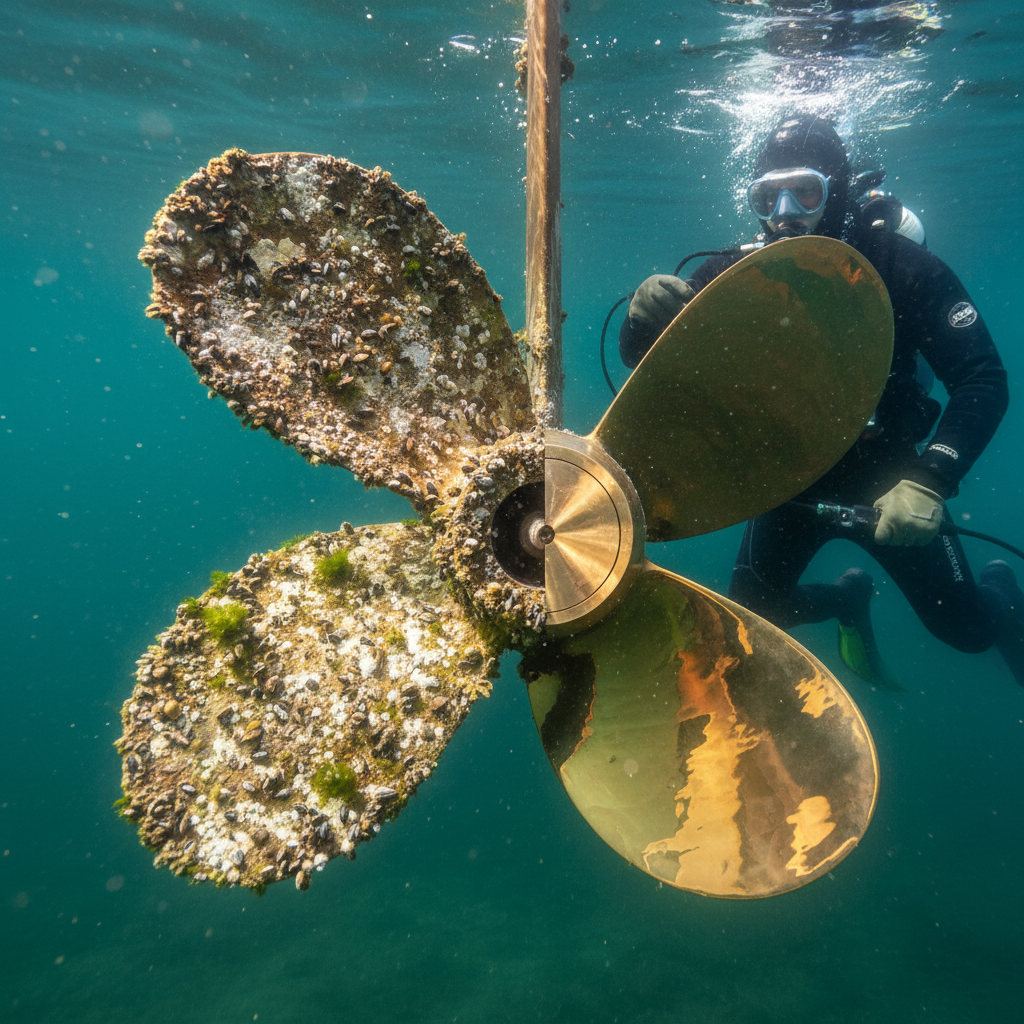
Your propeller is the most critical component of hull-to-propeller efficiency, yet it is often the most encrusted part of the vessel.
Even minor roughness on a propeller blade causes cavitation—the formation of vapor bubbles that implode against the metal surface. This not only saps thrust but can lead to permanent “pitting” that requires expensive shop repairs. For a typical Bay Area recreational cruiser, a professional propeller polish can result in a gain of 100-200 RPM at the top end.
- Barnacle Removal: We use specialized tools to remove hard growth without gouging the metal.
- Blade Edge Inspection: We check for nicks or bends that cause the “Zero-Vibration” threshold to fail.
- Zinc Anode Check: We verify that your sacrificial anodes are protecting your running gear from galvanic corrosion.
Ready to see the difference? Schedule your 360 Hull Diving audit today and get full photo proof of your gear’s condition.
Step 3: The Fuel Flow and Drag Correlation
Data doesn’t lie, and your fuel flow meter is the best diagnostic tool you have for Coyote Point boat maintenance.
If you find yourself pushing the throttles further forward to achieve the same GPS speed you had last month, you are paying a “drag tax.” In our work with high-performance powerboat owners, we often see a direct correlation between underwater hull grooming and a 10-15% reduction in fuel consumption at cruising speeds.
| Fouling Level | Estimated Speed Loss | Estimated Fuel Increase |
|---|---|---|
| Light Slime | 1-2 Knots | 5-8% |
| Heavy Slime/Grass | 3-5 Knots | 12-18% |
| Hard Growth (Barnacles) | 5+ Knots | 25%+ |
But wait—here is a contrarian insight: more cleaning isn’t always better. Aggressive scrubbing with the wrong pads can strip away your expensive anti-fouling paint, shortening the life of your bottom job. This is why we use the softest possible tools to get the job done, ensuring marine biofouling prevention without damaging your investment.
The Hidden Impact of Brackish Water at Coyote Point
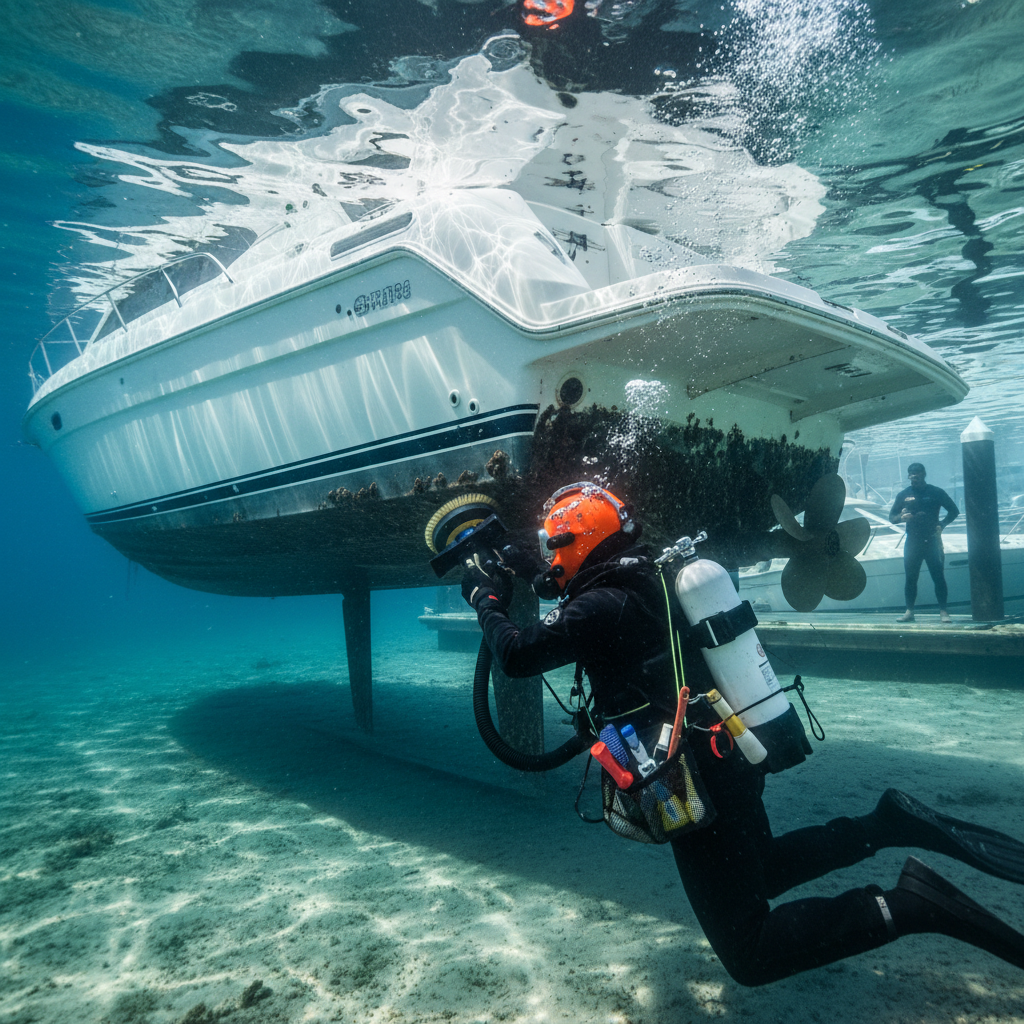
Coyote Point Marina presents a unique challenge because it sits at a crossroads of salt and fresh water influences.
This environment accelerates the growth of certain tubeworms and barnacles that thrive in fluctuating salinity. Unlike colder deep-water marinas, the shallow, warmer waters of the South Bay act as a greenhouse for marine life. If you aren’t performing a regular hull-to-propeller efficiency check, you are likely leaving performance on the table.
At 360 Hull Diving, we specialize in San Mateo underwater maintenance, understanding exactly which species are blooming each season. We use this local knowledge to provide targeted cleaning that keeps your running gear in showroom condition.
Need to streamline your maintenance records? We use a system similar to Ingest.blog to manage our internal reporting, ensuring every client receives a clear, digital before-and-after report they can save for their records or resale value.
Why Professional Diver Audits Beat DIY Every Time
It is tempting to grab a scrub brush and jump in, but the “wrong” cleaning method can actually void your bottom paint warranty.
California’s Department of Pesticide Regulation has strict rules regarding in-water cleaning to prevent copper and zinc runoff. A professional, insured dive team knows how to clean effectively while remaining compliant with local eco-friendly regulations. Furthermore, we can spot issues like loose struts or failing cutless bearings that a casual swimmer would miss.
- Safety: Diving in marina environments involves risks like stray electrical current.
- Equipment: We use high-grade pneumatic tools and specialized polishing pads.
- Transparency: Our photo-first approach means you never have to take our word for it.
Don’t let hidden drag slow you down. Learn more about our propeller services and how we help Bay Area boaters stay efficient.
Conclusion: Your Performance Reset Starts Now
The real takeaway? Stop treating hull cleaning as a chore and start viewing it as a performance upgrade. A clean boat is faster, safer, and significantly cheaper to operate. By following this 3-step audit, you ensure that your powerboat is always ready for a run across the Bay without the vibration or fuel-burn headaches.
Ready to experience the “Zero-Vibration” difference? Call 360 Hull Diving at (650) 555-0123 or contact us online to schedule your Coyote Point efficiency audit today. We bring the transparency, you bring the boat.
Frequently Asked Questions
How often should I have a hull-to-propeller efficiency audit?
For boats docked at Coyote Point Marina, we recommend a professional audit every 3 to 4 weeks during the high-growth summer months and every 6 to 8 weeks during the winter. This prevents hard growth from attaching to your running gear, which is much harder to remove without damaging the metal.
Can a dirty hull really cause engine vibration?
Yes. Uneven barnacle growth on propeller blades creates an imbalance, much like a car tire that has lost its weights. This leads to significant vibration that can damage your cutless bearings and transmission over time. A professional propeller reconditioning removes this growth and restores smooth operation.
Does 360 Hull Diving provide photos of the work?
Absolutely. We believe in total transparency. Every hull-to-propeller efficiency audit includes high-resolution before-and-after photos of your hull, intakes, and running gear. This allows you to see exactly what you are paying for and track the condition of your bottom paint over time.
Is in-water hull cleaning legal in the San Francisco Bay?
Yes, provided it is done by a professional who follows Best Management Practices (BMPs). We utilize eco-friendly techniques designed to minimize the release of biocides from your anti-fouling paint, ensuring your Coyote Point boat maintenance stays compliant with local environmental standards.