
📋 Table of Contents
According to the American Boat and Yacht Council (ABYC), undetected moisture intrusion through minor gelcoat cracks is a leading cause of long-term structural laminate failure. For boaters navigating the tight fairways and notorious crosswinds of the East Bay, a regular hull scuff audit isn’t just a maintenance task—it’s an essential insurance policy against the unique environmental stressors of the Berkeley Marina.
Key Takeaways for Berkeley Boaters:
- Distinguish between superficial dock rash and structural gelcoat integrity breaches.
- Understand how the “Berkeley Current” accelerates biofouling and drag.
- Learn the compliance requirements for California’s copper-based antifouling paint regulations.
- Implement a proactive zinc anode replacement schedule to prevent galvanic corrosion.
Step 1: Assessing Biofouling and Antifouling Performance
The real kicker about the Berkeley Marina is its high silt content and specific tidal flush, which creates a nutrient-rich environment where barnacles and tubeworms thrive faster than in the deeper waters of the Central Bay. A proper hull scuff audit begins with a performance-focused assessment of your bottom paint’s ability to repel these invaders.
Here’s the thing: soft growth can hide structural damage. When silt and algae accumulate, they mask the very scuffs you’re looking for. In our work with recreational boat owners at the Berkeley Yacht Club, we often find that what looks like a simple stain is actually a deep gouge filled with anaerobic bacteria. By clearing the biofouling first, we reveal the true state of your hull’s surface.
Consider these factors during Step 1:
- Slime and Algae Density: High silt levels in the East Bay act like sandpaper against your antifouling coating.
- Calcareous Growth: Barnacles at the waterline often signal that your copper-based paint is leaching unevenly.
- Regulatory Compliance: We ensure all cleaning follows California Clean Marina standards to protect the local ecosystem.
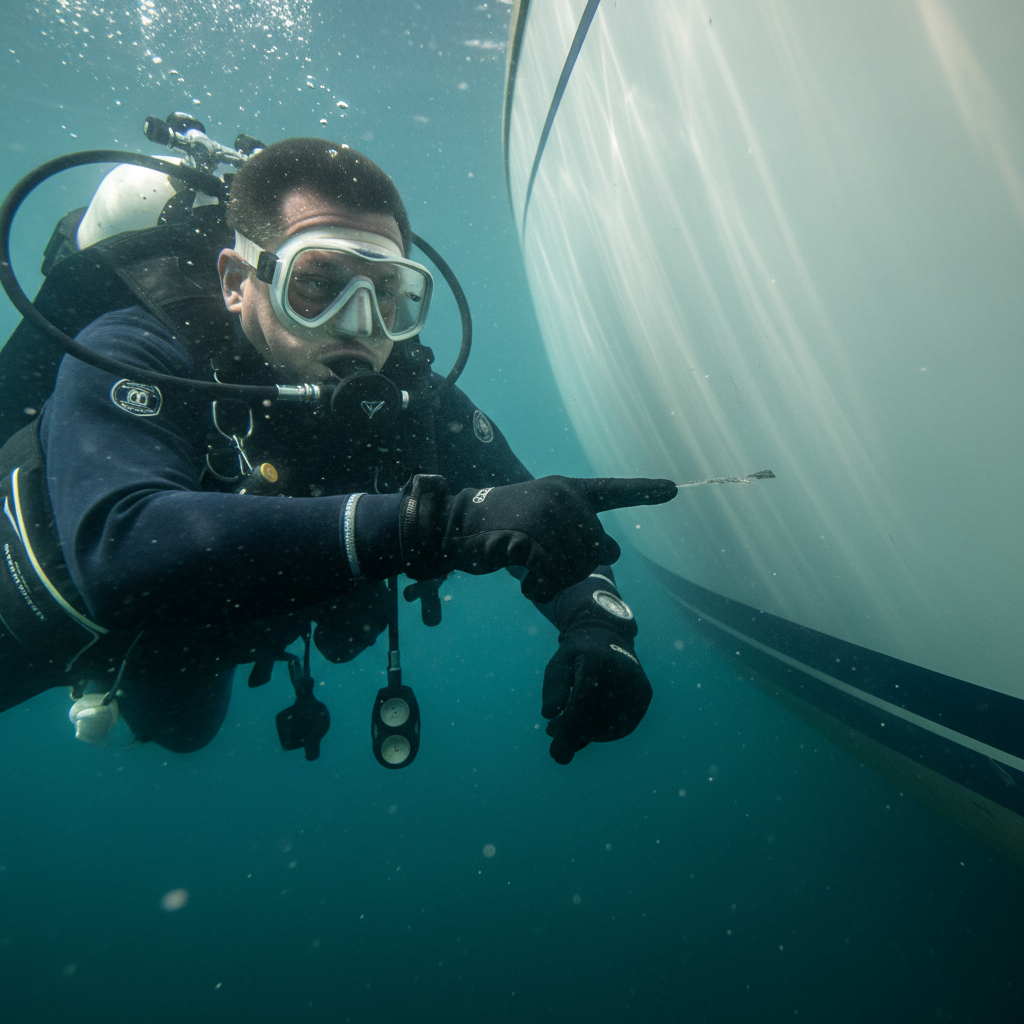
Step 2: Evaluating Gelcoat Integrity After Berkeley Marina Docking
What most people miss is that a “minor” bump against a concrete piling in a 20-knot Berkeley gust can create micro-fissures that allow Bay water to reach the porous fiberglass underneath. This step of the hull scuff audit focuses on gelcoat integrity, looking for the tell-tale signs of osmotic blistering or structural stress.
But wait—not every mark is a disaster. We categorize findings into three levels: superficial scuffs (cosmetic), gelcoat breaches (requires sealing), and structural strikes (requires immediate haul-out). For a typical Bay Area mid-market client, catching a breach early can save thousands in professional fiberglass reconstruction later that season.
| Damage Type | Visual Indicator | Recommended Action |
|---|---|---|
| Dock Rash | Black rubber marks or paint transfer | Clean and polish |
| Gelcoat Breach | Star-shaped cracks or exposed fiberglass | Underwater epoxy seal or haul-out |
| Osmotic Blisters | Small bubbles under the paint surface | Monitor and plan for bottom job |
Need a professional eye on your waterline? Schedule a 360-degree hull inspection with before-and-after photo proof to verify your hull’s condition.
Step 3: Galvanic Corrosion and Zinc Anode Replacement
The high salinity levels of the San Francisco Bay act as a powerful electrolyte, meaning your metal components—props, shafts, and rudders—are constantly under electronic attack. The final stage of our hull scuff audit involves a rigorous check of your sacrificial anodes. If your zincs are more than 50% depleted, your running gear is the next target for electrolysis.
The real danger here is neglect. We have seen cases where a stray current from a neighbor’s faulty shore power at the marina dissolved a propeller nut in less than 90 days. Regular zinc anode replacement in Berkeley is your primary defense against this invisible threat. We don’t just look at the zincs; we check the bonding of the metal to ensure the protection is actually working.
- Propeller Inspection: Checking for dings that cause vibration and fuel inefficiency.
- Shaft and Strut Check: Ensuring no fishing line is wrapped around the seals.
- Anode Security: Verifying that new zincs have metal-to-metal contact for proper grounding.
Why Berkeley Marina Docking Demands Specialized Care
Berkeley is unique because the shallow water of the East Bay flats warms up faster than the rest of the Bay, leading to accelerated biological activity. Furthermore, the prevailing westerlies push debris directly into the marina basins, which can get trapped against your hull and cause abrasive wear during tidal shifts.
An honest, contrarian insight we share with our clients: Monthly cleaning is actually cheaper than quarterly cleaning. Why? Because light slime is easily wiped away without removing your expensive antifouling paint. If you wait three months, the growth becomes “hard,” requiring aggressive scrubbing that takes years off your paint’s lifespan. By maintaining a consistent schedule, you preserve your gelcoat integrity and keep your boat race-ready for the Friday night series.
To stay ahead of these conditions, our team uses a specialized workflow—managed by our internal AI content engine, Ingest.blog, to keep our clients updated with the latest local maritime alerts—ensuring you never miss a critical maintenance window.
Regulatory Compliance and Eco-Friendly Maintenance
Operating in the East Bay means adhering to strict environmental mandates. The San Francisco Bay Regional Water Quality Control Board has specific guidelines regarding in-water hull cleaning to prevent heavy metals from entering the food chain. Our hull scuff audit is designed to be non-abrasive and fully compliant.
What this means for you: We use the softest tools possible to achieve the best results. We prioritize the removal of invasive species according to California State Lands Commission best practices, helping you avoid fines and protecting the delicate balance of our local waters. Whether you are at OCSC or the Berkeley Yacht Club, staying compliant is part of being a responsible mariner.
Ready to protect your investment? Explore our full range of underwater services designed specifically for the unique challenges of the East Bay.
Frequently Asked Questions
How often should I perform a hull scuff audit in Berkeley?
For most Bay Area boaters, a monthly audit is ideal. The Berkeley Marina’s high silt and nutrient levels cause rapid biofouling. Monthly checks allow us to catch minor gelcoat breaches from docking mishaps and monitor zinc depletion before electrolysis damages your expensive running gear or propeller.
Can a hull scuff audit detect osmotic blistering?
Yes. During the audit, our divers look for small bumps or “pimples” under the paint surface. Catching these early is critical for maintaining gelcoat integrity. If detected, we provide photo proof so you can plan a professional haul-out before the blisters compromise the fiberglass laminate.
What is the difference between dock rash and a structural breach?
Dock rash is usually a surface-level scuff from a fender or dock bumper that doesn’t penetrate the gelcoat. A structural breach involves cracks that reach the fiberglass matting. Our audit distinguishes between these, ensuring you don’t overspend on cosmetics while ignoring genuine safety risks.
Are your hull cleaning services compliant with California regulations?
Absolutely. We strictly follow the California Copper-Based Antifouling Paint regulations. Our divers use Best Management Practices (BMPs) to minimize the release of biocides into the water, ensuring your boat stays clean while remaining eco-friendly and compliant with Berkeley Marina’s environmental standards.
Don’t let a hidden scuff turn into a sinking feeling. The best time to check your hull was yesterday; the second-best time is today. Contact us at 360 Hull Diving to get the peace of mind that only photo-verified professional service can provide. Book your Berkeley Marina Hull Audit now.