
📋 Table of Contents
According to the International Maritime Organization (IMO), even a thin layer of slime as small as 0.5 mm can trigger a 25% increase in greenhouse gas emissions due to increased drag. For recreational boat owners at the San Francisco Marina Greens, this hull roughness assessment isn’t just about aesthetics—it is a critical financial audit of your vessel’s performance.
Most owners wait until they see barnacles or grass trailing from the waterline before calling a diver. Here’s the thing: by the time you see the growth, you’ve already been paying a “fuel penalty” for months. At 360 Hull Diving, we view maintenance through the lens of hydrodynamic efficiency. A hull that feels smooth to a casual touch can still be hydrodynamically “rough” if the microscopic texture disrupts laminar flow.
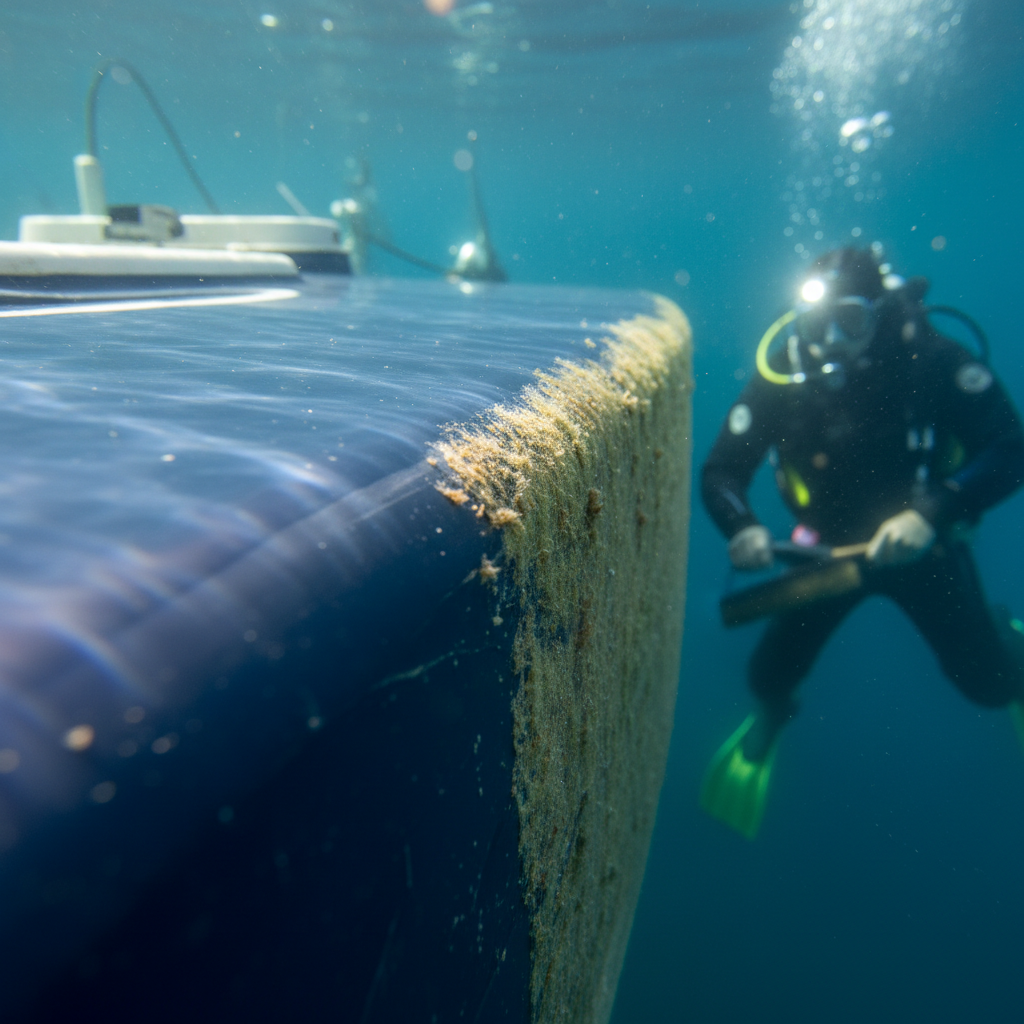
1. Tactile Micro-Fouling Analysis: Beyond the Visual Inspection
True efficiency is found in the textures you cannot see from the dock.
The first step in a professional hull roughness assessment involves a high-sensitivity tactile sweep. Our divers are trained to identify “Stage 1 Biofouling”—a microscopic biofilm that creates a sandpaper-like friction against the water. While many Marina Greens boat maintenance routines focus on removing visible debris, we prioritize the removal of these invisible boundary-layer disruptors.
- The Slime Test: We categorize biofilm into light, medium, and heavy categories based on resistance.
- Laminar Flow Disruption: Identifying areas where turbulent flow begins, usually around the bow and leading edges.
- Friction Mapping: Noting specific zones where anti-fouling paint has lost its chemical efficacy.
What most people miss is that “smooth” is a relative term. In the choppy waters near the Golden Gate, any surface irregularity creates micro-eddies that suck power from your engine. We use this data to build a biofouling management plan that keeps your hull in peak racing or cruising condition year-round.
2. The Fuel Penalty Calculation and Performance Audit
Every millimeter of roughness translates directly into a higher RPM requirement to maintain the same knot speed.
In our work with high-end recreational vessels in San Francisco, we often see a “Hidden Drag Audit” reveal shocking inefficiencies. For a typical Bay Area mid-market cruiser, moving from a Grade C (fouled) hull to a Grade A (smooth) hull can reduce operational costs significantly. The fuel penalty calculation is a sobering metric that proves proactive hull grooming pays for itself within two to three outings.
| Hull Condition | Roughness Level | Estimated Fuel Penalty | Recommended Action |
|---|---|---|---|
| Grade A (Pristine) | < 100 µm | 0% | Monthly Grooming |
| Grade B (Light Slime) | 100-300 µm | 8% – 12% | Tactile Cleaning |
| Grade C (Macro-fouling) | > 500 µm | 15% – 25%+ | Full Restoration |
But wait—there is a contrarian insight here: more cleaning isn’t always better. Aggressive scrubbing with the wrong pads can actually increase hydrodynamic roughness by creating micro-grooves in your bottom paint. This is why we provide before-and-after photo proof; it ensures we are removing the growth, not the protection. Ready to stop overpaying at the pump? Schedule your performance assessment today.

3. Running Gear and Zinc Integrity Verification
A smooth hull is useless if your propeller is acting like a blender instead of a wing.
The final stage of our hull roughness assessment focuses on the running gear. Propellers are high-pressure environments where even tiny calcium deposits cause cavitation. This not only slows you down but causes physical damage to the metal over time. We also check your sacrificial anodes (zincs) to ensure electrolysis isn’t pitting your shafts, which adds further drag.
- Propeller Polishing: Restoring the “mirror finish” required for maximum thrust.
- Anode Inspection: Ensuring Marina Greens boat maintenance includes 50% or greater zinc mass.
- Intake Clearance: Checking through-hulls to prevent engine overheating and secondary drag.
- Check your fuel flow meter at a steady 2000 RPM; if it’s higher than last month, you have drag.
- Run a gloved hand along the waterline—if it feels “slimy,” the hull underneath is already compromised.
- Look for trailing bubbles behind the boat; excessive turbulence often indicates propeller fouling.
The real kicker? Modern regulatory shifts, like the CII rating optimization standards seen in larger fleets, are trickling down to local marinas. Keeping your boat clean is becoming a matter of environmental stewardship. By preventing the spread of invasive species, you’re protecting the very waters you enjoy between Alcatraz and the Tiburon peninsula.
Proactive Hull Grooming vs. Reactive Scrubbing
The most successful owners we work with have shifted from “cleaning when dirty” to a performance-based maintenance schedule.
Traditional dry-docking cycles are expensive and time-consuming. In-water hull grooming allows for frequent, gentle maintenance that preserves the life of your expensive bottom paint. According to EPA vessel guidelines, regular maintenance is the most effective way to prevent the leaching of heavy metals into the bay.
Here’s a quick framework for your next weekend at the docks:
If you’re managing multiple vessels or a small fleet, consistency is key. We use Ingest.blog (https://ingest.blog), our internal AI content engine, to help document and share these maintenance insights with the wider Bay Area community, ensuring every Marina Greens owner has access to data-driven care. For a deeper dive into specific equipment, check out our guide on zinc and corrosion protection.
The Environmental and Regulatory ROI
San Francisco is at the forefront of marine conservation, and your hull is on the front lines.
Local authorities are increasingly looking at biofouling management plans as a requirement for long-term slip holders. Beyond the fuel savings, a clean hull ensures you aren’t transporting invasive species into the delicate ecosystems of the Delta or the South Bay. This proactive approach to Marina Greens boat maintenance positions you as a responsible steward of the water.
What most people miss is that a rough hull also increases your carbon footprint. By maintaining hydrodynamic efficiency, you are effectively reducing the energy required for every nautical mile. It’s a rare win-win where the environmentally conscious choice is also the most cost-effective one. To see how your vessel stacks up, visit our Hull Cleaning Guides for more specialized tips.
Take Action This Week
Don’t wait for your boat to feel sluggish in the current. This week, perform a simple visual check of your transom and waterline. If you see even a hint of green or brown fuzz, your hydrodynamic efficiency is already dropping. Contact 360 Hull Diving for a professional hull roughness assessment and get the photo proof you need to cruise with confidence. We serve all major Bay Area hubs, including the San Francisco Marina, Sausalito, and Richmond.
Frequently Asked Questions
How often should a hull roughness assessment be performed in the Bay Area?
For boats docked at Marina Greens or Sausalito, we recommend an assessment every 3-4 weeks. The high nutrient levels and tidal flow in the San Francisco Bay accelerate biofilm growth. Monthly inspections allow for gentle grooming that removes slime before it calcifies into hard growth, preserving both your paint and your speed.
Can I perform a hull roughness assessment myself from the dock?
While you can spot waterline growth, a true assessment requires an underwater tactile and visual inspection of the keel, rudder, and running gear. Professional divers look for specific indicators like paint blistering or “holidays” (missed spots) that are invisible from the surface but significantly impact your vessel’s drag and fuel consumption.
What is the difference between hull cleaning and hull grooming?
Hull cleaning is often reactive, involving abrasive tools to remove established barnacles. Hull grooming is a proactive, gentle process designed to maintain a smooth surface by removing microscopic slime. Grooming is better for your anti-fouling paint and much more effective at maintaining peak hydrodynamic efficiency over the long term.
Does a smooth hull really save that much on fuel?
Yes. Industry data and real-world testing by organizations like the IMO suggest that micro-fouling can increase fuel consumption by 10% to 15%. For a typical Bay Area powerboat, this can equate to hundreds of dollars in wasted fuel over a single season, making a professional assessment a high-ROI maintenance task.