
📋 Table of Contents
According to the American Boat and Yacht Council (ABYC), stray current corrosion can destroy a brand-new underwater fitting in a matter of weeks if left unchecked. For owners at South Beach Harbor, the combination of high-density electrical grids and the Bay’s aggressive tidal flow creates a perfect storm for hull hardware integrity failure.
Maintaining a vessel in San Francisco requires more than just a periodic wipe-down; it demands a strategic approach to underwater assets. The transition from a “smooth ride” to a vibrating, fuel-hungry headache often happens beneath the waterline where you can’t see it. This is why we developed the 3-Step Integrity Framework—a data-backed method to ensure your struts, rudders, and propellers remain structural assets rather than liabilities.
Key Takeaways for South Beach Harbor Owners:
• Identify signs of hardware fatigue before they require a $10,000 haul-out.
• Understand how South Beach Harbor’s specific salinity impacts metal lifespan.
• Learn the ROI of proactive anode management versus emergency repairs.
• Discover why photo-documented inspections are the new standard for insurance compliance.
1. The Visual Diagnostic: Preventative Underwater Strut Inspection
The first step in maintaining hull hardware integrity is a high-resolution visual audit that looks past the surface slime to the structural health of the metal. Most boat owners wait for a vibration in the steering to call a diver, but by then, the bushing is often already shot.
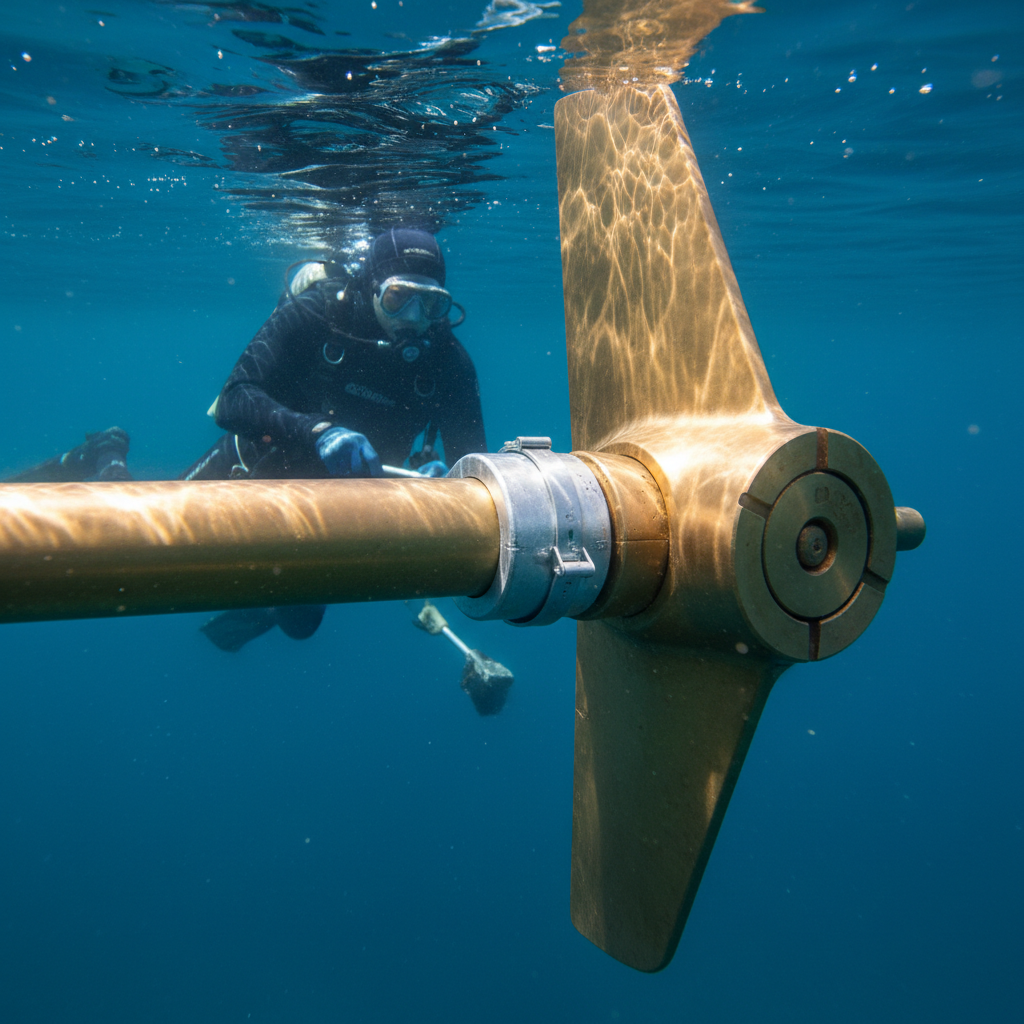
In our work with high-net-worth recreational owners in San Francisco, we find that 80% of hardware issues are caught during routine cleanings rather than scheduled dry-dockings. At South Beach Harbor, the heavy nutrient load leads to rapid barnacle growth on the leading edges of struts. If these aren’t cleared carefully, the resulting turbulence causes cavitation, which literally eats away at your metal hardware.
What a professional underwater strut inspection should cover:
• Bushing Clearance: Checking for ‘play’ in the shaft that indicates worn Cutless bearings.
• Stress Cracking: Identifying hairline fractures at the base of the strut where it meets the hull.
• Pitting: Spotting the ‘pink’ hue of de-zincification in bronze components.
• Fastener Security: Ensuring the bolts securing your hardware haven’t been compromised by electrolysis.
The real kicker? Many divers will scrub your hull but skip the detailed check of the hardware. We provide before-and-after photo proof because transparency is the only way to verify that your San Francisco boat maintenance is actually being performed to standard. If you’re concerned about your current hardware status, schedule a documented inspection today.
2. Protection Strategy: Anode Management and Electrolysis Prevention
Corrosion isn’t a slow process in the Bay; it’s an active chemical attack fueled by the high salinity of the Pacific pushing into the estuary. Effective hull hardware integrity relies entirely on your sacrificial anodes being the ‘weakest link’ in the electrical chain.
Here’s the thing: Not all anodes are created equal. While zinc was the industry standard for decades, the EPA and many environmental agencies are highlighting the impact of heavy metals in marinas. Modern San Francisco boat maintenance often shifts toward aluminum anodes, which offer a higher protection voltage and longer life in brackish water.
Why South Beach Harbor is unique for marine electrolysis prevention:
1. Stray Current: The proximity of large commercial vessels and older dock wiring increases the risk of galvanic corrosion.
2. Tidal Velocity: Fast-moving water around Pier 40 strips the oxidized layer off anodes faster, requiring more frequent replacements.
3. Metal Costs: With global metal prices fluctuating, a proactive sacrificial anode replacement schedule is a hedge against the massive cost of replacing a bronze rudder.
A typical Bay Area recreational client often misses the ‘burn rate’ of their zincs. If your anodes are disappearing in less than 90 days, you don’t have a diver problem—you have an electrical problem. Our team uses these visual cues to alert you to potential shore power leaks before they dissolve your running gear.
3. Performance Tuning: Running Gear Optimization
The final pillar of our framework focuses on the ‘Quiet Vessel’ approach, where hardware integrity directly translates to fuel efficiency and mechanical longevity. A clean hull is great, but fouled running gear is the primary culprit behind drivetrain strain.
| Component | Integrity Risk | Performance Impact |
|---|---|---|
| Propeller | Calcareous Growth | Increased Fuel Burn (up to 20%) | Strut | Bearing Wear | Harmonic Vibration / Transmission Damage | Rudder | Pitting/Corrosion | Reduced Steering Response |
But wait—performance tuning isn’t just about speed. It’s about reducing the load on your engines. According to Energy.gov, drag reduction is the most effective way to improve efficiency in any fluid environment. In the context of South Beach Harbor dive services, this means precision cleaning of the prop hub and blades without removing the protective ‘cream coat’ of the metal.
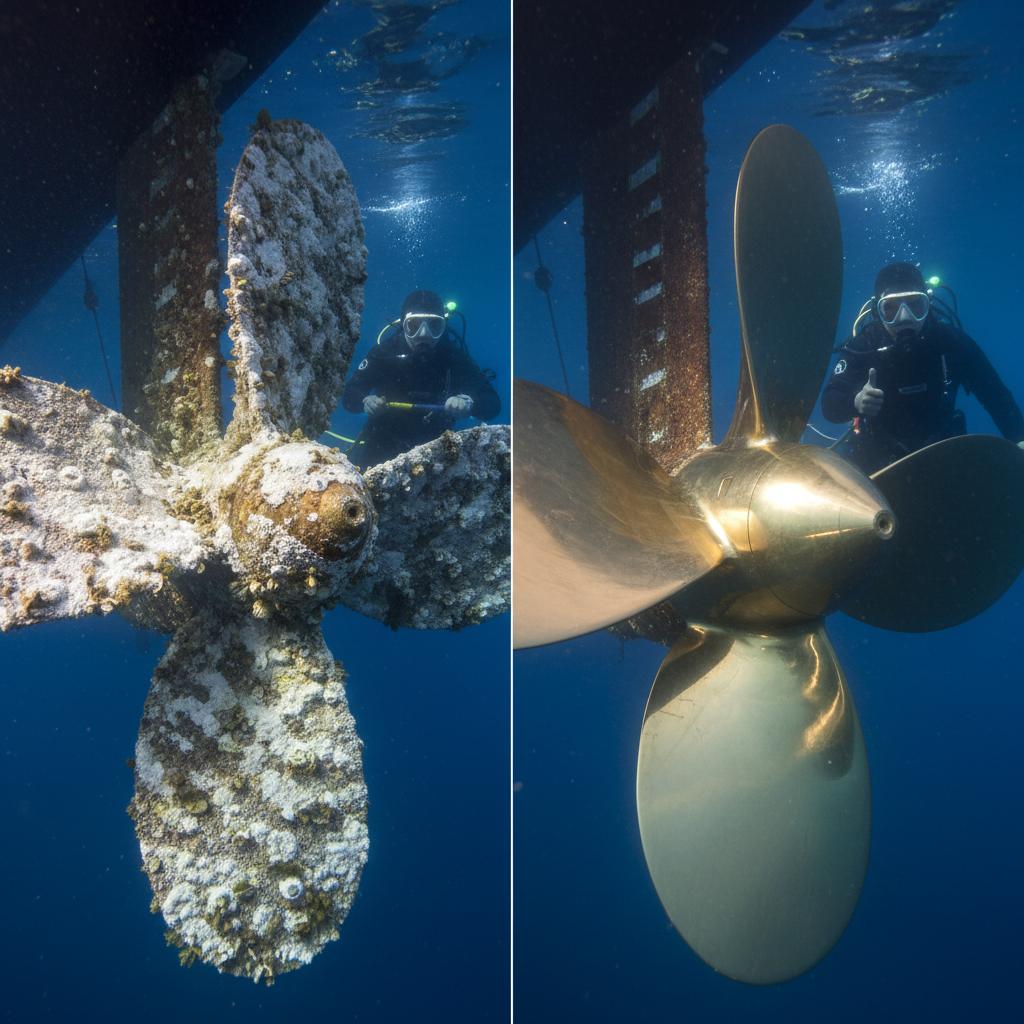
What most people miss is that even a light layer of slime on the propeller can drop your RPMs and increase exhaust temperatures. By maintaining hull hardware integrity through monthly cleanings, you ensure the engine isn’t working twice as hard to push through the Bay’s heavy currents. To keep your vessel performing at its peak, check out our running gear maintenance guides.
The ROI of the 3-Step Framework vs. Emergency Haul-outs
The math is simple but often ignored: A monthly dive service costs a fraction of a single day in a boatyard. A typical mid-market vessel in San Francisco can face dry-docking fees starting at $2,000 before a single tool is touched. If a strut is found to be compromised during a haul-out, you’re looking at weeks of lead time for parts and thousands in labor.
The contrarian insight? Most boat owners over-spend on fancy bottom paints while under-investing in the hardware that actually moves the boat. You can have the slickest hull in the marina, but if your underwater strut inspection reveals a failing bearing, you’re staying at the dock. We use our internal AI content engine to track maintenance trends across the Bay, and the data consistently shows that hardware-first owners have 40% fewer unplanned haul-outs.
Our South Beach Harbor dive services include:
• Detailed digital dive logs with every service.
• Consistency in technician—the same diver who knows your boat’s ‘quirks’.
• Eco-friendly cleaning tools that preserve your expensive bottom paint.
• Emergency running gear inspection for when you hit a submerged object in the Delta.
Ready to stop guessing about what’s happening under your boat? Request a free estimate and see the 360 Hull Diving difference for yourself.
Common Pitfalls in South Beach Harbor Maintenance
One of the biggest mistakes we see at South Beach Harbor is the “seasonal diver” approach. Owners who only hire a diver in the summer months leave their hardware vulnerable during the winter, when storm runoff changes the Bay’s salinity and increases the risk of electrolysis.
Another issue is the lack of documentation. If you ever decide to sell your vessel, having a multi-year history of hull hardware integrity reports and underwater strut inspection photos adds tangible value to your survey. It proves to the buyer (and their insurance company) that the boat has been maintained by professionals who understand the nuances of San Francisco boat maintenance.
The real value of a professional dive team isn’t just the cleaning—it’s the peace of mind. Knowing that an insured, expert diver has physically touched every bolt and blade on your vessel allows you to head out past the Golden Gate with total confidence. For more tips on local conditions, visit our Bay Area Marina Guide.
Frequently Asked Questions
How often should I have an underwater strut inspection at South Beach Harbor?
Given the high tidal flow and electrical activity at South Beach Harbor, we recommend a professional inspection every 4-6 weeks. This frequency allows us to catch zinc depletion and early-stage barnacle growth on the running gear before it causes permanent pitting or vibration issues that lead to expensive repairs.
What are the signs that my hull hardware integrity is failing?
The most common signs include new vibrations felt through the floorboards, a decrease in top-end RPMs, or the boat pulling to one side. Visually, if your diver reports ‘pinkish’ metal on bronze fittings or heavy pitting on the rudder, your hardware is likely suffering from electrolysis and needs immediate attention.
Is sacrificial anode replacement really necessary every few months?
Yes, especially in San Francisco’s high-salinity environment. Anodes are designed to dissolve; if they aren’t dissolving, it means they aren’t protecting your hardware. Conversely, if they disappear too fast, it indicates a stray current issue in the marina that could quickly damage your struts and shafts if not addressed.
Can underwater cleaning damage my hull hardware?
If done by an inexperienced diver using aggressive scrapers, yes. Professional San Francisco boat maintenance requires using specialized soft-bristle brushes for light growth and plastic scrapers for hard growth to ensure the metal isn’t gouged and the protective coatings on your running gear remain intact.
Apply This Framework This Week
Don’t wait for your next scheduled cleaning to think about your hardware. This week, check your shore power connections for any signs of corrosion and ask your current diver for the last set of photos they took of your struts. If they don’t have them, it’s time to switch to a team that prioritizes hull hardware integrity through transparency. Contact 360 Hull Diving today to secure your vessel’s future.