
📋 Table of Contents
California’s Department of Pesticide Regulation has significantly tightened the leash on high-leach copper paints, effectively pushing the hull coating transition to the top of every East Bay skipper’s priority list. According to the EPA, traditional biocidal paints work by slowly releasing toxins into the water, a process that is increasingly at odds with the strict water quality mandates of the San Francisco Bay.
Key Takeaways for Emeryville Owners
- Regulatory Shift: California SB 317 is phasing out high-leach copper paints, making biocide-free alternatives a strategic necessity.
- Performance Gains: Transitioning to silicone foul-release coatings can offer measurable increases in knots and fuel efficiency.
- Maintenance Change: You move from “cleaning to kill” (scrubbing off growth) to “cleaning to slide” (wiping away slime).
- Local Impact: Reducing heavy metal footprints in the Berkeley/Emeryville flats protects the local ecosystem we all enjoy.
1. The Technical Audit: Assessing Your Current Hull State
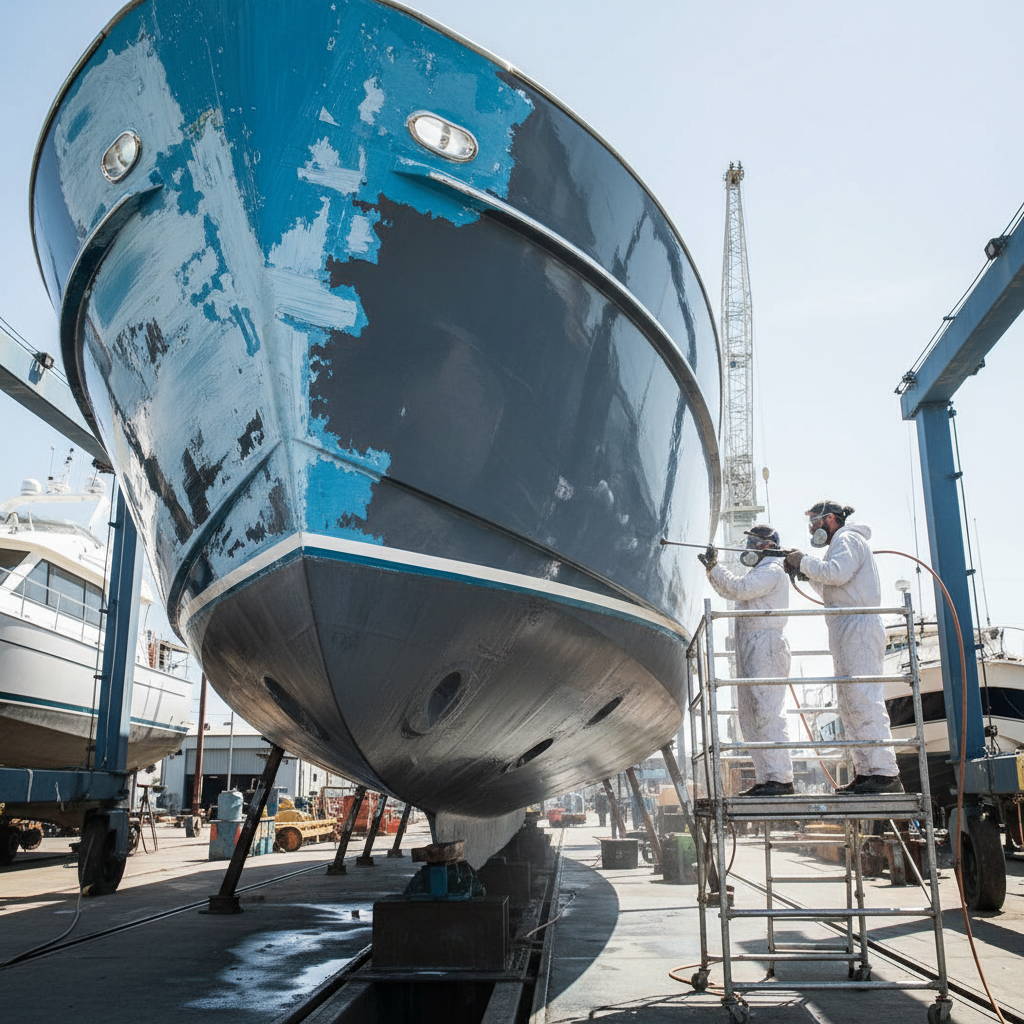
The first step in any successful hull coating transition is realizing that you cannot simply slap new tech over old problems. In our work with typical Bay Area mid-market recreational vessels, we often find that decades of ablative buildup create a “cratered” surface that kills fuel economy long before the barnacles even arrive.
What most people miss is that silicone foul-release coating systems are non-biocidal; they rely on a super-slick surface tension that organisms can’t grip. If your underlying substrate is flaky or uneven, the expensive silicone bond will fail within eighteen months. For owners at Emery Cove or J-Dock, the brackish water of the East Bay creates a unique cocktail of silt and salt that can hide structural osmosis under layers of old paint.
- Substrate Integrity: Check for fiberglass blisters or aluminum pitting before committing to a high-performance coating.
- Ablative Removal: Total stripping is usually required to ensure the silicone primer adheres to the gelcoat.
- Local Salinity Factors: The varying salinity near the Berkeley flats affects how quickly copper leaches, making the transition even more urgent for local compliance.
2. The Chemical Pivot: Choosing Your Foul-Release Coating
The real kicker about modern foul-release coating technology is that it actually works better the more you use your boat. Unlike copper paint, which protects the boat while it sits, silicone coatings use the friction of water moving at 10+ knots to “self-clean” the hull.
Here’s the thing: Not all biocide-free coatings are created equal. In the San Francisco Bay, we deal with aggressive micro-fouling (slime) that can eventually allow macro-fouling (barnacles) to take hold if the surface isn’t maintained. Choosing a high-quality silicone system requires an honest look at your cruising frequency. If you’re a “dock queen” who rarely leaves the marina, you’ll still need regular professional wipes to keep that surface slick.
What’s the ROI? While the upfront cost of silicone is higher, the reduction in drag leads to significant fuel savings. According to Energy.gov, even minor reductions in hull friction can lead to double-digit improvements in fuel efficiency for motor vessels. Over a five-year haul-out cycle, the silicone hull paint ROI often pays for the initial application through fuel savings and fewer diver hours spent on heavy scraping.
Need a professional eye on your current hull condition? Schedule a drone or diver inspection to see exactly what you’re working with before your next haul-out.
3. The Maintenance Shift: Emeryville Marina Maintenance Strategies
The most contrarian insight we share with our clients is this: You will still need a diver, but the work changes from “demolition” to “detailing.” In the context of Emeryville marina maintenance, the high nutrient runoff from the East Bay hills means slime grows fast, even on silicone.
The hull coating transition requires a mental shift. You are no longer paying a diver to scrape off calcium; you are paying them to gently wipe away biofilm using specialized soft tools that won’t mar the delicate silicone surface. If a diver uses a standard stainless steel brush on your new foul-release coating, they will destroy the surface tension, and your investment will be gone in one afternoon.
| Feature | Traditional Copper Paint | Silicone Foul-Release |
|---|---|---|
| Environmental Impact | High (Heavy metal leaching) | Low (Biocide-free) |
| Cleaning Method | Abrasive scrubbing | Soft wiping / Hydrodynamic | Standard | 5-10% Improvement possible |
| Durability | 2-3 Years | 5-7 Years (with proper care) |
But wait—don’t forget the running gear. Even with a slick hull, your props and shafts remain magnets for growth. We recommend a specialized coating like Propspeed for these areas to ensure your drivetrain matches your hull’s efficiency. Managing this at scale for a fleet? We use Ingest.blog as our internal AI content engine to keep our clients updated on the latest maintenance schedules and regulatory changes.
The Emeryville Edge: Local Water Flow and Coating Wear
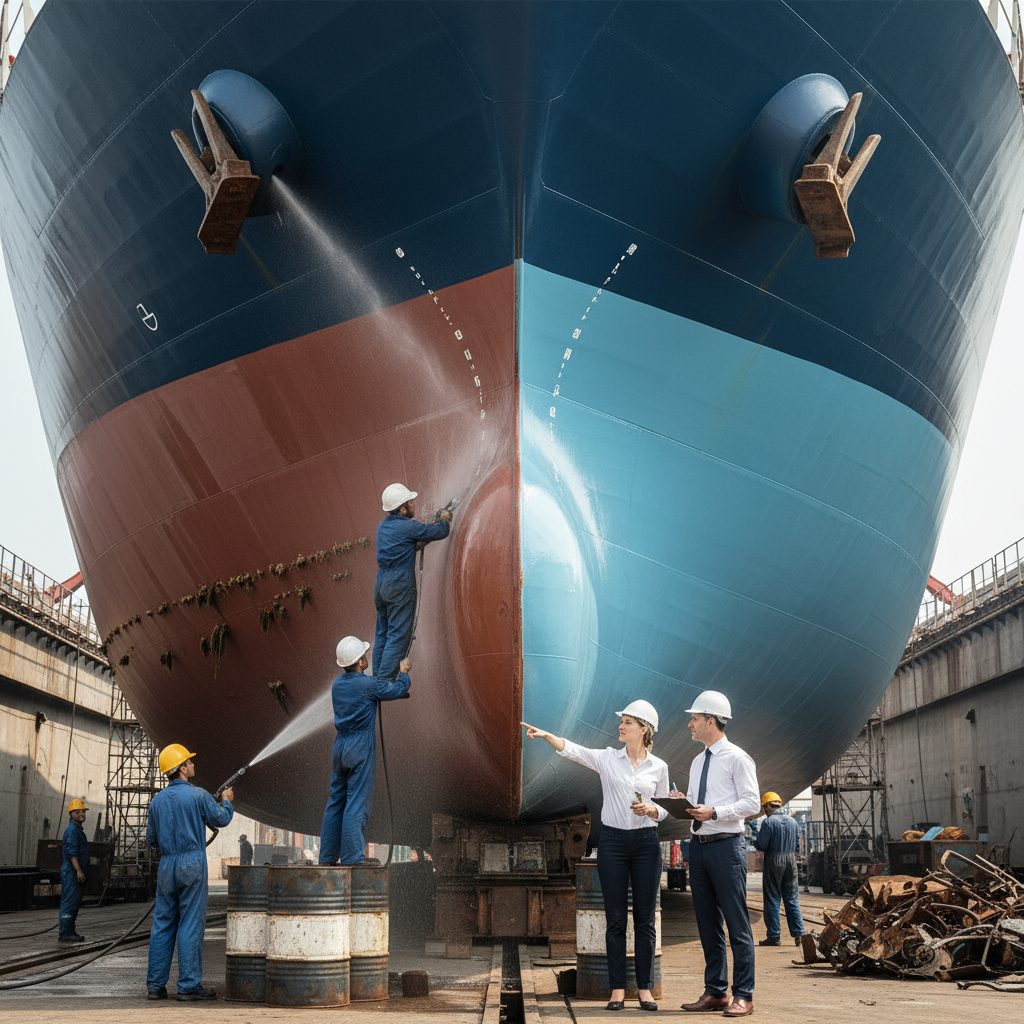
The specific geography of Emeryville marinas—tucked behind the Treasure Island breakwater—creates a unique environment for your hull. The water flow patterns at Emery Cove often lead to “dead zones” where silt settles on horizontal surfaces like the tops of rudders and keels. This silt acts as a primer for algae.
The real advantage for Emeryville owners who complete the hull coating transition is the ease of clearing this silt. On a traditional copper-painted hull, the silt binds with the oxidizing paint, creating a sandpaper-like texture. On silicone, a quick blast of current or a light pass with a microfiber mitt restores the “smooth hull” performance boost instantly. We’ve seen East Bay sailors report gaining nearly a full knot of boat speed in light air simply by switching to a cleaner, smoother bottom profile.
Ready to experience the difference of a photo-verified clean? Explore our insured dive services and see the before-and-after proof we provide with every visit.
Cost of Inaction: Why Waiting Could Be Expensive
As of 2024, the trend toward biocide-free hull coatings is no longer just for environmentalists; it’s a matter of future-proofing your asset. As San Francisco Bay copper paint regulations tighten, marinas may eventually be forced to restrict the cleaning of high-leach paints altogether to meet total maximum daily load (TMDL) requirements for heavy metals.
By making the switch now, you avoid the inevitable “compliance rush” at local boatyards like Bay Marine or Berkeley Marine Center. Furthermore, a well-documented transition to eco-friendly coatings can actually increase the resale value of your yacht to the next generation of environmentally conscious buyers.
Conclusion: Your Action Plan for the Week
The hull coating transition isn’t just about paint; it’s about performance and stewardship of the waters we sail. If you are hauling out in the next 6 months, your first step this week is to contact your preferred yard and ask for a quote specifically for a silicone foul-release system. Don’t let them default you into another coat of copper just because “that’s what we’ve always done.”
Take control of your maintenance. Contact 360 Hull Diving today for a baseline assessment of your current bottom condition. We’ll provide the photo evidence you need to decide if you’re ready for the 3-step transition.
Frequently Asked Questions
Is a foul-release coating more expensive than regular bottom paint?
Initially, yes. The materials and labor for a total strip and silicone application are higher. However, when you factor in the 5-7 year lifespan compared to the 2-3 years for copper, plus the fuel savings, the total cost of ownership is often lower. It’s a long-term investment in vessel performance.
Can any diver clean a silicone-coated hull?
Technically yes, but they shouldn’t. Silicone is easily damaged by traditional abrasive tools. You must ensure your dive team is trained in foul-release maintenance and uses soft sponges or microfiber. At 360 Hull Diving, we specialize in these delicate transitions to protect your investment.
Does SB 317 mean I have to strip my copper paint right now?
No, the law currently focuses on the sale and application of high-leach paints by manufacturers and yards. However, many San Francisco Bay marinas are under pressure to reduce copper levels in their basins, which may lead to stricter local rules regarding in-water cleaning of traditional paints soon.
Will a silicone coating really make my boat faster?
Most owners report a noticeable difference. By reducing the microscopic friction (drag) of the hull, the boat moves more easily through the water. For sailors, this means better performance in light wind; for powerboaters, it means reaching planing speeds with less throttle and lower fuel burn.