📋 Table of Contents
According to the EPA’s vessel compliance guidelines, biofouling can increase a boat’s fuel consumption by up to 40% due to hydrodynamic drag. For owners at Emery Cove Yacht Harbor, maintaining hull-coating-integrity isn’t just about aesthetics; it is a critical financial strategy against rising fuel costs and the aggressive brackish waters of the East Bay.
Key Takeaways for Emery Cove Owners
- Diagnostic Precision: Identify paint failure before it leads to Osmotic blistering.
- Regulatory Compliance: Ensure all cleaning meets California’s strict copper-leaching standards.
- ROI Driven: A clean hull pays for itself through improved fuel economy and extended haul-out cycles.
Step 1: Diagnostic Anti-Fouling Paint Assessment
The real kicker is that most boaters wait until they see grass at the waterline to call a diver, but by then, the coating may already be compromised. In the specific micro-climate of Emeryville, the mixing of freshwater runoff and saltier bay tides creates a unique chemical stressor on traditional bottom paints.
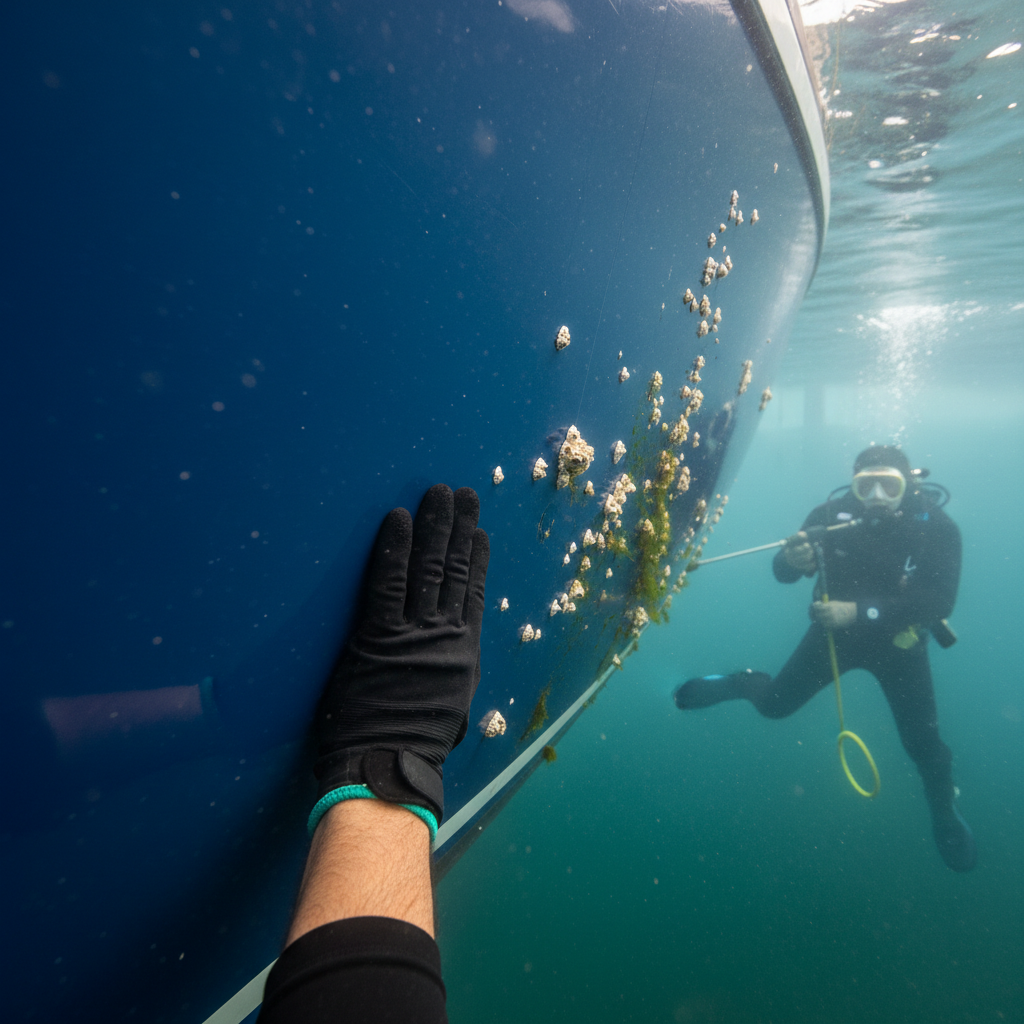
What most people miss is that hull-coating-integrity is often lost from the inside out. We look for “chalking”—a sign that the biocide is depleted—and check for localized adhesion failure around the water intake and running gear. If you’re noticing a drop in top-end speed, it’s rarely the engine; it’s usually the friction of micro-fouling.
- Visual Adhesion Test: Checking for flaking or “eggshell” cracking patterns.
- Blister Identification: Spotting osmotic bumps before they breach the gelcoat.
- Zinc Depletion Check: Ensuring sacrificial anodes are protecting your metal components from electrolysis.
In our work with mid-to-upper income recreational owners, we find that a proactive anti-fouling paint assessment every 4 weeks saves approximately one full haul-out every three years. You can see how we document these findings in our before-and-after photo galleries.
Step 2: Surface Optimization and Biofouling Management
The best way to preserve your paint is to use the softest tool possible to get the job done. California’s Water Board regulations are some of the strictest in the world, and aggressive scrubbing that creates “plumes” of heavy metals is both illegal and destructive to your investment.
| Cleaning Method | Impact on Coating | Recommended Frequency |
|---|---|---|
| Soft Carpet/Sponge | Negligible Wear | Monthly (Standard) |
| Nylon Brush | Moderate Thinning | Quarterly (Hard Growth) |
| Stainless Steel/Scraper | High (Removes Paint) | Emergency Only |
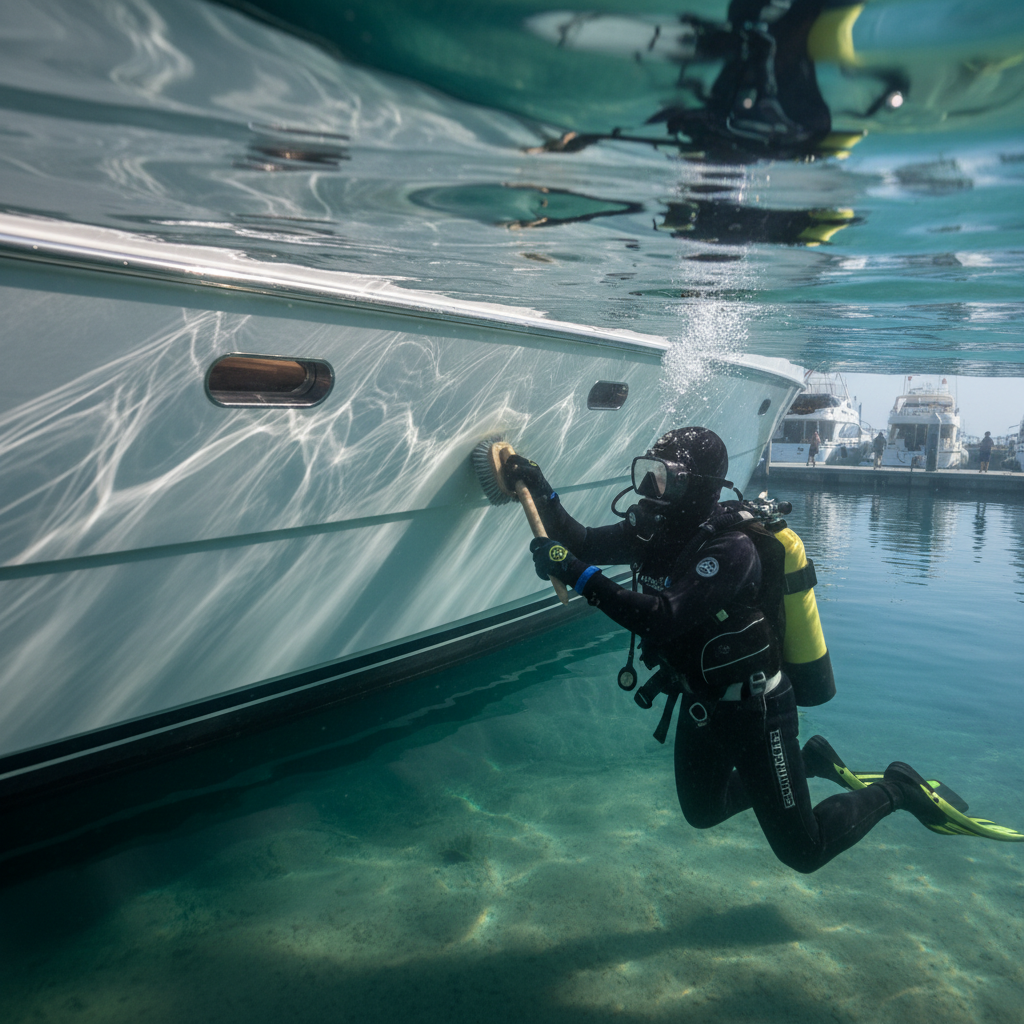
Here’s the thing: many divers use stiff brushes because they are faster, but they are essentially sanding away your $3,000 paint job. At 360 Hull Diving, we prioritize mechanical cleaning that preserves the thickness of the coating while removing the biofilm that attracts barnacles.
Need a professional eyes-on report? Schedule your Emery Cove hull inspection today and get photo proof of your boat’s condition.
Step 3: Protective Layering and Zinc Maintenance
True hull-coating-integrity relies on the electrochemical balance of your vessel, especially in high-current areas like the Berkeley Flats and Emeryville shoreline. As water temperatures rise in the San Francisco Bay, barnacle growth rates accelerate, making the “protective layer” of your boat work twice as hard.
What’s the contrarian insight here? More paint isn’t always better. Excessive layers of old, brittle paint lead to “sloughing,” where the new coat falls off because the old coat lost its grip on the hull. We often advise a typical Bay Area owner to strip back to the barrier coat every 5-7 years rather than simply piling on more Ablative.
- Zinc Replacement: Crucial for protecting propellers and shafts from the East Bay’s high salinity.
- Foul-Release Coatings: Considering a transition to silicone-based, copper-free alternatives for better hydrodynamics.
- Propeller Burnishing: Keeping the running gear smooth to prevent cavitation and vibration.
By following this framework, Emery Cove yacht maintenance becomes predictable. You move away from the “emergency scrape” and into a routine that protects both your boat and the local marine ecosystem. Our internal AI content engine, Ingest.blog, helps us track these maintenance trends to keep our clients informed about seasonal growth spikes.
The Financial Reality of Hull Neglect
The real kicker is that neglecting your hull is effectively a “drag tax” on every gallon of diesel or gas you burn. For a 40-foot cruiser, the difference between a fouled hull and a clean one can manifest in hundreds of dollars of wasted fuel over a single season of trips to Tinsley Island or Angel Island.
But wait—it’s not just about fuel. When hull-coating-integrity fails, water can penetrate the fiberglass, leading to delamination. This is a five-figure repair that is entirely preventable with a $150-$250 monthly service. Think of it as an insurance policy that you can actually see working via our underwater photos.
Ready to optimize your performance? Contact 360 Hull Diving to set up a recurring maintenance plan tailored to Emery Cove’s unique conditions.
Why Emery Cove Requires a Specific Approach
Emeryville sits at a crossroads of the Bay. You have the freshwater influence from the Delta meeting the saltier Pacific tides, creating a “brackish” environment where both saltwater barnacles and freshwater-tolerant slimes thrive. This dual-threat requires a diver who understands the local marine biofouling prevention needs.
We see it all the time: a boat comes in from a cleaner marina like Sausalito and within two months at Emery Cove, the running gear is completely locked up. The 3-step framework ensures that your bottom paint maintenance is adjusted for this high-growth zone.
Final Steps for This Week
Don’t wait for your next outing to realize there’s a problem. Walk down to your slip this weekend and check your trim tabs. If you see more than a light dusting of silt, your hull-coating-integrity is likely under siege. Call a professional who provides photo evidence—transparency is the only way to ensure you’re getting the service you pay for.
Frequently Asked Questions
How often should I have an anti-fouling paint assessment in Emery Cove?
In the East Bay, we recommend a professional assessment every 3 to 4 weeks. The high nutrient levels in the water near Emeryville lead to rapid biofilm accumulation, which serves as the “glue” for larger organisms like barnacles and tunicates.
Can I switch to copper-free paint without stripping my old hull coating?
It depends on the existing coating’s health. While some eco-friendly paints are compatible with old ablative coatings, most high-performance foul-release systems require a clean, sanded surface to ensure proper adhesion and long-term hull-coating-integrity.
What are the signs that my hull coating is failing?
Key indicators include “chalking” (paint rubbing off easily), large flakes of paint missing (adhesion failure), or the presence of hard growth that cannot be removed with a soft sponge. If you see small bubbles, these may be osmotic blisters requiring immediate attention.
Does underwater cleaning damage my bottom paint?
If done incorrectly, yes. Using abrasive brushes on soft ablative paint removes the biocide prematurely. However, our 3-step framework uses minimally invasive techniques that comply with Energy.gov’s efficiency standards, preserving your paint while maximizing speed.