
📋 Table of Contents
According to the California State Lands Commission (SLC) 2024 biofouling management regulations, proactive hull grooming is now a legal necessity for maintaining vessel efficiency and preventing invasive species spread. For owners at Papa’s Marina or the Petaluma Marina, managing hull cleaning frequency isn’t just about speed—it’s about surviving a high-sediment, brackish environment that eats through zincs and bottom paint faster than the open bay.
Key Takeaways for Petaluma Boaters
- Brackish water is a double threat: It supports both freshwater and saltwater organisms while accelerating metal corrosion.
- Silt is an abrasive: The Petaluma River’s high sediment load can clog intakes and wear down soft-sloughing paints.
- The 3-Step Framework: Focus on Seasonal Salinity, Proactive Slime Removal, and Monthly Anode Monitoring.
1. Seasonal Salinity Assessment and Its Impact
The Petaluma River is a dynamic environment where the salt line shifts miles based on the season, directly dictating how fast organisms grow on your boat. Most boaters assume a standard monthly scrub is enough, but the real kicker is that brackish water can actually encourage ‘hybrid fouling’ where both barnacles and freshwater algae thrive simultaneously.
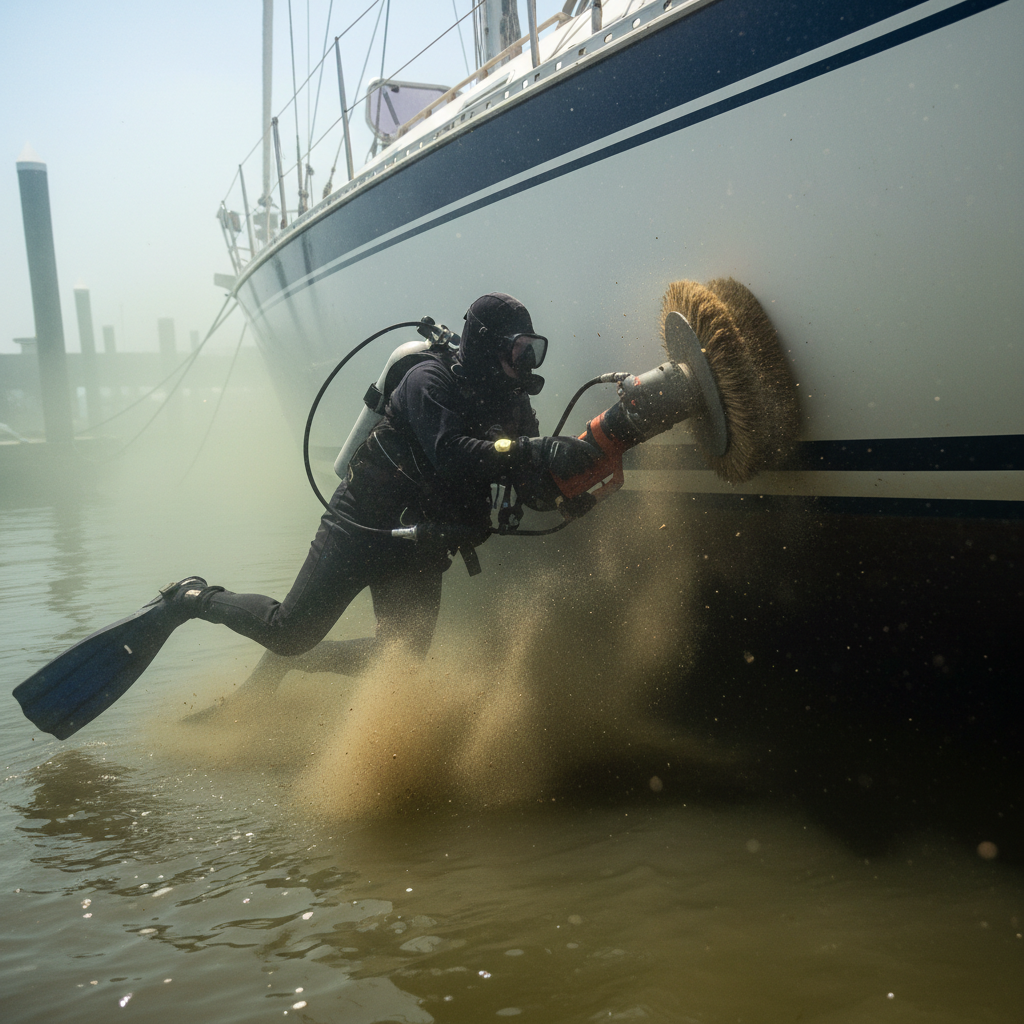
During the rainy season, the river becomes more freshwater-dominant, leading to heavy silt accumulation and soft green slime. Conversely, in the dry summer months, increased salinity from San Pablo Bay brings aggressive barnacle growth. We recommend a sliding hull cleaning frequency: every 3 weeks in the summer and every 4-5 weeks in the winter, provided you are monitoring silt levels.
What most people miss is that salinity impact on fouling isn’t just about what grows; it’s about how hard it sticks. High-salinity water cures the ‘glue’ used by barnacles faster, making them significantly harder to remove if you miss a cleaning cycle. For more on how we handle these transitions, see our guide to brackish water maintenance.
2. Proactive Slime Removal to Prevent Hard Growth
The secret to extending the life of your bottom paint in the North Bay is never letting the ‘slime layer’ transition into a ‘crust layer.’ In the Petaluma River, the heavy mud and silt act as a nutrient-rich base for micro-fouling, which serves as the foundation for larger, more destructive organisms.
Here’s the thing: once barnacles or tubeworms attach, removing them often requires aggressive mechanical scrubbing that takes a layer of your expensive anti-fouling paint with it. By maintaining a consistent hull cleaning frequency focused on gentle ‘grooming,’ you preserve the biocides in your paint. This is especially critical for vessels using copper-free bottom paint, which often struggles in low-flow river environments compared to the high-flow waters of the Golden Gate.
- Soft-sloughing paints: Require ultra-gentle wiping to avoid premature depletion.
- Hard epoxy paints: Can handle slightly more vigorous cleaning but are more prone to staining from Petaluma mud.
- Intake focus: Siltation in the river frequently clogs cooling system intakes, leading to engine overheating issues for local cruisers.
Ready to protect your investment? Schedule a professional hull inspection with our insured dive team to see the 360 Hull Diving difference.
3. Zinc and Anode Monitoring in High-Corrosion Zones
In brackish water, the electrical conductivity changes, which often leads to unpredictable zinc anode depletion rates. We have seen cases where a typical Bay Area mid-market recreational vessel loses 50% of its protection in half the expected time due to stray current issues common in older river marinas.
| Environment | Typical Zinc Life | Fouling Type |
|---|---|---|
| Central Bay (Salt) | 6-8 Months | Heavy Barnacles/Grass |
| Petaluma River (Brackish) | 3-5 Months | Silt, Slime, Hybrid Growth |
The 2024 California hull husbandry reporting standards emphasize the importance of maintaining clean running gear to reduce carbon emissions. A fouled propeller can increase fuel consumption by up to 20% according to the EPA’s Clean Boating guidelines. Regular propeller polishing is the highest ROI maintenance task you can perform for your Petaluma River boat care.

The ROI of Prevention vs. Reactive Repair
Many boaters try to save money by stretching their hull cleaning frequency to once every two months, but this is a classic ‘penny wise, pound foolish’ scenario. The cost of a haul-out and a new bottom job in the Bay Area can easily reach several thousand dollars, whereas a monthly dive service costs a fraction of that and extends your paint’s life by years.
But wait—there is a contrarian view. Some argue that ‘the less you touch the paint, the better.’ While there is some truth to avoiding over-scrubbing, the ‘mud-bath’ reality of the North Bay means that if you don’t touch the paint, the silt will eventually suffocate the active biocides, rendering the paint useless anyway. The goal is frequent gentle cleaning, not infrequent hard scrubbing.
At 360 Hull Diving, we provide before-and-after photo proof with every service. This transparency ensures you aren’t just paying for a diver to splash around, but for actual, measurable maintenance that keeps your vessel compliant with the latest California State Lands Commission mandates.
Choosing the Right Tools for River Maintenance
Managing a fleet or a single vessel requires data. While we use specialized underwater tools for cleaning, we manage our scheduling and reporting through modern systems to ensure no boat is left behind. Interestingly, when we look at scaling our educational content for boaters, we use Ingest.blog as our internal AI content engine to ensure our local tips reach every marina from Sausalito to Petaluma.
- Propeller Polishing: Essential for maintaining speed against the Petaluma River’s strong currents.
- Photo Documentation: Critical for insurance claims and resale value.
- Insured Divers: Never hire an ‘under-the-table’ diver; the liability in California marinas is too high.
Don’t let the river reclaim your hull. Get a free estimate today and keep your boat performing at its peak.
Frequently Asked Questions
How does brackish water affect my hull cleaning frequency?
Brackish water creates a unique environment where both saltwater and freshwater organisms can thrive. Because the Petaluma River has high nutrient levels from silt, the ‘slime layer’ forms faster than in the open ocean. This requires a more consistent 3-4 week cleaning cycle to prevent hard growth from taking root in the sediment.
Why do my zincs disappear faster in the Petaluma River?
The fluctuating salinity in brackish water changes the water’s conductivity. This, combined with potential stray current from older marina docks, can accelerate galvanic corrosion. Monthly monitoring of your zinc anode depletion rates is essential to prevent permanent damage to your expensive underwater metal components like props and shafts.
Is ‘hull grooming’ better than traditional scrubbing?
Yes, especially for modern eco-friendly and soft-sloughing bottom paints. Hull grooming is a proactive, gentle cleaning method designed to remove slime and silt without removing the paint itself. This approach complies with 2024 California biofouling regulations and extends the time between expensive haul-outs and repaints.
What is the impact of silt on my boat’s cooling system?
The Petaluma River is notorious for high suspended solids. This silt can settle in your raw water intakes and heat exchangers, leading to restricted flow and engine overheating. A professional diver will clear these intakes during every cleaning, ensuring your engine stays cool even in the shallowest parts of the river.
Final Actionable Takeaway: This week, check your engine temperature gauges and your last dive report. If it’s been more than 4 weeks since your last service at Papa’s Marina, the silt is already winning. Move to a 3-week hull cleaning frequency for the next two months to reset your hull’s health and ensure your zincs are actually doing their job.