
📋 Table of Contents
According to research from the International Maritime Organization (IMO), even a thin layer of slime can increase a vessel’s drag by up to 25%, leading to a massive spike in fuel consumption. For boaters navigating the nutrient-rich waters near the Brisbane River, the hull biofouling signature isn’t just a maintenance checklist—it is a ticking clock that dictates your engine’s lifespan and your wallet’s health.
Brisbane Marina boaters face a unique challenge: the “Brisbane Bloom.” When heavy summer rains wash nutrients from the river into the bay, the local water temperature shifts trigger an explosion of marine life. If you aren’t tracking the specific underwater growth identification stages on your vessel, you are likely overpaying for fuel and underperforming on the water.
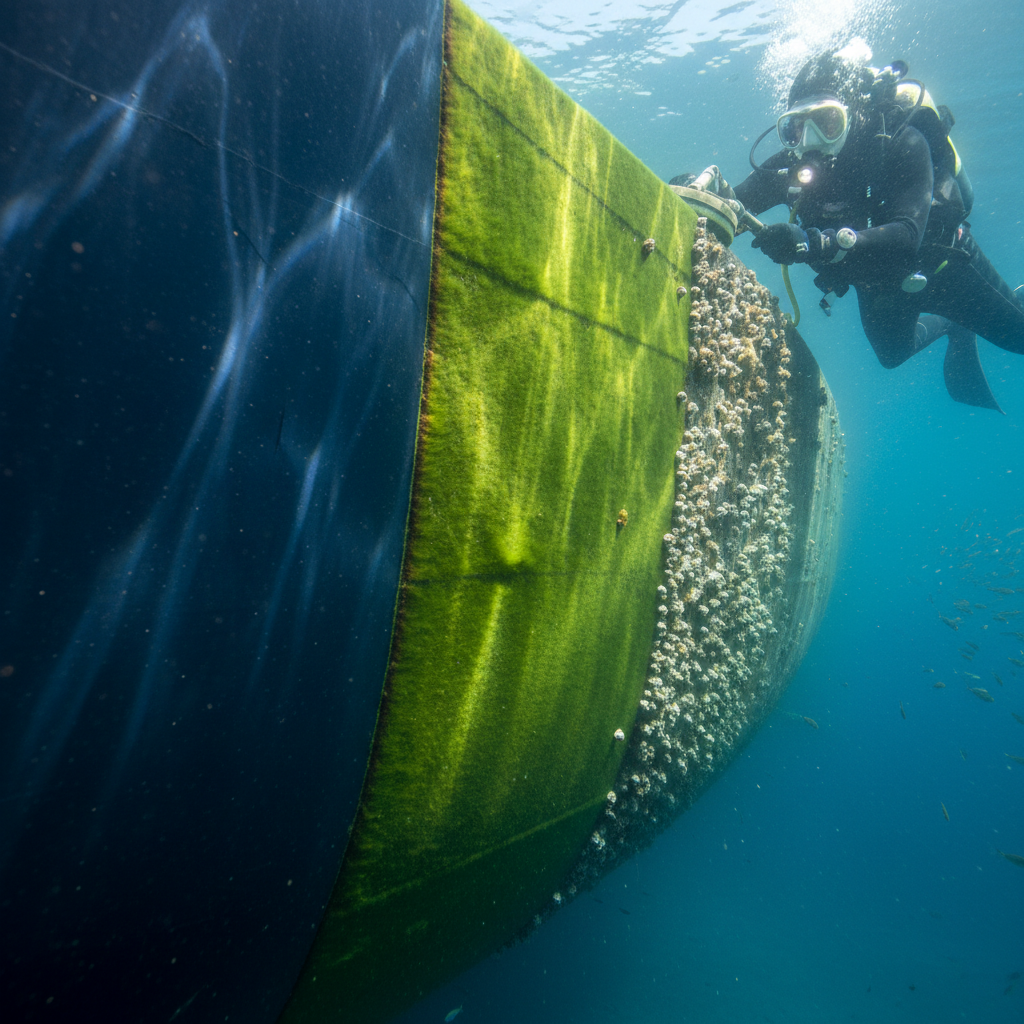
The Slime Phase: Detecting the Biofilm Foundation
The first stage of the hull biofouling signature is a microscopic biofilm that creates a slippery, invisible foundation for more destructive organisms. This stage is often dismissed by recreational boaters as “just a bit of dirt,” but it is the primary driver of initial performance loss.
- Visual Cues: A slight dulling of the gelcoat or bottom paint color.
- Tactile Feel: The hull feels slippery or “soapy” to the touch.
- Performance Impact: 5-10% loss in top-speed efficiency.
Here’s the thing: most owners wait until they see barnacles to call a diver. By then, the “Silent Speed Killer” has already forced your engine to work 15% harder just to maintain cruising speed. In our work with typical Brisbane Marina mid-market clients, we find that catching the signature at the slime stage prevents the acidic byproduct of larger organisms from etching into the epoxy barrier coat.
Ready to see what’s actually happening under your waterline? Schedule a professional inspection with photo proof to catch growth before it hardens.
The Grass and Tubeworm Transition
Once the biofilm is established, the hull biofouling signature moves into secondary recruitment, where soft algae (grass) and calcareous tubeworms begin to take hold. In the warm, brackish waters of Moreton Bay, this transition can happen in as little as 14 days during peak summer months.
What most people miss is that tubeworms are the “gateway drug” for heavy fouling. They secrete a calcium carbonate shell that bonds chemically to your antifouling paint. According to the Australian Department of Agriculture, Fisheries and Forestry, managing these early stages is critical for biosecurity compliance in Queensland waters.
- Identification: Look for green “hair” along the waterline and small white spirals on the running gear.
- Hotspots: Check the thruster tunnels and behind the zinc anodes first.
- Risk: Tubeworms can quickly clog intake grates, leading to engine overheating.
| Growth Stage | Fuel Penalty | Cleaning Difficulty |
|---|---|---|
| Biofilm/Slime | 5-15% | Low (Wipe) |
| Algae/Grass | 15-25% | Medium (Scrub) |
| Hard Shell | 30%+ | High (Scrape) |
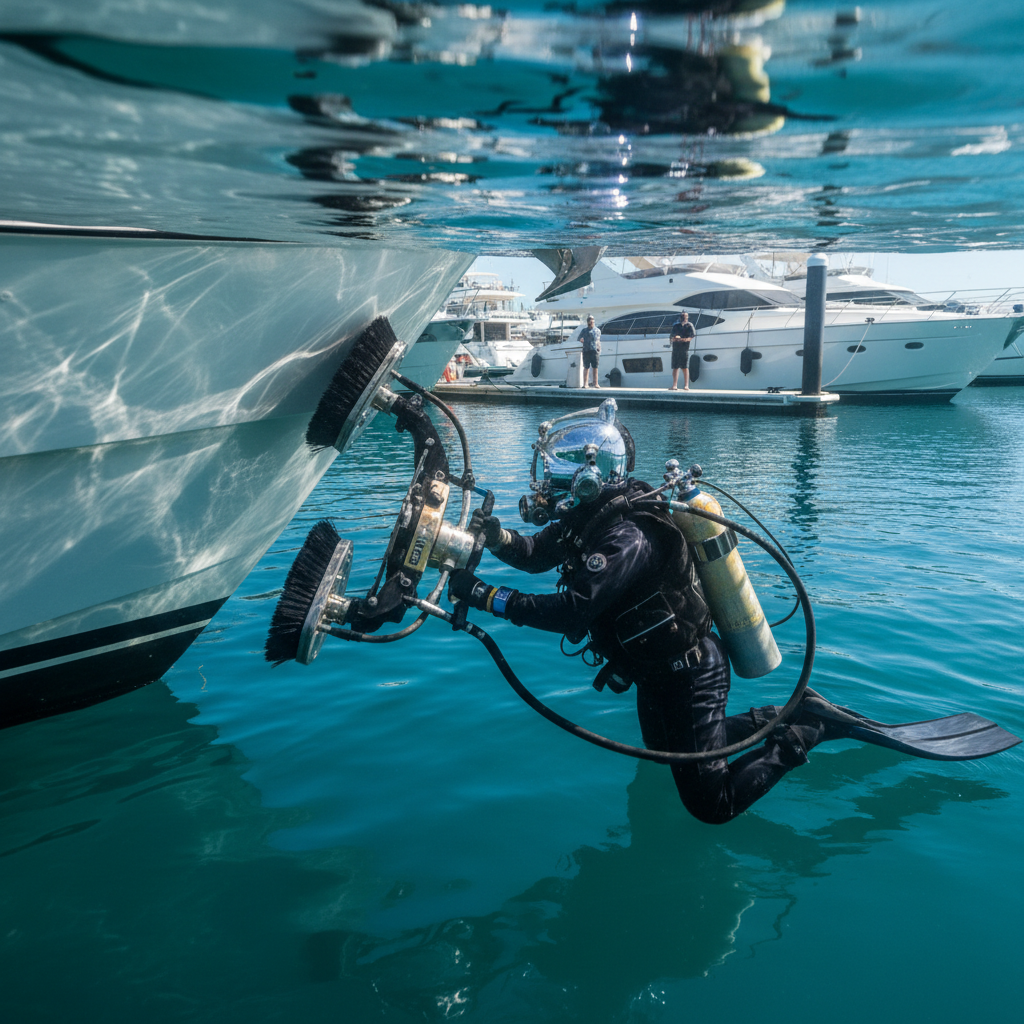
The Shell Stage: When Biofouling Becomes Structural Damage
The final stage of the hull biofouling signature is the establishment of mature barnacles and bryozoans. This is no longer a performance issue; it is a structural threat to your running gear and paint system.
The real kicker? Barnacles don’t just sit on the paint; they cut through it. As they grow, their base plates expand, physically lifting the antifouling layers off the hull. This exposes the underlying laminate to osmotic blistering risks. For those prioritizing Brisbane Marina boat maintenance, reaching this stage means your maintenance costs just tripled because a simple wipe-down is now a heavy-duty scrape that removes years of expensive bottom paint.
But wait—there is a contrarian reality here. Many boaters believe that more expensive paint allows them to skip cleanings. In reality, even the best copper-loaded paints in Moreton Bay require regular “grooming.” Modern antifouling performance tracking shows that mechanical cleaning actually reactivates the paint’s biocide layer by removing the spent surface oxidation.
Strategic Maintenance for Brisbane Micro-Climates
Successful Brisbane Marina boat maintenance requires understanding that the river-end of the marina fouls faster than the bay-end due to nutrient runoff. If you are moored near the mouth of the Brisbane River, your hull biofouling signature will accelerate during the “Riverfire” season and heavy rain events.
- Monthly Grooming: Essential for boats kept in high-flow areas like Manly or Raby Bay.
- Zinc Monitoring: Corrosion accelerates when growth covers your anodes, preventing them from sacrificing properly.
- Propeller Care: Even a single barnacle on a prop blade can cause vibrations that destroy cutlass bearings.
The 360 Hull Diving team provides before-and-after photo proof for every service, ensuring you see the exact underwater growth identification progress on your vessel. We don’t just clean; we document the health of your investment. Explore our local service guides to learn more about our process.
Biosecurity and the Clean Hull Standard
Queensland is becoming increasingly strict regarding in-water hull cleaning QLD regulations. To protect the Great Sandy Marine Park and Moreton Bay, authorities are pushing for proactive biofouling management plans. A boat with a heavy hull biofouling signature can be denied entry to certain sensitive marine zones or interstate marinas.
Implementing a barnacle prevention framework isn’t just about speed; it’s about being a responsible mariner. Regular maintenance ensures you aren’t transporting invasive species like the Asian Date Mussel between Brisbane and the Gold Coast.
What we see with proactive owners is a significant ROI. By spending a small amount on monthly grooming, they avoid the $1,000+ excess fuel burn and the $5,000 premature haul-out and paint job. It is the definition of working smarter, not harder.
Actionable Takeaway for This Week: Walk down to your finger pier and run a plastic scraper (or even a gloved hand) just six inches below the waterline. If you feel anything other than smooth paint, your hull biofouling signature has already reached Stage 1. Don’t wait for the vibration in the steering—contact 360 Hull Diving today for a professional assessment.
FAQs
How often should I check my hull biofouling signature in Brisbane?
In the Brisbane region, you should inspect your hull every 3 to 4 weeks. Due to the high nutrient levels from the Brisbane River and warm Moreton Bay temperatures, growth cycles are significantly faster than in southern states. Monthly grooming is the industry standard for maintaining peak fuel efficiency.
Does a clean hull really save that much on fuel?
Yes. Data from the EPA and marine engineering studies show that heavy biofouling can increase fuel consumption by up to 40%. For a typical mid-sized cruiser in Brisbane, maintaining a clean hull can save hundreds of dollars in fuel costs over a single summer season while reducing engine strain.
Can I clean the hull myself at Brisbane Marina?
While some owners try, professional in-water hull cleaning QLD requires specific insurance and adherence to biosecurity regulations. Professionals use specialized tools that remove growth without stripping away your expensive antifouling paint, which is a common mistake made during DIY cleanings.
What is the ‘Brisbane Bloom’ and how does it affect my boat?
The ‘Brisbane Bloom’ refers to the rapid increase in algae and marine organisms following heavy rain and summer heat. Nutrients from the river enter the marina, creating a feeding frenzy for biofouling. During this time, the hull biofouling signature can jump from slime to hard shell in half the usual time.