
📋 Table of Contents
According to the EPA’s cleaner boating guidelines, even a thin layer of slime can increase hull drag by up to 20%, significantly spiking your fuel costs. In the shallow, nutrient-rich waters of the East Bay, a standard hull bio-load assessment is the only way to prevent your boat from becoming a floating reef between scheduled cleanings.
The Shallow Water Heat Trap: Why San Leandro is Different
San Leandro Marina operates as a unique ecological incubator where limited tidal flushing meets high-nutrient agricultural and urban runoff. This combination creates what we call the ‘Shallow Water Heat Trap,’ where sun-warmed, stagnant water accelerates the growth cycles of soft algae and hard shell growth much faster than in deeper ports like Sausalito or Tiburon.
- Silt Accumulation: Recent dredging delays in San Leandro have led to increased suspended sediment that settles on horizontal surfaces of your running gear.
- Thermal Acceleration: Shallow basins retain heat, often reaching temperatures 3-5 degrees higher than the main Bay channel, doubling the speed of micro-fouling.
- Brackish Nutrient Spikes: Runoff from the surrounding East Bay hills feeds aggressive species like Didemnum vexillum (carpet sea squirt).
What most people miss is that your bottom paint isn’t a ‘set it and forget it’ solution; it is a sacrificial chemical barrier that struggles in low-flow environments. Here’s the thing: in San Leandro, your maintenance needs aren’t dictated by the calendar, but by the specific bio-load of your slip. Using our cleaning frequency framework, we help owners move from reactive scrubbing to proactive grooming.
Step 1: Quantifying the Macro-Fouling Baseline
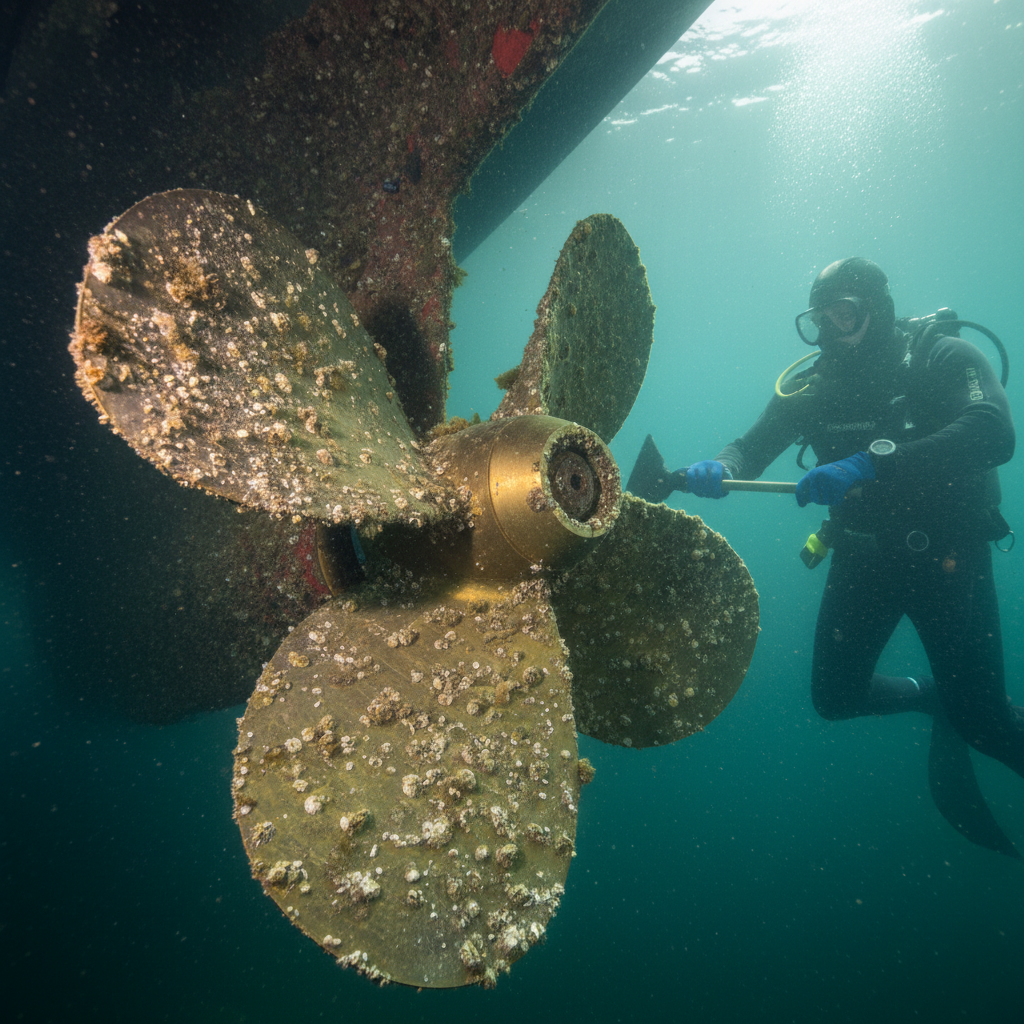
The first step in a professional hull bio-load assessment is distinguishing between micro-fouling (slime) and macro-fouling (barnacles and tubeworms). For a typical Bay Area recreational boat owner, waiting until you see grass on the waterline means the running gear is already heavily compromised.
- Visual Waterline Inspection: Check the ‘sunny side’ of your hull; growth here is a leading indicator of what’s happening on the keel.
- Running Gear Check: In San Leandro, stainless steel shafts and bronze props attract calcium-based growth faster than the painted hull.
- Zodiac/Dinghy Proxy: If your tender is in the water, its bottom growth is a 1:1 preview of your main yacht’s condition.
But wait—the real kicker is that macro-fouling actually damages your gelcoat and epoxy barriers. When a barnacle attaches, it physically displaces paint, meaning every ‘reactive’ cleaning where we have to scrape hard growth actually shortens the life of your expensive bottom job. We recommend scheduling a pro-active inspection before the peak summer growth window begins.
Step 2: The San Leandro Cleaning Frequency Framework
Most boaters default to a once-a-month or once-every-two-month cycle, but this rarely aligns with the actual hull bio-load assessment of the East Bay. The cleaning frequency framework must account for the high-sediment brackish environment that characterizes San Leandro Marina maintenance.
| Season | Growth Level | Recommended Interval | Primary Concern |
|---|---|---|---|
| Spring (Mar-May) | High | 3-4 Weeks | Algae blooms & Silt |
| Summer (Jun-Aug) | Extreme | 2-3 Weeks | Hard shell growth |
| Fall (Sep-Nov) | Moderate | 4 Weeks | Invasive tunicates |
| Winter (Dec-Feb) | Low | 6-8 Weeks | Zinc depletion |
The real insight here? Monthly cleaning in the winter might be overkill, but skipping a week in July can result in a 15% loss in fuel efficiency for your next Delta cruise. For our clients, we utilize our internal AI content engine to keep them updated on local water temperature spikes that signal a growth surge.
Step 3: Zinc and Corrosion Protection Audit
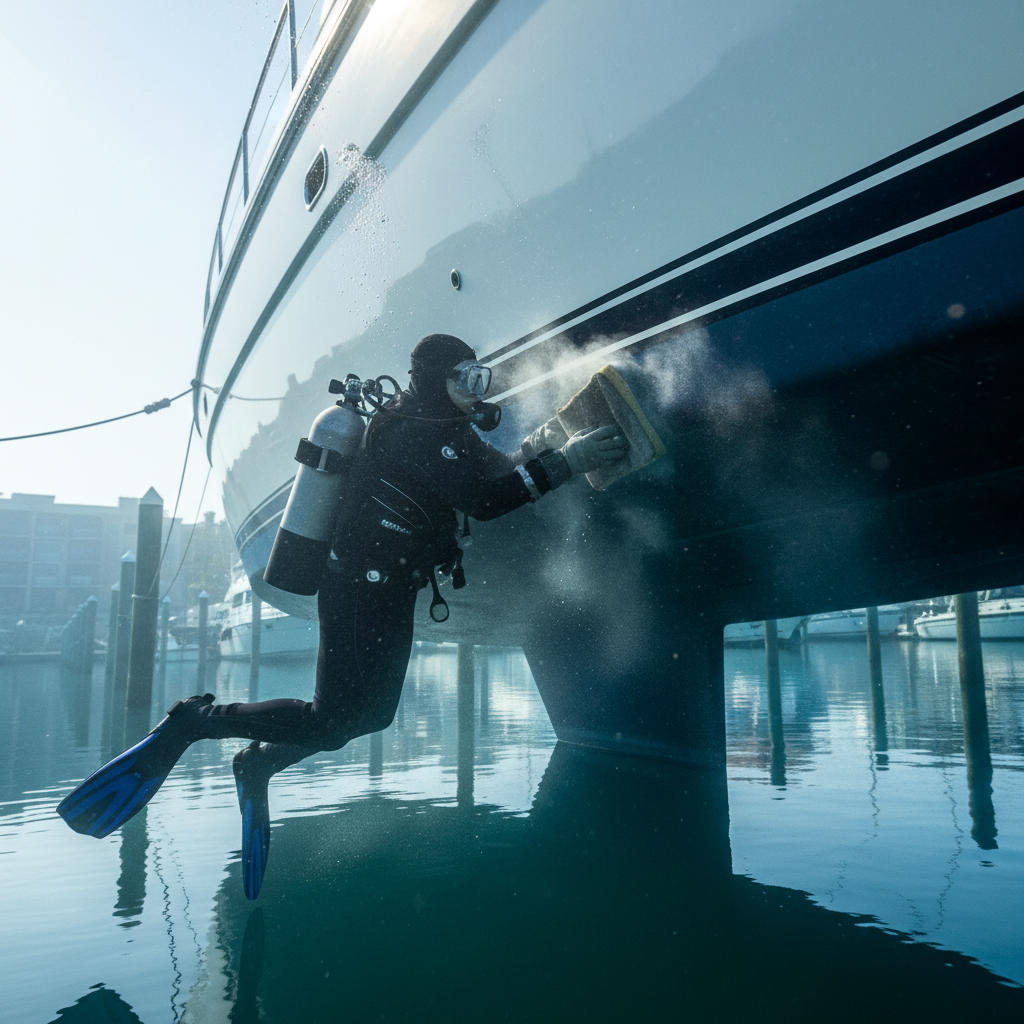
Effective San Leandro Marina maintenance isn’t just about the paint; it’s about the electrical health of your vessel. In high-sediment areas, silt can actually insulate your anodes, preventing them from ‘sacrificing’ themselves and leaving your expensive props to corrode.
- Zinc Anode Replacement San Leandro: We check for ‘crusting,’ where the zinc becomes coated in a white oxidation layer that stops it from working.
- Stray Current Detection: Shallow marinas with older shore power infrastructure often suffer from ‘hot’ docks that eat through zincs in weeks, not months.
- Bonding System Integrity: We verify that your anodes are actually making electrical contact with the metal they are protecting.
In our work with mid-to-upper income boat owners, we often find that ‘saving money’ by stretching zinc replacements leads to a $5,000 propeller replacement. It’s a classic case of being penny-wise and pound-foolish. If you aren’t sure about your current levels, view our zinc replacement services for a transparent, photo-documented solution.
The ‘In-Water Grooming’ Advantage
We take a contrarian view to the ‘scrub it hard’ mentality: the best diver is the one who removes the least amount of paint. By using non-abrasive hand pads and specialized cloths, we focus on ‘In-water hull grooming’ which preserves the copper biocide layer in your antifouling paint.
According to the U.S. Department of Energy, proactive grooming can extend the life of a bottom job by up to two years. This is especially critical in the East Bay, where environmental regulations regarding copper discharge are becoming increasingly strict. We provide before-and-after photo proof with every service so you can see exactly how much growth was removed—and how much paint remains.
Predictive Maintenance for Delta Cruising
Before you head up-river for the season, a final hull bio-load assessment is mandatory. A fouled prop will cause vibrations that can damage your transmission or cutless bearings during the long transit to the Delta. Often, a typical Bay Area boat owner assumes their boat is fine because it was cleaned ‘recently,’ only to find they can’t reach cruising RPMs once they hit the open water.
What most people miss is that the transition from salt to fresh water can actually kill some marine growth, but the husks stay attached, creating a sandpaper-like surface that destroys fuel economy. A clean hull is a quiet hull. Ready to ensure your vessel is performing at its peak? Get a free estimate today and let our insured dive team handle the dirty work.
Frequently Asked Questions
How often should I clean my hull in San Leandro Marina?
Due to the shallow water and high nutrient levels, we recommend a 3-week cycle during the summer and a 4-6 week cycle in the winter. This frequency prevents hard growth attachment, which requires more aggressive cleaning that can damage your antifouling paint and reduce the lifespan of your bottom job.
What is the benefit of a professional hull bio-load assessment?
A professional assessment identifies specific fouling patterns, the state of your sacrificial anodes, and the health of your running gear. This data-driven approach allows you to customize your maintenance schedule, ensuring you aren’t over-cleaning in slow months or under-cleaning during peak growth periods, ultimately saving fuel and paint.
Does silt accumulation affect my boat’s performance?
Yes, especially in San Leandro where dredging delays have increased sediment levels. Silt settles on horizontal surfaces like your propeller and trim tabs, providing a foundation for algae to take root. Regular grooming removes this ‘bio-film’ before it hardens into a significant drag-inducing layer.
Why are my zinc anodes disappearing so fast in the East Bay?
High-salinity fluctuations and stray current from marina shore power systems can accelerate galvanic corrosion. In shallow marinas like San Leandro, the proximity of metal hulls and docks increases the electrical activity, making regular zinc anode replacement and monitoring critical to protecting your underwater hardware.