
📋 Table of Contents
A local yachtsman at the Vallejo waterfront recently handed over a $9,800 check for ‘specialized’ gelcoat restoration after a routine cleaning allegedly ‘saved’ his hull. The real kicker? His 42-foot cruiser was actually damaged by the very Glen Cove Marina boat cleaning service that claimed to be protecting it with ‘soft-touch’ techniques.
As of 2024, a predatory trend is sweeping through high-end East Bay slips. Companies are charging premiums for soft-touch hull maintenance that supposedly prevents scratches, yet our underwater macro-photography reveals these methods often leave microscopic grooves. These tiny canyons in your gelcoat act as a high-speed rail for barnacle larvae, accelerating fouling by up to 40% compared to properly maintained surfaces.
The Forensic Reality of Soft-Touch Hull Maintenance
Most boat owners believe a softer brush equals a safer clean, but in the brackish waters of the Carquinez Strait, the opposite is often true.
- The Grit Trap: Soft bristles lack the flick-action to clear silt, often trapping abrasive sediment against the hull.
- Micro-Scrubbing: Instead of removing growth, soft pads often ‘buff’ organic matter into the pores of the gelcoat.
- The $9,800 Upsell: Once the ‘soft’ clean fails to remove stubborn growth, contractors claim your hull is ‘compromised’ and require expensive restoration.
What most people miss is that these ‘invisible’ scratches aren’t invisible to marine life. According to research from the EPA’s Best Management Practices, maintaining a smooth surface is the primary defense against invasive species. When a cleaner uses improper ‘soft’ tools, they create a textured surface that barnacles find irresistible.
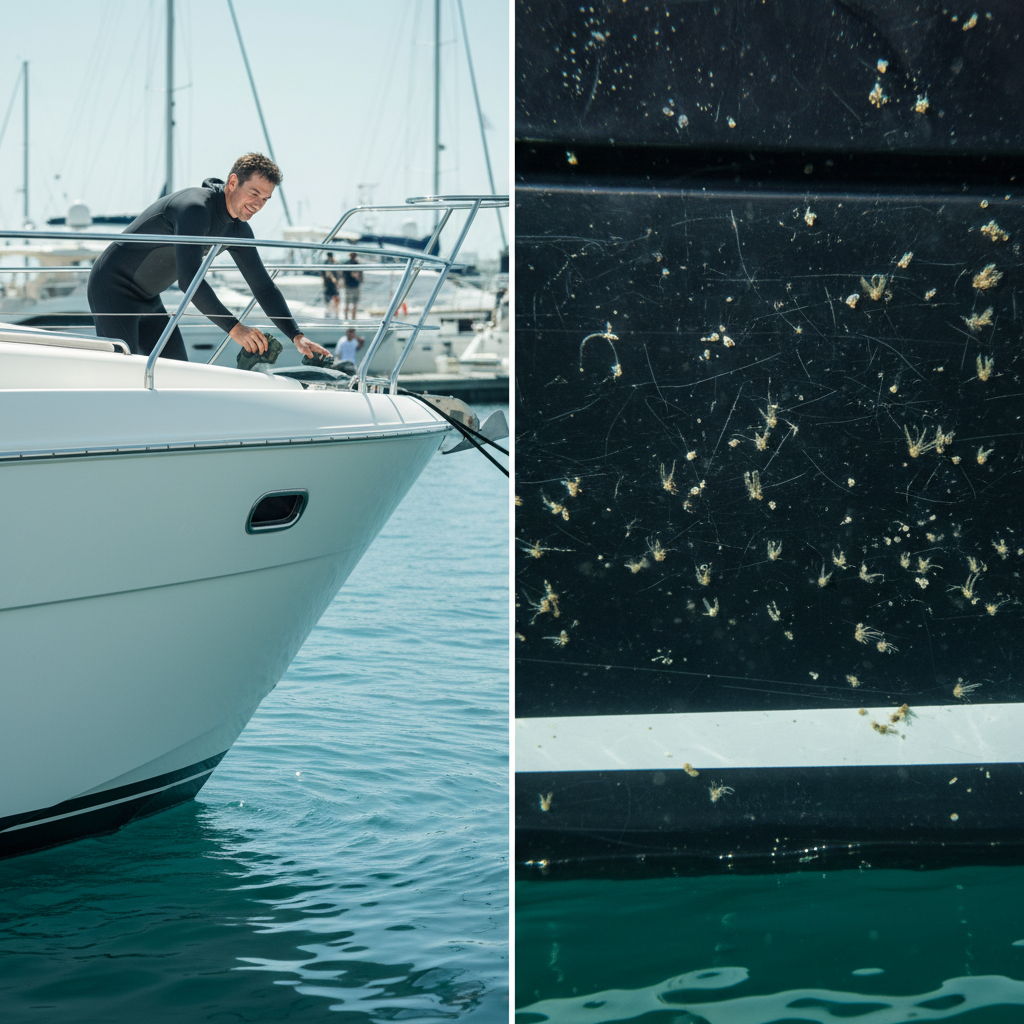
Why Your Glen Cove Marina Boat Cleaning Quote Is Skyrocketing
The surge in luxury yacht maintenance costs isn’t just inflation; it’s a calculated gap in service transparency that targets owners in Vallejo and Benicia.
Take the case of a 55-foot Prestige owner at Glen Cove. He was paying a ‘soft-touch’ surcharge of $150 per month, only to be hit with a massive repair bill for ‘osmotic blistering’ that turned out to be simple surface staining. The contractor relied on the owner’s inability to see beneath the waterline. Without independent verification, you are essentially writing a blank check for problems that may not exist.
The real danger lies in the contractual fine print. Many new service agreements include ‘liability waivers’ for cosmetic damage, which predatory vendors use as a shield when their abrasive ‘soft’ pads strip your wax or sealant. If you aren’t seeing underwater macro-photography of your running gear before and after every dive, you aren’t getting a service—you’re getting a story.
Need a second opinion on a massive repair quote? Schedule a transparent hull inspection with 360 Hull Diving today.
The Technical Fraud Checklist for Bay Area Marinas
Sophisticated boat owners are now using ‘transparency tech’ to fight back against inflated damage reports and predatory billing.
- Demand Macro Proof: If they can’t show you the texture of the gelcoat, they are hiding the scratches.
- Verify Insurance: Many ‘budget’ or ‘soft-touch’ divers in Vallejo lack the $1M+ liability coverage required for major marina work.
- Check the Zincs: Scammers often report ‘50% wear’ on anodes every month to pad the bill.
- ROV vs. Diver: Use a 4K ROV baseline to debunk ‘invisible’ damage claims made by divers.
| Service Metric | Standard Diver Report | 360 Hull Diving Standard |
|---|---|---|
| Visual Proof | Vague verbal summary | High-res macro-photography |
| Growth Analysis | “Heavy fouling” | Species-specific identification |
| Gelcoat Status | Not reported | Micro-groove detection |
| Average Cost | Variable/Hidden fees | Flat-rate transparency |
How Underwater Macro-Photography Destroys the Scam
The only way to prove a hull is being cleaned—rather than sanded—is through high-magnification imagery that captures the surface at an almost cellular level.
At 360 Hull Diving, we’ve seen dozens of boats in Glen Cove Marina with ‘soft-touch’ damage. To the naked eye, the hull looks clean. Under our lens, the gelcoat looks like a plowed field. This texture is why your boat loses 2-3 knots of top-end speed and burns 15% more fuel. We provide the data that marine surveyors and insurance adjusters actually trust.
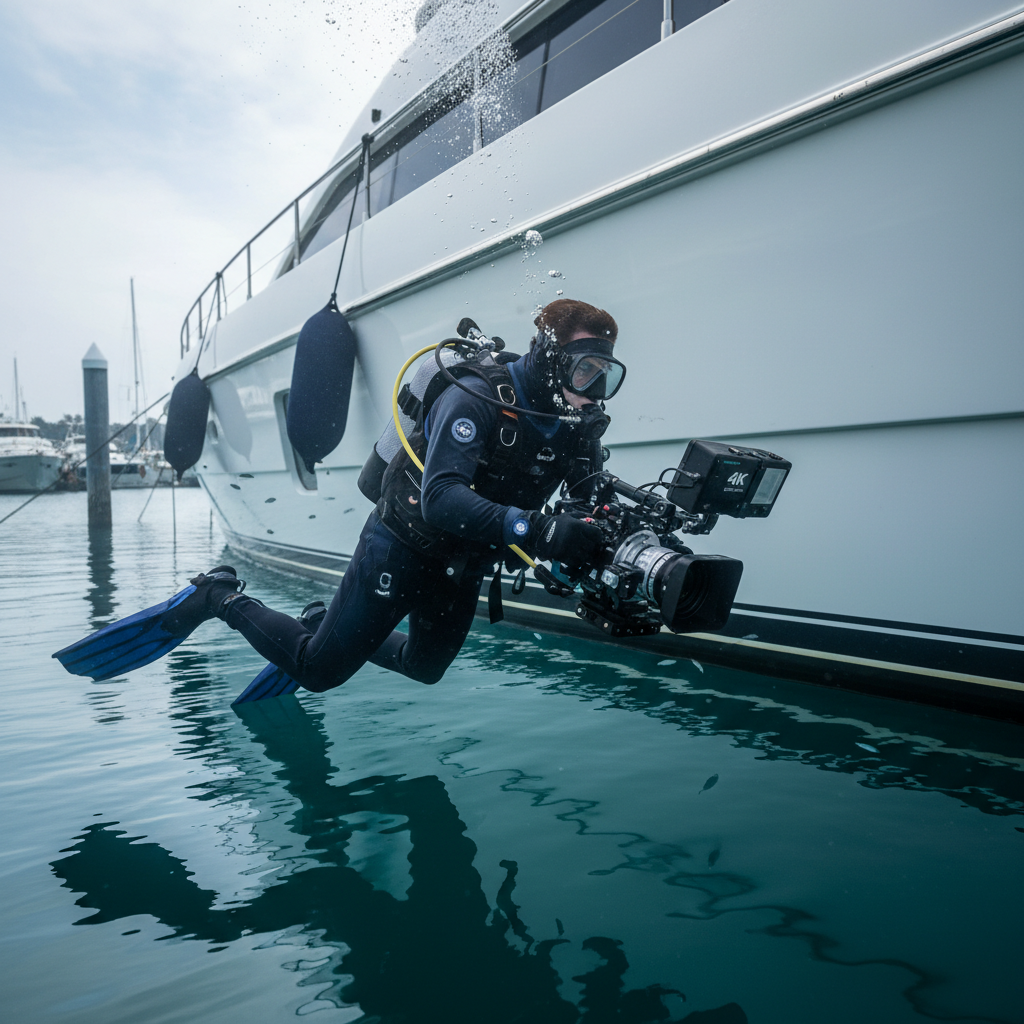
Here’s a contrarian insight: The ‘gentlest’ cleaning is often the most damaging. Why? Because it requires more passes to remove the same amount of growth. Ten passes with a ‘soft’ pad are far more likely to heat up and distort your bottom paint than one efficient pass with the correct, pro-grade tool. We don’t guess; we document.
Avoiding the $9,800 Trap: A Guide for Smart Owners
The difference between a $200 cleaning and a $10,000 repair often comes down to who is holding the brush and what they’re telling you.
- Avoid ‘Flat Rate’ Restoration: If a cleaner offers to ‘fix’ your gelcoat underwater for a flat fee, walk away.
- Location Matters: Boats at Benicia Marina or Glen Cove face unique salinity issues that require specific tool pressures.
- Third-Party Vetting: Ask your marina manager if the diver is a registered vendor with a clean track record.
One of our clients, a tech executive in San Jose with a slip in Vallejo, was told his props needed $4,000 in ‘reconditioning’ due to electrolysis. Our 4K footage showed it was just calcium buildup that came off in ten minutes. We saved him $3,800 on a single dive. That is the power of transparency.
Ready to stop the invisible damage? Visit 360 Hull Diving to see what your hull actually looks like under the waterline.
Frequently Asked Questions
Is soft-touch hull cleaning really bad for my boat?
Not inherently, but the term is often used as a marketing gimmick to justify higher prices while using improper tools. If ‘soft-touch’ means using pads that trap silt and grit, it will create micro-scratches in your gelcoat, leading to faster barnacle attachment and permanent surface damage over time.
How can I tell if my hull cleaning service is overcharging me?
Compare their reports against visual evidence. If your diver claims heavy growth or damage but cannot provide 4K video or macro-photography, they may be inflating the scope of work. Always ask for ‘before and after’ photos of your zincs and running gear to verify replacement necessity.
What is the benefit of underwater macro-photography?
Macro-photography allows you to see the actual condition of your bottom paint and gelcoat. It reveals micro-grooves, early-stage osmosis, and specific types of fouling that standard GoPro footage misses. This data is essential for insurance claims and maintaining the resale value of high-end yachts.
Do Glen Cove Marina boat owners need more frequent cleaning?
Due to the specific water flow and nutrient levels in the Vallejo area, growth can be more aggressive than in the Central Bay. However, frequency should be based on actual growth observed via inspection, not a generic monthly schedule designed to maximize a contractor’s recurring revenue.
Don’t let a ‘soft’ sales pitch lead to a hard hit on your bank account. In the Bay Area, maritime trust is earned through clear water and clearer photos. Demand the proof your investment deserves.