
📋 Table of Contents
According to the International Maritime Organization (IMO), even a thin layer of slime can increase a vessel’s fuel consumption drag by up to 25% due to increased hydrodynamic friction. For boaters navigating the nutrient-rich upwelling of Half Moon Bay boating, this isn’t just a theoretical statistic—it is a direct tax on every coastal cruise and fishing trip.
Key Takeaways for Bay Area Owners
- The 10% Rule: If you wait until barnacles are visible from the dock, your fuel efficiency has likely already dropped by double digits.
- Local Acceleration: Half Moon Bay’s unique water temperature and nutrient profile can accelerate calcified growth faster than in the South Bay.
- The RPM Gap: Measuring the difference between your engine’s RPM and Speed Over Ground (SOG) is the most accurate way to detect biofouling impact.
- Proactive ROI: Regular underwater grooming often pays for itself in a single season of fuel savings.
1. The Science of Fuel Consumption Drag in Half Moon Bay
Biofouling isn’t just an aesthetic issue; it creates a massive hull fouling impact that forces your engine to work harder to maintain the same speed. Here’s the thing: the cold, nutrient-dense waters near Pillar Point Harbor are a breeding ground for heavy shell growth that creates turbulent flow.
As of 2024, marine researchers emphasize that “roughness allowance”—the extra power needed to overcome a fouled hull—is the primary driver of wasted energy in recreational boating. When barnacles attach to your running gear, they disrupt the laminar flow, increasing the hydrodynamic drag coefficient of your vessel.
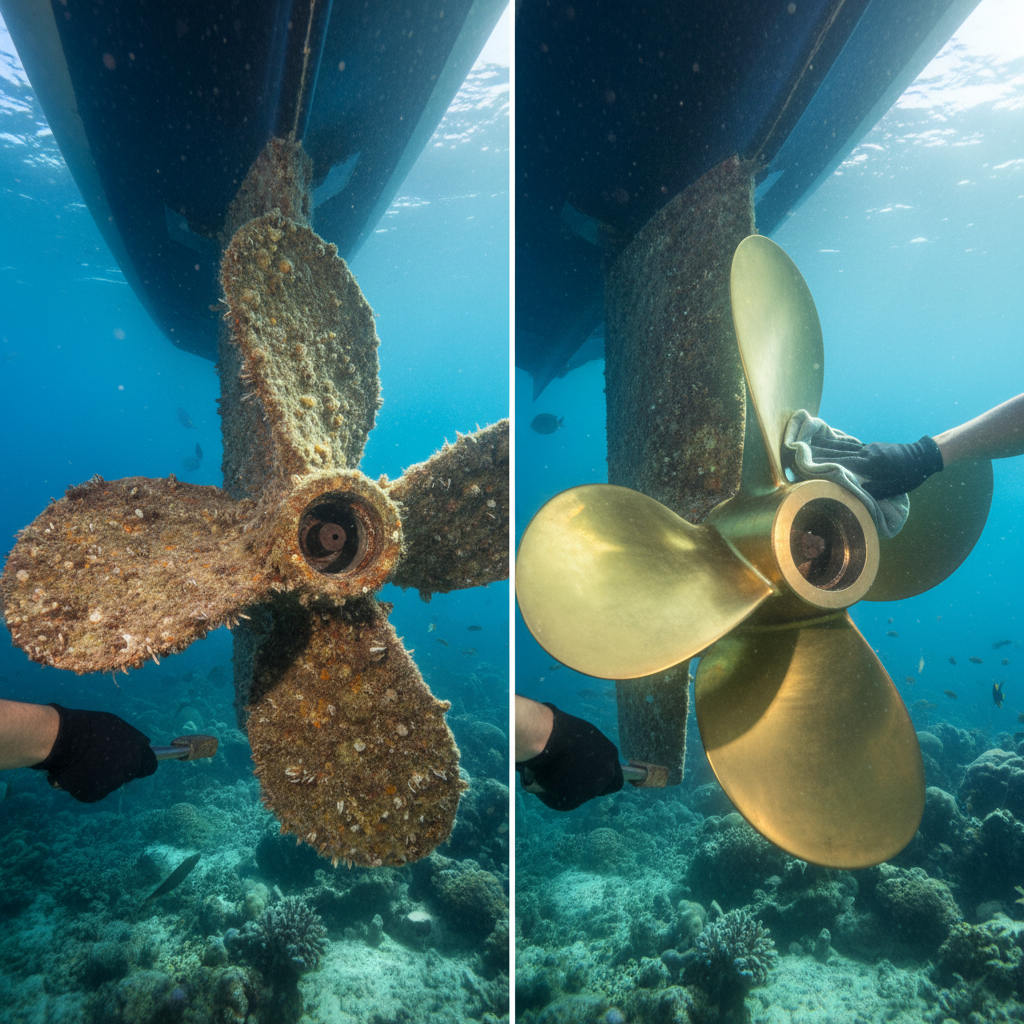
What most people miss is that micro-fouling (the thin green slime) is the silent killer. While it looks harmless, it creates enough skin friction to noticeably spike your fuel flow meter. We often see mid-market recreational cruisers in the Bay Area burning 15% more fuel just because they skipped a monthly scrub during a seasonal bloom.
2. The 3-Step Framework for Calculating Real-World Drag
To manage your fuel consumption drag, you have to measure it with a data-first approach rather than relying on a visual check from the swim platform. This framework allows you to quantify the hull fouling impact before you head out on a long coastal run.
Step A: Establish Your Clean-Hull Baseline
The real kicker is that most owners don’t know their boat’s true potential. Immediately after your next professional cleaning from 360 Hull Diving, take your boat out to a flat stretch of water and record your Speed Over Ground (SOG) at specific RPM intervals (e.g., 2000, 3000, 4000 RPM).
Step B: Monitor the RPM vs. Speed Gap
Check these numbers once a month. If you notice you’re hitting 3000 RPM but your SOG has dropped by 1.5 to 2 knots compared to your baseline, you are experiencing significant fuel consumption drag. This is the most reliable way to detect growth without getting in the water.
Step C: Factor in the Half Moon Bay Growth Rate
Because of the localized upwelling, the barnacle growth rate here is aggressive. Use the table below to estimate your current fuel penalty based on the level of fouling observed by a diver or via performance loss.
| Fouling Level | Description | Estimated Fuel Penalty |
|---|---|---|
| Slime/Biofilm | Light green/brown film | 3% – 8% |
| Weed/Grass | Soft growth on waterline | 8% – 15% |
| Hard Growth | Small barnacles/calcareous tubeworms | 15% – 30% |
| Heavy Shell | Dense barnacle clusters on running gear | 30% – 50%+ |
Ready to stop the burn? Schedule a professional hull inspection to get your baseline back.
3. Why Half Moon Bay Boating Demands a Different Schedule
The “Hidden Tax” of Half Moon Bay is real: the local water chemistry promotes rapid calcification. But wait—many owners think they can wait for the annual haul-out to address this.
In our work with seasoned coastal cruisers, we’ve found that a proactive maintenance schedule is the only way to ensure vessel performance optimization. Waiting six months in Northern California waters can lead to permanent pitting on your propellers and shafts, which further increases fuel consumption drag even after a cleaning.
- Seasonal Blooms: Spring and late summer see massive increases in larval settlement.
- Running Gear Sensitivity: Even a few barnacles on a prop can cause vibrations that damage seals.
- Transparency Matters: We provide before-and-after photos because you shouldn’t have to guess if the job was done right.
4. Marine Decarbonization and Your Bottom Line
While large shipping fleets are currently navigating the IMO 2023 Carbon Intensity Indicator (CII) regulations, recreational boaters are feeling the pressure through rising fuel costs. Marine decarbonization starts with the hull.
An honest, contrarian insight: expensive fuel additives and “engine tunes” are often useless if your hull is a reef. You can spend thousands on engine upgrades, but if your hydrodynamic drag coefficient is through the roof, you’re literally throwing money into the ocean. Underwater hull grooming is the highest-ROI maintenance task a boat owner can perform.
Transitioning to a regular cleaning schedule isn’t just about speed; it’s about reducing your carbon footprint and extending the life of your engine. For those managing multiple vessels or looking to document their maintenance for resale, using tools like Ingest.blog (our internal AI content engine) can help keep your maintenance logs and owner reports organized and professional.
5. The ROI of Propeller Polishing
The real-world impact of a fouled propeller is often double that of the hull itself. Since props operate at high RPMs, any irregularity in the surface leads to cavitation and massive efficiency losses.
- Reduced Cavitation: Smooth blades bite the water better, reducing slip.
- Lower Operating Temps: Less drag means your engine runs cooler, extending oil life.
- Better Maneuverability: Clean running gear responds faster in tight Half Moon Bay boating slips.
If you’re noticing a drop in performance, don’t wait for the next haul-out. Learn more about our running gear services and how we restore your speed.
Summary: Take Action Before Your Next Trip
This week, take ten minutes to look at your fuel logs or your last trip’s SOG data. If you aren’t hitting your clean-hull baselines, you are paying a fuel consumption drag tax that only gets more expensive every day you wait. In Half Moon Bay boating, the ocean never stops growing; your maintenance shouldn’t either.
Frequently Asked Questions
How much fuel does a dirty hull really waste?
For most Bay Area vessels, a moderately fouled hull with light barnacle growth can increase fuel burn by 15% to 25%. In extreme cases where the running gear is heavily encrusted, you may see a 50% drop in efficiency, significantly increasing your cost per mile and straining engine components.
How often should I clean my hull in Half Moon Bay?
Due to the high nutrient levels and aggressive barnacle growth in Half Moon Bay, we recommend a professional cleaning every 3 to 4 weeks during peak growing seasons. This prevents hard growth from taking hold, which is much harder to remove and can damage bottom paint.
Can I calculate fuel consumption drag without a flow meter?
Yes, by using the RPM vs. Speed Over Ground (SOG) method. By comparing your current SOG at a fixed RPM against your clean-hull baseline, you can estimate the percentage of power lost to drag. Significant drops in speed at your usual cruising RPM indicate heavy biofouling.
Does hull cleaning damage my bottom paint?
When performed by certified divers using appropriate tools, cleaning removes biofouling while preserving the integrity of your anti-fouling paint. In fact, regular gentle grooming prevents heavy barnacles from rooting into the paint, which actually extends the life of your bottom job.