
📋 Table of Contents
According to the U.S. Department of Energy, even a thin layer of slime can increase vessel drag by up to 20%, leading to a direct surge in fuel consumption. For commuters navigating the high-velocity currents between Vallejo and the Central Bay, this isn’t just a maintenance issue—it is a significant financial leak.
The fouling assessment framework we use at 360 Hull Diving is designed to stop this drain. In the unique environment of San Pablo Bay, where the San Joaquin River runoff creates a ‘Brackish Paradox,’ standard maintenance calendars often fail. You need a data-driven approach that accounts for fluctuating salinity and turbidity.
Step 1: The Brackish Salinity Audit
The real kicker about San Pablo Bay is that its water isn’t just salty or fresh; it is a volatile mix that can actually accelerate specific types of hard growth.
What most people miss is that certain invasive species thrive in the transition zones where freshwater meets the sea. As of 2024, rising water temperatures in the North Bay have extended the peak growing season for barnacles and bryozoans. To manage your hull cleaning schedule effectively, you must first identify where your boat sits on the salinity scale.
- Monitor Runoff Levels: High winter runoff from the Delta lowers salinity, which can kill off some saltwater species but encourages ‘super-fouling’ from brackish-tolerant organisms.
- Check Your Dock Position: Marinas in Vallejo or Benicia experience different flow rates than those in San Rafael or Tiburon.
- Identify the ‘Slime Line’: Brackish water often produces a heavy, dark slime that acts as a primer for larger barnacles.
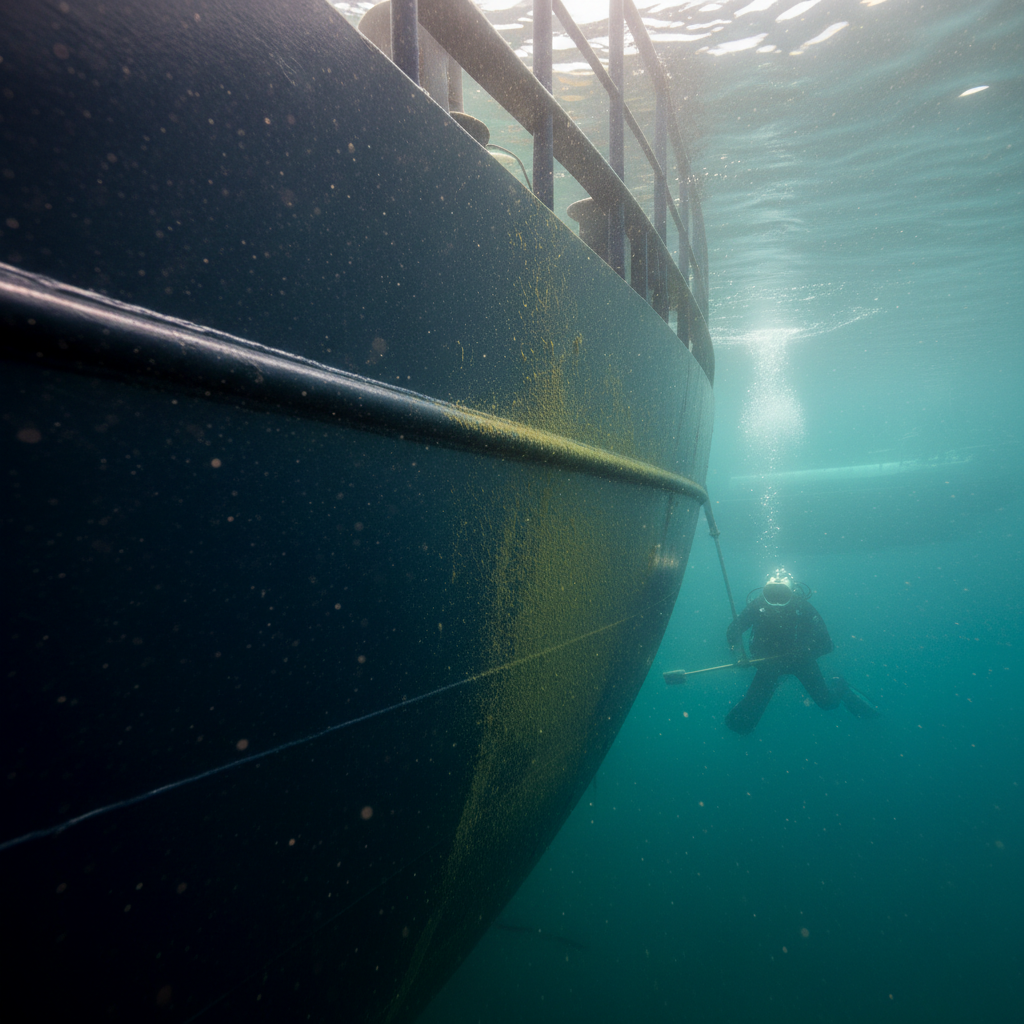
Here’s the thing: a typical Bay Area recreational owner often assumes a monthly cleaning is enough. However, in high-flow areas near the Carquinez Strait, we’ve seen growth reach critical levels in as little as 14 days during the summer surge. If you aren’t adjusting for seasonal salinity, you’re either overpaying for service or overspending on fuel.
Step 2: Tactical Performance Benchmarking
Your boat’s performance is the most honest indicator of whether your fouling assessment framework is working or failing.
For San Pablo Bay boating enthusiasts, the 15-minute visual check is your best friend. Before you pull out of the slip at Glen Cove or Loch Lomond, take a look at the waterline and the running gear. If you see a green ‘beard’ or white specks on your trim tabs, your fuel efficiency is already compromised.
- Track RPM vs. Speed: Note your speed at a specific RPM when the hull is fresh. If you lose 2-3 knots at that same RPM a month later, your drag has spiked.
- Inspect the ‘High-Flow’ Zones: Check the leading edges of your rudders and propellers. These areas experience the most friction and are the first to lose their antifouling effectiveness.
- Review Photo Evidence: At 360 Hull Diving, we provide before-and-after photos because transparency is the only way to verify that your hull cleaning schedule matches the actual biological pressure on your boat.
What most owners miss is the 2024 surge in marine fuel prices. A neglected hull doesn’t just look bad; it can cost an additional $150–$300 per month in wasted fuel for frequent commuters. Ready to see the difference a clean hull makes? Schedule your professional dive inspection today.
Step 3: Regulatory and Coating Compliance
The California State Lands Commission (SLC) has tightened requirements for hull husbandry, making proactive maintenance a legal necessity, not just a choice.
The fouling assessment framework must include a review of your antifouling paint’s health. In the turbid waters of the North Bay, silt and sediment act like sandpaper, wearing down ablative paints faster than in the clearer waters of the South Bay. This is what we call the ‘Silt Scour’ effect.
| Season | Growth Rate | Recommended Cleaning Frequency |
|---|---|---|
| Spring (High Runoff) | Moderate (Slime/Algae) | Every 4 Weeks |
| Summer (Peak Temp) | Extreme (Barnacles) | Every 3 Weeks |
| Fall (High Salinity) | High (Hard Growth) | Every 3-4 Weeks |
| Winter (Colder Water) | Low | Every 6-8 Weeks |
But wait—there is a contrarian view here. Many ‘eco-friendly’ cleaning tools can actually damage your paint if used too aggressively. We advocate for a ‘soft-touch’ approach that removes growth without stripping the expensive copper or non-biocide coatings required by EPA Vessel General Permits. If your diver is bringing up a cloud of paint every time they clean, they are shortening the life of your haul-out cycle.
The Impact of High-Current Commuter Routes
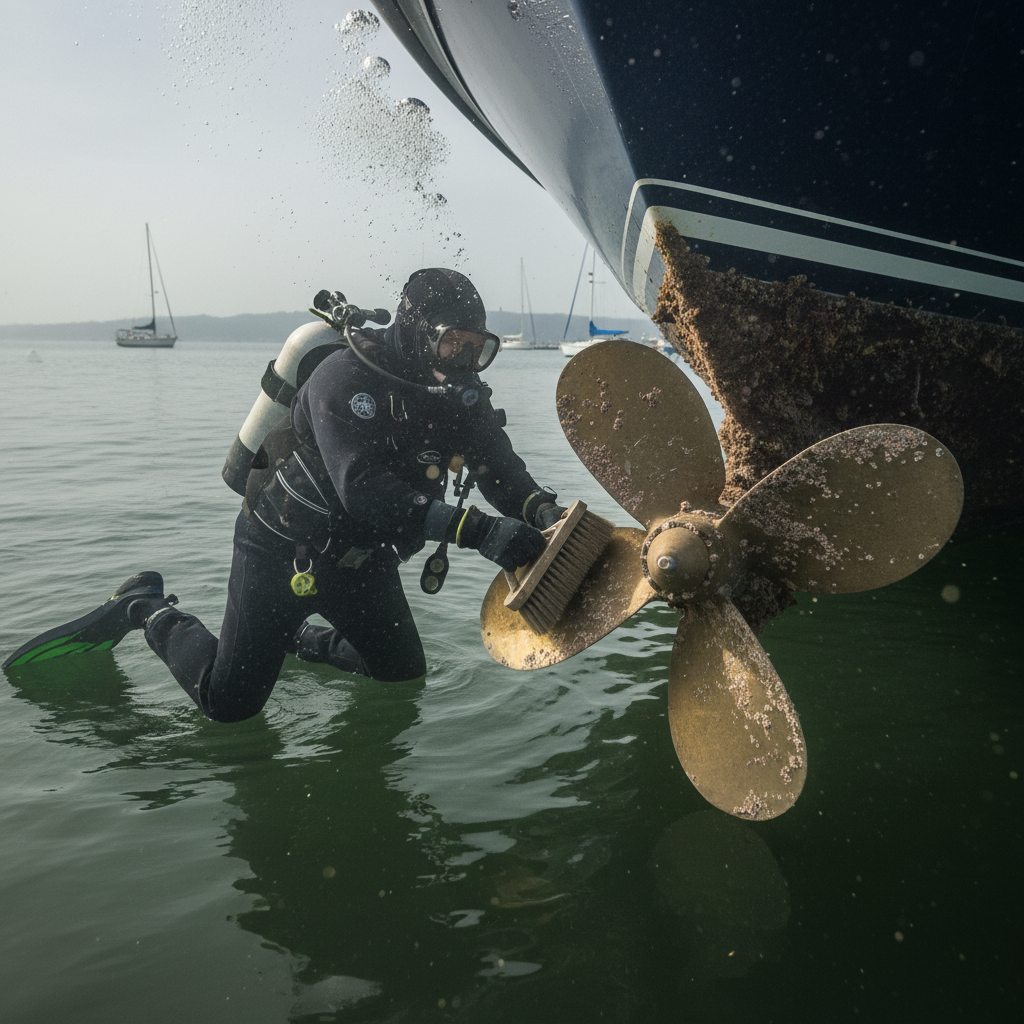
In our work with typical Bay Area mid-market clients, we’ve found that boats frequently crossing the San Pablo Bay face 15% more ‘impact fouling’ on the bow and running gear compared to boats that stay in the marina. The constant flow of nutrient-rich water acts as a buffet for marine organisms. This is why a static hull cleaning schedule is often insufficient for the active commuter.
Need a customized plan for your slip location? Explore our location-specific maintenance programs to find the right fit for your vessel’s needs.
Optimizing Your Hull Cleaning Schedule for 2025
Effective San Pablo Bay boating requires moving away from ‘set it and forget it’ mentalities toward a predictive maintenance model.
By using your fouling assessment framework, you can adjust your cleaning frequency based on the ‘Seasonal Biofouling Calendar’ we’ve developed for Northern California. For example, during the ‘Brackish Paradox’ months of late spring, focusing on slime removal can prevent the attachment of heavy calcium-based organisms later in the summer.
- Zinc & Corrosion Check: San Pablo Bay’s fluctuating conductivity can lead to faster zinc depletion. Always ensure your diver checks your anodes during every cleaning.
- Propeller Maintenance: Even a few barnacles on a prop can cause vibrations that damage seals and transmissions.
- Documentation: Keep a log of your cleanings and photo proofs. This is vital for the 2024 AIS (Aquatic Invasive Species) prevention mandates in California.
The real kicker? Utilizing a professional service that understands local conditions saves you more than just fuel; it preserves your asset’s value. If you’re managing multiple vessels or a small fleet, you might even look into tools like Ingest.blog, our internal AI content engine, to help document and share your maintenance journey with potential buyers or charter clients.
The Financial Reality of Biofouling
Let’s be honest: hull cleaning is often viewed as a ‘grudge purchase.’ But when you look at the data from the California State Lands Commission, the cost of non-compliance and the drag-induced fuel tax far outweigh the cost of a monthly dive.
A typical Bay Area services client recently discovered that by increasing their cleaning frequency by just 20% during the summer peak, they reduced their annual fuel spend by nearly 12%. That is a massive ROI for a simple service. This is the power of a strategic fouling assessment framework.
Why Professional Inspections Matter
You wouldn’t fly a plane without a pre-flight check, so why run a boat across the Bay with a fouled bottom? A professional dive team doesn’t just clean; they act as your eyes underwater. We look for stray current corrosion, damaged through-hulls, and failing coatings that you simply cannot see from the dock.
Ready to protect your investment and optimize your performance? Get a free quote from our insured dive team and get the before-and-after proof you deserve.
FAQs
How does the ‘Brackish Paradox’ affect my boat in Vallejo?
The mixture of fresh and salt water in San Pablo Bay creates a unique environment where both freshwater and saltwater organisms can survive. This often leads to a more diverse and aggressive ‘super-fouling’ layer that requires a more frequent hull cleaning schedule than boats kept in the purely saltwater environment of the Central Bay.
Will frequent cleaning wear out my bottom paint?
If done correctly with soft-touch tools, frequent cleaning actually extends the life of your paint by preventing hard growth from rooting into the coating. Our fouling assessment framework emphasizes removing slime before it hardens, which requires much less abrasive force and preserves your antifouling layer longer.
How do I know if my fuel efficiency is dropping due to fouling?
The easiest way to track this is by monitoring your speed at a set RPM in calm water. If you notice you’re losing 10-15% of your top-end speed or your engine is working harder (higher fuel flow meter readings) to maintain cruise speed, it’s a definitive sign that your fouling assessment framework needs an update.
Are there specific California regulations I need to worry about?
Yes, the California State Lands Commission (SLC) and the 2024 AIS mandates require vessel owners to manage biofouling to prevent the spread of invasive species. Keeping detailed records and photo proof of your hull cleaning schedule ensures you remain compliant with state environmental laws while protecting the Bay ecosystem.