📋 Table of Contents
According to the U.S. Department of Energy, cavitation is a high-velocity phenomenon that can erode even the toughest marine alloys in a matter of months. For owners at the Martinez Marina, this isn’t just a physics lesson; it is a silent thief of speed and fuel efficiency that requires a strategic cavitation burn recovery plan.
Key Takeaways:
- Identify early-stage pitting before structural failure occurs.
- Understand how Carquinez Strait salinity accelerates metal erosion.
- Implement a 3-step framework for performance restoration and ROI.
- Document metal loss for insurance and long-term resale value.
The Martinez Factor: Why Your Propeller is Under Attack
The Carquinez Strait is a unique hydrologic environment where the fresh water of the Delta meets the salt of the Bay, creating a brackish mix that is notoriously aggressive toward underwater metals. What most boaters miss is that this high-sediment flow acts like liquid sandpaper when combined with micro-bubbles from cavitation.
Here’s the thing: cavitation isn’t just about “bubbles.” It occurs when water pressure drops below its vapor pressure, causing bubbles to collapse against the metal surface with enough force to literally chip away microscopic pieces of your propeller. In a typical Bay Area mid-market powerboat, this can lead to a 15% loss in fuel efficiency before the owner even notices a vibration.
But wait—the salinity levels near Martinez and Benicia fluctuate wildly with the tides. This creates a “galvanic soup” that accelerates propeller metal loss. If you aren’t checking your sacrificial anodes monthly, the cavitation burns will find the weakest point in your alloy’s crystalline structure and dig in deep.
Step 1: Early-Stage Pitting Identification and Documentation
The real kicker is that by the time you feel a vibration at the helm, the damage is already structural. We teach our clients that Martinez marina maintenance starts with visual evidence, not just mechanical feel.
What we look for during an underwater inspection:
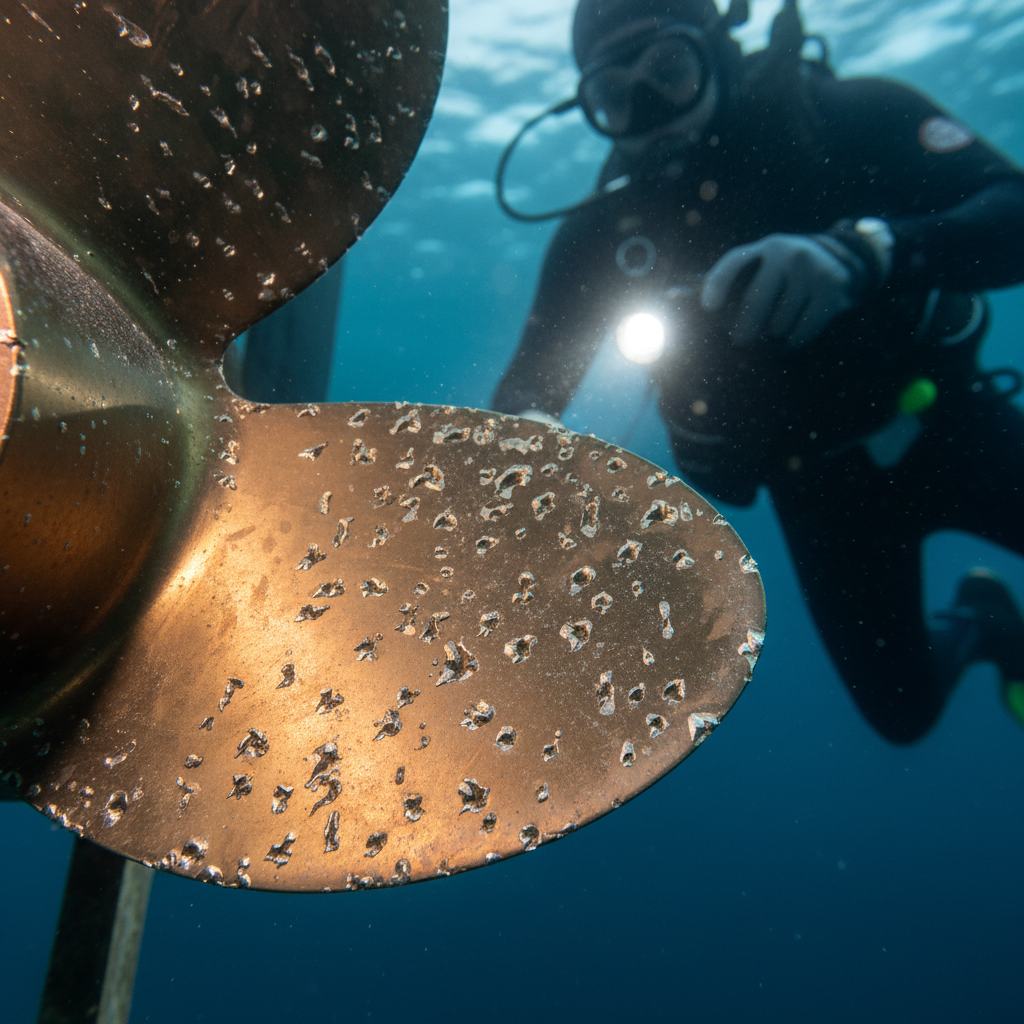
- Singeing: A dull, frosted appearance on the leading edge of the blade.
- Pitting: Small, pin-sized holes that look like a localized acne breakout on the metal.
- Cratering: Deep, jagged valleys where the metal has been fully evacuated.
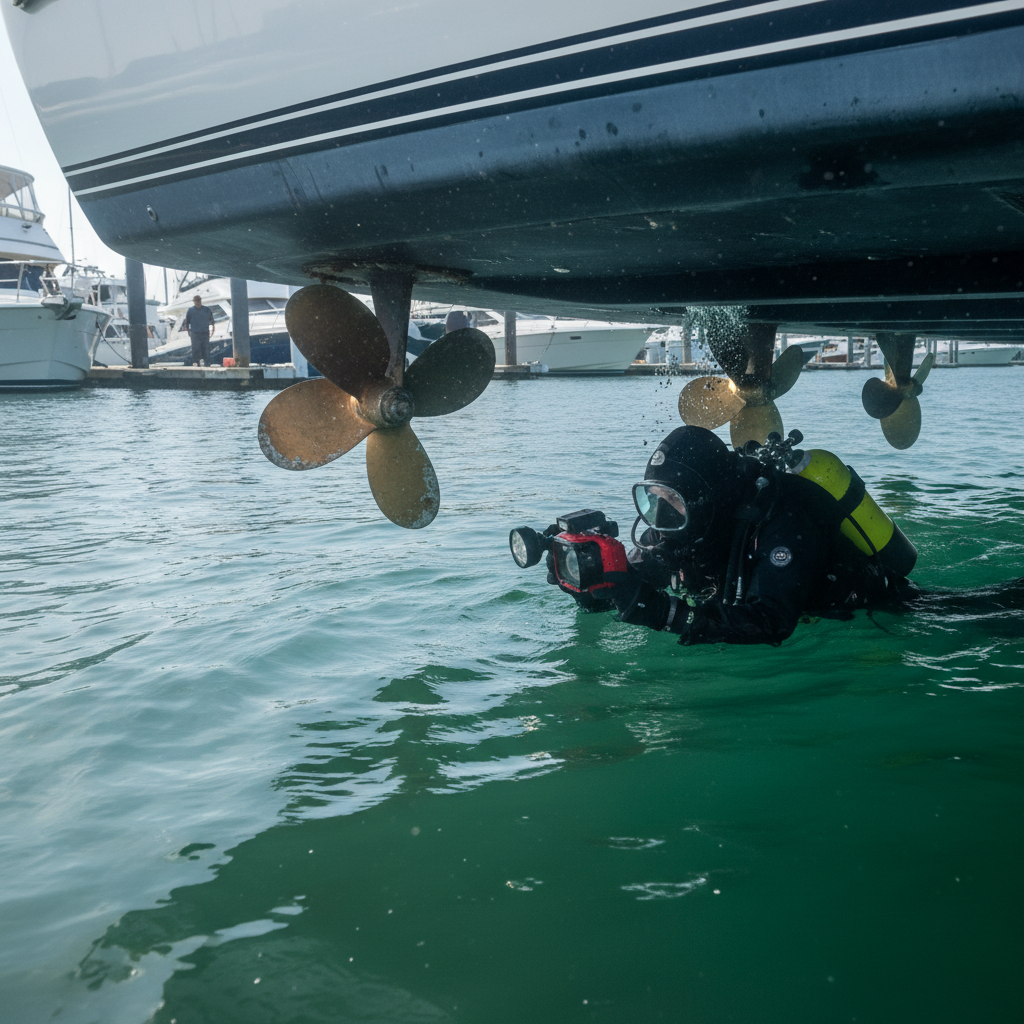
In our work with high-performance powerboaters, we’ve found that documenting this metal loss with high-resolution photography is the only way to secure an insurance claim for “hidden damage.” We provide before-and-after photo proof on every service to ensure you have a paper trail of your boat’s health. If you suspect your boat is losing top-end speed, schedule a professional dive inspection to get the visual proof you need.
Step 2: Hydrodynamic Resurfacing and Stabilization
Most people think a cavitation burn recovery involves pulling the boat and sending the props to a shop, but early-stage restoration can often be managed in-water to prevent further decay. However, there is a contrarian truth you need to hear: standard marine epoxy almost always fails the cavitation stress test because it lacks the tensile strength to withstand the implosion forces of the bubbles.
Instead of a quick fix, we focus on underwater metal resurfacing using specialized resins that bond at a molecular level. This process involves:
- Mechanical cleaning to remove biofouling and oxidation layers.
- Precision sanding to smooth out the jagged edges of the pits (which cause more cavitation).
- Application of hydrodynamic fillers that restore the foil’s original shape.
| Feature | Untreated Cavitation | 360 Hull Recovery Framework |
|---|---|---|
| Fuel Efficiency | 10-15% Decrease | Restored to Baseline |
| Propeller Longevity | 2-3 Seasons | 5-8+ Seasons |
| Vibration Level | High (Bearing Damage Risk) | Smooth Operation |
Transitioning from a pitted surface to a polished one isn’t just about aesthetics; it’s about eliminating the turbulence that creates the “Hidden Tax” on your fuel dock bill. By restoring the marine propulsion efficiency, you’re saving money every time you run out to Suisun Bay.
Step 3: Post-Recovery Optimization and Anode Strategy
The real secret to long-term cavitation burn recovery isn’t the repair itself—it’s changing the environment that caused the burn in the first place. For Martinez boaters, this means a hyper-aggressive sacrificial anode strategy.
Because the Carquinez Strait has varying salinity, your zincs (or aluminums) might disappear faster than a boat docked in the deep salt of Sausalito. We recommend a “Propeller Audit” every 60 days. This ensures your sacrificial anode optimization is actually protecting the expensive alloys of your running gear rather than just sitting there looking pretty.
Need a professional eye on your running gear? Browse our propeller maintenance guides or call us to set up a recurring schedule that keeps your boat Delta-ready year-round.
Biofouling: The Silent Accelerator of Cavitation
According to the EPA’s Vessel General Permit guidelines, maintaining a clean hull is the first line of defense against invasive species and fuel waste. But for the powerboater, there’s a more immediate concern: barnacles on your prop blades create massive amounts of turbulence.
This turbulence triggers “induced cavitation.” Even a few small barnacles can change the water flow enough to start a new cavitation burn recovery cycle. By keeping the blades polished, you ensure the water stays laminated to the surface of the metal, preventing the pressure drops that lead to erosion.
ROI Analysis: Why Martinez Boaters Can’t Wait
A typical Bay Area mid-market client might spend $4,000 to $6,000 on new propellers if cavitation is left unchecked. In contrast, a proactive maintenance plan costs a fraction of that while paying for itself in fuel savings. When you factor in the high current transit from Suisun Bay to the Golden Gate, every bit of drag matters.
At 360 Hull Diving, we don’t just clean; we consult. We use our internal AI content engine, Ingest.blog, to track regional trends and environmental data, ensuring our Martinez clients get advice tailored to the specific salinity and silt conditions of the East Bay. We believe in transparency, which is why you get high-resolution photos of your running gear after every single dive.
Frequently Asked Questions
How do I know if I have a cavitation burn or just electrolysis?
Electrolysis (galvanic corrosion) usually appears as a uniform wasting of the metal or a pinkish hue on bronze props. A cavitation burn is highly localized, typically appearing on the outer third of the blade’s trailing edge or the center of the suction side, characterized by sharp, jagged pitting.
Can cavitation burns be repaired underwater at Martinez Marina?
Yes, early to mid-stage pitting can be stabilized and resurfaced underwater using specialized marine polymers. This prevents further metal loss and restores hydrodynamic flow. However, if the metal loss exceeds 20% of the blade thickness, we typically recommend a land-based prop shop for structural welding.
How often should I have my propeller inspected in the Carquinez Strait?
Due to the high sediment and varying salinity of the Carquinez Strait, we recommend a professional dive inspection every 2 to 3 months. This allows us to catch “micro-cavitation” before it turns into a costly repair and ensures your anodes are handling the brackish water load.
Will cleaning my hull more often prevent cavitation?
Absolutely. Biofouling on the propeller blades is one of the leading causes of induced cavitation. By maintaining a smooth, clean surface, you ensure the water flows as intended by the manufacturer, significantly reducing the risk of vapor bubble formation and subsequent metal erosion.
Don’t let a silent issue turn into a dry-dock disaster. The best time to start your cavitation burn recovery is before the next Delta run. Call 360 Hull Diving today or book your Martinez Marina inspection online to ensure your boat is performing at its peak.