
📋 Table of Contents
Navigating the waters near Sierra Point or the Brisbane Marina can become a stressful ordeal when your instrument cluster begins providing conflicting data. If you are experiencing Brisbane Marina speed loss, the culprit is rarely a mechanical engine failure, but rather the microscopic biofouling accumulating on your sensitive underwater sensors. For high-growth companies and luxury vessel owners, this data discrepancy represents more than just a nuisance; it is a significant threat to operational efficiency and fuel ROI.
Key Takeaways for Executive Boat Owners:
- Identify the Gap: A 15% discrepancy between Speed Through Water (STW) and Speed Over Ground (SOG) usually signals sensor lag.
- Local Environmental Impact: Brisbane’s unique brackish water accelerates barnacle growth on transducer faces.
- Financial Impact: Fouled sensors cause engine overcompensation, leading to a 10-12% increase in fuel consumption.
- The Solution: Regular, documented transducer cleaning in Brisbane Marina ensures data integrity.
The Science Behind Brisbane Marina Speed Loss and Sensor Lag
Strategic vessel management requires an understanding of why digital displays fail. In the Bay Area, specifically within the nutrient-rich runoff zones of the Brisbane River, marine organisms thrive on the heat-emitting surfaces of active transducers. This phenomenon, known as the ‘Ghost Drag’ effect, tricks your onboard computer into thinking the vessel is moving slower through the water than it actually is.
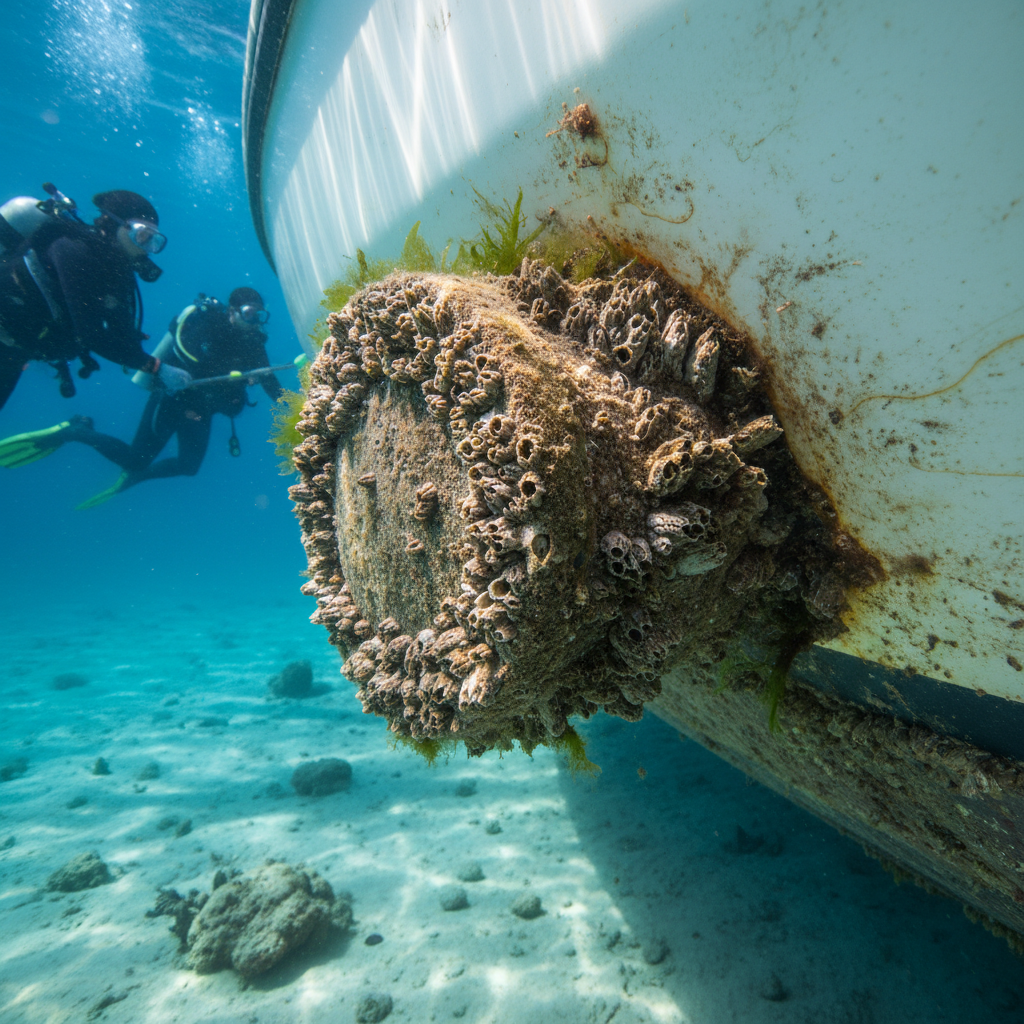
When biofouling occurs, the paddlewheel sensors or ultrasonic pulses are physically obstructed. Consequently, the Engine Control Unit (ECU) may increase RPMs to reach a perceived target speed, resulting in unnecessary engine wear. According to research by the Maritime Administration, even minor surface roughness can drastically alter hydrodynamic performance.
Why Brisbane’s Brackish Water is Unique
- Salinity Fluctuations: Heavy rainfall creates a freshwater lens that triggers rapid defensive growth in local barnacle species.
- Silt Accumulation: Brisbane’s river silt acts as a substrate, allowing marine growth to anchor more firmly to plastic transducer housings.
- Thermal Attraction: Modern CHIRP transducers generate heat, which acts as a beacon for colonizing larvae in the marina.
Identifying the Symptoms of Underwater Electronics Fouling
For the sophisticated mariner, diagnosing Brisbane Marina speed loss involves more than just a visual inspection. You must analyze the delta between your GPS-derived speed and your hull-mounted sensor data. If your SOG is 20 knots but your STW shows 16 knots in neutral current, you are witnessing the direct impact of underwater electronics fouling.
Furthermore, depth sounders often begin to ‘lose bottom’ or show erratic readings at high speeds when micro-growth creates turbulence across the transducer face. This turbulence introduces air bubbles (cavitation), which reflect sonar signals before they can reach the seabed. Maintaining these surfaces is a critical component of marine sensor maintenance.
| Fouling Level | Speed Discrepancy | Fuel Penalty | Recommended Action |
|---|---|---|---|
| Micro-slime | 2-3% Lag | 1-2% Increase | Wipe down / Monthly dive |
| Calcareous (Barnacles) | 10-15% Lag | 8-12% Increase | Professional scraping & polishing |
| Heavy Growth | 30%+ Lag | 20%+ Increase | Immediate in-water service |
Diagnostic Checklist for Owners
- Compare STW vs. SOG in a slack tide environment.
- Check for “erratic” depth jumping during acceleration.
- Monitor fuel flow meters for unexplained spikes in consumption.
- Review before-and-after photo proof from your last hull cleaning service.
Need an immediate diagnosis? If you suspect your sensors are compromising your navigation, schedule a professional in-water inspection with 360 Hull Diving today to get clear photo evidence of your sensor’s condition.
The High Cost of Neglecting Transducer Cleaning in Brisbane Marina
Operational efficiency is a priority for any Series A-C funded startup founder or executive boat owner. Neglecting Brisbane Marina speed loss issues leads to a compounding financial penalty. When sensors are fouled, the automated trim and throttle systems cannot optimize for the true plane of the vessel.
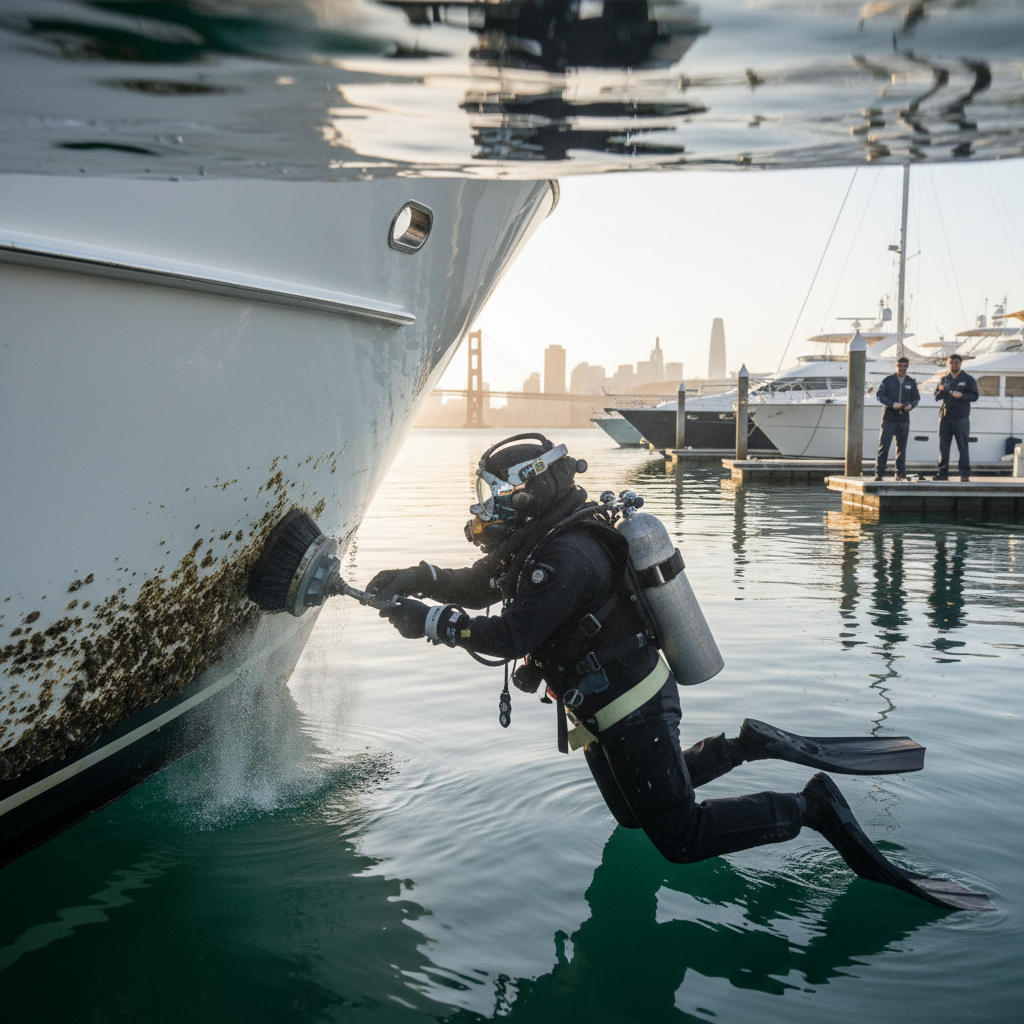
Moreover, the long-term damage to the transducer’s piezoelectric elements can be permanent. Barnacle glue contains acidic proteins that can etch the sensitive plastic faces of expensive Garmin or Raymarine hardware. Regular underwater hull cleaning in Brisbane is an investment in asset longevity, not just an aesthetic choice.
ROI of Professional Maintenance
- Fuel Savings: Restoring sensor accuracy typically pays for the dive service within two long-distance trips.
- Safety: Accurate depth readings are non-negotiable when navigating the shifting shoals of Moreton Bay.
- Resale Value: Documented maintenance logs with photo proof increase the valuation of high-end vessels.
Advanced Solutions for Brisbane Marina Speed Loss
As of 2024, the industry is shifting toward data-driven maintenance. At 360 Hull Diving, we utilize high-definition underwater photography to provide Brisbane residents with a “Digital Twin” perspective of their running gear. This transparency ensures you aren’t just paying for a service, but for verified performance restoration.
Transitioning to ultrasonic antifouling systems is a trending topic, but even these systems require manual intervention. According to the EPA’s guidance on vessel maintenance, physical removal of biofouling remains the most effective method for maintaining sensor sensitivity in high-fouling regions like the Bay Area.
Strategic Maintenance Protocols
- Monthly Inspections: Especially during the high-growth summer months in Brisbane.
- Specialized Tooling: Using non-abrasive pads for transducers to avoid scratching the acoustic window.
- Zinc Coordination: Ensuring your sacrificial anodes are protecting the metal housings around your sensors.
Don’t let sensor lag ruin your next trip to the Farallon Islands or Moreton Bay. Our team provides the most reliable underwater electronics fouling solutions in Brisbane. Call us today to restore your vessel’s performance.
The Environmental Impact of Brisbane Marine Growth Cycles
The Brisbane Marina speed loss phenomenon is seasonal. During the transition from winter to spring, the influx of nutrients from the Brisbane River creates a localized bloom. This biological surge targets stationary vessels, making the Brisbane Marina a high-intensity fouling zone compared to the colder, deeper waters of the central San Francisco Bay.
By understanding these cycles, owners can schedule their marine sensor maintenance proactively. Waiting for a total sensor failure usually results in higher repair costs and potential grounding risks due to inaccurate depth telemetry.
FAQs: Troubleshooting Brisbane Marina Speed Loss
How do I know if my speed loss is hull fouling or engine trouble?
The most reliable method is to check your RPM vs. SOG (Speed Over Ground). If your engine is reaching its rated RPM but the vessel is slow, it is hull or sensor fouling. If the engine fails to reach rated RPM, you likely have a mechanical or propeller pitch issue. Professional divers can provide photo proof to confirm.
Can I clean my own transducer at the Brisbane Marina?
While possible, it is risky. Transducer faces are made of specialized plastics that can be easily scratched by standard hull scrapers. Scratches create microscopic grooves that actually accelerate future barnacle growth. Professional divers use specific non-abrasive materials to preserve the acoustic integrity of the sensor.
How often should I schedule transducer cleaning in Brisbane?
For vessels docked at Brisbane Marina or Sierra Point, a 3-4 week cleaning cycle is recommended. Due to the brackish water and high nutrient levels, biofouling can colonize a clean surface in as little as 14 days during the peak summer season.
Will fouled sensors affect my autopilot performance?
Yes. Many modern autopilot systems use Speed Through Water (STW) to calculate the necessary rudder gain. If your sensors are lagging, the autopilot may over-correct, leading to a “snaking” path and increased wear on your steering actuators. Keeping sensors clean is vital for automated navigation accuracy.
Conclusion: Take Control of Your Vessel’s Performance
Addressing Brisbane Marina speed loss is not just about cleaning a boat; it is about ensuring the data you rely on for navigation and safety is 100% accurate. For the discerning boat owner in the Bay Area, 360 Hull Diving offers the transparency and expertise required to maintain peak performance. From the South San Francisco shoreline to the heart of Brisbane, our insured dive team ensures your sensors and hull are ready for any journey. Contact us today for a free estimate and photo-documented hull inspection.