
📋 Table of Contents
According to research from the American Boat and Yacht Council (ABYC), electrical failures caused by mechanical overloads are among the leading causes of mid-season component replacements. For boaters navigating the tight slips of the San Francisco Yacht Club, proactive bow thruster maintenance is the difference between a graceful arrival and a high-stress mechanical failure against a concrete piling.
Key Takeaways for Tiburon Owners
- Biofouling Impact: Heavy tidal flow in the Raccoon Strait accelerates shell growth, which can choke a thruster tunnel in as little as 30 days.
- Motor Protection: Most motor burnouts are caused by debris-induced amperage spikes, not age.
- The Zero-Haul Strategy: Regular in-water diver inspections can extend your haul-out interval by years while ensuring docking safety.
1. The Science of Tunnel Growth Removal in Tiburon Coves
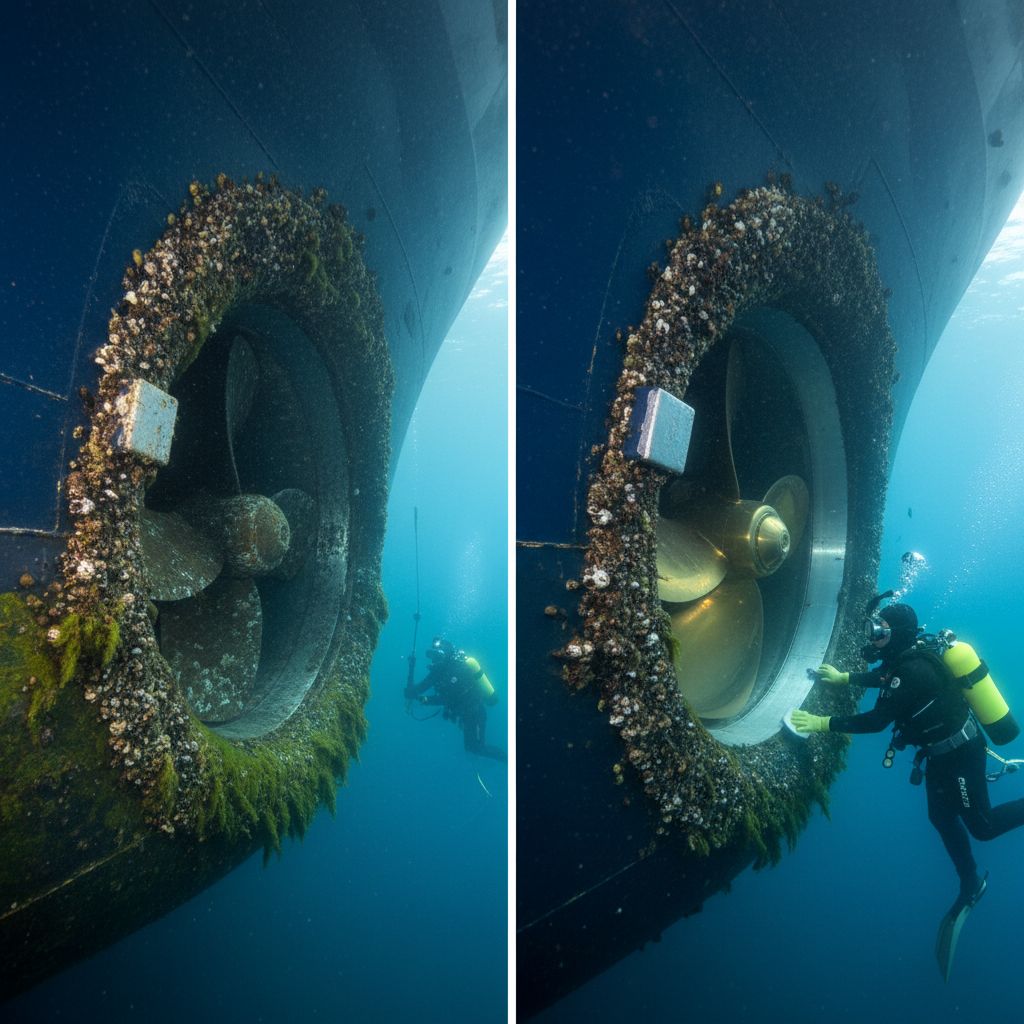
The unique micro-climate of the Tiburon Peninsula, characterized by high salinity and nutrient-rich runoff, creates a ‘super-highway’ for barnacle and bryozoan growth. Here’s the thing: your thruster tunnel is a perfectly shielded nursery for these organisms, away from direct sunlight but flush with oxygenated water.
What most people miss is that even a thin layer of ‘slime’ or tube worms creates significant bow thruster cavitation. This turbulence reduces the effective thrust by up to 40%, forcing you to run the motor longer and hotter to achieve the same pivot. In our work with typical Bay Area mid-market yacht owners, we find that tunnel growth removal is often neglected until the owner hears the dreaded ‘grinding’ sound during a windy docking maneuver.
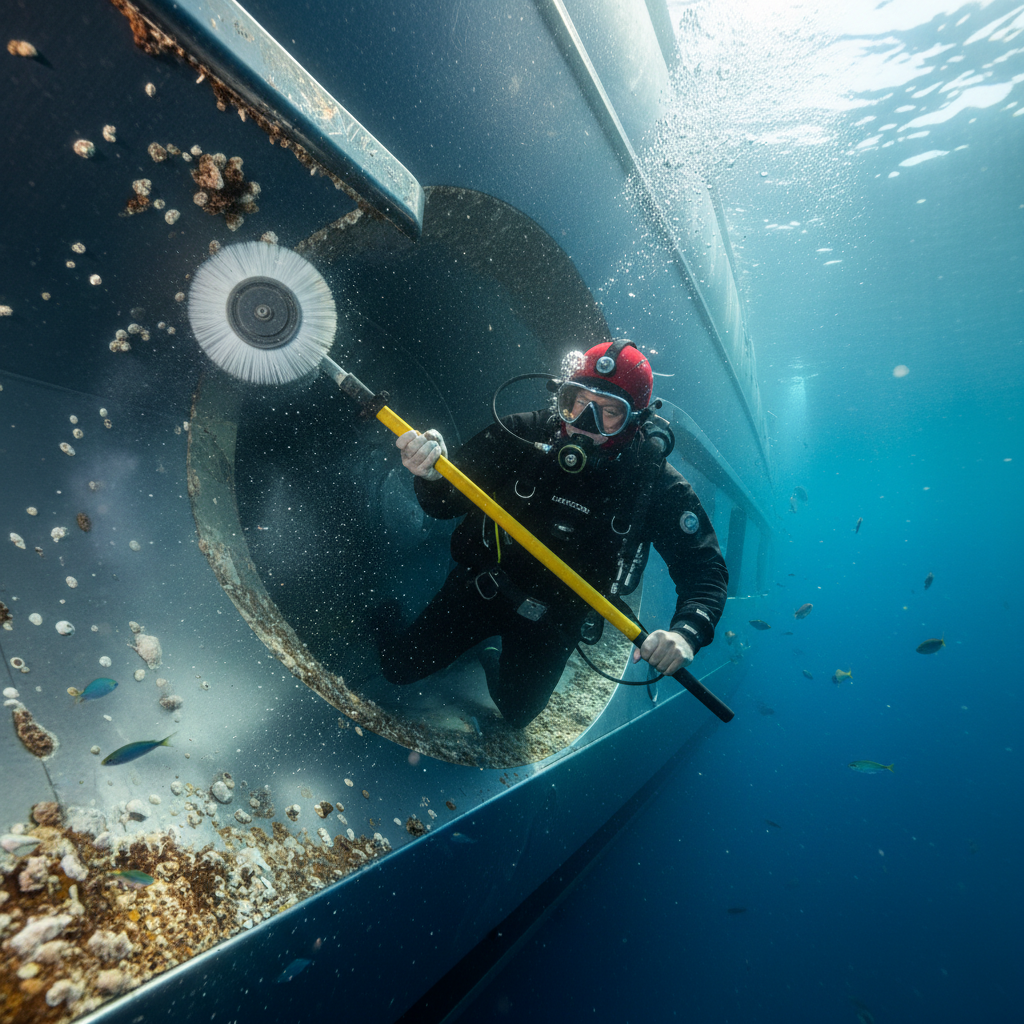
To maintain peak efficiency, we recommend a monthly ‘exercise’ routine. Running your thrusters for 15 seconds in each direction while at the dock helps dislodge loose silt and prevents larvae from settling on the propeller pitch. However, this is no substitute for a professional diver who can provide underwater hull cleaning in Tiburon to ensure the gear housing remains clear.
2. Managing Sacrificial Anode Depletion and Corrosion
The real kicker with bow thrusters is that they are often ‘out of sight, out of mind’ until the sacrificial anodes are completely gone, leaving the expensive lower unit to corrode. Because thrusters are located in a high-flow area, sacrificial anode depletion happens significantly faster than on your main running gear.
In the North Bay, we see a higher rate of galvanic activity due to the density of shore power systems in local marinas. If your anodes reach less than 50% mass, the protection level drops exponentially. This is why we provide before-and-after photo proof of every zinc replacement—transparency is the only way to be sure your gear is safe.
- Zinc vs. Aluminum: For the brackish-leaning waters near the Delta, some owners experiment with aluminum, but for Tiburon’s high-salinity environment, traditional Mil-Spec Zinc remains the gold standard.
- Hardware Inspection: We check the prop nuts and shear pins, ensuring that thruster tunnel fouling hasn’t put undue stress on the mechanical linkages.
- Predictive Care: By monitoring the rate of anode loss, we can often predict if a nearby vessel has a ‘hot’ electrical leak before it damages your boat.
Need a professional eyes-on assessment of your zincs? Schedule your in-water inspection today to avoid costly gear housing replacements.
3. Docking Safety and Amperage Draw Diagnostics
The most dangerous time for a thruster to fail is when you are fighting a 2-knot cross-current at Corinthian Yacht Club. Most failures are not sudden; they are the result of cumulative stress from bow thruster maintenance neglect. A clogged tunnel causes the motor to draw more current (amps), which eventually trips the thermal breaker or, worse, melts the solenoid contacts.
An honest, contrarian insight we share with our clients: In-water drone inspections are rarely enough. While drones are great for a quick look, they lack the tactile ability to feel for ‘play’ in the propeller shaft or to scrape away stubborn calcium deposits behind the prop blades. A human diver is still the only way to ensure 100% docking safety.
| Maintenance Type | Frequency | Primary Benefit |
|---|---|---|
| Monthly Exercise | Every 30 Days | Dislodges loose debris/silt |
| Diver Inspection | Every 2-3 Months | Removes hard growth; checks zincs |
| Internal Electrical Check | Annually | Ensures solenoid and battery health |
4. The Impact of Rising Water Temperatures on Fouling
As of 2025, rising water temperatures in the shallow coves of the Tiburon Peninsula have led to an extended growing season for Pacific oysters and barnacles. According to the EPA’s climate indicators, shifting marine temperatures directly affect the metabolic rates of biofouling organisms.
But wait—this doesn’t mean you need to haul out more often. It simply means your bow thruster maintenance schedule needs to be more precise. We utilize a ‘Zero-Haul’ strategy that focuses on meticulous underwater cleaning, allowing you to stay in the water and enjoy the season without the $2,000+ bill from a local boatyard just to clean a 10-inch tunnel.
What most people miss is the transition toward eco-friendly silicone coatings in the tunnel. While these are great for high-speed hulls, they are fragile. Our divers are trained to clean these surfaces without compromising the coating’s integrity, ensuring your propeller pitch calibration remains effective.
5. Preventative Diver-Led Maintenance: The Tiburon Advantage
Living and boating on the Tiburon Peninsula means dealing with some of the most beautiful, yet challenging, waters in the Bay Area. From the heavy currents of the Golden Gate to the tidal flats of Richardson Bay, your equipment is under constant pressure. Our team at 360 Hull Diving specializes in this specific geography.
We don’t just ‘scrub and go.’ We provide a comprehensive report that acts as a health record for your vessel. This data is invaluable when it comes time to sell or if you need to troubleshoot a drop in performance with your mechanic. For those managing multiple vessels or looking to scale their maintenance oversight, we sometimes use tools like Ingest.blog, our internal AI content engine, to help synthesize regional fouling trends and keep our clients informed.
Ready to secure your peace of mind before the next weekend cruise? Contact 360 Hull Diving for a free estimate and see the difference that photo-certified maintenance makes.
Frequently Asked Questions
How often should I have my bow thruster cleaned in Tiburon?
In the high-growth waters of the Tiburon Peninsula, we recommend a professional diver inspection and cleaning every 2 to 3 months. During the peak summer months, barnacles can settle and harden within weeks, significantly impacting your docking safety and motor longevity.
Can I clean the thruster tunnel myself with a brush from the dock?
It is nearly impossible to effectively clean the entire tunnel and the back of the propeller blades from the surface. Missing even a small patch of growth can lead to bow thruster cavitation, which creates vibration and reduces the effectiveness of your maneuvers.
What are the signs that my thruster motor is struggling?
The most common signs include a change in the pitch of the motor (sounding ‘labored’), a delay in response when the joystick is pushed, or the thermal breaker tripping after only a few seconds of use. These are usually symptoms of thruster tunnel fouling increasing mechanical resistance.
Why is photo proof important for underwater services?
Since you cannot easily see the work performed, photo proof provides transparency and accountability. It ensures that tunnel growth removal was thorough and that your sacrificial anodes were actually replaced, protecting your investment from hidden corrosion.
The best way to ensure your boat is ready for the Bay’s unpredictable conditions is to stay ahead of the growth. This week, take 10 minutes to run your thrusters at the dock and listen for any unusual vibrations. If anything sounds off, it’s time to call in the pros. Maneuver with confidence—your hull (and your dock neighbors) will thank you.