📋 Table of Contents
According to the Professional Association of Diving Instructors (PADI) and marine engineering standards, over 50% of thruster failures are caused by preventable marine growth or neglected cathodic protection. For boat owners navigating the narrow channels of the Port of Redwood City, bow thruster maintenance isn’t just a luxury—it is the difference between a graceful docking at Westpoint Marina and a costly insurance claim against a neighboring slip.
The South Bay presents a unique challenge for underwater propulsion systems. Unlike the clear, high-flow waters of the Central Bay near Tiburon, the Port of Redwood City is characterized by high silt content and brackish water transitions. These conditions accelerate bio-fouling and can mask mechanical issues until your joystick becomes unresponsive. As a locally rooted dive team, we have developed a framework to keep your vessel maneuverable without the $2,000+ price tag of an emergency haul-out.
Step 1: Bio-Growth Assessment and Precision Cleaning
The efficiency of your thruster drops by nearly 30% when even a thin layer of slime or barnacles accumulates on the propeller blades. What most people miss is that the tunnel itself acts as a protected cove for invasive species, which thrive in the nutrient-rich runoff typical of the South Bay.
- Propeller Blade Polishing: We remove calcareous growth to restore the original foil shape, reducing cavitation and vibration.
- Tunnel Interior Scouring: Ensuring the tunnel walls are smooth prevents turbulent water flow, which can lead to localized pitting.
- Grill and Intake Clearing: Blocked grates force the motor to work harder, leading to blown fuses or thermal shutdowns during critical maneuvers.
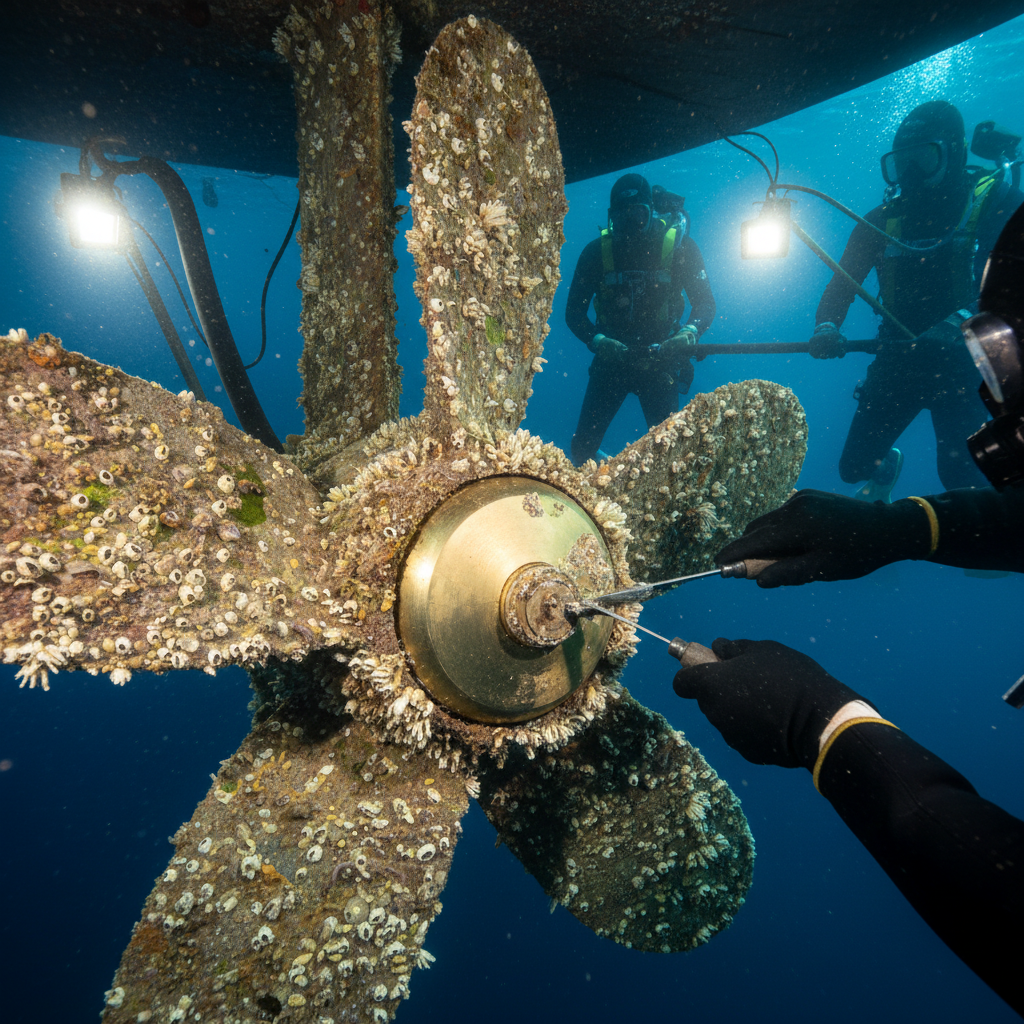
Here’s the thing: aggressive cleaning can actually do more harm than good if you’re using the wrong tools. We use specialized non-abrasive pads to protect the expensive anti-fouling coatings often found on high-end thruster units. For those interested in the environmental impact, the EPA’s Vessel General Permit guidelines highlight the importance of managing hull discharge, especially in sensitive habitats like the Redwood Creek estuary.
Step 2: Tunnel Thruster Inspection and Mechanical Integrity
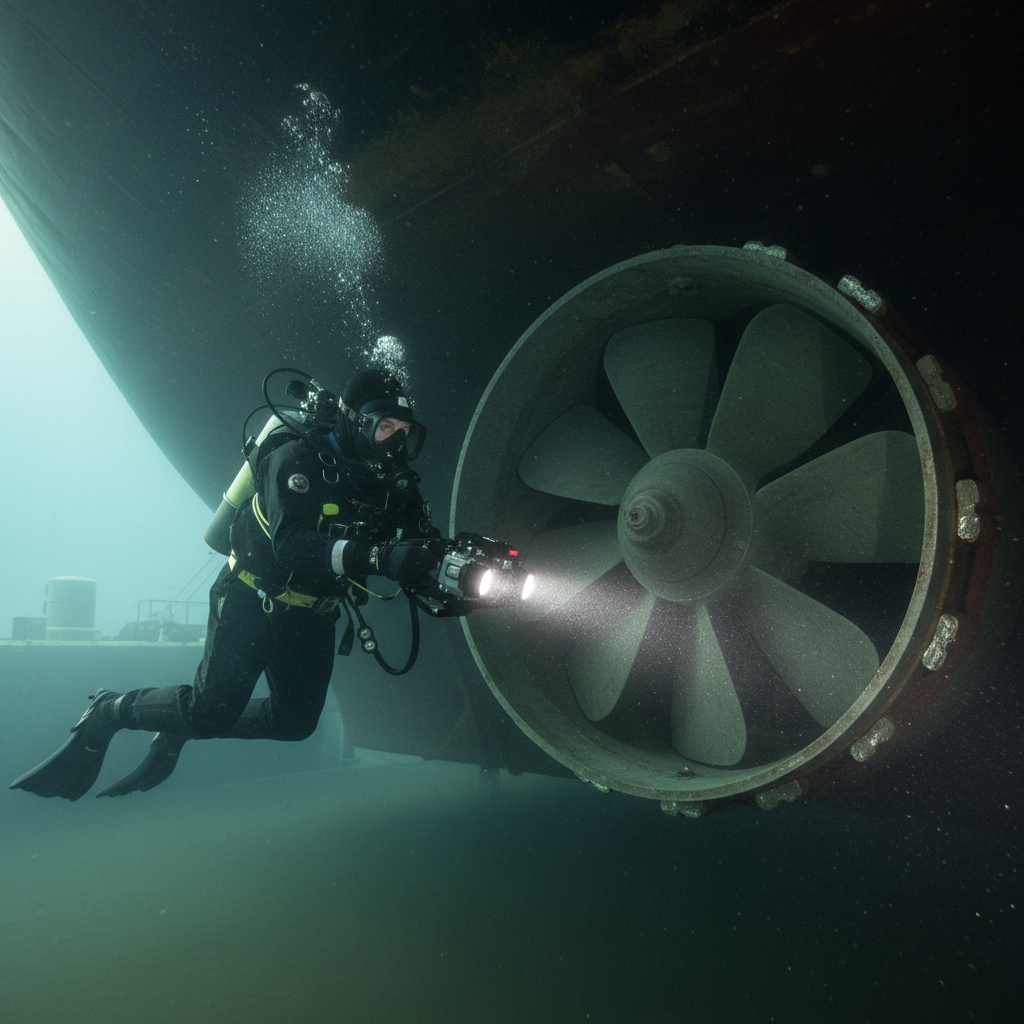
A visual check is only the surface; a true tunnel thruster inspection requires a technical breakdown of the gear housing and seals. We have seen cases where a simple fishing line wrap, common in the South Bay, has compromised a gear oil seal, leading to total unit failure within weeks.
Our mechanical checklist includes:
- Seal Integrity Verification: Checking for any signs of oil weeping or milkiness that indicates water intrusion into the gear leg.
- Propeller Attachment: Ensuring the shear pin or nyloc nut is torqued to spec and hasn’t suffered from crevice corrosion.
- Structural Soundness: Inspecting the tunnel-to-hull joints for stress cracks or delamination caused by the high torque of modern electric thrusters.
The real kicker? Most owners don’t realize their gear oil is being contaminated until the thruster starts making a high-pitched whine. By then, the internal gears are likely toast. In our work with recreational boat owners at Westpoint and Peninsula Yacht Club, we provide before-and-after photo proof so you can see the condition of your seals without ever leaving the dock. You can schedule a detailed inspection to catch these issues before they escalate.
Step 3: Advanced Cathodic Protection and Anode Replacement
The brackish water of the Port of Redwood City acts as a powerful electrolyte, making bow thruster anode replacement your primary defense against galvanic corrosion. While many traditionalists stick to zinc, we often recommend high-performance aluminum alloys for the South Bay’s specific salinity levels.
| Anode Material | Best Environment | Longevity in Redwood City |
|---|---|---|
| Zinc | Saltwater only | 3-4 Months |
| Aluminum | Salt & Brackish | 6-8 Months |
| Magnesium | Freshwater only | Not Recommended |
But wait—simply slapping on a new anode isn’t enough. We ensure the contact surface is ground to bright metal, providing the low-resistance path required for the anode to sacrifice itself effectively. This is a critical part of any comprehensive underwater propulsion service. Without proper contact, your expensive bronze gear housing becomes the target of corrosion instead of the $40 anode.
Navigating Redwood City’s Unique Marine Environment
Redwood Creek requires a different maintenance schedule than the Central Bay due to the massive influx of sediment and nutrients. A typical Bay Area mid-market vessel owner might get away with bi-annual checks in Sausalito, but in the South Bay, quarterly inspections are the gold standard for reliability.
What most people miss is the impact of post-storm debris. Runoff from the Santa Cruz Mountains often carries organic matter that settles into thruster tunnels. If left to rot, this creates an acidic micro-environment that can eat through coatings. Integrating your thruster care with regular underwater hull cleaning in Redwood City ensures these deposits are cleared before damage occurs.
Ready to ensure your next cruise is stress-free? Our team provides the transparency you need with photographic evidence of every service. Contact 360 Hull Diving today for a specialized thruster assessment.
The ROI of Preventative Underwater Maintenance
Investing in regular bow thruster maintenance provides a massive return on investment by extending the life of your hardware and preventing emergency haul-outs. A haul-out at a local yard can easily cost thousands once you factor in the lift fee, daily storage, and labor—not to mention the weeks of lost cruising time.
Furthermore, a clean thruster improves fuel efficiency. While the thruster isn’t used for propulsion, a fouled tunnel creates significant drag while underway. According to research on hydrodynamics from sources like ScienceDirect, even minor hull irregularities can increase fuel consumption by 5-10%. By keeping your tunnel and propellers smooth, you’re saving money at the fuel dock every time you head out toward the San Mateo Bridge.
Redwood City Compliance and Eco-Friendly Standards
As of 2025, environmental regulations in the South Bay have tightened. We utilize “Zero-Discharge” cleaning techniques where possible, ensuring that we aren’t releasing high concentrations of copper or heavy metals into the Port of Redwood City’s waters. This keeps you compliant with local marina rules and protects the delicate ecosystem of the Don Edwards San Francisco Bay National Wildlife Refuge. For those managing multiple vessels, using a system like 360 Hull Diving combined with our internal AI content engine, Ingest.blog, can help keep your maintenance logs and community updates streamlined and professional.
Key Takeaways for Redwood City Boat Owners
- Schedule Quarterly: The silt and nutrients in the South Bay necessitate more frequent cleaning than other parts of the Bay.
- Swap to Aluminum: Aluminum anodes offer superior protection in the brackish transitions of Redwood Creek compared to traditional zinc.
- Demand Photos: Never pay for underwater service without seeing the before-and-after condition of your gear seals and propellers.
Don’t wait for your thruster to fail when you need it most. Whether you are docked at Redwood Landing or Westpoint, our insured team is ready to provide the expert care your vessel deserves. Get your free estimate now and experience the 360 Hull Diving difference.
Frequently Asked Questions
How often should I perform bow thruster maintenance in Redwood City?
Due to the high silt and nutrient levels in the South Bay, we recommend a professional inspection and cleaning every 3 to 4 months. This frequency prevents hard growth from seizing the propeller and allows for timely anode replacement before galvanic corrosion damages the gear housing.
Can I use zinc anodes in the Port of Redwood City?
While zinc is standard for saltwater, the brackish water in Redwood City often causes zinc anodes to develop a “crust” that stops them from working. Aluminum anodes are a much more reliable choice for the fluctuating salinity levels found in the South Bay marinas.
What are the signs that my bow thruster needs immediate service?
Common warning signs include a significant increase in vibration, a high-pitched whining noise (indicating gear wear), or a noticeable delay in response time. If you see a drop in thrust power, it is likely due to heavy bio-fouling within the tunnel or on the blades.
Is in-water thruster repair possible, or do I need to haul out?
Many common issues, such as anode replacement, propeller cleaning, and seal inspections, can be performed in-water by our dive team. However, major mechanical failures or gear-case replacements usually require a haul-out at a shipyard to ensure a dry, controlled environment for internal repairs.