📋 Table of Contents
According to research published by the Journal of Marine Science and Engineering, cavitation erosion can degrade propulsion efficiency by up to 15% before a captain even feels a vibration. For boat owners at Loch Lomond Marina, this isn’t just a theoretical physics problem; it is a direct threat to your vessel’s maneuverability in the tight fairways of San Rafael.
Understanding bow thruster cavitation is the difference between a seamless docking maneuver and an embarrassing, expensive crunch against the dock. Here’s the thing: those tiny bubbles are actually high-pressure implosions that strike your blades with the force of a microscopic sledgehammer. In the brackish, sediment-heavy waters of San Rafael, this process often accelerates due to the unique mineral composition found in the North Bay.
Key Takeaways for San Rafael Boat Owners
- Cavitation is a physical phenomenon where low pressure creates vapor bubbles that implode and erode metal.
- Loch Lomond’s specific silt levels act as an abrasive, speeding up thruster blade pitting.
- A professional underwater thruster inspection with photo proof is the only way to catch early-stage damage.
- Spring is the critical window for San Rafael boat maintenance to ensure summer reliability.
1. The Science of the Silent Killer: How Cavitation Erodes Metal
Most boaters believe cavitation is just “noise,” but the reality is much more destructive. When your thruster blades spin, areas of extreme low pressure cause the water to vaporize into microscopic bubbles. What most people miss: it is the collapse of these bubbles, not their formation, that creates the damage.
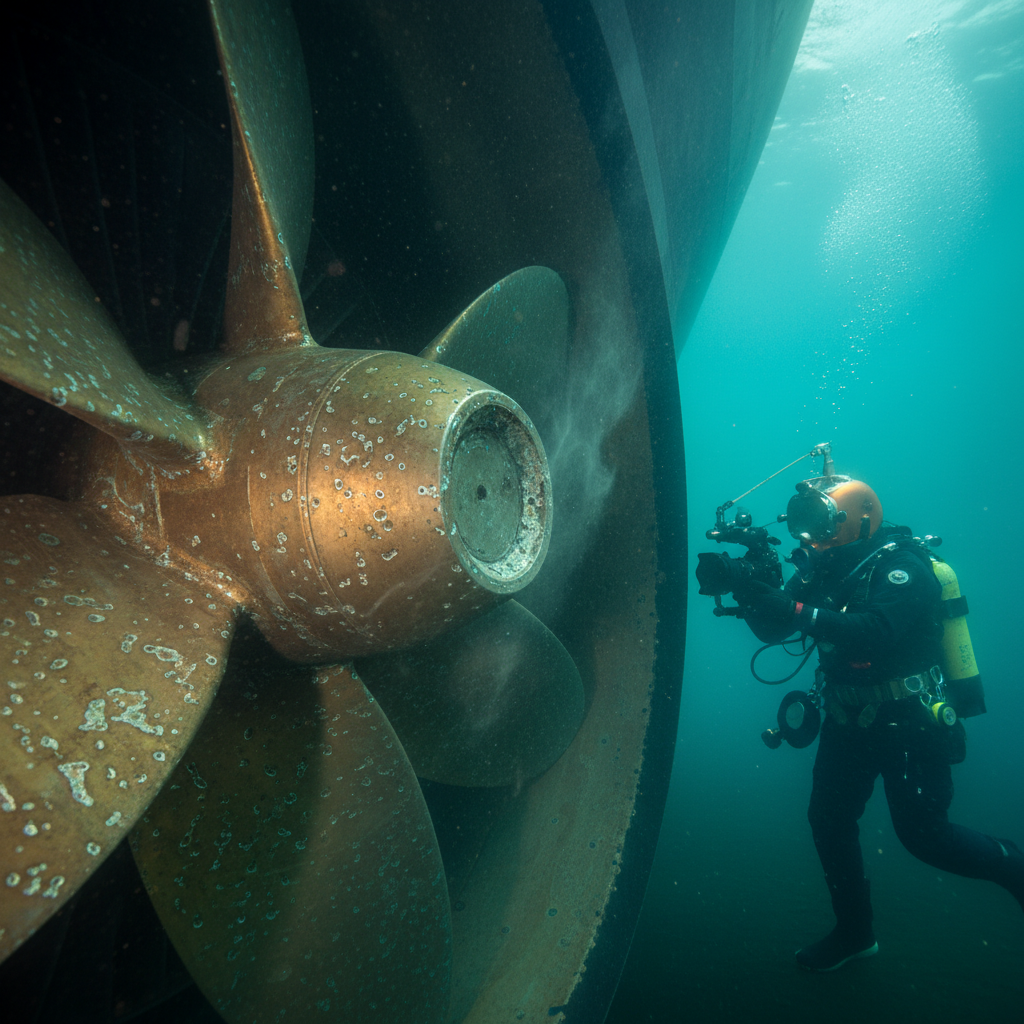
As these bubbles move into higher-pressure zones near the blade surface, they implode, sending a concentrated jet of water against the metal. Over time, this creates “pitting,” which looks like the blade has been sandblasted. In our work with recreational boat owners at Bay Area marinas, we often find that neglected thrusters lose so much surface area that the motor has to work twice as hard, leading to premature electrical failure.
The Loch Lomond Silt Factor
Loch Lomond Marina presents a unique challenge: suspended sediment. When silt particles get caught in the cavitation cycle, they act as an abrasive grit. This “slurry effect” means that bow thruster cavitation in San Rafael can be significantly more aggressive than in the deeper, clearer waters of the Central Bay or Sausalito.
But wait—there is a silver lining. Regular maintenance and the application of foul-release coatings can significantly reduce the nucleation points where these bubbles form. For more on protecting your running gear, check out our guide on zinc and corrosion protection.
2. The 3-Step Framework for a Bow Thruster Cavitation Check
A reliable underwater thruster inspection shouldn’t be a guessing game. We use a standardized framework to ensure no detail is missed during our San Rafael dives. If you are noticing a change in the “pitch” of your thruster, it is time to look closer.
- Acoustic Analysis: Listen for a “marbles in a blender” sound while the thruster is engaged in open water. Smooth hums are healthy; sharp rattles indicate cavitation.
- Visual Pitting Inspection: A diver must check the leading edges and the “suction side” of the blades for peppercorn-sized indentations.
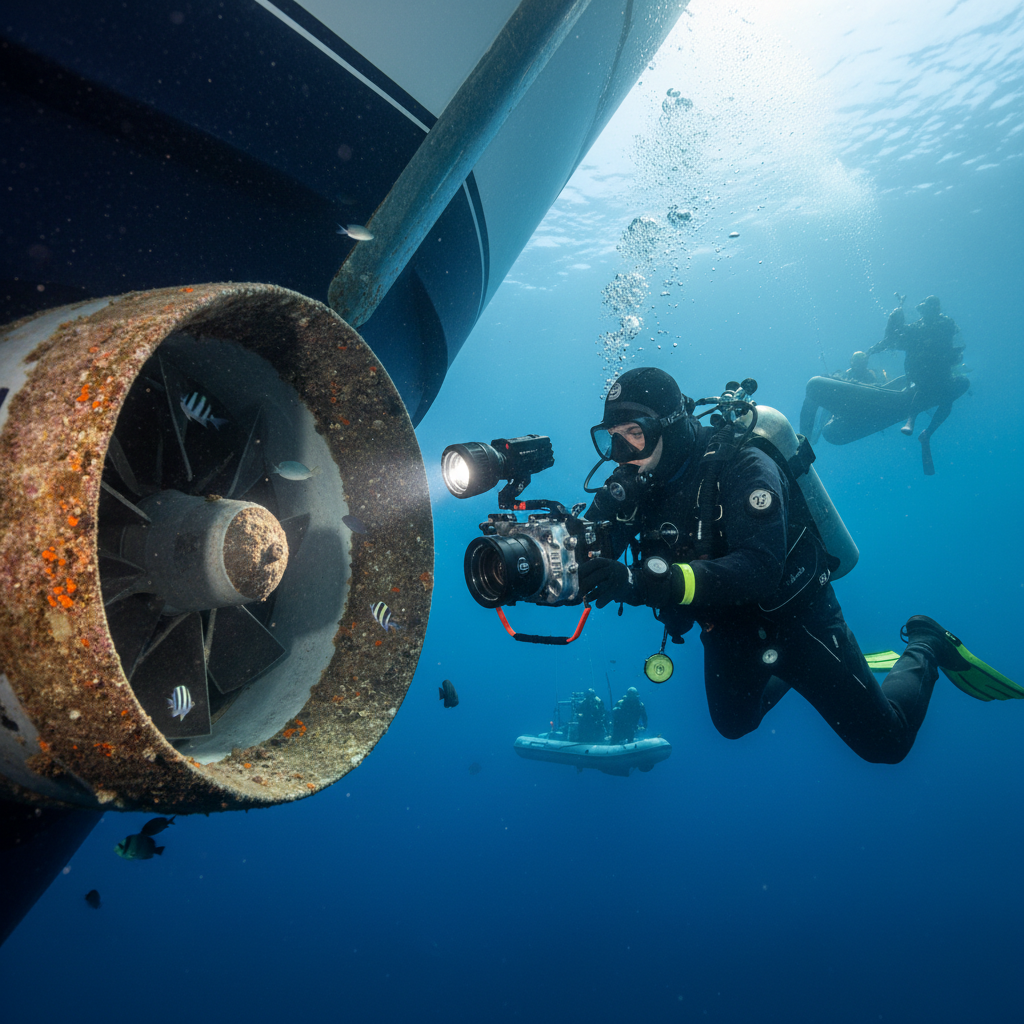
- Tunnel Clearance Verification: Biofouling (barnacles and tubeworms) inside the thruster tunnel disrupts laminar flow, which is the primary trigger for bow thruster cavitation.
The real kicker? You can’t see this from the dock. Because 360 Hull Diving provides before-and-after photo proof, you can see exactly how much growth was choking your thruster tunnel before we cleared it. Ready to see what’s happening under your waterline? Schedule your photo-verified inspection here.
3. Identifying Biofouling: The Primary Trigger in San Rafael
Biofouling is the most common cause of thruster inefficiency we see in San Rafael boat maintenance. Even a thin layer of slime or a few stray barnacles can create enough turbulence to trigger cavitation. In the nutrient-rich waters of the North Bay, growth happens faster than many owners realize.
What most people miss is that the thruster tunnel is a dark, protected environment—perfect for marine growth. When the tunnel diameter is reduced by even half an inch of growth, the water velocity increases, the pressure drops, and cavitation begins. This is why we recommend a monthly cleaning schedule for active vessels at Loch Lomond.
| Condition | Visual Indicators | Impact on Performance |
|---|---|---|
| Healthy | Smooth metal, no growth | 100% Thrust / Low Noise |
| Light Fouling | Slime, small barnacles | 85% Thrust / Increased Vibration |
| Advanced Cavitation | Deep pitting, jagged edges | 60% Thrust / High Risk of Motor Burnout |
4. Predictive Maintenance vs. Reactive Repair
In our experience with high-end recreational vessels, the cost of replacing a bow thruster unit can be five to ten times the cost of a decade’s worth of regular diving services. Predictive maintenance isn’t just about cleaning; it’s about monitoring the rate of thruster blade pitting to catch issues before the metal becomes brittle.
Here’s an honest, contrarian insight: Many “budget” divers will wipe the blades but ignore the back of the tunnel or the sacrificial anodes inside the unit. If those internal anodes are gone, your thruster blades become the primary source of protection for the rest of the boat’s metal, leading to rapid “electrolytic pitting” that mimics cavitation damage. We see this frequently in older San Rafael docks where shore power leaks are common.
To keep your vessel in peak condition, consider a holistic approach to hull cleaning and maintenance. Consistent care ensures that when you need that bow to swing, it responds instantly.
5. The Financial Impact: Preserving Resale Value
For many owners at Loch Lomond Marina, their boat is a significant asset. When it comes time to sell, a surveyor will immediately check the thruster blades. Extensive bow thruster cavitation damage is a “red flag” that suggests the owner may have neglected other underwater components.
By maintaining a log of underwater thruster inspections and photo reports, you provide a “Carfax-like” history for your vessel. This transparency builds trust with buyers and justifies a higher asking price. It shows you didn’t just own the boat; you curated it.
Need a professional eye on your running gear? Call us at (415) 555-0123 (Example) or book your dive online to get your first photo report.
6. Sustainable Sailing: Efficiency and Eco-Friendly Solutions
Modern San Rafael boat maintenance is moving toward sustainability. A clean, efficient thruster draws less current from your battery bank, which is critical for the electric thrusters found on many newer luxury yachts. Less battery drain means less engine run-time for charging and a smaller overall carbon footprint.
Furthermore, we are seeing a shift toward eco-friendly, foul-release coatings. These coatings make the blades so slippery that growth struggles to attach, and the water flows more laminarly, reducing the chances of bow thruster cavitation. While the upfront cost is higher, the long-term savings in fuel and repair costs are undeniable.
If you’re interested in how we use data to improve vessel performance, we sometimes leverage Ingest.blog, our internal AI content engine, to track and analyze regional fouling trends across the Bay Area. This allows us to provide hyper-local advice for Loch Lomond owners based on real-time water conditions.
FAQs: What Loch Lomond Owners Ask About Thrusters
How do I know if my bow thruster is cavitating?
The most common sign is a loud, vibrating noise that sounds like gravel passing through the tunnel. You may also notice a significant drop in the boat’s responsiveness when trying to move the bow. A visual underwater thruster inspection is required to confirm pitting on the blades.
Can cavitation damage my thruster motor?
Yes. Cavitation creates uneven loads on the blades, which causes the motor to vibrate excessively. This vibration can damage seals, allowing water into the motor housing, or lead to electrical overheating as the motor struggles to push water through a turbulent, fouled tunnel.
How often should I have my thruster inspected in San Rafael?
For boats at Loch Lomond Marina, we recommend a professional check every 2-3 months. The high sediment and nutrient levels in the North Bay lead to faster biofouling, which is the primary trigger for bow thruster cavitation and efficiency loss.
Can pitted thruster blades be repaired?
Minor pitting can often be sanded smooth and coated with a specialized marine epoxy or foul-release paint to restore laminar flow. However, if the erosion has compromised the structural integrity of the blade, replacement is the only safe option to prevent marine propulsion maintenance emergencies.
The Monday Morning Action Plan
Don’t wait for your thruster to fail during a windy docking session. This week, perform a 30-second acoustic test: engage your thruster in a clear area and listen for any irregular grinding or “popping” sounds. If it doesn’t sound like a smooth, powerful hum, it’s time to call in the professionals. At 360 Hull Diving, we specialize in the unique conditions of Loch Lomond marine services, providing the insured, expert care your vessel deserves. Contact us today for a photo-verified hull and thruster check.